


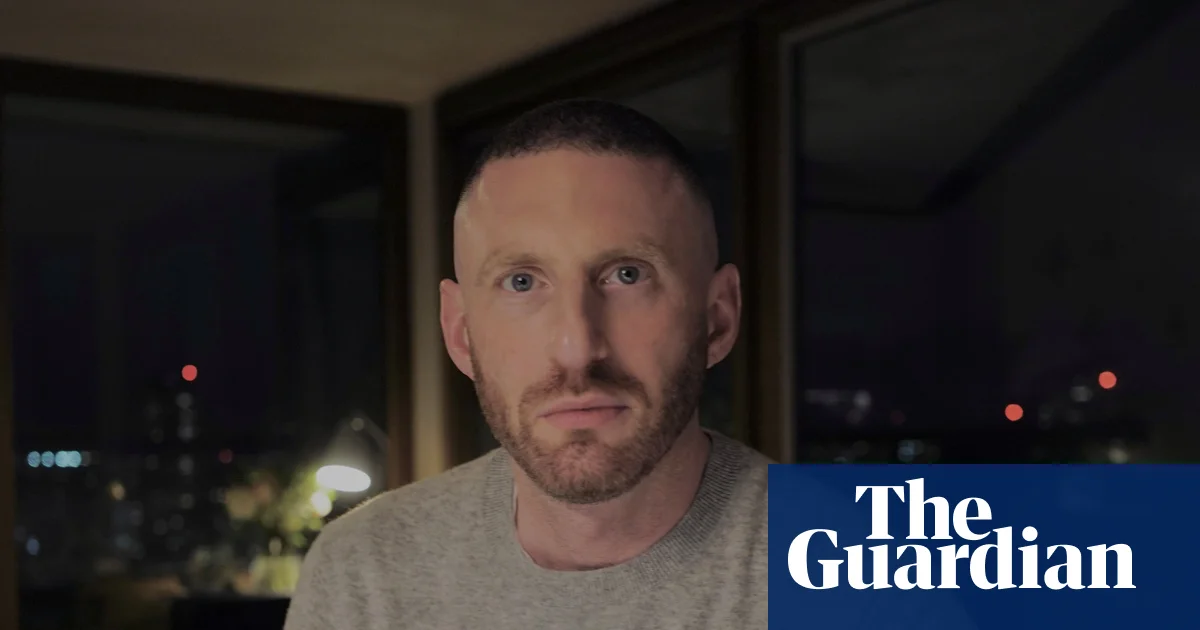
Three months ago, at 42, I was diagnosed with attention deficit hyperactivity disorder. Unlike many adults prior to receiving a diagnosis, I had not spent years wondering whether I had ADHD. In fact, I was oblivious until quite recently, when I strongly identified with several things a colleague said about their own experience of ADHD. The more I learned, the more I found myself thinking: “Wow, that’s me.”
My forgetfulness, distractibility, messiness, chronic need for organisation and memory strategies, constant lateness, tendency to lose things daily, persistent perfectionism and habit of going, tyres screeching, right up to the last minute of every deadline suddenly made sense. Things I had spent my life viewing as daily frustrations or personal failings had an explanation. I had ADHD, and had always had it. There was a reason for the constant chatter and noise in my brain, with any gaps filled with, or interrupted by, a song. Honestly, literally anything can trigger a song.
The diagnosis brought an unexpected, enormous sense of relief. I could finally look at aspects of myself that I had previously been frustrated by and understand them differently – with a new kindness toward myself. And then I heard about a documentary claiming that ADHD isn’t even real, as discussed in Gina Rippon’s article (There is nothing scientific about The Great ADHD Myth? ‘documentary’, 20 August). My first reaction was confusion. Then embarrassment. Then actual shame. Had I just been a fool? Was the explanation that had brought me so much relief actually all just fiction?
Of course, it is healthy and worthwhile to question shaky science where the evidence is lacking. But to question the existence of a condition supported by decades of clinical research and scientific evidence is astonishing – and potentially so damaging to so many lives. For people like me, this isn’t an abstract argument about a trend or fashion. An ADHD diagnosis can fundamentally change how you understand your entire life.
I hope the documentary will continue to be thoroughly challenged. People who have found a framework for understanding and accepting themselves deserve better than to have that understanding so casually and thoughtlessly undermined by a documentary lacking even basic scientific rigour.
Daisy Jones
Bristol
In her critique of the recent Channel 4 documentary on ADHD, Prof Gina Rippon apparently thinks that, when addressing the issue of how much validity the diagnosis has, all we need do is gather more scientific evidence about it. But huge amounts of evidence have already been accumulated. What she fails to consider is the question of how existing evidence should be interpreted, because she seems to assume that the status of ADHD as a genuine neurological disorder is indubitable. However, any body of data can be open to different interpretations. Moreover, she does not consider the fact that much research on ADHD has been conducted with the assumption that it is a distinct disorder and, unsurprisingly, has achieved results that support this. This assumption needs to be questioned, and there is nothing unscientific about doing so.
Prof Rippon also criticises the case study of Mason, used in the documentary, for not being a scientific experiment. But this implies a very narrow positivist view of what scientific inquiry involves. Single-case methodology, such as was used here, is scientific and has a long history of use in psychology, including neuropsychology. The salient question is the extent to which the results may be generalisable to a larger population. If sufficient such case studies are conducted with consistent results, stronger conclusions can be drawn.
Dr Richard Hassall
Honorary research fellow, department of philosophy, University of Nottingham
An independent prevalence review which has taken into account all the research on childhood and adult ADHD will shortly be published, answering many of the issues brought up in this extremely biased programme. I would now urge Channel 4 to commission a much more accurate programme based on this review. It could be called ADHD: The Truth.
Dr Val Harpin
Consultant neurodevelopmental paediatrician
I was diagnosed with severe ADHD long before the current rise in adult diagnoses. I struggled profoundly to process and retain information at school and was moved back a year. At nine, I had to leave my prep school because of my learning difficulties. I was eventually accepted by Millfield school, where I was taught in very small classes.
My parents did not choose medication lightly. I was monitored by paediatricians for years and was also part of Prof Sir Michael Rutter’s English and Romanian Adoptees study following my adoption from Romania.
I am now 37 and run a successful dog-grooming business. In many ways, I found a life that suits the way my brain works: practical, creative, fast-moving and hands-on. But ADHD has not disappeared. Without medication, paperwork piles up, conversations become harder to follow and my organisation noticeably deteriorates.
I completely support careful diagnosis and sensible prescribing, and I understand concerns about overdiagnosis. But there is a difference between occasionally feeling distracted and having difficulties severe enough to shape your entire childhood.
Medication did not suddenly make education easy. Even with it, following tasks, instructions and courses could still be difficult. I wanted to learn, but processing and retaining information remained a struggle and sometimes stopped me taking on new courses because I knew how overwhelming they could become.
But medication gave me the chance to find myself, discover what I was good at and build confidence.
It did not make me someone else. It gave me a better chance to become myself.
Rosieanna Edelman
Bath
As a 45-year-old recently diagnosed with ADHD, I find the central question of Max Pemberton’s Channel 4 documentary The Great ADHD Myth? – namely, whether ADHD is a genuine neurodevelopmental disorder, or simply a set of tendencies – somewhat extraneous.
It is not only schools that fail to accommodate brains or behaviours that are deemed untypical. Our entire economy is predicated upon the idea that competition rewards hard work – and while that is fine for adults who are able to focus consistently on the demands of work and life, it is ill-suited to those who are not. Thus, adults with an ADHD diagnosis are often forced to choose between protecting our creative, sometimes chaotic true selves – our “fun-ness”, as Mason, the boy in the programme, put it – and medication that can make us feel more stable and productive, but also flat and uninspired.
Yes, it feels dystopian to potentially overdiagnose and overmedicate kids. But it is a different type of cruelty to throw those same kids out into a world that is not designed for them, without the language to understand why they struggle or how best to cope.
Simon Lee
Tunbridge Wells, Kent
