


Key takeaways from this investigation
- County prosecutors in Illinois fed sensitive personal and location information about local residents — including court dates and scheduled jail releases — to federal immigration agents.
- The practice was widespread: Prosecutors’ offices in 1 out of every 6 counties in Illinois provided information to ICE.
- Illinois’ TRUST Act prohibits local law enforcement agencies from providing information to federal immigration officials, but state’s attorneys disagreed about whether their offices are bound by the law.
- The consequences were devastating for families: Some people who didn’t appear to otherwise be on ICE’s radar were deported after county prosecutors shared information about them with federal agents.
This story was produced in partnership with WIRED.
Rolando Perez Samayoa had come to the United States in 2023 seeking safety. Fleeing violence in Mexico, he’d first planned to make a life in Alabama but had been told that Illinois would protect immigrants like him. “There’s some kind of law there,” he said. “It’s supposed to be a sanctuary.”
He was referring to the state’s 2017 TRUST Act, which was meant to keep local law enforcement out of federal deportation efforts. Samayoa made his way to southern Illinois and found work cleaning a factory. After a DUI arrest in Marion County last October, Samayoa said, he attended his hearings — a fact confirmed by court records.
In late January, John Christeson, an assistant state’s attorney in the office prosecuting the case, emailed an agent with Homeland Security Investigations, a division of U.S. Immigration and Customs Enforcement, about Samayoa. The message included his date of birth, an upcoming court date, and where he lived: Centralia, Illinois.
“Ok, we’ll take care of it, thank you,” the federal agent, Sergio Fulgencio, wrote back minutes later. Two days later, he wanted to know more: “Do you have any reports on this guy?”
Christeson sent him the police report and related tickets. Three weeks later, federal agents apprehended Samayoa outside his home. They hauled off his 17-year-old son, too.
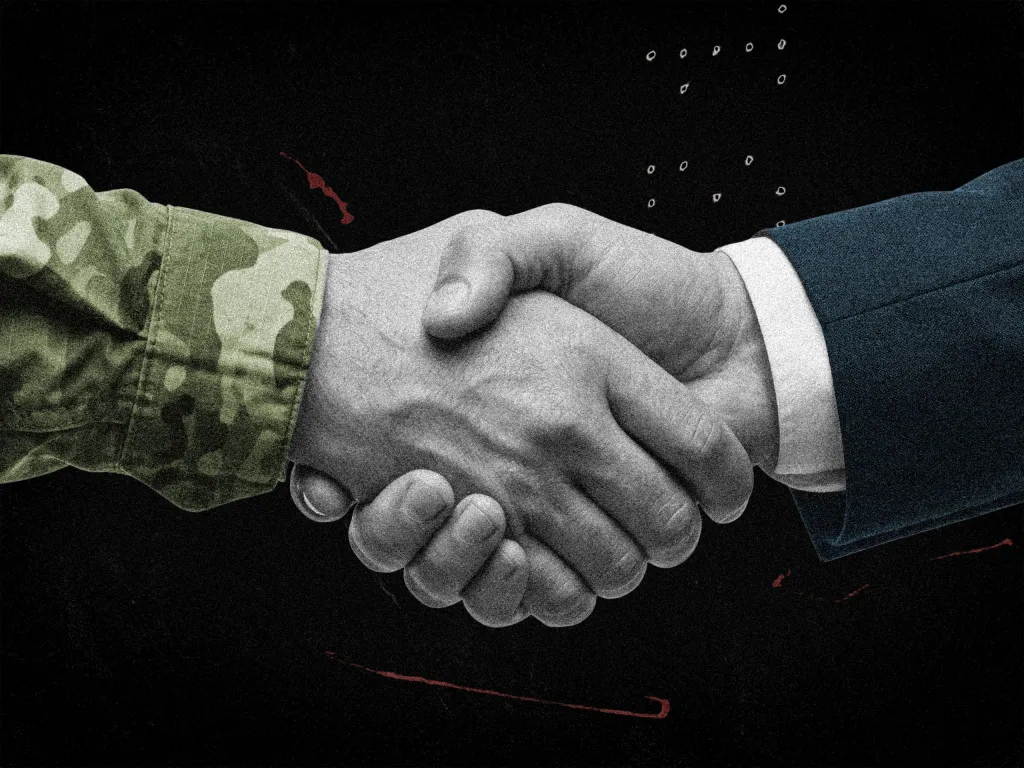
The exchange is among dozens of emails reviewed by Injustice Watch that reveal a pattern of consequential collaboration between county prosecutors and federal immigration agencies across Illinois during the first 15 months of President Donald Trump’s second term.
State’s attorneys offices in one out of every 6 Illinois counties acted as valuable assets of federal immigration enforcement, sharing sensitive personal data about the people they were prosecuting without criminal warrants, public disclosure, or legislative oversight, and with no accounting of how often it happened or who was affected.
Sometimes, prosecutors volunteered information on their own. Other times, they simply answered when Department of Homeland Security agents came calling. The correspondence crossed party lines and included everyone from paralegals to elected state’s attorneys. The collaboration typically happened without the knowledge of defendants or their attorneys.
The TRUST Act bars police and other agencies from helping federal agents deport people absent a federal criminal warrant. But the law doesn’t squarely answer whether prosecutors and their staff are bound by those same restrictions.
Since Trump took office for the second time, his administration has ramped up immigration enforcement, detention, and deportation, and ICE has visibly displayed its enforcement at worksites, front yards, and courthouses. In response, states including New York have joined Illinois and more than a dozen others in barring local police and sheriffs from helping with federal immigration enforcement. But the scale of prosecutor collaboration in Illinois — which is one of the largest sanctuary states, and often cited as a national model — raises questions about the limitations of state laws to protect immigrants.
Injustice Watch filed Freedom of Information Act requests with all 102 Illinois state’s attorney’s offices and drew on records from federal and circuit courts. Together, those internal emails and case files ran more than 5,000 pages. The documents reveal that prosecutors shared much more than just names. Their emails contain photographs. Home addresses. The date and time a defendant was due in court or set to leave jail — the exact window for ICE to make an arrest.
Eleven offices didn’t respond; some produced records only after Injustice Watch sued them under FOIA. The rest remain in litigation.
And the written record may be only part of the story. Messages with phrases like “Thank you for taking my call” point to conversations no records requests could follow.
None of it was inevitable. Dozens of Illinois county prosecutors, faced with the same federal pressure, claimed they had no record of contact with ICE, and at least one made a point of shutting it out — suggesting every act of collaboration was a choice.
And the choices had consequences: People flagged to ICE were detained and deported, tearing families apart.
DHS did not answer questions about how its agents work with local officials in Illinois.
Antonio Gutierrez, who co-founded the advocacy group Organized Communities Against Deportations, was among those who pushed for the TRUST Act. Residents wanted “to trust in local police, in local prosecutors, in the criminal justice system, to be fully separated from immigration and deportation enforcement,” Gutierrez said.
The records revealed in Injustice Watch’s investigation, Gutierrez said, prove that trust was never warranted.
The ones who were willing — and those who weren’t
Twenty minutes after flagging Samayoa, Marion County’s Christeson emailed Fulgencio again.
“I’ve got another potential,” he wrote, flagging a man with a local warrant who had been arrested on an unrelated charge in Missouri.
Fulgencio replied that agents were already tracking the man on a civil removal order — a deportation order from an immigration court — and asked whether the county warrant should take priority.
“Our warrant will not take priority over removal,” Christeson answered.
Fulgencio wrote back just 34 minutes later: “He’s in ICE Custody awaiting removal.”
Christeson didn’t respond to questions about his correspondence with Fulgencio, nor did his boss, Marion County State’s Attorney Tim Hudspeth.
Criminal cases offer protections that immigration proceedings don’t: Prosecutors must prove guilt beyond a reasonable doubt, and attorneys are appointed to defendants who can’t afford one. Removal proceedings are civil: There’s no right to an appointed lawyer, and the government can establish deportability on “clear and convincing evidence,” a lower legal standard.
Spencer Reynolds, an attorney with the NAACP Legal Defense Fund and a former Department of Homeland Security lawyer, said that because deportation is an easier path than prosecution, some local officials might be tempted to use it to “clear their docket” — a move that “risks undermining the rights people have in the criminal proceeding context.” Once a defendant is turned over to ICE, the criminal case — and the protections it affords the accused — fall away.
In several counties, prosecutors reached out only once or twice. Some local prosecutor’s offices did nothing more than ask immigration officials whether a defendant was already in federal custody, but may have put the person on ICE’s radar in the asking.
According to documents reviewed by Injustice Watch, contact happened more often in DuPage County in Chicago’s western suburbs, where 1 in 5 residents were born abroad. Staff there contacted federal immigration agents more than any other prosecutor’s office in the state. Staffers answered ICE’s requests for information and offered specific cases for federal agents to pursue.
In April 2025, for example, a Customs and Border Protection officer based at O’Hare International Airport asked an assistant prosecutor for records tied to a voter fraud investigation. The request was an administrative subpoena — issued by DHS, not by a judge. On its own it carried little weight: If the office refused, DHS would have to go to federal court and attempt to enforce it.
Ninety minutes later, the prosecutor sent the voting records of two county residents.
DuPage State’s Attorney Bob Berlin said his office reviewed the subpoena like any other before producing the records CBP sought. Its other contacts with immigration agents, he said, were permitted under the TRUST Act’s criminal investigation carve-out, which allows cooperation with federal agencies — including Homeland Security — in such investigations.
Sometimes, the collaboration crossed county lines.

In central Illinois, Menard County State’s Attorney Gwendolyn Thomas contacted federal immigration agents on at least five occasions, often asking whether a defendant was “on a deportation list” in order to assess flight risk, and sometimes sharing details about the men she was prosecuting, including when one might be released from jail.
She also pointed colleagues in neighboring Cass and Mason counties to Homeland Security investigator Kevin Parks. Prosecutors subsequently wrote to Parks on their own, telling him Thomas had shared his contact information.
Cass County State’s Attorney Craig Miller — who shared information about three defendants with federal agents — declined to comment. Thomas didn’t respond to questions about her communications with agents or about steering other prosecutors to Parks.
Mason County State’s Attorney Zachary Bryant told Injustice Watch that the information his office had received from Homeland Security “was helpful in obtaining appropriate identification for purposes of obtaining a valid criminal history for the defendant,” even though records show Parks shared information regarding the defendant’s immigration history, not her criminal history. Bryant did not respond to questions about the discrepancy.
None of the state’s attorneys who responded to Injustice Watch’s questions described the contact they and their staff had made as a mistake or the work of a rogue employee; like DuPage County’s Berlin, most defended their practices outright.
“It is very common that information is shared between agencies in the criminal justice system, including those in law enforcement,” wrote Kendall County State’s Attorney Eric Weis, whose office sent a man’s records to a Detroit ICE office for use in immigration court proceedings.
In Kane County, where staffers asked Customs and Border Protection to identify three people through facial recognition, State’s Attorney Jamie Mosser called it “a standard investigatory technique used throughout all of law enforcement.”
In response to records requests, more than half of Illinois state’s attorneys offices said they had no record of contact with ICE since Trump returned to office. Some offices chose not to collaborate out of internal practice, some out of a commitment to community trust.
In Lake County, State’s Attorney Eric Rinehart spent months hardening his office against immigration enforcement. He circulated the Illinois attorney general’s guidance on complying with the TRUST Act to police chiefs, and told the county’s public defender to report any TRUST Act violations, adding that he not only enforced the law, he “happen[ed] to agree with it such that I hope it is widely followed in letter and spirit.”
“When people are afraid to come to court, for any reason,” he wrote to state lawmakers in October, “we cannot make our communities safe, we cannot find the truth, and we cannot achieve justice.”
Rinehart also issued a written policy barring ICE officials from the private areas of his office without a warrant signed by a judge.
In southern Illinois, Jackson County treated questions from federal agents the way they would any other: as FOIA requests, answered with redactions under the state’s public records law.
A gray area in the law
Illinois has made repeated promises to its residents about the way it treats immigrants.
Then-Gov. Bruce Rauner, a Republican, signed the TRUST Act with bipartisan support at a packed restaurant in Little Village, the Chicago neighborhood at the heart of the city’s Mexican community, months after Trump first took office in 2017 promising mass deportations. Among the attendees were law enforcement officials who wanted to assure the public that immigrants had no reason to fear contacting the police.
In 2021, Gov. JB Pritzker called Illinois “the most welcoming state in the United States.” In June 2025, he flew to Washington to defend his position before a hostile House committee. In December, as ICE swept people up outside hearings, he also signed a law in Little Village, this one barring civil immigration arrests within 1,000 feet of a courthouse. The idea that the Trump administration would keep people from attending court, he said at the signing, “boggles the mind.”
But the courthouse law was written to stop the agent waiting on the sidewalk, not the prosecutor inside.
Nearly all the defense attorneys whose clients appear in the records obtained by Injustice Watch said they had no idea prosecutors were sharing case information with federal immigration agents. They spoke on the condition of anonymity, several citing concern about straining relationships with the prosecutors they face in court, others pointing to cases that are still pending.
Legal scholars described the collaboration between federal immigration agents and local prosecutors as unprecedented.
“I cannot recall a single instance in my past practice where an individual within the state’s attorney’s office shared information with ICE,” said University of Kentucky assistant law professor Matthew Boaz.
Still, he said in an email, “the sentiment of the TRUST Act — separating state/local criminal law enforcement from federal civil immigration enforcement — would seem to include any actor within the criminal legal system.”
Prosecutors themselves couldn’t agree on whether the TRUST Act applied to them.
Some said their offices are bound by it. The act covers law enforcement agencies; DuPage County’s Berlin said that includes him and his staff.
“The State’s Attorney’s Office is charged with enforcement of state, county, and municipal laws,” he said. “Therefore, the law applies to my office.”
Others said the law doesn’t reach them. Lake County’s Rinehart said his office doesn’t arrest or detain people, so it isn’t a law enforcement agency as defined by the act. Yet Rinehart said his office declines to collaborate with federal immigration enforcement regardless.
These two offices staked out the clearest positions, landing on opposite sides of the question — and on opposite ends of the spectrum of collaboration. Berlin said his office was bound by the TRUST Act, but it contacted federal immigration officials more than any other. Rinehart said his office wasn’t bound by it, yet shut ICE out entirely. (Neither office tracks its contact with ICE. While police departments and sheriff’s offices must file annual TRUST Act compliance reports, state’s attorneys aren’t required to do so.)
Illinois Attorney General Kwame Raoul, the state’s chief legal officer, didn’t resolve the question.
“Applying the TRUST Act in practice requires state and local enforcement to navigate complex interactions in circumstances that are not always clear-cut,” he said in a statement, without answering whether county prosecutors are bound by the law he enforces.
Pritzker didn’t respond to questions about whether the TRUST Act binds prosecutors, whether the state should track their contacts with ICE, or whether Illinois has kept its promises to its residents.
For Samayoa, the question of whom the law binds is beside the point.
Whatever idea he had about Illinois being a sanctuary ended in February, when ICE agents descended on him in his front yard as he was stepping out to grab a belated birthday dinner. He said eight agents pointed their guns at his teen son, who was trying to reach him as ICE moved in.
“Everything was going smoothly until his 17 year old son thought he would help his dad out by trying to run over the agents,” Homeland Security’s Fulgencio wrote to Marion County’s Christeson after the incident. “Ended up damaging a vehicle. So now [his son’s] going with him.”
Samayoa denied that his son tried to run over the agents. DHS defended the way its agents handled the arrest.
“ICE law enforcement officers are trained to use the minimum amount of force necessary to resolve dangerous situations to prioritize the safety of the public and our officers,” a spokesperson said in a statement. “Officers are highly trained in de-escalation tactics and regularly receive ongoing use of force training.”
Samayoa and his son were taken to St. Louis, where he said he felt pressured to agree to leave the country rather than fight his case. He directed his son to do the same. The Department of Homeland Security confirmed both father and son “accepted a voluntary departure.” Within hours, both were on a plane to Texas.
After one night in an El Paso hotel, Samayoa said, he and his son were escorted across the border into Ciudad Juarez, where he destroyed all immigration paperwork he had with him — vowing to never return to the United States. DHS confirmed both were removed from the United States on Feb. 25.
Father and son spent time in a shelter before scraping together bus fare to their native state of Chiapas. Back in Illinois, the rest of the family had to raise their own fare south; two months passed before they were all together again.
When Injustice Watch reached Samayoa, he said he didn’t know that a prosecutor had shared information about him with federal immigration authorities before the raid. He said he’d warn the community he left behind in Illinois: Showing up for prosecutors could mean showing up for ICE.
Click to explore some of the documents from this investigation.
The post The county prosecutors who became ICE informants appeared first on Injustice Watch.
