


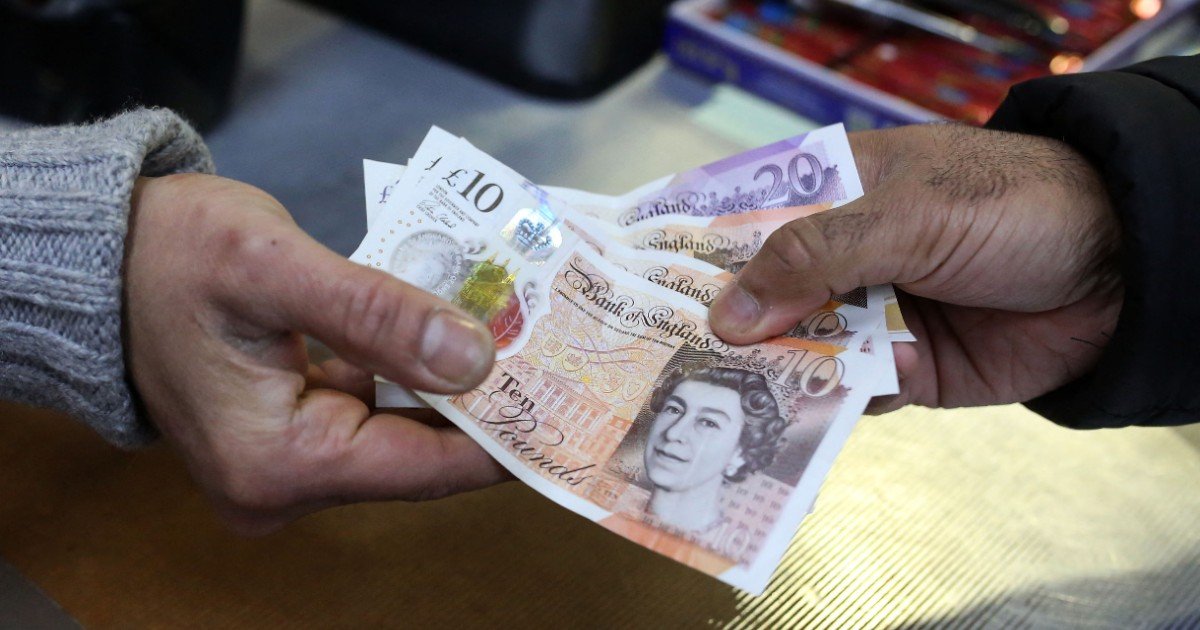
Benefits and the amount the government spends on welfare has become one of the most hotly debated issues in politics.
This explainer tackles some of the most common questions and claims we’ve seen about the benefits system and how much it costs:
The figures referenced in this article typically refer to Great Britain, although figures for disability benefits after 2022/23 exclude Scotland, where responsibility for certain types of benefits including disability and carer’s benefits is devolved.
The Department for Work and Pensions (DWP) includes the State Pension in its benefit figures. Much of the debate around benefits spending focuses specifically on working-age benefits spending however, so we’ve provided figures for both overall benefits spending and non-pensioner spending wherever possible.
The information on this page is accurate as of August 2026. If you have any other questions you think we should look into, please let us know.
Join 74,000 newsletter subscribers who trust us to check the facts
Sign up to get weekly updates on politics, immigration, health and more.
Subscribe to weekly email newsletters from Full Fact for updates on politics, immigration, health and more.
Our fact checks are free to read but not to produce, so you will also get occasional emails about fundraising
and other ways you can help. You can unsubscribe at any time. For more information about how we use your data
see our Privacy Policy.
How much does the government spend on benefits?
In 2026/27 the Department for Work and Pensions forecast that in real terms £342.8 billion will be spent on benefits in Great Britain—up from £329.1 billion the previous financial year. Nearly half of it is spent on pensions.
The graph below shows the amount of money the government forecasts will be spent on the main types of benefits in 2026/27 in real terms compared to 2025/26.
Since April 2020 most benefits have been uprated in line with CPI inflation each year, having previously been frozen between April 2015 and April 2020. The state pension is uprated each year by whichever is the highest of CPI inflation, average earnings or 2.5%, a policy known as the ‘triple-lock’.
How much has benefits spending increased in recent years?
Since 2020/21 overall real terms benefits spending is forecast to have increased by approximately 16%. As a percentage of GDP, benefits spending is lower than it was in 2020/21 (though it’s worth noting that the UK’s GDP was heavily impacted by the Covid-19 pandemic, particularly in that year), but has been increasing since 2022/23.
The state pension makes up the largest part of welfare spending, followed by Universal Credit, then incapacity and disability benefits.
How many people are claiming benefits?
According to DWP figures in August 2025 24.3 million people in Great Britain were claiming some form of benefits. 10 million of these people were of working age.
The graph below shows DWP forecasts for the number of people claiming the most common types of benefits in 2025/26 and 2026/27.
When looking at how the number of working age people on individual types of benefits has changed over recent years, it’s important to be aware that figures are affected by ongoing work to move people from previous forms of benefits (often referred to as ‘legacy benefits’) to Universal Credit.
The graph below shows how much of the increase in Universal Credit in recent years is due to people migrating to the new system, and how much is due to people who weren’t previously on benefits starting to claim Universal Credit.
How many people are claiming health related benefits?
The number of people claiming benefits due to ill-health or disability has increased substantially since the Covid-19 pandemic.
In 2026/27 the DWP forecasts that the caseload for working age incapacity (health-related) benefits will be 3.85 million, while the caseload for disability benefits will be 3.63 million—many people will be receiving both kinds of benefit.
The graph below shows how much of the increase in people claiming the health element of Universal Credit in recent years is due to people migrating to the new system, and how much is due to people who weren’t previously on benefits starting to claim Universal Credit for health reasons.
How many young people are claiming benefits?
There are around one million benefits claimants in England and Wales aged 16-24, and a further 60,000 in Scotland.
According to Office for National Statistics data, at the end of the most recent financial year (2025/26), a total of 327,800 people aged 18-24 were receiving benefits for the principal reason of being unemployed.
In recent years there’s been particular focus on the number of young people who are receiving benefits for health reasons. According to DWP data, around 250,000 16-24 year olds are claiming the health element of Universal Credit, while around 440,000 people in this age bracket are claiming Personal Independence Payment, the main disability benefit (this figure is for England and Wales only as disability benefits are devolved in Scotland).
How many graduates are claiming benefits?
We’ve also seen claims about the number of graduates claiming benefits, following a report last year from the Centre for Social Justice (CSJ) think tank which claimed that 700,000 graduates were both out of work and on benefits.
The DWP does not publish figures showing the exact number of graduates who are claiming benefits—the CSJ’s figure is an estimate based on ONS Labour Force Survey data. The think tank says the 700,000 figure is for all 16-64 graduates—its estimate for the number of more recent graduates (those under 30) is approximately 111,000. It estimates that the number of under 30 graduates who are out of work due to sickness and claiming benefits is lower still, at 19,453.
It’s still the case that the vast majority of graduates (90%) are in work (although many people who work can also claim benefits).
Are most people on Universal Credit in work?
No. At the moment around 38% of people on Universal Credit are working (whether employed or self-employed).
There have been periods during which the split between people on Universal Credit who are in work and not in work has been almost 50/50—the proportion who were in work peaked at 49.8% in December 2021. But broadly speaking the percentage of people on Universal Credit who are working has been falling since then.
How much can someone who isn’t working claim in benefits?
For most working age people there is a limit to the maximum amount you can claim in benefits, called the benefit cap—the exact maximum limit per month depends on where you live and whether you have a family who live with you.
However, this cap doesn’t apply to everyone—for example, people who are unable to work due to a health condition or disability are not subject to the benefit cap.
The Centre for Social Justice has claimed that a family receiving “full handouts” could claim more than the average salary in benefits. While this does appear to be hypothetically possible, it’s worth noting these figures assume a family has both at least one parent and one child with a disability or health condition. This won’t be the case for every family that is claiming benefits.
Department for Work and Pensions figures suggest the average monthly Universal Credit award for a couple with children in which at least one person is unable to work due to a health condition or disability is around £1,800 per month (about £21,600 a year). This figure doesn’t include any additional benefits (like PIP) that a family may also be claiming.
How many children have been affected by the lifting of the two child benefit limit?
The government has claimed that its decision to abolish the two child benefit limit—a policy which meant third or additional children born after April 2017 were not eligible to receive extra Universal Credit or child tax credit payments—is lifting half a million children out of poverty.
This figure is based on the government’s own impact assessment of removing the policy, which estimates that by 2029/30 there will be 450,000 fewer children in ‘relative low income after housing costs’ compared to if the two child benefit limit had remained in place.
Around 300,000 of these children were already in poverty as a result of the policy, with a further 150,000 children forecast to have been pulled into poverty by 2029/30 had it continued.
It’s worth noting that there are a number of ways to estimate the number of people in poverty, and the precise scale of the impact of the government’s decision to lift the cap depends on the exact metric used.
Can immigrants claim benefits?
It depends on their immigration status. Most immigrants who are in the UK on temporary visas (including work and study visas), asylum seekers and those who are in the UK without the right to be here (for example, whose visas have expired) are not eligible to claim mainstream benefits. This is called ‘no recourse to public funds’ (NRPF).
Asylum seekers can apply for specific financial and housing support from the government, but this operates separately from the benefits system. We’ve written more about the support available to asylum seekers here.
In contrast, immigrants with the permanent right to live in the UK—those with EU settled status and indefinite leave to remain, as well as people with refugee status—typically are able to access the benefits system in the same way as UK-born people can.
The House of Commons Library estimated that 3.6 million people could be in the UK with a NRPF condition at the end of 2024.
Is it true you can get a free car if you have ADHD or anxiety?
People receiving certain types of disability benefits who have been assessed as needing help getting around can use them to pay for a car (or other mobility aids like motorised scooters or wheelchairs) through a charity called Motability.
Under the scheme, some or all of the benefit will be paid directly from the government to Motability each month to pay for the lease on the car. Some more expensive cars also require a one-off advance payment.
The government does not routinely publish figures showing the number of people receiving a vehicle through Motability, but data published in response to a written parliamentary question last year showed that in April 2025 a total of 589,550 Personal Independence Payment claimants had a Motability contract to receive a vehicle.
Of these claimants around 9,000 had ADHD/ADD listed as their primary medical condition, while around 35,000 had some form of anxiety disorder as their primary condition.
Having a condition like ADHD or anxiety doesn’t automatically qualify you to receive benefits, and not everyone receiving benefits with these conditions will be eligible for motability either—however this limited data does suggest that some people whose primary medical condition is neurodevelopmental or mental health-related are receiving cars through the scheme.
How big a problem is benefit fraud?
We regularly see comparisons being made on social media about how much more tax evasion and avoidance costs the government than benefit fraud.
According to the latest government data, in 2025/26 an estimated £6.8 billion was overpaid in benefits due to fraud—2.2% of all benefits expenditure. In cash terms this is an increase on 2024/25, when £6.4 billion was estimated lost to fraud, but the same as a percentage of benefits expenditure.
By comparison, in 2024/25 the amount estimated to have been lost to tax evasion was £7.1 billion, and the estimated amount lost to tax avoidance was £0.8 billion.
