


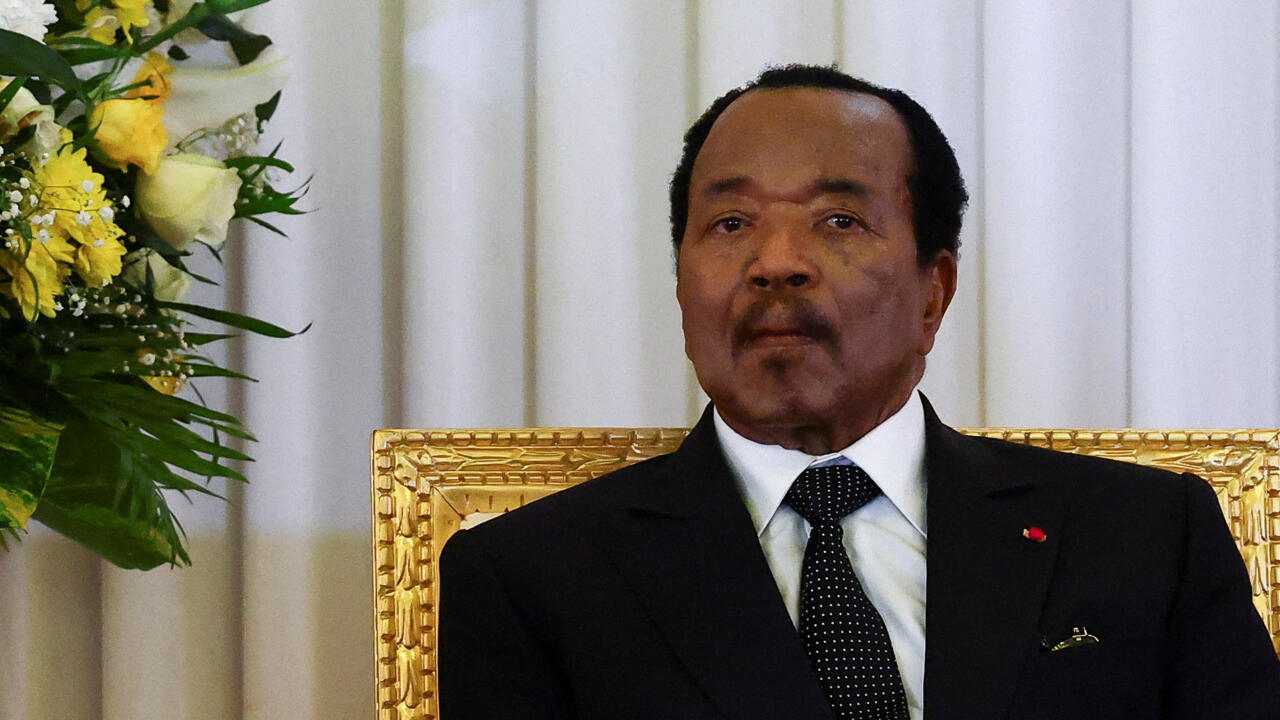
President Paul Biya returned to Cameroon on Thursday after a 73-day absence that fuelled speculation about the 93-year-old’s health – and who is really running the country.
The world’s oldest serving head of state, Biya landed in Yaoundé at around 1600 GMT from Geneva, where he had been staying since June 7 on what his office called “a short private stay”.
Cameroonian media had reported that Biya, leader since 1982, had been in the Swiss city with family members and close aides.
Watch moreLeo and ‘the tyrants’: Does new pope’s defiant message resonate?
After more than two months away, the president left the airport alongside first lady Chantal Biya, waving from a car on its way to the presidential palace.
Dozens of ruling party supporters gathered at the airport to welcome him home, some wearing clothes bearing Biya’s image.
Biya’s health has long been the subject of rumours, often linked to his frequent stays in Geneva.
On June 18, Communication Minister René Emmanuel Sadi denied reports that Biya had been hospitalised at a Geneva clinic.
One of your browser extensions seems to be blocking the video player from loading. To watch this content, you may need to disable it on this site.
His unusually long absence sparked sharp criticism from the opposition, which condemned an “institutional vacuum” and a country on “autopilot” while the appointment of a new government and vice-president have been pending for months.
‘Spectacle’
“For a democracy like ours, it’s normal for a president’s prolonged absence to raise questions. But it changed nothing in the functioning of the country,” said teacher Giles Owono, 30, who also came to greet Biya.
James Fame Ndongo, a senior ruling party figure and higher education minister, dismissed claims of a power vacuum last month, insisting the president continued to oversee state affairs.
For many Cameroonians, however, Biya’s repeated absences over the past two decades have become a source of growing frustration.
“It makes no difference whether he returns or stays away. When he is here, he does nothing,” Univers opposition party leader Prosper Nkou Mvondo told AFP.
“I see no reason to take part in this spectacle.”
The results of Biya’s nearly half-century in power have been mixed. Armed insurgencies by Boko Haram in the north and separatists in the west, along with a stagnant economy, have left many young people disillusioned with the leader.
Biya’s re-election to an eighth term in October 2025 triggered protests that were violently suppressed. The authorities acknowledged several dozen deaths but did not provide a definitive toll.
After a 2008 constitutional amendment abolished term limits, Biya has now led Cameroon longer than most of its citizens have been alive. More than 70 percent of the country’s population of nearly 30 million people is below the age of 35.
His long stay abroad has also stoked talk of a post-Biya future and accelerated jockeying among would-be successors as questions over who might replace him persist.
Without a vice-president, the senate president, Aboubakary Abdoulaye, is next in line to lead in the event of a power vacuum, until a presidential election can be organised.
(FRANCE 24 with AFP and AP)
