


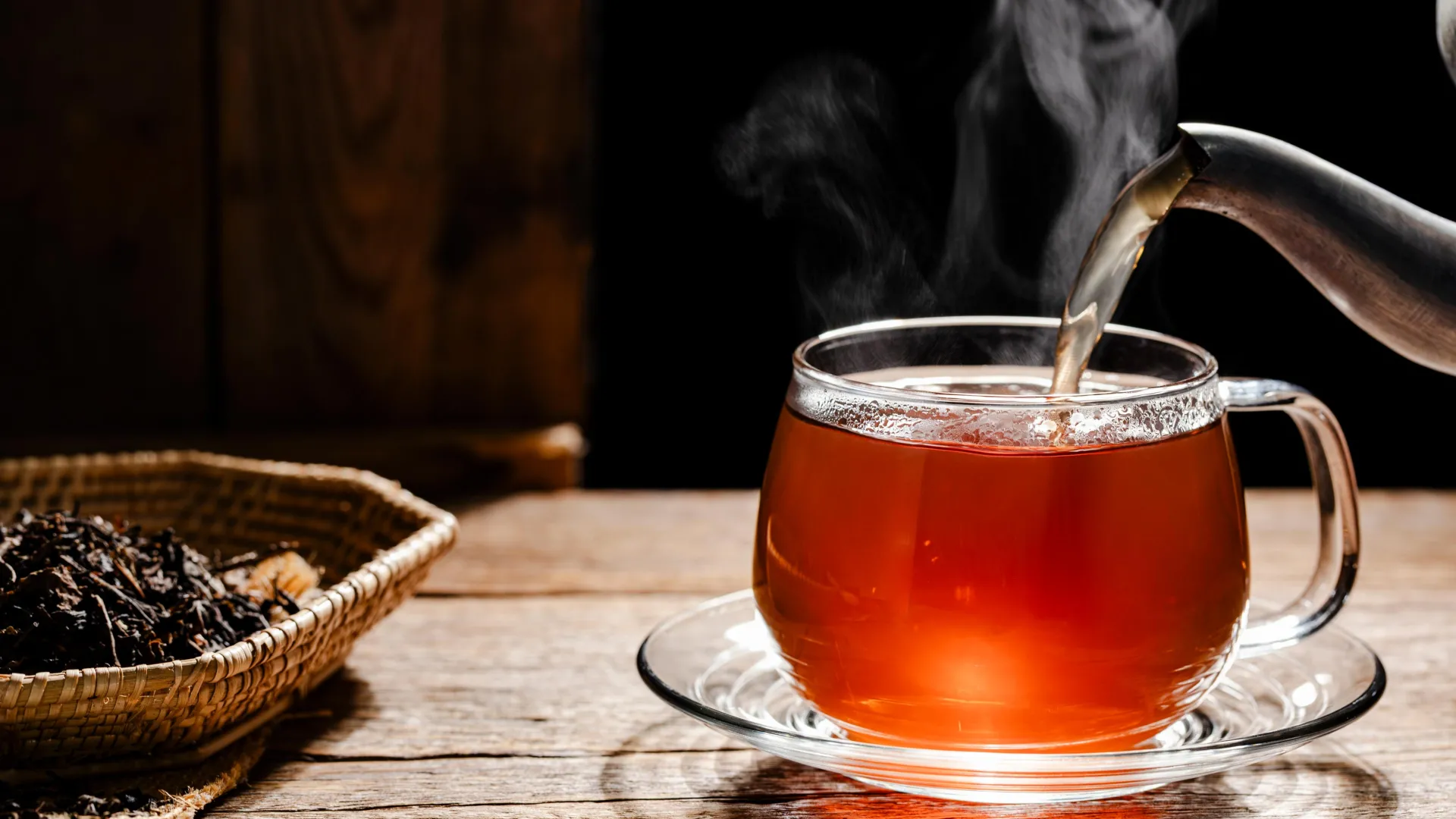
Drinking tea regularly may offer important benefits for your heart and blood vessels, according to a massive study involving nearly 500,000 adults. Researchers found that people who consumed tea regularly had a lower risk of developing several vascular diseases compared with those who did not drink tea.
However, the findings also revealed some unexpected differences. The type of tea, how strong it was, and even the temperature at which it was consumed were all associated with vascular health. While certain tea drinking habits were linked to a lower risk of disease, drinking tea at extremely high temperatures appeared to have the opposite association.
The research, published in the Journal of Internal Medicine, provides new insights into how an everyday beverage may be connected to long-term cardiovascular health.
Nearly 500,000 Adults Reveal a Link Between Tea and Vascular Health
The study included 485,934 adults in China who were followed for a median of 9.05 years. During that period, researchers recorded 14,863 cases involving several types of vascular disease.
These conditions included cardiovascular disease, which affects the heart and blood vessels, and cerebrovascular disease, which involves blood vessels that supply the brain. The researchers also examined pulmonary heart disease, a condition in which problems involving the lungs or their blood vessels place strain on the heart, and peripheral artery disease, which occurs when arteries carrying blood to areas such as the legs become narrowed or blocked.
Although these conditions affect different parts of the body, they share an important feature: they interfere with the circulation of blood, which delivers oxygen and nutrients to organs and tissues.
When the researchers compared tea drinking habits with the incidence of these diseases, they found that regular tea consumption was associated with an 11% lower risk of the combined vascular outcomes.
The relationship also appeared to vary with the amount consumed. Among people who drank tea at least weekly, the lowest estimated risk occurred at approximately six to eight cups per day.
This does not necessarily mean that drinking more tea directly prevents disease or that everyone should consume that amount. Because the research was observational, it could identify connections between tea drinking and health outcomes but could not establish that tea itself was responsible for the differences.
Black Tea vs. Green Tea: Does the Type Matter?
One particularly interesting finding involved the type of tea participants consumed.
Black tea showed more consistent associations with a reduced risk of vascular disease than green tea. This suggests that different varieties of tea may not have identical relationships with cardiovascular health.
Both black and green tea come from the same plant, Camellia sinensis, but they undergo different processing methods. Black tea is typically allowed to undergo extensive oxidation, a chemical process that changes the composition of compounds in the leaves, while green tea is processed to limit oxidation.
Tea naturally contains plant compounds known as polyphenols, which have attracted scientific interest because of their antioxidant properties and potential effects on blood vessel function. Antioxidants can help limit certain types of cellular damage caused by reactive molecules.
However, the study does not establish whether these compounds explain the observed differences between black and green tea.
Tea strength also appeared to matter. Participants who drank tea of moderate strength had the lowest associated vascular disease risk, suggesting that stronger tea was not necessarily linked to greater benefits.
Drinking Tea Too Hot May Carry Unexpected Risks
Perhaps the most surprising finding concerned tea temperature.
Although regular tea consumption was generally associated with a reduced risk of vascular disease, drinking tea described as “burning hot” was linked to an increased risk.
The result suggests that the temperature of tea may be an important consideration alongside how much people drink and which variety they prefer.
Very hot beverages can expose tissues in the mouth and digestive tract to high temperatures, but the study did not establish the biological mechanism behind the observed vascular risk. It also did not identify a specific temperature at which tea becomes harmful.
The findings therefore should not be interpreted as proof that drinking extremely hot tea directly causes vascular disease. They do, however, raise questions about whether certain drinking habits could offset some of the favorable associations seen with regular tea consumption.
Tea, Exercise, and Smoking Habits May Work Together
The researchers also examined how tea consumption related to other lifestyle factors, including smoking and physical activity.
Their analysis showed that people who regularly drank tea, were not current smokers, and maintained high levels of physical activity had the lowest vascular disease risk.
“Joint analyses showed that tea consumption, smoking status and physical were collectively associated with vascular risk, with the favorable combination of habitual tea consumption, non-current smoking and high physical activity associated with the lowest risk,” the authors wrote.
These results highlight the importance of considering overall lifestyle rather than looking at a single food or beverage in isolation.
Regular physical activity supports cardiovascular health in several ways, including improving circulation, helping regulate blood pressure, and supporting the function of the heart and blood vessels. Avoiding smoking also reduces exposure to substances that can damage blood vessels and increase cardiovascular risk.
Taken together, the findings suggest that tea drinking may be one component of a broader pattern of habits associated with better vascular health.
Although more research is needed to determine whether tea consumption directly influences disease risk, the study offers encouraging evidence that this widely consumed beverage is associated with cardiovascular health. It also highlights an important distinction: when it comes to tea, the amount, variety, strength, and temperature may all be worth considering.
