


Reading Time: 4 minutes
Click here to read highlights from the story
- Gov. Tony Evers reopened the commutations process in April – the first time in 25 years Wisconsin prisoners had the opportunity to request shorter sentences.
- The Commutation Advisory Board will meet from 8:30 a.m. to 3:30 p.m. on Friday. The virtual meeting is open to the public with no registration required.
- It will stream at www.youtube.com/@GovCommutations and/or wiseye.org/live.
- Natalie Murphy, one of 12 people who will speak at the hearing, told Wisconsin Watch she spent two weeks reading through her application before submitting it.
- The ACLU of Wisconsin also released new polling this week that shows a majority of Wisconsinities favor some form of clemency for some individuals.
A dozen incarcerated Wisconsinites will publicly make their case for clemency on Friday.
Those individuals represent a fraction of the people who’ve applied for commutations since Gov. Tony Evers reopened the process in April, marking the first opportunity in 25 years for Wisconsin prisoners to request their sentences be shortened.
The Commutation Advisory Board, appointed by the governor, will recommend which applicants’ sentences Evers should commute. Initial announcements said the board would hold its first meeting in June, but it’s now scheduled for Friday, Aug. 21, from 8:30 a.m. to 3:30 p.m. The meeting, which is virtual, is open to the public with no registration required. It will stream at www.youtube.com/@GovCommutations and/or wiseye.org/live, according to the governor’s office.
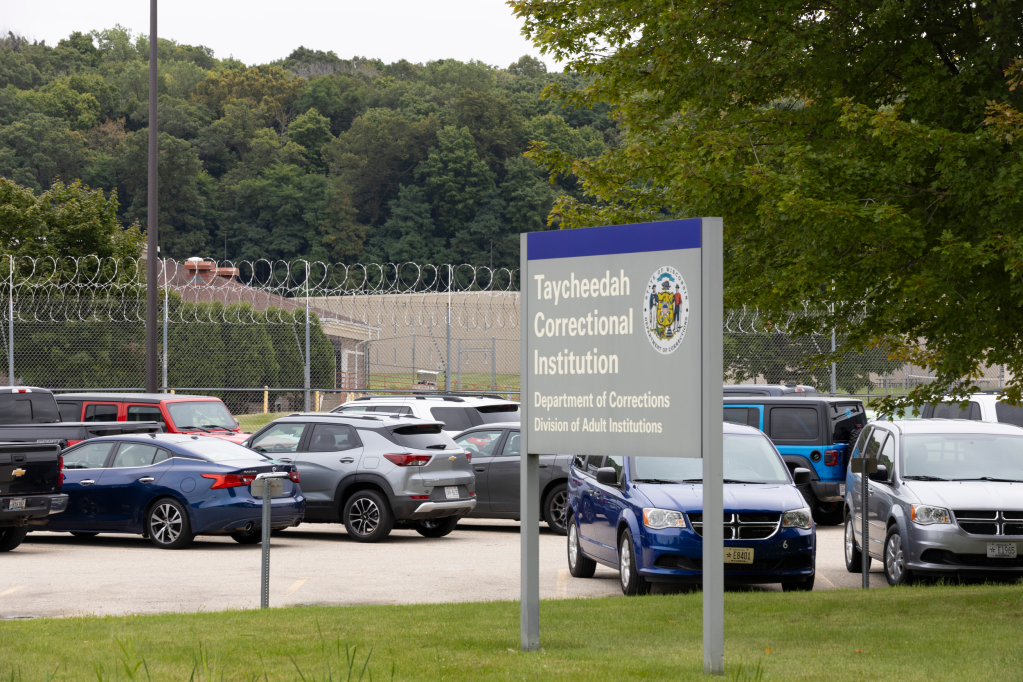
Among those addressing the committee Friday is Natalie Murphy, who was sentenced in 2016 to 20 years in prison and six and a half years of extended supervision for first-degree reckless homicide and second-degree recklessly endangering safety. Incarcerated at Taycheedah Correctional Institution, she’s spent the last seven years working full time as a certified peer specialist, sharing her own experience and offering a listening ear to fellow prisoners for $1 an hour.
“Being able to take the things that I have made mistakes in, or the pain that I have … and show people that there’s hope to get through that, is crucial to who I am at this point in my life,” Murphy said.
When she heard the governor’s commutations announcement, she filled out the 17-page application. For two weeks, she read through it every day.
“I’d start in the morning, like, ‘OK, does this reflect who I am as a person?’ And then I would tweak it,” Murphy said. When she was ready, she got it notarized and mailed it.
At the end of July, she got a letter saying she’d been selected for a hearing.
“I was shaking quite a bit,” Murphy said. “I just wasn’t expecting it.”
Murphy acknowledges that one purpose of the legal system is to punish people for their crimes by removing them from the rest of society. But she thinks the commutation process shows people that rehabilitation matters too.
“If we do not emphasize rehabilitation and second chances and putting faith back into people, it can create a really dangerous and toxic environment,” Murphy said.
Poll shows Wisconsinites favor clemency
The majority of Wisconsinites favor some form of clemency for at least some individuals, according to a new poll commissioned by the ACLU of Wisconsin. The poll, conducted in March by public opinion research firm GBAO, surveyed 800 registered voters in Wisconsin.
Of those voters, 51% support ending or shortening the sentences of prisoners “who meet certain selected criteria” if courts determine they can “successfully and safely re-enter their communities.” Thirty-seven percent opposed the idea.
The poll found voters were more likely to support early release for incarcerated individuals who are on hospice or need extensive care in their old age, as well as for female prisoners who killed or attacked an alleged abuser, and for prisoners who have served 20 years or more for a crime they committed as a minor.
Respondents also support pardons for a variety of Wisconsinites who’ve served their sentences. Pardons, which Gov. Evers has issued throughout his tenure, officially forgive an offense and restore the person’s civil rights. In Wisconsin, pardons are currently available only to individuals who completed their full sentences, including any extended supervision, at least five years ago. Though these pardons don’t shorten sentences, they can make it easier to get a job, housing or a professional license.
Eighty percent of ACLU survey respondents said they support pardons for individuals convicted of nonviolent crimes, and 50% said they support pardons for those convicted of violent crimes.
Wisconsin’s next governor will determine whether Wisconsinites will continue to receive commutations after Evers leaves office in January.
In April, Republican U.S. Rep. Tom Tiffany’s gubernatorial campaign told Wisconsin Watch he would rescind Evers’ executive orders on commutations because they allow people convicted of murder to apply.
Under Evers’ executive order only those previously convicted of sexual assault, physical abuse or sexual exploitation of a child, trafficking of a child, incest or soliciting a child for prostitution are ineligible for commutations.
Milwaukee County Executive David Crowley, who won the Democratic gubernatorial primary, told Wisconsin Watch in April he would work with the Legislature to “institutionalize” Evers’ commutations process but that he “would not allow commutations of murderers.”
For now, many Wisconsin prisoners are holding out hope that their applications will be granted before any potential changes to the process.
On Friday, Murphy will read from the personal statement she was told to prepare, explaining why she’s in prison, what rehabilitation she’s done, what she’d do if she got out and why she thinks she deserves a commutation.
Beyond that, she’s not sure what to expect. She doesn’t know when or how she’ll learn what the board and the governor decide. If she doesn’t receive a commutation, she’ll remain incarcerated until her scheduled release date in 2036.
Meanwhile, Wisconsin’s prison population is nearing a record high. As of Friday, Aug. 14, the system held 23,789 prisoners, just 37 shy of the record set in 2019. That’s nearly 6,000 people more than the system was designed for, according to the Department of Corrections.
Wisconsin Watch reporter Brittany Carloni contributed to this report.

Wisconsin Watch is a nonprofit, nonpartisan newsroom. Subscribe to our newsletters for original stories and our Friday news roundup.
Wisconsin to hold commutations hearing Friday is a post from Wisconsin Watch, a non-profit investigative news site covering Wisconsin since 2009. Please consider making a contribution to support our journalism.
