


In a landmark judgment on Aug. 14, South Africa’s Constitutional Court set aside exploration rights held by oil giant Shell and Impact Africa, a South African oil and gas company. The ruling prevents the companies from exploring for fossil fuels off South Africa’s Wild Coast.
The case was brought by Wild Coast communities and environmental organizations after Shell announced plans in 2021 to conduct a 3D seismic survey off the country’s Eastern Cape province coastline. They argued that authorities had failed to meaningfully consult affected communities or consider harms to their spiritual and cultural rights and livelihoods. Authorities also failed to consider the potential harm to marine life and climate change, the plaintiffs argued.
In the judgement, Justice Jody Kollapen wrote the majority opinion and said consulting communities isn’t just a procedural requirement, but “a process which affirms human dignity by affording a seat at the table to those whose lives are impacted by decisions.”
Acknowledging the “cornerstone role that dispossession played in the apartheid regime,” the court noted that South Africa’s natural resources are highly contested and that the case is embedded in “well-documented struggles by coastal communities to protect their land, marine resources and ways of life in the face of extractive activities.”
The judges also considered last year’s International Court of Justice Advisory Opinion on countries’ obligations in the context of climate change: “Decisions must be taken within a framework of heightened diligence, informed by scientific knowledge, international commitments and the foreseeable impacts of emissions on present and future generations,” Kollapen wrote.
The question of oil exploration rights in the area began in 2014, when the Department of Mineral Resources and Energy granted Impact Africa Limited the right to undertake a seismic survey to look for oil and gas reserves on the Wild Coast. Impact Africa Limited is a subsidiary of Impact Oil & Gas Limited, which in 2021 transferred a 50% stake of its exploration rights in the area to Shell.
The case has appeared before several South African courts over the past decade before reaching the Constitutional Court, the highest in the country.
Carmen Mannarino from the South African nonprofit Masifundise Development Trust, which works with communities in the area, told Mongabay that the court’s decision is a victory for fishing communities. “The court recognized that exploring for resources in light of potential future financial benefits does not compare to the constitutionally recognized rights of fishing communities,” Mannarino said.
“This is the apex court and the first time that it has dealt with issues relating to the community and environmental rights in relation to oil and gas exploitation,” Melissa Groenink, an attorney with one of the applicants, civil society organization Natural Justice, told Mongabay, adding that the ruling might influence similar cases currently in process.
Shell did not respond to Mongabay’s request for comment by the time of publication.
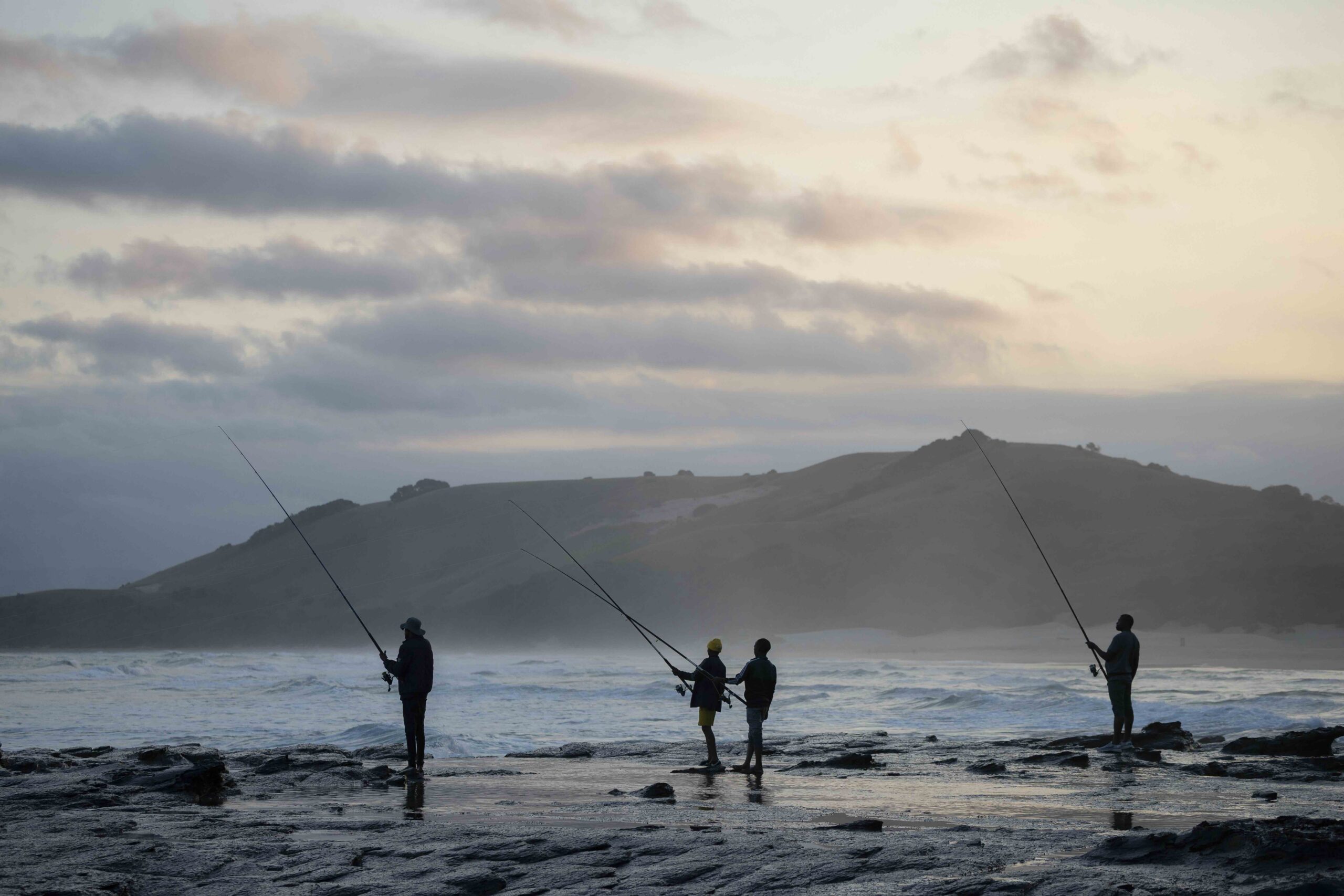
Banner image: Fisherpeople in Port St. Johns, Eastern Cape. Image courtesy of Aletta Harrison CC BY 4.0.
