


- Marine protected areas (MPAs) cover less than 10% of the ranges of most species of sharks and rays, with significant shortfalls for threatened and critically endangered species, a new study finds.
- The analysis also reveals major gaps in reporting on the extent of fishing and harvesting re-strictions in these preserves.
- The study’s authors recommend including biodiversity targets as part of the 30×30 framework and encourage policymakers to consider aligning MPAs with important shark and ray areas to maximize conservation and biodiversity benefits.
- However, some researchers disagree that blanket MPAs would meaningfully benefit shark and ray conservation.
In 2022, 196 countries agreed to the ambitious conservation goal of “30×30”: setting aside 30% of the planet’s coastal and marine areas for conservation by 2030 as part of the Kunming-Montreal Global Biodiversity Framework.
Now, halfway to 2030, only about 10% of the ocean is covered by protected areas, leaving many countries far short of meeting this biodiversity goal by the end of the decade. Even within these existing reserves, new research shows significant gaps for one of the most threatened marine groups: sharks and rays.
A study published in Conservation Letters in July finds that most species of sharks and rays have less than 10% of their ranges covered by any marine protected area (MPA), with significant shortfalls for threatened and critically endangered species. The analysis also reveals major gaps in reporting on the extent of fishing and harvesting restrictions in these preserves, also known as “take-status”, which is important for assessing meaningful protection for these animals.
“Simply increasing the amount of protected ocean doesn’t necessarily mean we’re actually protecting those threatened species,” Amanda Arnold, a marine biodiversity researcher at Simon Fraser University in Canada and the lead author of the study, told Mongabay. “It’s not covering the breadth of biodiversity.”
Research suggests that to offer measurable conservation benefits, marine preserves should cover at least a tenth of a species’ range, with 20-40% coverage maximizing conservation gains. Yet few species see this level of protection: a previous study suggests that 97.4% of marine species have less than 10% of their ranges within MPAs. With more than one-third of sharks and rays at risk of extinction, this group especially needs safeguarding.
To see how well sharks and rays were protected by existing MPA boundaries, the researchers overlaid spatial data from the World Database of Protected Areas and geographic range information from the IUCN Red List of Threatened Species for nearly 1,200 shark and ray species. The analysis focused primarily on “no-take” areas, which offer the highest level of protection through a ban on activities such as fishing, mining and drilling.
The results reveal that among threatened sharks and rays, 79% have less than 1% of their ranges within no-take MPAs in national waters. For critically endangered sharks and rays, that number rises to roughly 90%.

“It’s a continued wake-up call that although we’re making progress, we’ve got a long, long way to go,” Mike Heithaus, a marine ecologist at Florida International University in the U.S. who was not involved in the study, told Mongabay. As a researcher studying sharks, he said it’s “a little bit terrifying when we see how few animals have their ranges substantively protected.”
International agreements like 30×30 can lead to the location of MPAs in politically or economically convenient areas, rather than in places that are valuable for biodiversity, lead author Arnold said. Some MPAs are also designed around specific species rather than the full breadth of an area’s biodiversity.
To help policymakers and researchers look at the MPA coverage for their specific countries or species being studied, Arnold and her coauthors created a tool that breaks down the results by region and category. “It’s a great snapshot with the information we have and lays the foundation for really important and impactful work going forward,” Heithaus said.
Complicating the analysis, the study also finds that only about a third of countries with marine preserves in their national waters report take-status information, which “makes it difficult to evaluate how effective these MPAs truly are,” Arnold said. Sharks and rays are slow to grow and reproduce, making them highly susceptible to overfishing or even dying from accidental bycatch.
Based on the findings, the study’s authors recommend including biodiversity targets as part of the 30×30 framework and encourage policymakers to consider aligning MPAs with important shark and ray areas to maximize conservation and biodiversity benefits. They also encourage mandatory reporting of take-status information as part of MPA data collection.

However, some researchers disagree that blanket marine protected areas would meaningfully impact shark and ray conservation. Gavin Naylor, director of the Florida Program for Shark Research at the Florida Museum of Natural History, who was not involved in the study, told Mongabay that while there is “unambiguous evidence” that MPAs are helpful for animals that tend to stay in one place, the benefits for mobile animals such as sharks and rays are much less certain and require far more context for individual species.
He said that protecting areas that hold special significance, such as places where certain sharks or rays come to breed, could be helpful for conservation, though “we just don’t have that kind of information for most of these animals.” Even the IUCN species ranges don’t adequately reflect uncertainties about how and where these animals live, according to Naylor.
“All of this complexity — this dance of biology — is unfortunately not captured by a polygon,” he said.
Ultimately, the experts interviewed for this story agree that MPAs are just one conservation tool for sharks and rays. They say that effective protection strategies will also need to incorporate environmental and fisheries management, including regulations and enforcement on shark fishing. New technologies that decrease the potential for shark and ray bycatch, along with better range data, could also help boost populations.
“We’re hoping to protect 30% of the planet by 2030, right? That still leaves 70% of the [ocean] open for fishing,” Arnold said. “We can’t just slap an MPA on a species range and call it a day.”

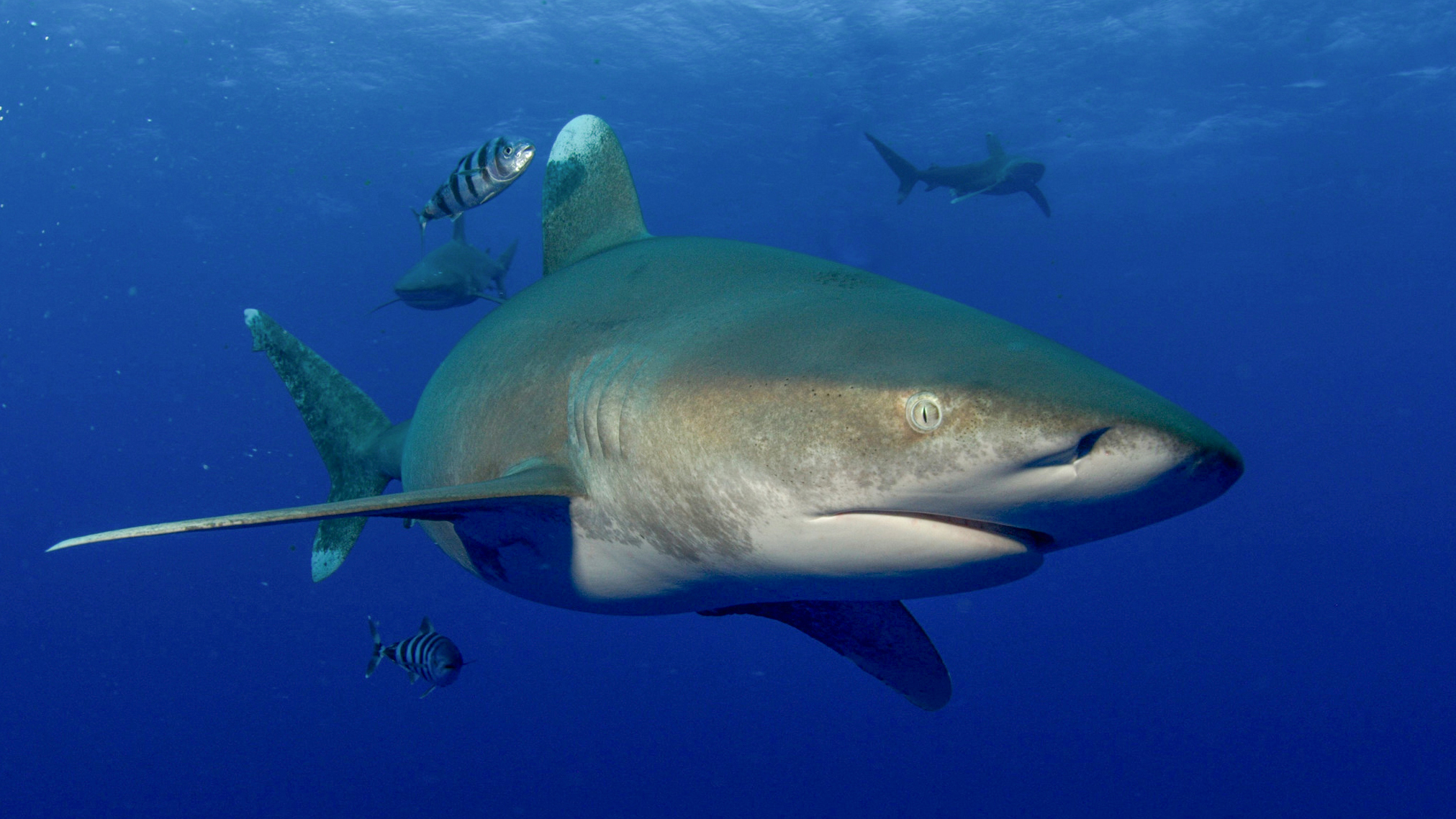
Banner image: Oceanic whitetip shark (Carcharhinus longimanus), listed by the IUCN as a critically endangered species. Image by Jonathan Lavan, underpressurephotog.com via iNaturalist (CC BY-NC 4.0).
Offshore wind power cables can affect sensory system of sharks and rays: studies
Sharks and rays do not know boundaries and a new high seas treaty seeks to protect them
Citations:
Arnold, A. E., Matsushiba, J. H., & Dulvy, N. K. (2026). Sharks, Rays, and MPAs: A Global Assessment of Marine Protected Area Coverage in National Waters Across Species Ranges. Conservation Letters, 19(4), e70071. doi:10.64898/2026.03.18.712493
Dulvy, N. K., Pacoureau, N., Rigby, C. L., Pollom, R. A., Jabado, R. W., Ebert, D. A., … Simpfendorfer, C. A. (2021). Overfishing drives over one-third of all sharks and rays toward a global extinction crisis. Current Biology (21), 4773-4787.e8. doi:10.1016/j.cub.2021.08.062
Klein, C. J., Brown, C. J., Halpern, B. S., Segan, D. B., McGowan, J., Beger, M., & Watson, J. E. (2015). Shortfalls in the global protected area network at representing marine biodiversity. Scientific Reports (1). doi:10.1038/srep17539
Feedback: Use this form to send a message to the editor of this post. If you want to post a public comment, you can do that at the bottom of the page.

