


Plastic pollution could disrupt the bioluminescent light produced by deep-sea organisms, researchers warn in a letter in the journal Cambridge Prisms: Plastics. When deep-sea organisms ingest plastics, it could disrupt the chemical pathways that create bioluminescence and damage the tissues in their bodies, impairing their ability to find food and a mate, the authors said.
In the deep sea, up to 80% of organisms with complex cells are believed to be bioluminescent, the only source of light in the darkest parts of the ocean. The light these organisms create is essential for their survival and reproduction, the letter notes. Disruption of their bioluminescence could negatively impact food webs and ecosystem functions in the deep sea, the largest and least-explored biome on Earth, the letter says.
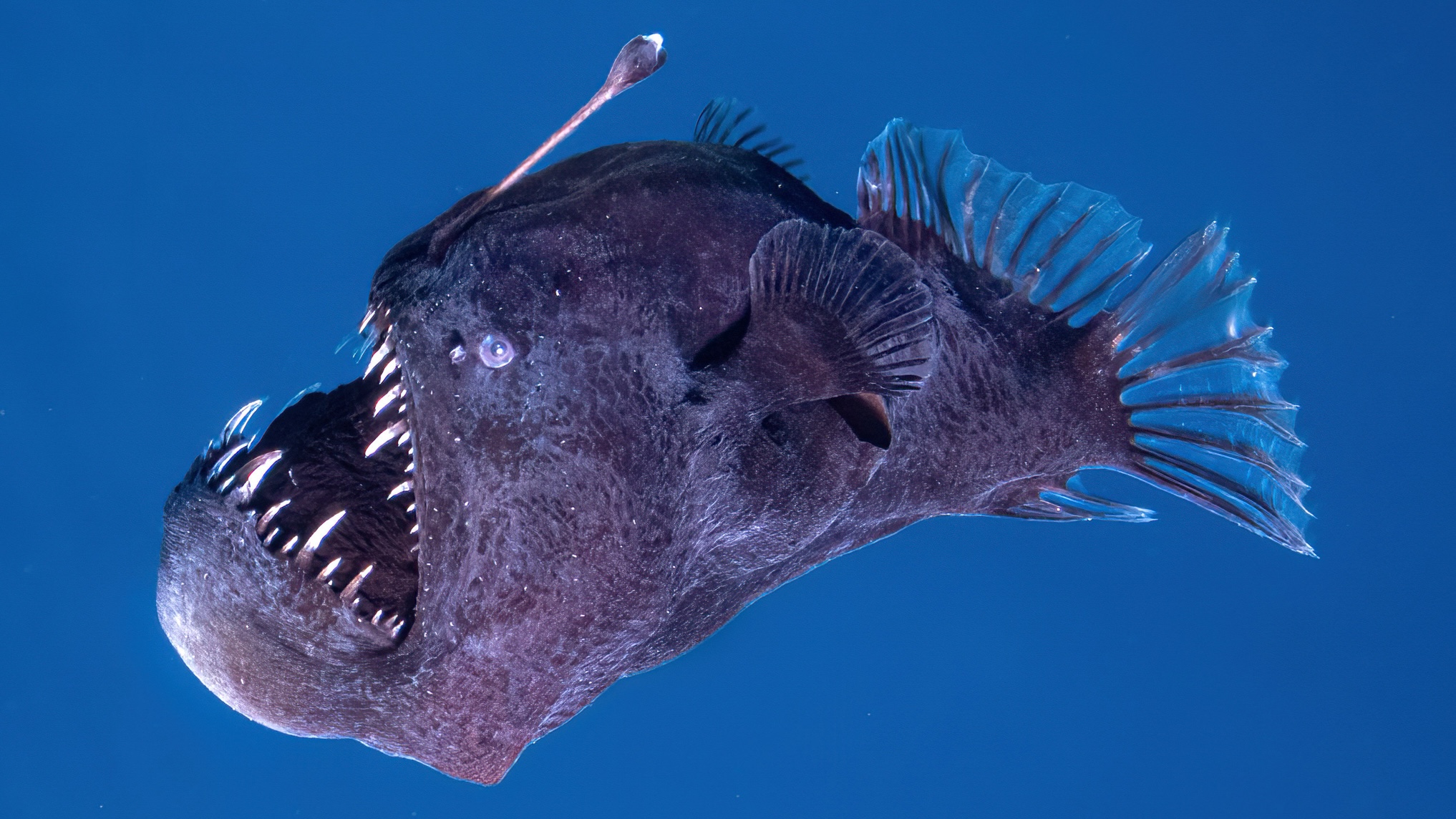
In an email to Mongabay, co-author Renjith VishnuRadhan of Amity University in India offered the example of an anglerfish. “It is widely recognizable from documentaries and films such as Finding Nemo,” he said. “Female deep-sea anglerfish have a modified dorsal spine ending in a luminous lure called the esca. Light produced by symbiotic bacteria helps attract prey and may also assist with recognition or communication in darkness.”
It’s well-established that bacterial bioluminescence can be affected by pollutants, VishnuRadhan said, and ingestion of toxic plastic additives by anglerfish could disrupt the bacterial symbiosis in the lure, theoretically affecting its luminous signaling.
The authors note there’s some evidence of plastic pollution impacts on deep-sea ecosystems, but scientists lack the high-quality data and observations needed to understand the problems in depth. A major challenge is that deep-sea organisms are fragile and their habitats are largely inaccessible to researchers. “The main constraint is that a rigorous in situ effect study requires more than merely detecting plastics and organisms at the same location; it must establish exposure, biological response, and, preferably, causation under deep-sea conditions.”
Edith Widder, an expert on deep-sea bioluminescence and CEO of the Ocean Research & Conservation Association, who wasn’t involved with the study, agreed that better data are necessary to really understand the threats microplastics may present to deep-sea bioluminescence. “Whether microplastic pollution represents a significant emerging threat to deep-sea bioluminescence remains uncertain. Detecting and understanding any such impacts will require sustained, long-term monitoring.”
VishnuRadhan said he’s hopeful that studies are technically feasible using advanced technologies and remotely operated vehicles.
“I am optimistic that the effects of plastic on deep-sea organisms and ecological processes will become a recognized research area,” he said. “The subject is moving rapidly beyond simply asking, ‘Are plastics present in the deep sea?’ Investigators are now examining transport pathways, ingestion, chemical leaching, food-web transfer and biological stress.”
Banner image: Humpback blackdevil (Melanocetus johnsonii) anglerfish © Marc Martin Sola via iNaturalist. CC BY-NC 4.0.
