


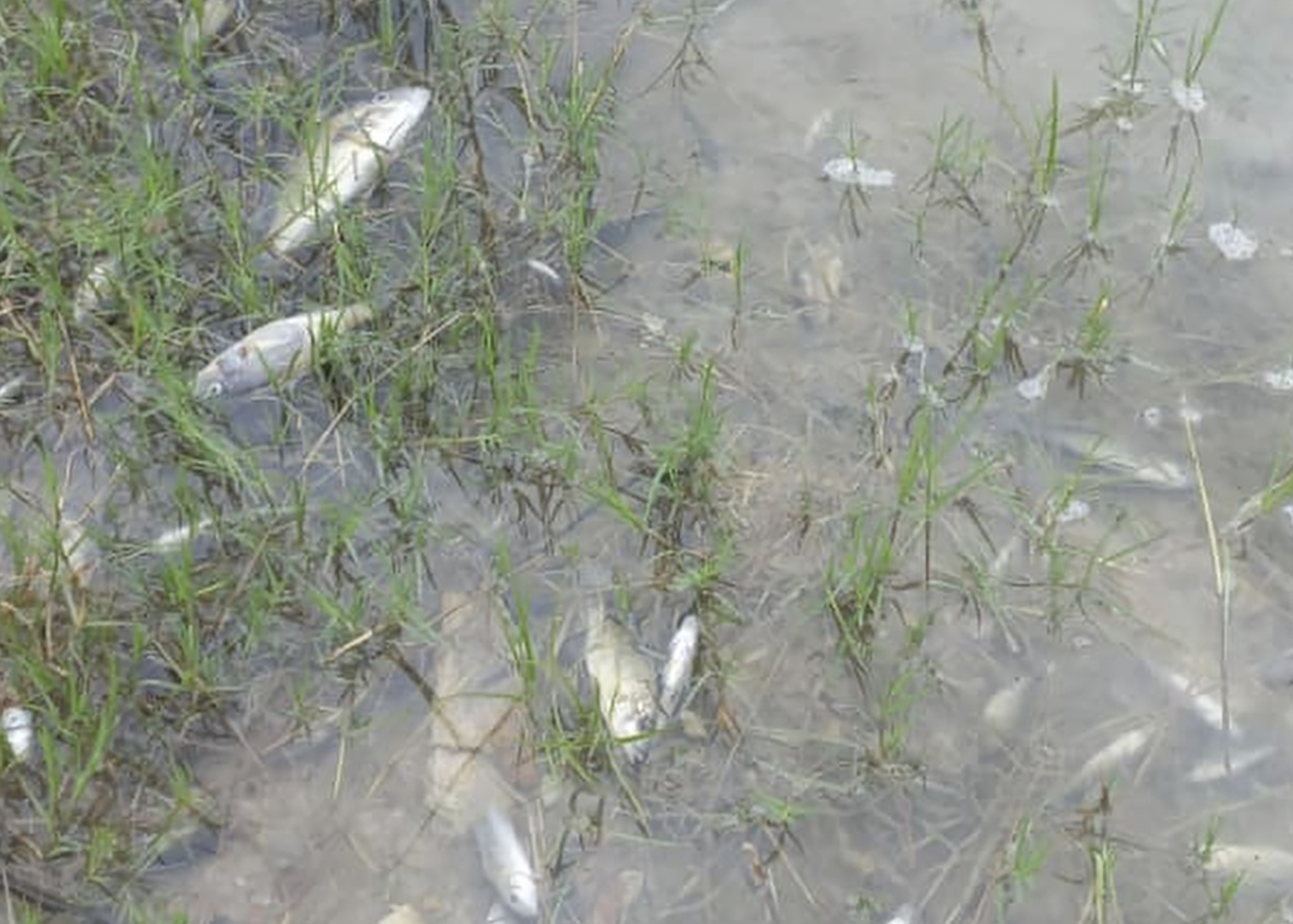
- A recent study on the ecological impacts of a tailings dam failure in Zambia’s Copperbelt Province in 2025 finds that highly toxic substances such as arsenic, lead and zinc were released into the Kafue River system.
- As a result of the spill at Sino-Metals Leach Zambia’s mine, millions of liters of acidic mining waste were released into waterways connected to the river.
- The assessment links the incident to the death of wildlife and the contamination of soils and water sources in the region.
- Sino-Metals Leach Zambia says it has initiated cleanup measures, but communities still reside on contaminated land, according to civil society organizations.
One and a half years after the collapse of a large tailings dam in Zambia’s Copperbelt Province, the environmental and human impacts of the toxic spill continue to affect residents, civil society members have told Mongabay.
The dam, which is used to store mining waste and is owned by Chinese copper company Sino-Metals Leach Zambia, failed on Feb. 18, 2025, in the town of Chambishi in north-central Zambia. It released millions of liters of acidic mining waste into waterways connected to the Kafue River. Stretching 1,576 kilometers (979 miles), the Kafue is the longest river lying entirely within Zambia and a lifeline for millions of people in the country.
A study by researchers at Zambia’s Copperbelt University published in the Journal of Hazardous Materials Advances in May 2026 is the first independent scientific assessment of the ecological impacts of the incident. The researchers found severely compromised water quality, high concentrations of heavy metals in water, fish, sediments and pastures, and evidence that toxic substances had entered the food chain.
The larger Kafue River system provides water to around half of Zambia’s population. It feeds into the Zambezi River and sustains biodiverse wetland ecosystems including the Lukanga Swamp and the Kafue Flats.
For the study, the scientists collected water samples from five sites in the affected area and one in the unaffected area as a control in the days following the accident. Their analysis of the samples showed that heavy metal concentrations, including of copper, iron, zinc, lead and arsenic, exceeded both Zambian and international environmental thresholds.
The researchers linked the water and land pollution to large-scale fish mortality, contamination of pastures used for livestock grazing and damage to crops and vegetable gardens that form the basis of local livelihoods.

Fish and pasture samples also showed evidence of bioaccumulation, the buildup of toxic substances within organisms. The analysis flagged the risk of biomagnification, the process of contaminants moving up and through the food chain, increasing in concentration higher up the chain and posing a threat to the ecosystem at large and human health.
Waste materials stored in tailings dams, such as the one owned by Sino-Metals, can contain metals such as zinc, lead, chromium, cadmium and arsenic. Rather than breaking down over time, many of these materials bind to sediments or accumulate in living organisms where they can persist. Global experience shows that communities dependent on a polluted water source for drinking water, fishing, livestock and agriculture could be exposed to health risks for years.
The findings suggest that contamination extended beyond the immediate spill site into connected river systems and that the ecological consequences could spread further downstream.

The findings also provide scientific backing for concerns raised by communities and civil society and independently confirm some of the findings of other environmental assessments commissioned by the company and the Zambian government. Mongabay contacted the study’s authors for comment, but was told by the dean of Copperbelt University that they weren’t able to comment, citing political sensitivity around the matter.
The Sino-Metals tailings spillage has become part of a broader geopolitical debate around Zambia’s mining sector. It featured prominently in a May 2026 report published by the U.S. government’s Select Committee on the Chinese Communist Party, which accuses China of operating through mafia structures, disrespecting international environmental standards and “destroying the planet … in its quest to dominate critical minerals.”
Zambia is Africa’s second and the world’s ninth-largest producer of copper. Its vast mineral resources have attracted the attention of several industrialized nations looking to access minerals critical to their energy and economic security. In response to the rising demand for these metals, Zambia is aiming to more than triple its copper production by 2031.
The local impact of the spill

Kalusale, a village immediately adjacent to the Sino-Metals mine, has been heavily impacted by the spill. According to nonprofit FIAN Zambia, residents in Kalusale continue to live on contaminated land while toxins in the water sources and farmland have undermined their livelihoods. Some families have left their homes and are renting accommodation elsewhere, Vladimir Chilinya, FIAN Zambia’s country coordinator, told Mongabay.
In April this year, a FIAN team attended a meeting with community members in Chambishi, upstream from Kalusale.
“People continued cultivating the crops on land that is contaminated with acid, which is a risk to their health as well as to the health of people who will consume them,” Chilinya said.
The Copperbelt University study notes that some people were reported to have consumed water, vegetables or fish contaminated in the incident. “Thus, the mining spillage did not only impact on the aquatic ecosystem and the life in it, but potentially devastated the very wellbeing fabric of riparian [riverbank] communities,” the authors write.
Debating the scale of the damage
While the ecological impacts of the spill are not disputed, debate has emerged over the scale of the contamination and the adequacy of the response.
Sino-Metals sparked controversy when it canceled a contract with the South African company hired to assess the incident’s environmental impacts, Drizit Environmental, days before the assessment was due to conclude in June 2025.
According to Drizit Environmental’s draft assessment report, which remained unpublished, which Mongabay has seen, the scale of contamination was substantially greater than that communicated by the company. While Sino-Metals reported that the spill released around 50 million liters of toxic waste, Drizit estimated that at least 1.5 million tonnes of contaminated effluent were released.
Drizit has since initiated a debt collection court case against Sino-Metals and the Zambia Environmental Management Agency (ZEMA) to claim unpaid dues for the work done on the impact assessment.
Following the cancellation of Drizit’s contract, the Zambian government announced it would take over from Sino-Metals to conduct the environmental assessment as the company hadn’t met its obligations to submit a report on the incident. ZEMA, on behalf of the government, commissioned another company to conduct a “socio-economic incident impact assessment”. This was completed in December 2025.
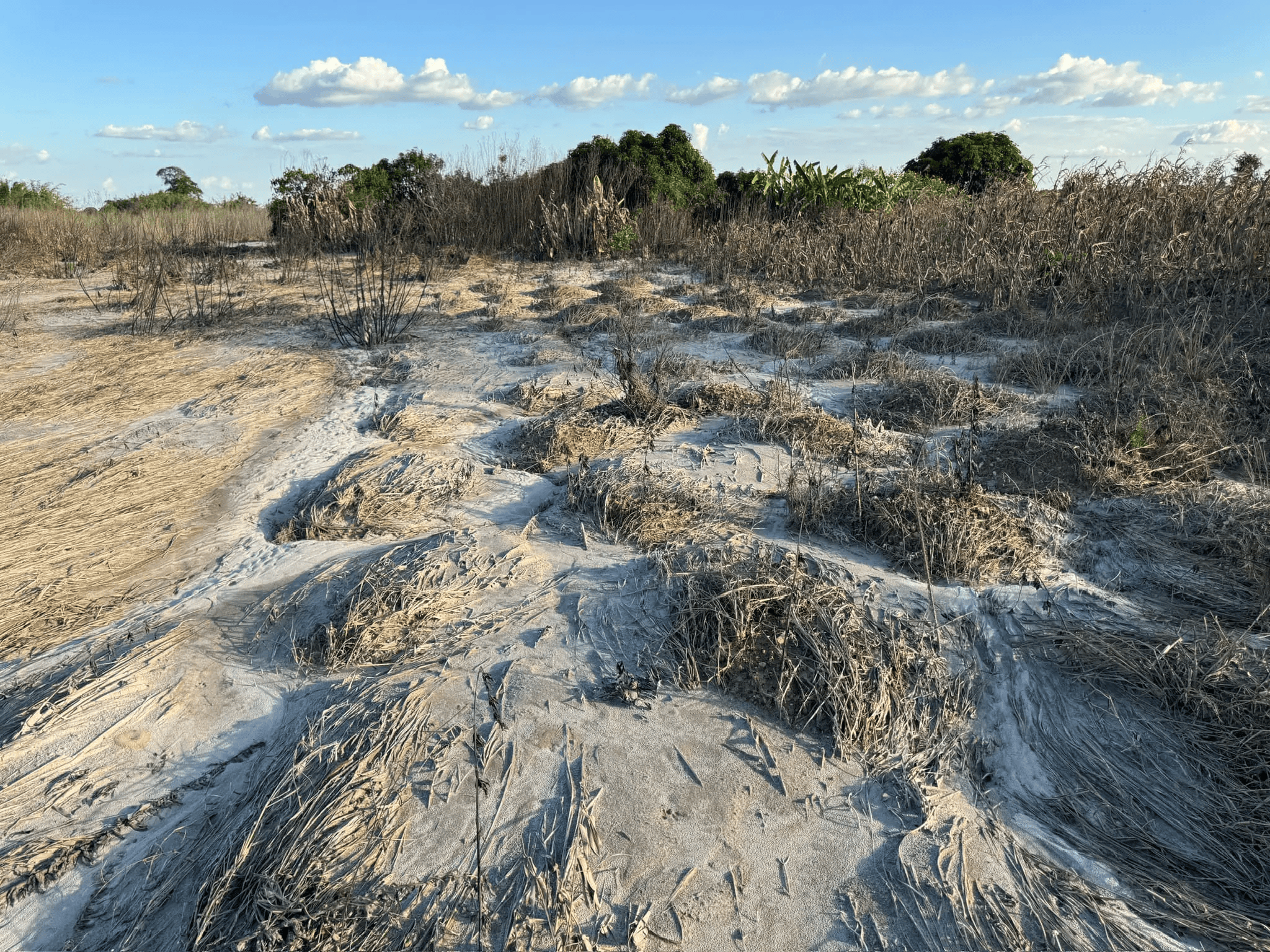
The resulting report confirms ongoing contamination in the communities closest to the spill, but concludes that risks to people were localized, particularly through contaminated wells and crops. It recommends continued monitoring and targeted remediation, including the resettlement of “the residents who have permanently settled in the pollution control zone of the Mine.”
According to FIAN however, as of August 2026, no households have been relocated.
“We noticed that there are no efforts to resettle people,” Chilinya said. “The basis of resettlement is on the fact that they cannot farm anymore, and also, they cannot use water resources anymore for drinking because most of it is polluted.”
Neither ZEMA nor the Zambian Ministry of Green Economy and Environment responded to Mongabay’s request for comment. Sino-Metals Leach did not get back to Mongabay at the time of publication.
In a public disclosure meeting in January 2026, the government announced that residents in Kalusale will be resettled and that Sino-Metals will be given until the end of June 2026 to clean the area.
The company launched a remediation campaign after last year’s incident, distributing water and food parcels.
In June, Sino-Metals was still providing affected households with 40 liters of drinking water a week, FIAN said, which, the non-profit added, is insufficient for families of six or more. The company’s official cleanup works began in March this year.
ZEMA recently announced it will inspect the cleanup exercise by Sino-Metals, which was due to be completed by July 2026. In a social media post, the government agency said it would assess the “extent of remediation works completed and confirm compliance with the applicable environmental restoration requirements.”
The uncertainty over remediation has led to legal action. Late last year, 176 community members filed a constitutional petition in the Lusaka High Court seeking a comprehensive cleanup, compensation for lost livelihoods and the provision of water and food supplies. Sino-Metals attempted to get the case thrown out, but failed. The company then appealed the High Court’s decision to let the case continue. The Supreme Court hearing for the appeal is scheduled for Aug. 18.
Although Sino-Metals made one-off cash payments to households in July 2025, the community’s petition argues that long-term support proportionate to the severity of the damage is needed.

Nsama Musonda Kearns, from environmental organization Care for Nature Zambia, told Mongabay that rising geopolitical tensions make it difficult to navigate the scope of the spillage. While Sino-Metals and the Zambian government have maintained in statements made throughout last year that progress is being made in cleaning up of the spillage and pH levels have returned to pre-incident levels, critics say it is a concerted effort to whitewash the event’s real impact.
“It has left us with a question mark: is these geopolitics or is it really happening on the ground?” said Kearns, who visited the site shortly after the incident. One of the biggest challenges for civil society groups was the lack of capacity to conduct an independent investigation into the spill, she said. They don’t have sufficient funds, according to Kearns. Access to the site has also been highly restricted after the company sealed off the area.
With ongoing court proceedings and outstanding government inspections and reports, uncertainty remains over when the contamination will be fully addressed.
According to FIAN’s Chilinya, many residents do not fully understand the long-term risks associated with heavy metal contamination. Community members continue to cultivate affected land because there are few other options.
“We need the state to provide direction on where we are with the remedial measures, to what extent the company is complying, and to ensure affected people understand the long-term consequences,” Chilinya said.
Banner image: Dead fish in the Kafue River near the town of Luanshya, Zambia, a day after the tailings dam spill, Feb. 19, 2025. Image by AP Photo/Richard Kille.
Mining spill highlights need to protect Zambia’s vital Kafue River & its fish
Citation:
Chama, L., Nyirenda, V. R., Phiri, D., Musuka, C. G., Simuchimba, G., Siachoono, S. M., … Mubemba, B. (2026). Ecological disaster in the making: Assessing the impact of Sino-Metals Leach tailings dam collapse on the Kafue river ecosystem. Journal of Hazardous Materials Advances, 22, 101104. doi:10.1016/j.hazadv.2026.101104
FEEDBACK: Use this form to send a message to the author of this post. If you want to post a public comment, you can do that at the bottom of the page.
Cite this article
Victoria Schneider (2026). A mine polluted a Zambian river in 2025: Residents continue to live with the impacts. Mongabay Conservation news. DOI: https://doi.org/10.66709/news-326147

