


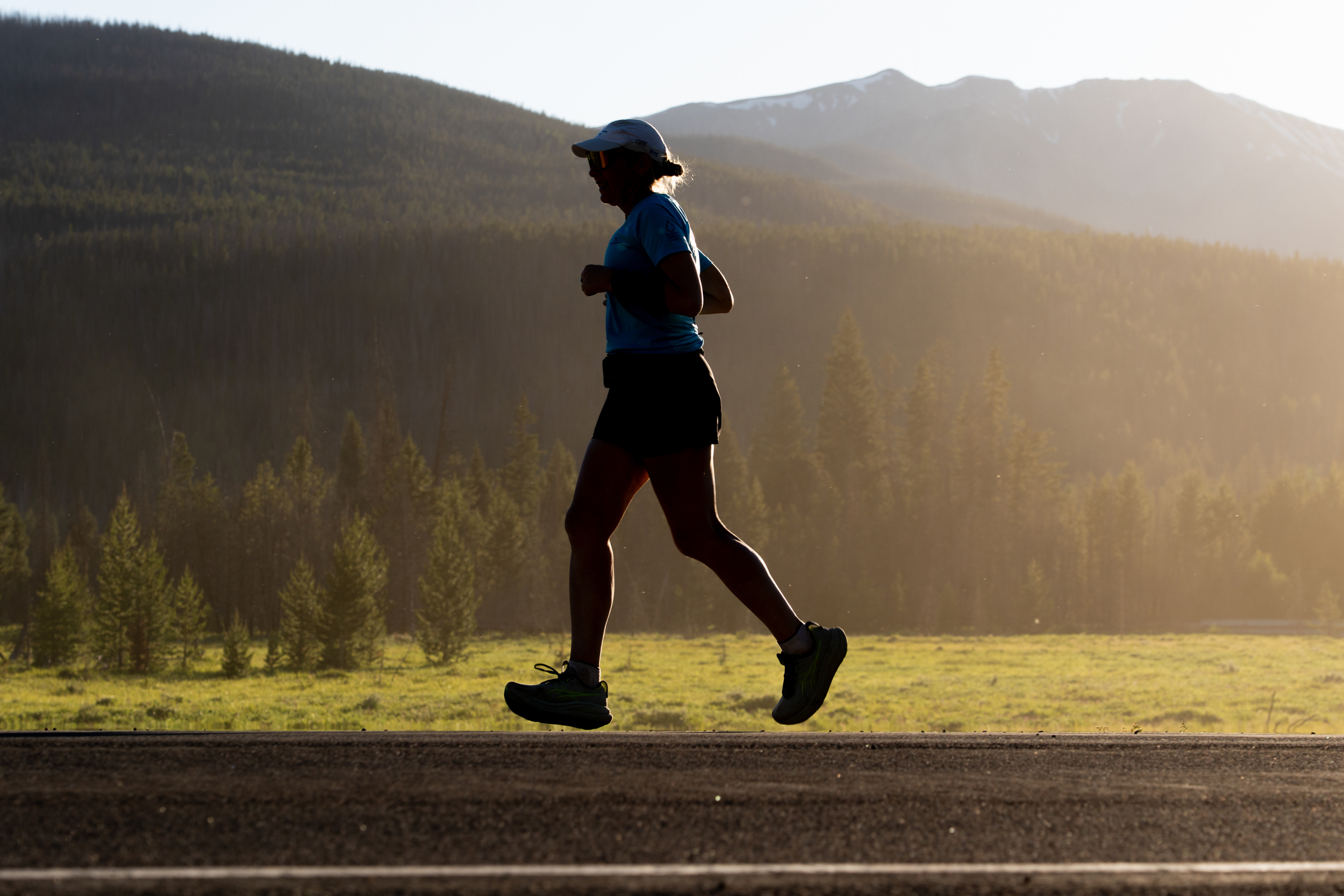
Mina Guli had run more than 25 miles when she saw the plume of smoke towering over the Utah desert. The Australian ultrarunner was preparing to run another 25 miles in the morning, but watching the nearby wildfire grow made it impossible to relax and rest up for the next day’s mileage.
“We would lie in our tents at night and look out across the landscape and see the Babylon Fire burning in the distance,” said Guli, referring to the wildfire burning in southeastern Utah. “It’s hard to describe if you haven’t seen how big it is. It looked like a nuclear mushroom cloud.”
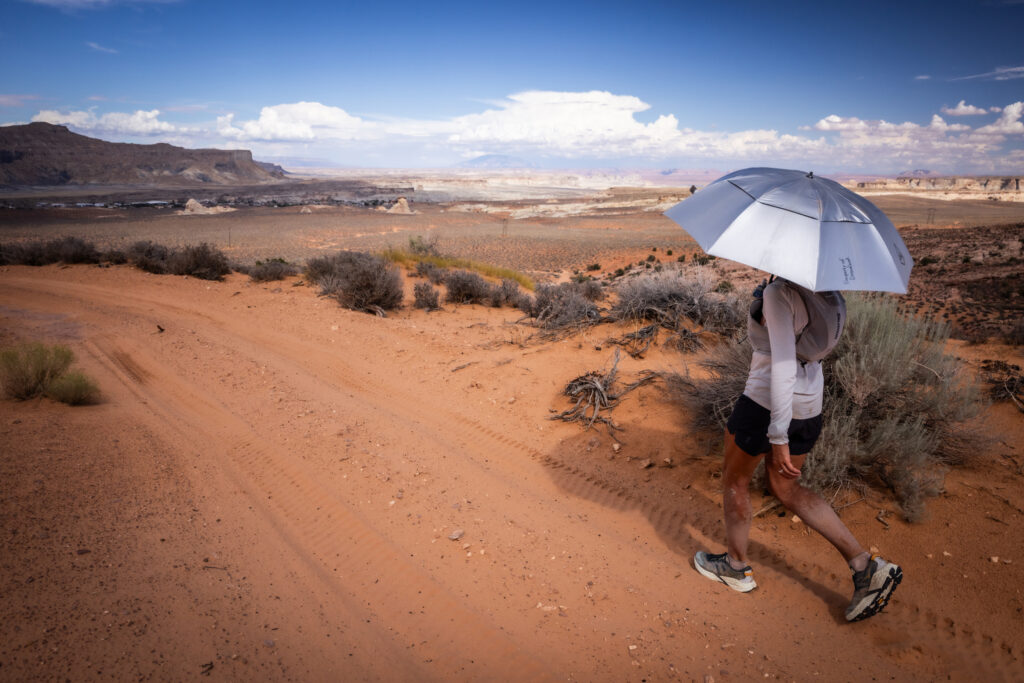
Guli, also the CEO of the nonprofit Thirst Foundation, is running 2,000 miles along the Colorado River in 100 days to campaign for action on the water crisis. Earlier this summer, she had to reroute part of her run to avoid the massive Babylon and Snyder wildfires burning in Utah and Colorado. She now runs at night to avoid the higher-than-average temperatures baking the U.S. Southwest—but she has no way of avoiding the choking wildfire smoke in the air.
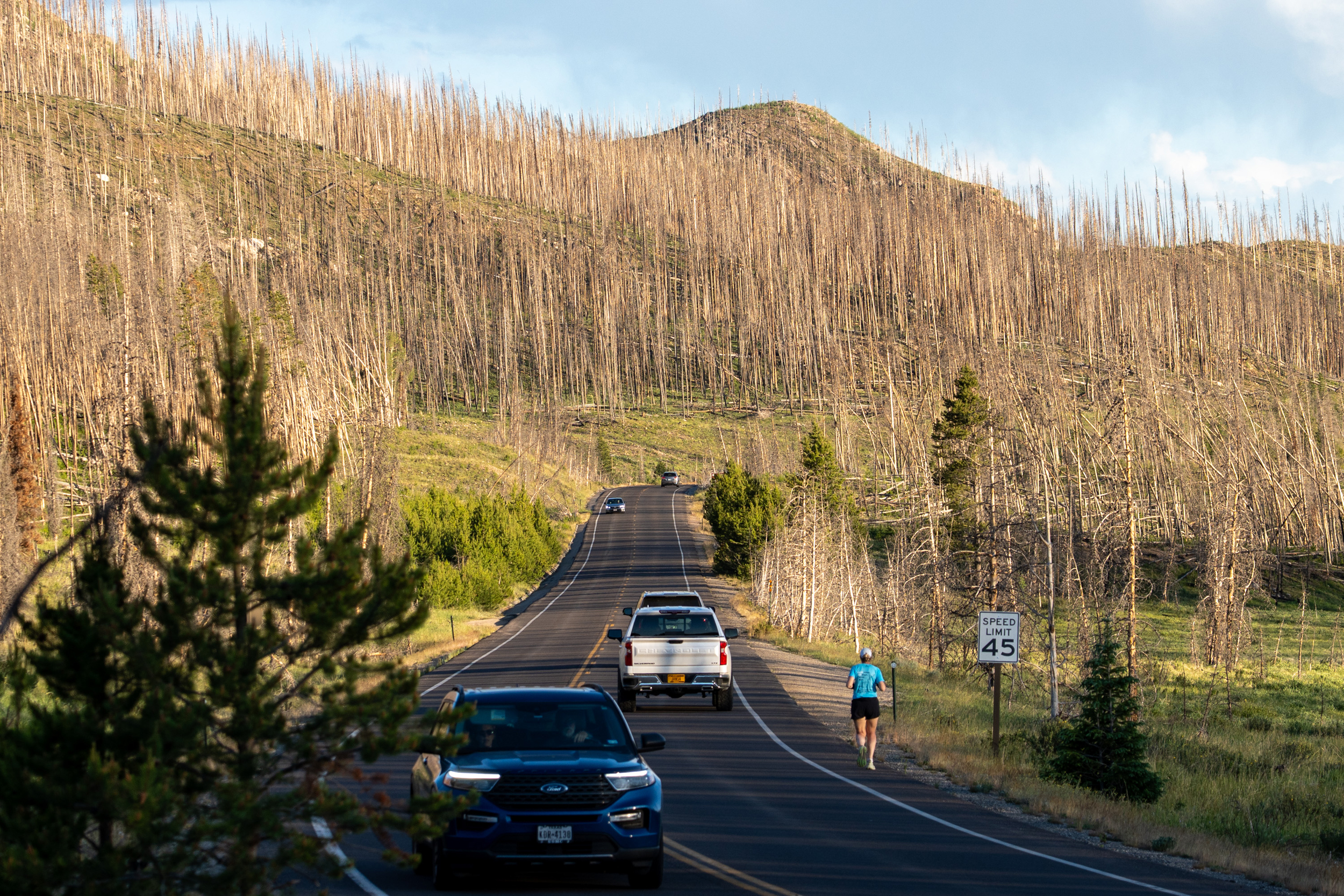
This year’s warm temperatures and record low snowpack combined to stoke the devastating wildfires that claimed the lives of five firefighters, including four who died after being burned by one of the fires Guli navigated around in Colorado. The climate change-driven aridification plaguing the Colorado River Basin has led to larger and increasingly severe wildfires, changing precipitation patterns, dangerous heat and plummeting water levels.
The Colorado River Basin has long been in crisis, as water demand and allocations have outstripped what the river can provide and the drying climate has reduced its flows. Record low levels at Lake Mead and Lake Powell, the two largest reservoirs in the nation, threaten vital water infrastructure. The Bureau of Reclamation predicts that by August, water levels at Lake Powell will fall within a foot of “minimum power pool,” below which Glen Canyon Dam can no longer generate electricity.
The plummeting water levels have shocked Guli every day of her journey. Earlier this month, she prepared to cross the river using a raft but found that she could walk across instead.
“The river that should have been flowing fast and deep,” she said, was “so low that we could literally wade down the course of the river.”
The biggest obstacle standing in the way of action in the basin, Guli said, is fragmentation, most obviously between the Upper and Lower basins into which the seven states that share the river’s water are separated. Since the Colorado Compact overallocated the river’s water in 1922, the two halves of the basin have disagreed over how to shoulder the burden of conserving water.
Mina argues that the schism between the upper and lower basin also resembles the lack of united effort among different types of water users. “Reducing fragmentation, not just in the geography of how we look at the river, but also the sectors is pretty key,” she said. “It’s not a government problem, a community problem or a company problem. It’s an all of us problem.”
For Guli to reach the ocean from the river headwaters, she needs to run the equivalent of around 65 marathons before the end of September. Her route will bring her to the U.S.-Mexico border before she runs nearly 300 more miles to the Santa Monica pier outside Los Angeles to see the Pacific Ocean that the Colorado River no longer reaches, having been fully consumed by upstream users.
She hopes that the run—and the summits her nonprofit is holding for conservation, government and industry leaders along her route—will encourage action on solutions to the water crisis. The Thirst Foundation partnered with Danish pump manufacturer Grundfos to fund and promote the campaign.
The first summit, held in Denver, highlighted some solutions for water conservation in the Upper Basin. Kate Ryan, executive director of the Colorado River Water Trust, described how the trust sent water downstream from a reservoir to help important endangered fish habitat. According to the organization’s website, water from the project at times accounted for half of the water in the 15-mile stretch of the Colorado River east of Grand Junction that Colorado recognizes as critical habitat for the four endemic endangered fish species: the Colorado Pikeminnow, Razorback Sucker, Humpback Chub and Bonytail Chub.
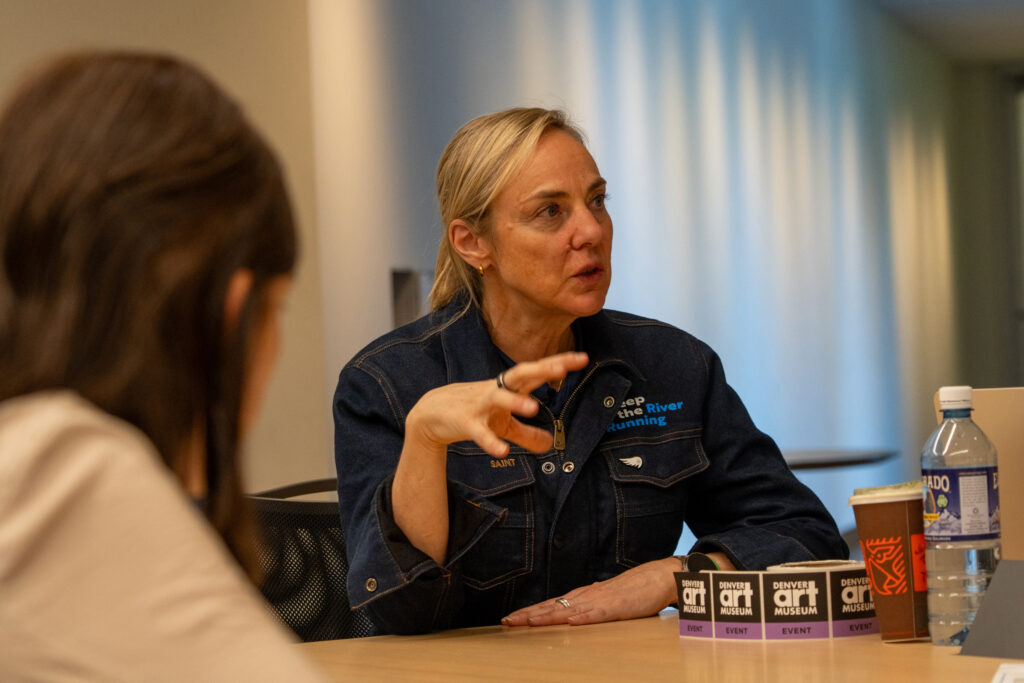
Guli’s run is sponsored by the Water Resilience Coalition, an initiative of the U.N. Global Compact composed of the CEOs of major multinational corporations. While the coalition seeks to provide “global leadership” in water sustainability, its membership includes companies whose business practices have been criticized as detrimental to water resources.
For example, Cargill, the giant food and agricultural corporation, sits on the coalition’s six-member advisory board. Cargill also owns meat-processing facilities for cattle raised in the Colorado River Basin, where they are a key driver of water depletion in the region. Crops raised as cattle feed like alfalfa and hay account for 55 percent of water consumption basin-wide, and 90 percent of agricultural irrigation water in the Upper Basin states of Colorado, New Mexico, Utah, and Wyoming.
Early this year, Indigenous leaders blockaded Cargill facilities in the Brazilian Amazon to protest its privatization of the Tapajós river, a tributary of the Amazon. The river was to be dredged to provide transportation for Cargill’s soybean operations in the region, which have been criticized for running afoul of efforts to stop deforestation. The company’s position on the advisory board of a water conservation group has raised the spectre of greenwashing among some of the coalition’s critics.
In a statement to Inside Climate News, a spokesperson for Cargill disagreed with the suggestion that participation in the coalition could be considered greenwashing. “This collective work complements – but does not replace – the action Cargill takes through its own business and partnerships,” said a spokesperson, “In our operations, we work to reduce water use, improve water efficiency and strengthen wastewater management.”
Similar criticisms have been leveled against other members of the coalition, such as Coca-Cola, the world’s biggest plastic polluter, and DuPont, which manufactures PFAS and other dangerous water pollutants.
“DuPont’s participation in the Water Resilience Coalition reflects a commitment we have demonstrated for decades as a global water technology leader,” said a spokesperson for DuPont in a statement to Inside Climate News. Coca-Cola did not respond to requests for comment.
Grundfos, the funder of Guli’s Colorado River run, is also a member of the coalition.
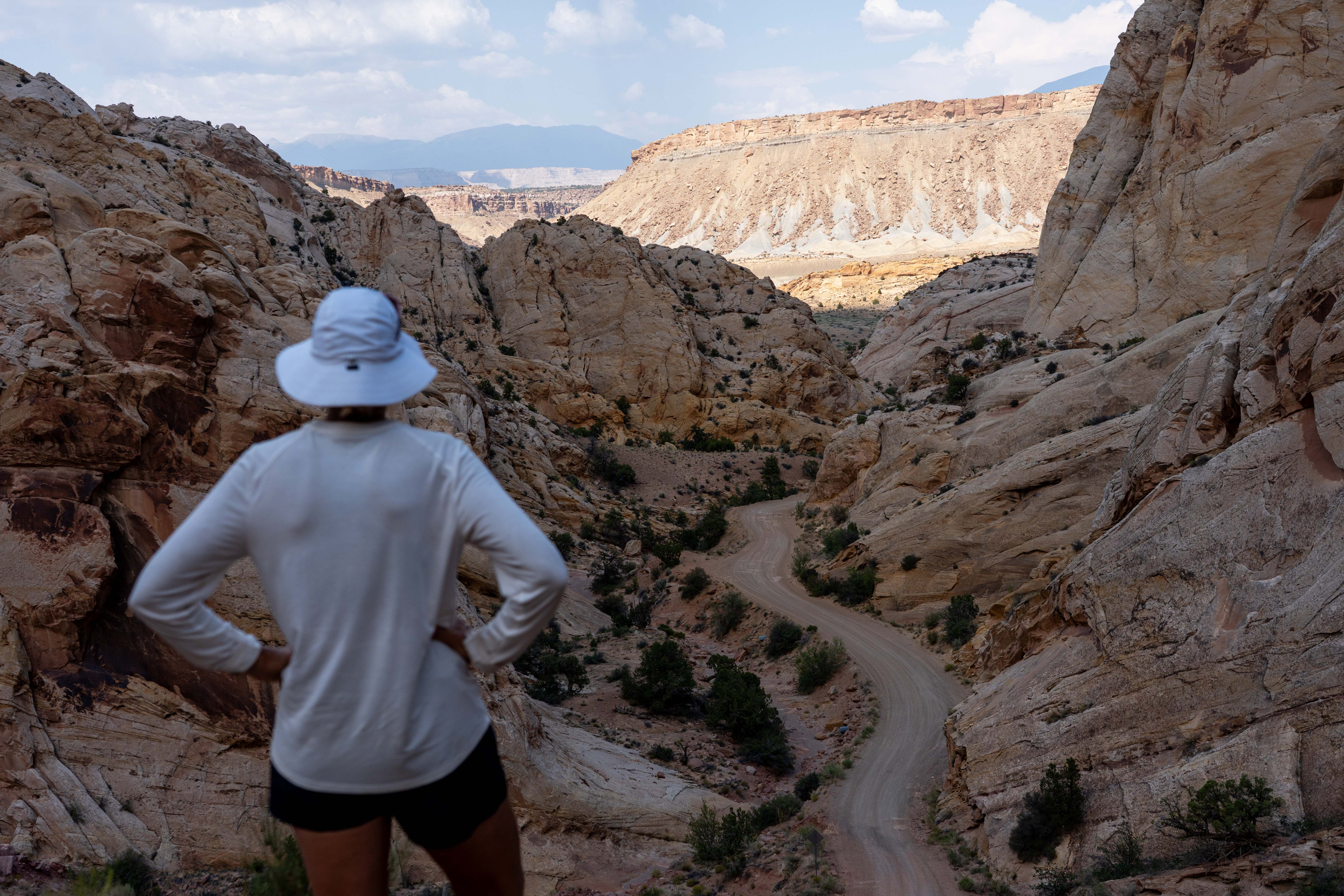
The Water Resilience Coalition states that a company’s membership does not indicate coalition endorsement of its environmental policies but instead a commitment to making improvements. “Delivering the needed impact requires engagement with high water footprint companies,” a spokesperson for the Water Resilience Coalition wrote in a statement, “All stakeholders have a role to play in addressing the dire challenges of the Colorado River Basin.”
Guli agreed that tension exists between the goals of Thirst and the operations of some of the members of its partner coalition, but she noted that it is important to include major corporations that may have been drivers of water problems in the efforts to develop solutions.
“These conversations are not easy,” she said, but, “if we never engage and we always leave these organizations on the outer, we will continue to perpetuate problems with fragmentation. Everyone who touches water in the Colorado River system has a place at the table.”
This story is funded by readers like you.
Our nonprofit newsroom provides award-winning climate coverage free of charge and advertising. We rely on donations from readers like you to keep going. Please donate now to support our work.
The tension between corporate funders and conservation nonprofits is not unique to Thirst. Environmental nonprofits have drawn scrutiny in the past for accepting money from polluters. The World Wildlife Fund, for instance, has taken donations from Cargill, Chevron and BlackRock, among other multinational corporations.
Jeff Blumenfeld, author of “Get Sponsored: a Funding Guide for Explorers, Adventurers, and Would-Be World Travelers,” explains that corporate sponsorship is common and even necessary to fund projects like the Colorado River run. “It doesn’t concern me as much where the money comes from as what the project is,” he said, “and how the project helps us understand environmental and political issues in this world.”
Guli believes the connection to industry will help Thirst accomplish its goals. “We all know that none of this happens without money,” she said. She hopes that the businesses supporting the project and attending the river summits will “generate the kind of financial returns that incentivizes, encourages and inspires the financial markets to move in behind innovations.”
Guli’s past campaigns have also drawn attention to the water crisis with daring endurance runs. For example, in 2022 she ran 200 marathons in 32 countries, and released videos along the way of adaptation projects and water saving technologies in the places she visited.
In 2018, Guli attempted 100 marathons in 100 days to raise awareness for the global water crisis, but she had to stop after completing marathons 61 and 62 on a stress-fractured femur.
This time she is running in the heat of the Southwest summer and battling poor air quality. But even with wildfires along her path, she remains committed to reaching the end of the Colorado River and hopes the campaign will change the way all water users approach the crisis.
Guli believes that the crisis can only be understood by seeing it from the ground and speaking to people affected by it. During her run, she met a former river guide who explained that he left the industry because jobs had dried up as the water levels dropped. His words stuck with her, she said.
“He said to us, ‘people need to come out here and see for themselves just how much strife the river basin is in, because only then will they truly understand the magnitude of what we’re facing.’”
“Looking out at the beauty of this incredible landscape, witnessing the destruction of a river system, speaking to young farmers and seeing in their eyes the destruction of hope for a future,” said Guli, “[I’ve felt] everything from injustice and anger and frustration and disappointment to wonder and awe and inspiration from these incredible humans that we’re meeting all along the way.”
About This Story
Perhaps you noticed: This story, like all the news we publish, is free to read. That’s because Inside Climate News is a 501c3 nonprofit organization. We do not charge a subscription fee, lock our news behind a paywall, or clutter our website with ads. We make our news on climate and the environment freely available to you and anyone who wants it.
That’s not all. We also share our news for free with scores of other media organizations around the country. Many of them can’t afford to do environmental journalism of their own. We’ve built bureaus from coast to coast to report local stories, collaborate with local newsrooms and co-publish articles so that this vital work is shared as widely as possible.
Two of us launched ICN in 2007. Six years later we earned a Pulitzer Prize for National Reporting, and now we run the oldest and largest dedicated climate newsroom in the nation. We tell the story in all its complexity. We hold polluters accountable. We expose environmental injustice. We debunk misinformation. We scrutinize solutions and inspire action.
Donations from readers like you fund every aspect of what we do. If you don’t already, will you support our ongoing work, our reporting on the biggest crisis facing our planet, and help us reach even more readers in more places?
Please take a moment to make a tax-deductible donation. Every one of them makes a difference.
Thank you,

Fellow
Maya McDaniel is a fellow at Inside Climate News, currently based in Western Colorado. She is a junior at Swarthmore College, majoring in Environmental Studies with a focus on biology. She is interested in the impacts of climate change on the American Southwest, especially wildfire risk and the Colorado River water crisis.
