


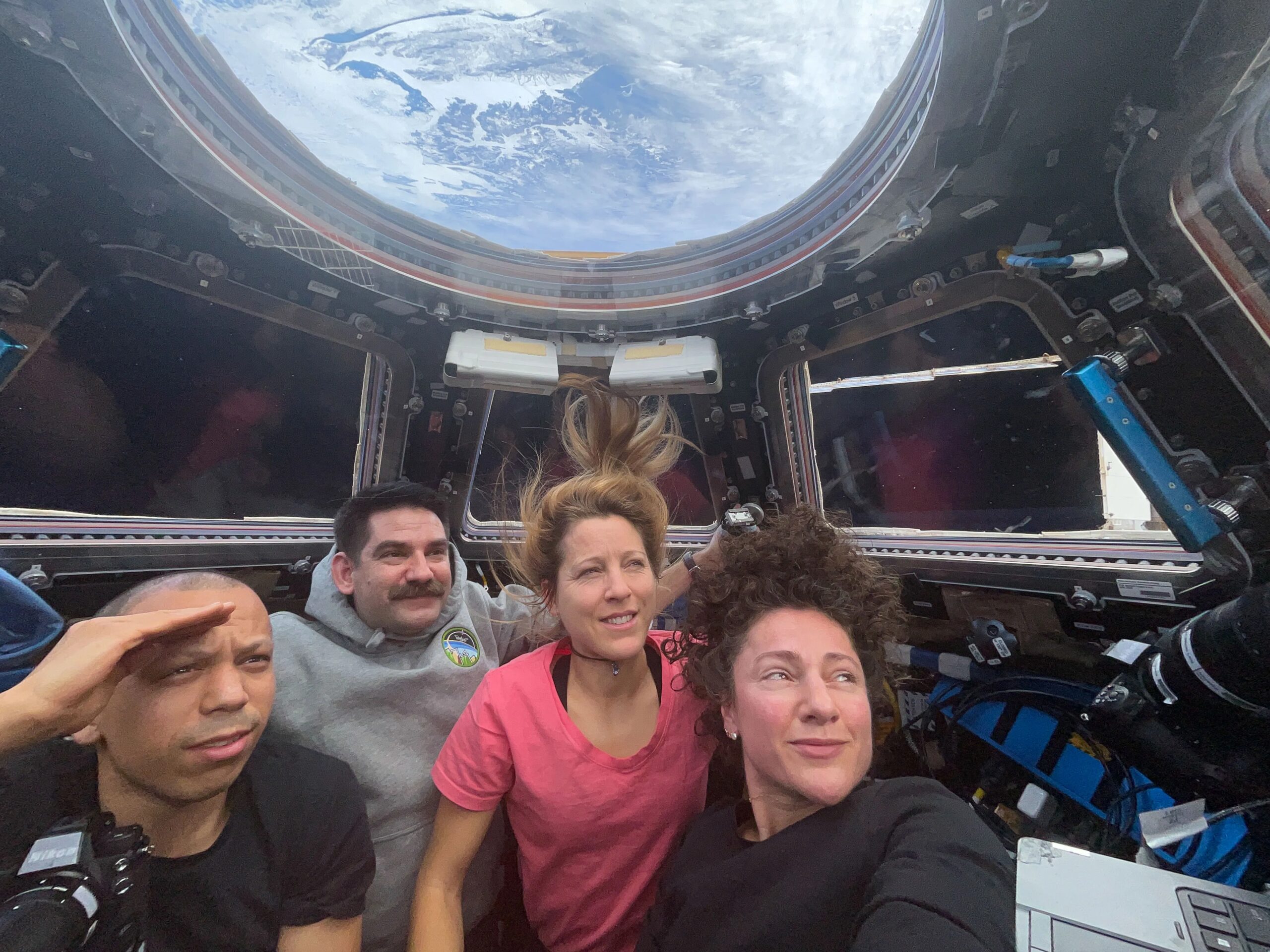
The International Space Station has been busy throughout 2026, as it continues to be a bustling workspace for astronauts conducting a variety of scientific experiments that lay the groundwork for missions to the Moon and beyond.
NASA’s Artemis II mission in April was the first crewed flight around the Moon in more than 50 years, marking a major milestone for humanity’s return to the lunar surface. While the mission validated key systems needed for future deep space human exploration, work aboard the International Space Station continues to support those goals. Astronauts on the orbiting laboratory are testing technologies, studying how the human body adapts to long-duration spaceflight, and conducting experiments to help ensure crews can live and work safely in deep space. Research aboard the space station, coupled with Artemis and Moon Base programs, will continue to demonstrate how NASA is preparing for sustained astronaut exploration of the Moon and, eventually, Mars.
Astronauts aboard the International Space Station demonstrate and optimize innovative technologies to support exploration missions, reduce the technology footprint, and fine-tune systems ahead of travel beyond low Earth orbit.
Exercise equipment is important for long-duration spaceflight. On average, astronauts lose between 1% and 1.5% of their bone density each month while in microgravity, increasing the potential risk for fractures and other bone-related issues. Regular exercise can help counteract these effects and keep astronauts healthy. The European Enhanced Exploration Exercise Device (E4D) is a compact, versatile system now being tested aboard the space station for exploration crews. The system supports a variety of exercises, can simulate different gravity levels and may lead to even more compact exercise technology for exploration crews.
During deep space missions, astronauts may need medical care but could be too far from Earth to receive a resupply spacecraft with additional equipment. To prepare for that possibility, researchers are testing medical technologies aboard the station. One of these investigations, the Intravenous Fluid Generation – Mini (IVGEN Mini),evaluates producing intravenous (IV) fluids using the station’s potable water supply. Because commercially available IV fluids have a shelf life of only about 16 months, successful demonstrations of this technology could help meet medical needs while reducing launch mass and volume.
Medical care is one hurdle crews may face during future missions, while another is the limited time astronauts have to complete tasks that require human intervention. Robotic technologies, such as the Test facility for lab-aUtomation System in Kibo (TUSK), may help address these time constraints. This investigation studies how microgravity affects delicate robotic operations that rely on precise movement. Insights could help improve the design of future automated systems that can execute tasks independently, freeing up astronauts’ valuable time during future missions.
Astronauts also serve as test subjects. They collect biological samples, conduct medical exams, and perform scans to understand how bodies adapt to life in space. This research helps scientists and medical personnel understand the effects of spaceflight and protects crew health as missions extend farther into the solar system.
Past research shows weightlessness during spaceflight can sometimes disrupt astronauts’ normal blood flow, which may increase health risks for conditions, such as blood clots.The Spaceflight Thrombosis and Risk Factors (Venous Haemostasis) experiment examines changes in blood flow to identify unique physiological correlations and create preventative measures for at-risk crew members.
Astronauts also may experience changes to their cardiovascular and respiratory systems during spaceflight, which could affect blood pressure regulation. Research with the Causal Analysis of Cardiorespiratory Coupling on the ISS (CARDIOBREATH) uses the Bio-Monitor “smart shirt” to track heart rate, blood pressure, breathing rate, and activity during exercise sessions aboard the orbiting complex. Results will improve understanding of cardiovascular health in microgravity and inform treatments for cardiorespiratory risks during and after long-duration missions.
Maintaining mental health in space is as important as physical health. Prolonged isolation and confinement can impact a crew member’s sleep, morale, and decision-making. The Mind/Body Practices for Deep Space Exploration (RelaxPro) experiment evaluates non-invasive practices, such as meditation, to develop a structured system to reduce stress and improve sleep on future missions.
Spacecraft are a critical aspect of deep space missions, providing shelter from the harsh environment of space, along with oxygen, water, and other life-support systems. Testing systems aboard the International Space Station allows researchers to refine technologies for next generation spacecraft traveling beyond low Earth orbit.
The Fiber-optic Active Dosimeter (Lumina) demonstrates real-time radiation monitoring using optical fibers that darken when exposed to radiation. Monitoring ionizing radiation keeps astronauts safe and remains one of the key challenges for future deep space exploration.
Many spacecraft use cryogenic, or extremely cold, fuels for propulsion. These fuels must remain cold to stay in liquid form, but temperature fluctuations in space can cause them to slowly evaporate and escape the tank, affecting fuel efficiency. The Zero Boil-Off Tank Noncondensables (ZBOT-NC)investigation evaluates how gases that do not liquify at low temperatures impact pressure control, evaporation, and condensation rates inside propellant tanks. Data from this experiment will help validate models and support the design of more efficient cryogenic fuel storage systems.
As the crew’s living environment, the spacecraft must also be monitored for microbial activity to help ensure a safe and healthy habitat. The Genomic Enumeration of Antibiotic Resistance in Space (GEARS) investigation surveys the space station for antibiotic-resistant organisms to better understand how bacteria may adapt in space. The study uses DNA sequencing techniques to advance onsite identification and diagnostic capabilities that will be important for future missions.
International Space Station science still is buzzing for the remainder of 2026. To learn more about ongoing research aboard the space station, visit:
