


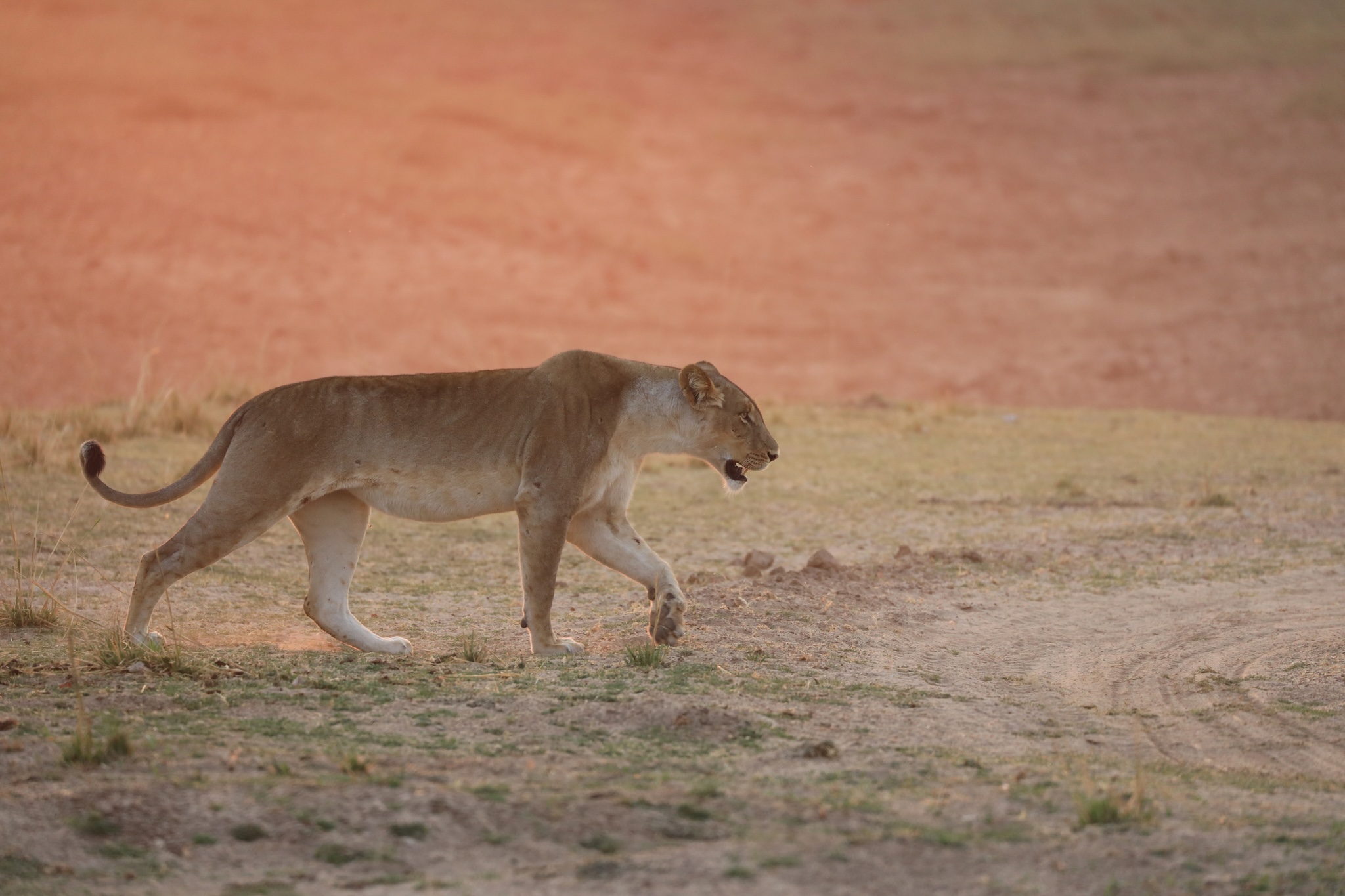
Numbering fewer than 25,000, lions remain vulnerable to extinction. These big cats have suffered catastrophic declines and today occupy roughly 6% of their historical range.
Living with lions (Panthera leo) is not easy. Outside of protected areas, lions kill livestock and, infrequently, people. In response, the cats are poisoned, shot and speared. But across Africa, where the majority of lions live, communities are trialing traditional and new ways to ensure people and lions can coexist.
To mark World Lion Day on Aug. 10, 2026, here is a look at some of Mongabay’s recent coverage of those projects.
Protecting livestock saves lions
In a conflict hotspot in northern Zimbabwe, Zimbabwean lion conservationist Moreangels Mbizah and her colleagues train Batabilili (“protectors” in Tonga, the local language).
These community guardians track lions and promote the use of secure enclosures for livestock, as well as lion deterrents, reports Mongabay contributor Ryan Truscott. While not a panacea, the guardians program has significantly helped reduce conflict between lions and people, and vice versa.
In 2026, Mbizah won a prestigious Whitley Award for her work. The £50,000 ($67,500) prize money will help Mbizah’s NGO, Wildlife Conservation Action, recruit more “Batabilili.”
More evidence of success?
In northern Botswana’s Okavango Delta region, a conservation nonprofit, CLAWS Conservancy, has helped set up a real-time alert system to warn locals of approaching lions so they can take measures to protect themselves and their livestock.
Lions are fitted with GPS collars and tracked.
“If the lion gets within a 5-kilometer [3-mile] radius of a village, or 3-kilometer [1.9-mi] radius of a smaller cattle post or homestead, then it automatically triggers the dispersal of an alert directly to the people who live within that radius where that line is breached,” CLAW Conservancy’s Andrew Stein said in a Q&A with Mongabay’s Abhishyant Kidangoor in 2025. “It’s like a virtual fence.”
In February, contributor Gloria Dickie reported that lions appear to be rebounding in the region where the lion alert-system operates. Restoration of traditional herding practices has also contributed to a large drop in cattle losses and fewer retaliatory lion poisonings.
Community engagement is key
In northern Kenya, the Samburu women’s group Mama Simba (“Mothers of Lions” in Kiswahili) has played an active role in human-lion coexistence for more than a decade, partnering with the Ewaso Lions conservation project.
In a commentary co-authored with Victoria Wanjohi, a wildlife conservation scientist, Mama Simba says that, “the inclusion of women in Africa’s lion conservation efforts is essential to not only to protect the species, but to do so sustainably with the buy-in of nearby communities — which at times can have a tense and challenging relationship with the predatory species.”
“Lions have a powerful place in Samburu culture,” Mama Simba and Wanjohi say. “Traditional beliefs hold that when a lion roars at night, it signals good fortune coming to the community.”
Banner image: A lion in Zambia. Image by Darren Obbard via iNaturalist (CC BY 4.0).
