

Close Menu
NCIJ Network NCIJ Network
    What's Hot

    MGT issued 1.65 billion shares as mining revenue fell to zero

    August 9, 2026

    Germany warns of ‘daily hybrid warfare’ after explosive-laden drone found | Russia-Ukraine war News

    August 9, 2026

    Hundreds arrested over French wildfires, but who is to blame?

    August 9, 2026
    Facebook X (Twitter) Instagram
    Trending
    • MGT issued 1.65 billion shares as mining revenue fell to zero
    • Germany warns of ‘daily hybrid warfare’ after explosive-laden drone found | Russia-Ukraine war News
    • Hundreds arrested over French wildfires, but who is to blame?
    • Burnham vows crackdown on ‘rip-off’ business practices to ease cost of living | UK cost of living crisis
    • The best electric screwdrivers of 2026: Expert tested and reviewed
    • Senate Punts Clarity Act Vote to September as Democrats Hold Out
    • Iran vows to keep Strait of Hormuz closed until US meets demands
    • No Dogs in Space is a music history podcast for true obsessives
    • About
      • Our Team
      • Editorial Policy
      • Editorial Independence
      • International Support
    • Trust & Standards
      • AI Usage Policy
      • Conflict of Interest Policy
      • Corrections Policy
      • Ethics Policy
      • Fact-Checking Policy
      • Source Protection
    • Get Involved
      • Guide for Sources
      • Support Independent Journalism
    • Legal
      • Cookie Policy
      • Privacy Policy
      • Terms of Use
    Facebook X (Twitter) Instagram
    NCIJ Network NCIJ Network
    Sunday, August 9
    • Home
    • World
    • Ai
    • Business
    • Politics
    • Health
    • Crypto
    • Science
    • Technology
    • Cybersecurity
    • Defense & Security
    • Economy
    • Energy
    • Europe
    • More
      • Fact Check
      • Investigations
      • Opinion & Analysis
      • Environment
    NCIJ Network NCIJ Network
    Home»Science

    Chemists set electrons free and break a decades-old chemistry barrier

    NCIJ NETWNCIJ NETWORKBy NCIJ NETWNCIJ NETWORKAugust 9, 2026 Science No Comments4 Mins Read
    Share
    Facebook Twitter LinkedIn Pinterest Email

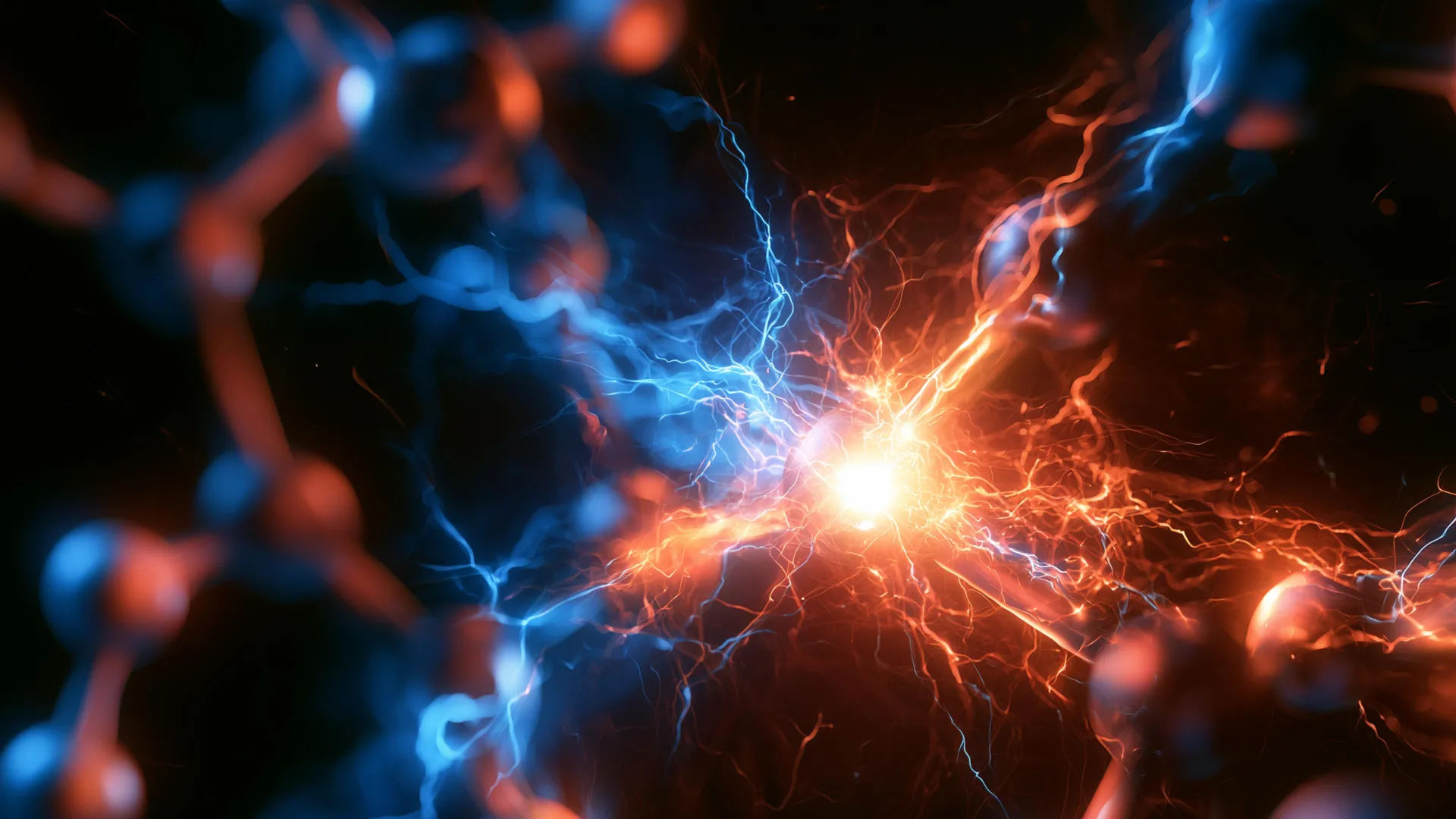
    Chemists depend on sophisticated molecules to develop life-saving drugs, produce advanced high-tech materials, and recreate processes found in living systems. One of the most useful tools for building these complicated structures is single-electron transfer, a technique that can activate molecules that would otherwise resist reacting and allow them to join together.

    For decades, however, chemists have faced a basic limitation in how electron transfer works. When two molecules are competing to receive an electron, the electron typically goes to the molecule that is easier to reduce. That natural preference can prevent researchers from directing reactions toward other potentially useful pathways.

    Researchers led by chemists at the University of Wisconsin-Madison, working with teams at Colorado State University and the University of Colorado Boulder, have now demonstrated a different approach to reaction design. Their new strategy, recently reported in Nature, addresses a long-standing problem involving electron-transfer selectivity and could make a wide range of previously inaccessible coupling reactions possible.

    Releasing Electrons Directly Into Solution

    Rather than trying to control which molecule receives an electron through conventional chemical preferences, the researchers developed a catalyst that releases the electron directly into the surrounding solution.

    “Our catalyst works a bit differently because it actually just ejects the electron directly into solvent,” says Zachary Wickens, a professor in the UW-Madison Department of Chemistry who led the work. “This gives you, more or less, the strongest reductant and the most aggressive source of electrons you could possibly have since a free electron would rather be in basically any molecule than just on its own in solution.”

    Once released, the free electron is extremely eager to find somewhere else to go. It can attach to the first molecule it encounters, even if that molecule would not normally be the preferred electron recipient based on its ability to stabilize the added electron.

    That behavior changes the usual rules governing which reaction pathway wins. As Wickens puts it, “anything is better than the electron freely floating in solution,” says Wickens.

    Why the Unexpected Selectivity Works

    While the Wisconsin team developed and tested the new reaction system in the laboratory, collaborators in Colorado investigated the underlying chemistry to determine why the approach behaves so differently.

    Researchers at Colorado State University carried out computational studies, while scientists at the University of Colorado Boulder used spectroscopy to examine the processes controlling the new reaction framework. The Colorado State work was led by Robert Paton with support from the National Science Foundation-funded Center for Sustainable Photoredox Catalysis (SuPRCat).

    “Our calculations reveal how the decisive selectivity emerges after electron transfer has already occurred,” says Paton. “We found that the desired reactant can escape reversal and continue toward product, while the partner that is easier to reduce is effectively recycled back to its starting material. This explains how the reaction can succeed despite the usual thermodynamic preference.”

    The findings show that the crucial selection does not necessarily happen when the electron first moves. Instead, the outcome can be determined by what happens afterward. The desired molecule can continue along the pathway that produces the final product, while the molecule that would normally be favored for reduction can return to its original state.

    A New Framework for Designing Redox Reactions

    The Wickens group has spent the past five years developing the family of catalysts that made this alternative approach to selectivity possible. By changing how chemists think about where and when reaction selectivity is determined, the method could expand the range of molecules that can be connected through electron-transfer chemistry.

    According to Wickens, “This is not just another synthetic method; it’s a new way to design redox reactions.”

    The research team included Prof. Zachary Wickens, Joseph M. Edgecomb, Matthew D. Resmini, and Alissia F. Meyer of UW-Madison; Niket Manoj and Prof. Robert S. Paton of CSU; and Prof. Niels H. Damrauer and Arindam Sau of CU Boulder.

    barrier break chemistry Chemists decadesold electrons free set
    NCIJ NETWNCIJ NETWORK
    • Website

    Keep Reading

    Scientists discover bacteria that lock toxic uranium into a stable form

    60,000-year-old ostrich eggshell engravings reveal a surprisingly sophisticated human mind

    For decades, we were told to choose low-fat dairy. New research says otherwise

    Frequent cannabis users wake up with their “stress hormone” already elevated

    Burnham to set out cost-of-living measures as he tours UK

    Cutting sweet foods doesn’t curb cravings or improve health

    Add A Comment
    Leave A Reply Cancel Reply

    Editors Picks

    MGT issued 1.65 billion shares as mining revenue fell to zero

    August 9, 2026

    Germany warns of ‘daily hybrid warfare’ after explosive-laden drone found | Russia-Ukraine war News

    August 9, 2026

    Hundreds arrested over French wildfires, but who is to blame?

    August 9, 2026

    Burnham vows crackdown on ‘rip-off’ business practices to ease cost of living | UK cost of living crisis

    August 9, 2026
    Latest Posts

    Certighost Exploit Lets Low-Privileged Active Directory Users Impersonate a Domain Controller

    July 24, 2026

    Silicon Valley Is Completely Divided Over Chinese AI

    July 24, 2026

    Ship insurers restrict war coverage for Saudi Arabian cargoes in Red Sea

    July 24, 2026

    Subscribe to News

    Get the latest sports news from NewsSite about world, sports and politics.

    NCIJ Network is an independent digital news platform delivering trusted investigative journalism, European and global news, in-depth analysis, and fact-based reporting with accuracy, transparency, and integrity.

    Facebook X (Twitter) Instagram Pinterest YouTube

    MGT issued 1.65 billion shares as mining revenue fell to zero

    August 9, 2026

    Germany warns of ‘daily hybrid warfare’ after explosive-laden drone found | Russia-Ukraine war News

    August 9, 2026

    Hundreds arrested over French wildfires, but who is to blame?

    August 9, 2026

    Subscribe to Updates

    Get the latest creative news from FooBar about art, design and business.

    Type above and press Enter to search. Press Esc to cancel.