


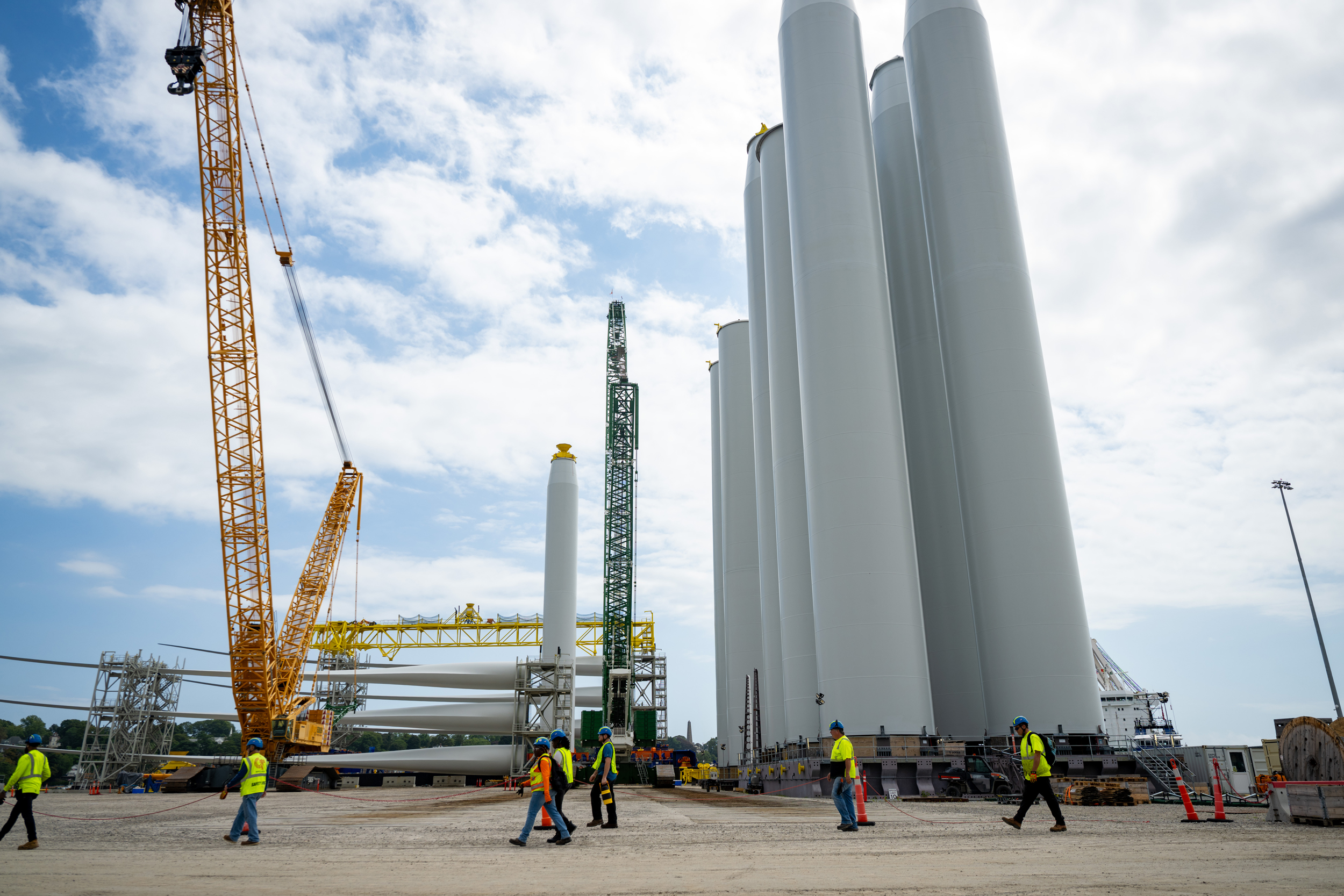
When Gerard Mullin decided to train in offshore wind, he didn’t know what to expect. But on his first long-term project in Massachusetts, he immediately relished the consistency of the work, the good pay and the novelty of laboring at sea.
“I thought it was the best thing in the world,” he said.
In his first eight weeks working offshore, Mullin made more money than he had saved in the previous five years.
But the industry was on shaky ground. Mullin had his bags packed for five weeks offshore with Empire Wind in New York when President Donald Trump’s stop-work order last year stranded him at home in Boston. Trump—who had railed against the industry in his 2024 election campaign—halted all future permitting last year and canceled 12 offshore wind leases this spring and summer.
Thousands of workers like Mullin who were promised steady, well-paying careers in offshore wind now find themselves racing to secure the few positions left or returning to their prior work. Meanwhile, the supply chain that emerged to support offshore development has been left adrift, including in towns in need of a promised economic boost.
Those are less-discussed consequences of the political turmoil besetting the domestic industry, said Elizabeth Wilson, a professor at Dartmouth College studying offshore wind.
“All of the promises of economic development that offshore wind was supposed to help support have evaporated,” Wilson said.
For Mullin, the change was shocking.
“All of a sudden, the federal government is concerned with my work, and there’s nothing I can do to change how they view it,” Mullin said. “Now there are things completely outside of my control, changing how I make a living.”
Trump has long scorned offshore wind, calling the 2012 project he unsuccessfully opposed near one of his Scottish golf courses “disgusting & inappropriate.” His administration, which has inaccurately described renewables as costly and unreliable as it tries to block them in favor of climate-altering fossil fuels, said his offshore wind policies are good for the economy and workers.
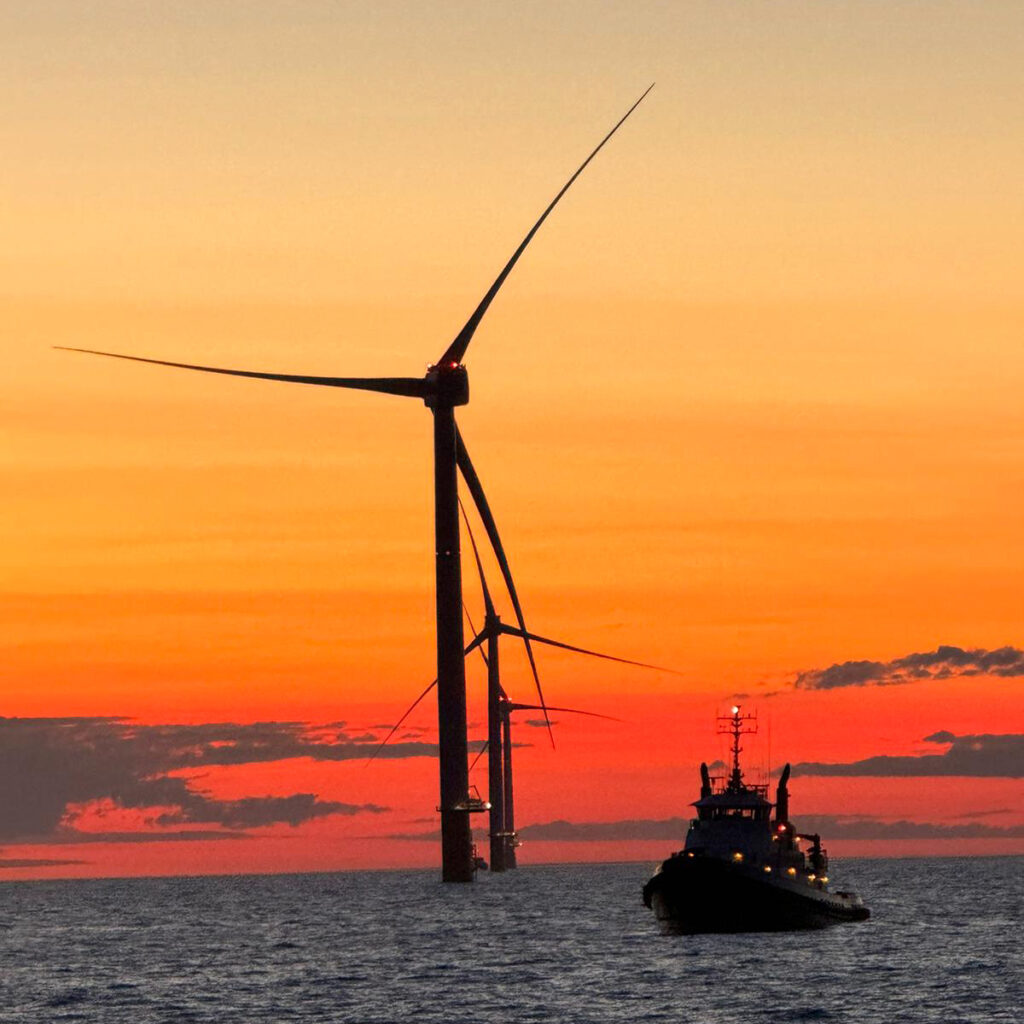
“President Trump has delivered on his popular promise to reverse the Left’s costly Green New Scam to lower prices for families and businesses and strengthen our country’s energy security,” Taylor Rogers, a White House spokeswoman, said in a statement. “By prioritizing the production of reliable, affordable, and secure energy sources, the President has restored U.S. energy dominance—creating thousands of good-paying energy jobs across the country.”
Tim Sullivan, who was CEO of the New Jersey Economic Development Authority until December, said he can’t comprehend the White House’s logic.
“It’s the strangest thing: I’ve spent 15 or so years working in public-sector economic development; I’ve never seen people cheering for job destruction, particularly elected officials,” he said.
As a pile driver, a specialized structural laborer essential to offshore wind projects, Mullin lived and worked on a ship five weeks at a time, followed by five weeks at home with his family. It was a schedule that suited him well.
Mullin joined offshore wind projects across Massachusetts, Virginia and New York. His employer, an international contractor, even brought him and other members of his union across the Atlantic for a wind project off the coast of Scotland.
Now, Mullin is back to the same type of onshore construction work he did four years ago, before he started with wind.
“The writing was on the wall that this idea that I’m going to go to the same ship, five weeks on, five weeks off, steady—that just isn’t the reality anymore,” Mullin said.
Opportunity Lost
Joshua Grigsby, 42, took his son to Rio de Janeiro, Disney World and SeaWorld. Natalie MacDonald, 26, stopped living paycheck to paycheck. Others bought homes and started families.
Inside Climate News spoke with over a dozen workers and union leaders who said the financial opportunities from the nascent U.S. offshore wind industry had been unparalleled. They saw long-term careers ahead of them. They feel that opportunity slipping through their fingers.
Anthony Hibbard was on one of the first boats that carried ironworkers to Vineyard Wind, off the coast of Massachusetts. What he found was “financial freedom,” he said, and he worked his way up to become a foreman on Coastal Virginia Offshore Wind.
After the Trump administration’s moves to scuttle the industry, Hibbard returned to local, onshore jobs in Portland, Maine, where he earns just one-fifth of what he did offshore.
“I make enough to get by, but I like to be smart with my money, and I don’t have the scope to continue being smart with it,” Hibbard said. “It’s definitely—you can feel the difference, that’s for sure.”
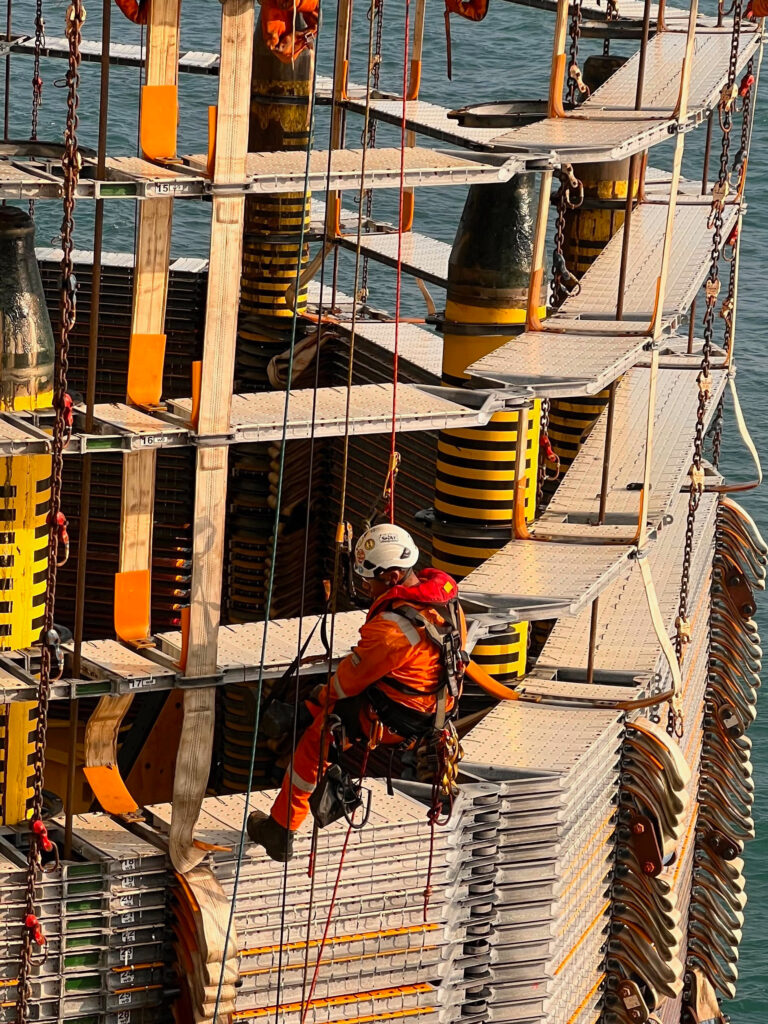
The loss of offshore wind has had financial consequences for many union workers. While many were paid the same per hour as jobs they could find onshore, they could work more than double the hours, and the company covered many living expenses. Grigsby made double to triple what he did onshore.
When Zaheer Razi, 28, joined the Piledrivers Local 56 union as a commercial diver, he transitioned into offshore wind as soon as he could. The logic was that it could be the anchor for people’s careers, he said—union leaders told workers to “set your roots down,” expecting over a decade of steady work.
He’s still working on Revolution Wind near Rhode Island, but he knows it won’t last.
“I’m probably one of the few guys that’s probably going to be working till mid-August, I believe, and then it’s really going to be silent for the next two or three years,” Razi said. “It is very frustrating, but it’s out of our control. Nobody could have really predicted it, but at this point, we’re just riding it out for what we can.”
Razi’s project is one of the five major U.S. wind farms that appear to remain on track despite the political backlash. But they are nearing completion and the permitting pipeline is all but blocked, meaning construction jobs will soon evaporate, according to multiple experts and union leaders.
Kris Ohleth, director of the Special Initiative on Offshore Wind, a U.S. policy think tank, attributed the lack of employment prospects to the political uncertainty that has stymied investor interest.
“We’ve trained them, we’ve given them this great experience, they’re building their futures for their families, and now they have no projects to work on,” Ohleth said of the offshore wind labor force, “and that’s because of the lack of market confidence.”
At the time of Trump’s election, the market research firm BloombergNEF forecast that the United States would build 39 gigawatts of offshore wind by 2035, enough electricity to power 13 million homes. By the end of last year, the firm had downgraded that prediction to just 6 gigawatts, according to Harrison Sholler, a wind analyst at BNEF.
For Garrison Biel, an offshore wind diver, the industry’s decline has meant there are close to no employment opportunities left.
“They’re more gigs than jobs,” Biel said. “They’re like short hitches, trying to wrap things up, tidy everything up. So I know people that are still working, but it’s not like how it was the first couple of years when it started, where that’s all you needed to do.”
He switched back to commercial diving around eight months ago because “what was available left offshore was slim pickings,” he added.
Biel said the offshore wind industry was supposed to be reliable, with guaranteed time off to make up for the long periods away from home and the weeklong, 12-hour-per-day shifts.
“Now, everybody that’s doing it, they get off the boat after working seven-twelves for a couple of weeks and they go right back to work, because they don’t know if they’re ever going to go back out on a boat again,” he said.
Grigsby was able to buy a house with his money from offshore wind. His union’s business manager, John Dunderdale, said at least a dozen other members of Piledrivers Local 56 did the same.
This story is funded by readers like you.
Our nonprofit newsroom provides award-winning climate coverage free of charge and advertising. We rely on donations from readers like you to keep going. Please donate now to support our work.
When these projects disappear, “you’re taking away their means of bringing back into the community,” Dunderdale said.
“Now you have a member sitting home, collecting unemployment, because there’s no work,” he added.
Benjamin Hawkins, who lives in Whitman, Massachusetts, said he made enough to upgrade his parents’ house and enjoy a new degree of “leverage” over his life.
“It’s heartbreaking, because you wonder about what’s going to happen in the future with your money,” Hawkins said.
He added: “Offshore wind was the reason I could improve that life, so to have the president affect my life, just as an average American—it was not on my bingo card.”
“We Sold This Dream”
Offshore wind first began edging into the U.S. energy market in 2011, decades after it had taken off in Europe. An Obama administration study that year predicted that a vibrant offshore wind industry could help meet the nation’s renewable energy needs while investing in infrastructure and creating “thousands of construction and operational jobs.”
The first U.S. offshore wind farm, Block Island, came online near Rhode Island in 2016, and states began offering financial incentives to drive development. The Biden administration made offshore wind a central priority in 2021, and from there, state and federal agencies geared up for a boom. The federal government sold leases to major international energy companies that began to see the U.S. as an attractive market, centered in the Northeast, Virginia and California.

Construction and permitting began in force not long before Trump returned to office with a promise to kill offshore wind.
“That’s like somebody working on skyscrapers, and then somebody saying, ‘We’re not allowed to build any skyscrapers,’” Biel said. “It’s just a kind of crazy thing.”
No comprehensive or exact estimate of offshore wind-related jobs exists, but New Jersey’s Economic Development Authority estimated in 2022 that a typical project creates around 1,000 construction jobs per year and 100 lifetime operational jobs.
Dunderdale said shutting down any project at that size and scale is a “huge hit,” both for the workers and their local economies.
Central to the fledgling domestic industry was the growth of training and certification programs, primarily through community colleges and unions.
Millwrights Local 1121, which operates across New England, met with developers in 2021 to start offshore wind job training, which would cost $10,000 to $20,000 per person. It was worth it, said the union’s vice president and business manager, Andy Benedetto, because they had heard there would be “years’ and years’ worth of work.”
“We invested millions of dollars in training, more or less, and lots of hours went into putting all this together, and now that work is dried up for the foreseeable future,” Benedetto said. “We hope not too long, but we built this whole workforce, and we sold this dream to our members that if they get involved and get the training and go on this first project, then they’re going to carry over for the next 10 years.”
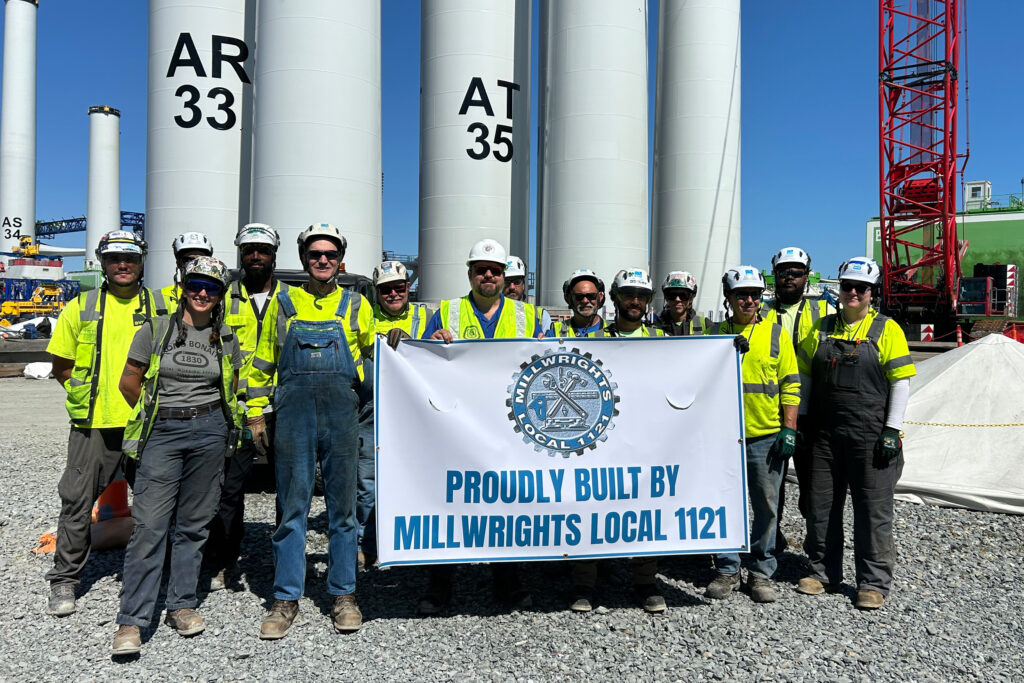
His union wasn’t alone. Public and private investments poured in to develop the new workforce. New York, New Jersey and Massachusetts led the Northeast with millions of dollars in grants to training and research programs.
Ironworkers Local 7, which operates across the Northeast, received $300,000 from Massachusetts in 2022 “to be ready for when the work comes,” said Grant Provost, the union’s Maine business agent. “And the work never really came.”
Dunderdale helped build the only U.S.-based school with heavy-lift training for Piledrivers Local 56. In total, offshore wind training cost the union about $30,000 per person, which he said was “an investment in the member.”
Esther Rosario, executive director of the labor coalition Climate Jobs New York, said unions that spent years preparing for the offshore wind economy have to reassess their plans.
“We’re ready to work, we’re ready to build, we have the trained workforce—we need work,” Rosario said. “You can’t apprentice somebody into a job that doesn’t exist.”
Offshore wind was billed as a boon not just for the building trades but for the entire economy. Manufacturing would move to the United States and locals would fill those jobs. For port cities like Massachusetts’ Salem and New Bedford, or New Jersey’s Paulsboro, the loss has threatened years of expected economic progress.
In August 2025, Trump canceled a $34 million grant to build an offshore wind terminal in Salem, which Frank Callahan Jr., president of the Massachusetts Building Trades Unions, said at the time put 800 construction workers out of a job.
“It means fewer jobs, fewer career opportunities,” Callahan said in a recent interview. As an example of this loss, he pointed to Prysmian Group, an Italian manufacturer, abandoning plans in January 2025 for an offshore wind cable plant near New Bedford.
At one point, Salem County, New Jersey—one of the state’s poorest counties—was poised to gain 1,500 new jobs for its population of 65,000.
“That’s a huge inflection point in that county’s economy that at this point is hard to see materializing any time soon,” said Sullivan, the former New Jersey official.
What’s Next?
The thousands of offshore wind workers aren’t all suddenly unemployed. Most did some trade work before, and unions are used to moving members onto different projects when conditions shift.
Still, Provost, the Ironworkers business agent, said offshore wind is a huge dent in unions’ portfolio of opportunities.
“If we’re not building offshore wind, and we’re not building jobs like that, you got to get in on university- and state-funded projects, and that doesn’t keep everybody busy,” Provost said. “We’ve got a massive amount of unemployed people in Local 7 right now.”
And just because workers can transition doesn’t mean they want to.
If he had a choice, Hawkins said, “I’d never work on land again.”
In addition to the financial opportunity, Razi said offshore wind was a once-in-a-lifetime experience.
“We were meeting people from all over Europe, all over the world, and it was just a great environment to learn as somebody being in their mid-20s,” said Razi, who is finishing up an offshore diving job.
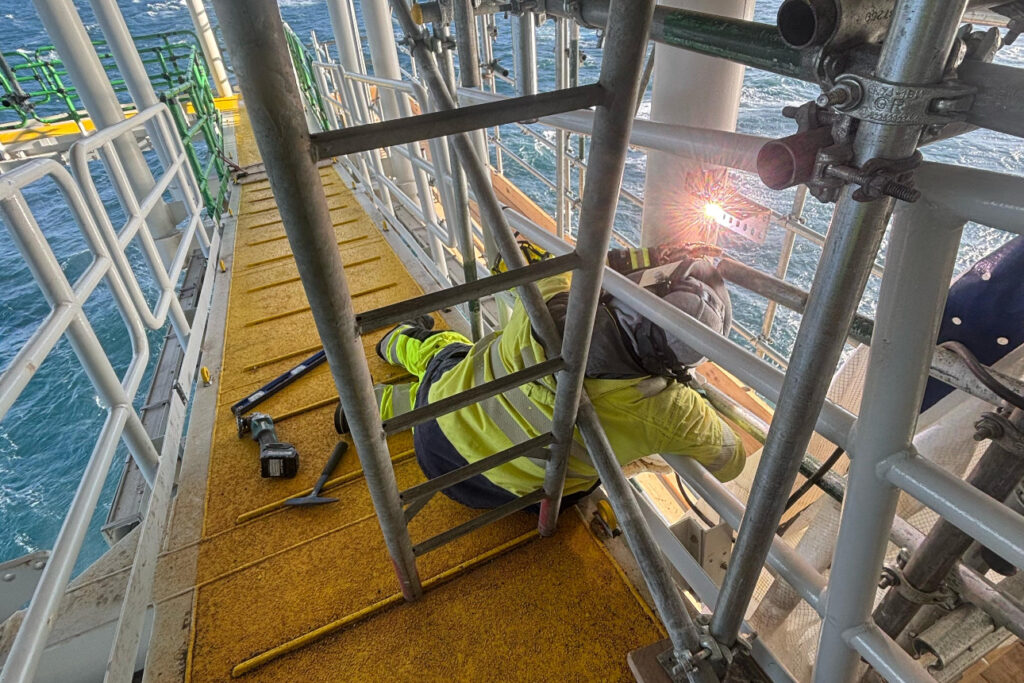
Living and working together consistently for weeks on end, crews became good friends, even vacationing together and learning each other’s languages. Hawkins joked that every rigger knew how to curse in at least three languages.
“It’s like being at the U.N.,” he said.
Benedetto said the millwrights he represents are eager to return to offshore wind, but they feel burned by political headwinds turning against them.
“They did a good job,” he said, “and they’re bummed out that they’re middle-class workers being used as pawns.”
Last November, Mullin’s building in Boston caught on fire, and he lost everything he owned. Six weeks later, he said, he was able to buy a condo near the city.
“That would not have been possible without offshore wind,” he said.
Mullin said he wishes others, especially young people entering the trades for the first time, could have the opportunity he did.
“It’s just too bad because they were good jobs and people were happy with them,” he said. “And it really was just a fair day’s work for a fair day’s pay.”
About This Story
Perhaps you noticed: This story, like all the news we publish, is free to read. That’s because Inside Climate News is a 501c3 nonprofit organization. We do not charge a subscription fee, lock our news behind a paywall, or clutter our website with ads. We make our news on climate and the environment freely available to you and anyone who wants it.
That’s not all. We also share our news for free with scores of other media organizations around the country. Many of them can’t afford to do environmental journalism of their own. We’ve built bureaus from coast to coast to report local stories, collaborate with local newsrooms and co-publish articles so that this vital work is shared as widely as possible.
Two of us launched ICN in 2007. Six years later we earned a Pulitzer Prize for National Reporting, and now we run the oldest and largest dedicated climate newsroom in the nation. We tell the story in all its complexity. We hold polluters accountable. We expose environmental injustice. We debunk misinformation. We scrutinize solutions and inspire action.
Donations from readers like you fund every aspect of what we do. If you don’t already, will you support our ongoing work, our reporting on the biggest crisis facing our planet, and help us reach even more readers in more places?
Please take a moment to make a tax-deductible donation. Every one of them makes a difference.
Thank you,

Fellow
Ajani Stella is a Dow Jones reporting fellow at Inside Climate News, based in New York City. Previously, he interned at amNewYork, covering politics, housing and crime. His reporting experience also includes immigration, labor and higher education policy issues. Ajani is currently a junior at Georgetown University, where he serves as executive editor of the student newspaper, The Hoya.
