


Welcome back to Foreign Policy’s Latin America Brief.
The highlights this week: The region’s so-called second pink tide comes to an end, Bolivia secures a $1.9 billion IMF loan, and the United States ends deportation protections for Haitians.
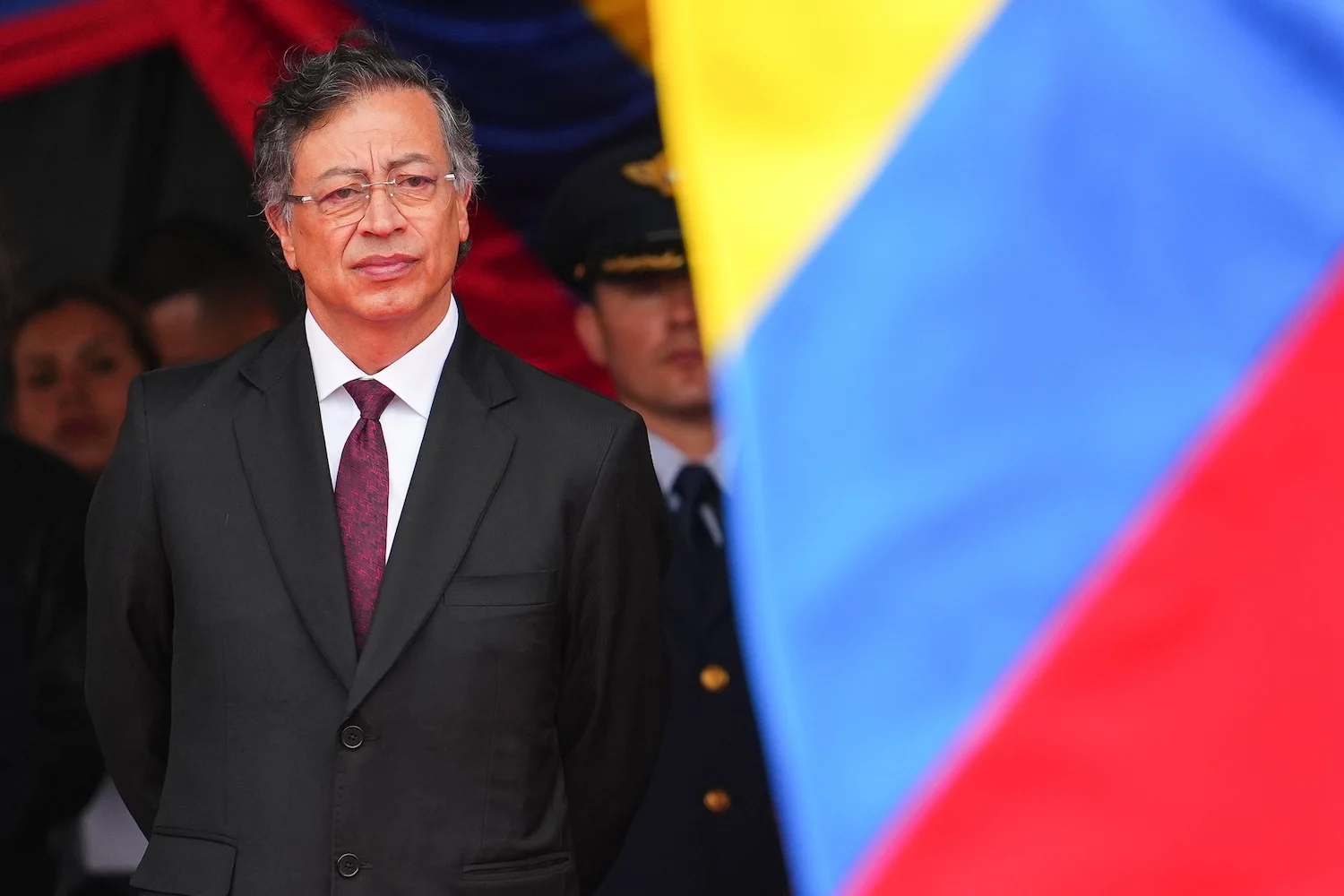
Right-wing lawyer Abelardo de la Espriella will be inaugurated as Colombia’s president on Friday. He replaces Gustavo Petro, the latest in a string of left-wing Latin American leaders to leave office amid the region’s broader shift toward the right.
When Petro and his ideological allies were elected in the wake of the COVID-19 pandemic, their victories were so widespread that many observers dubbed the phenomenon a “second pink tide,” recalling the wave of left-leaning and socialist governments that swept through Latin America from the late 1990s to the early 2010s.
The first pink tide transformed the domestic and foreign policies of many South American countries, which increasingly turned toward one another to pursue a shared agenda of regional integration.
These changes were made possible in large part by a global commodities boom that increased public revenue across the region. Social spending generally went up, income inequality declined, and access to higher education expanded. By the end of the first pink tide, South American governments were cooperating regionally on health, infrastructure, and conflict resolution.
That momentum gave way in the mid-2010s as falling commodity prices, mounting economic challenges, and high-profile corruption scandals ushered in a more volatile political period.
Across the region’s democracies, voters elected a new crop of right-wing leaders whose foreign policies deprioritized regional integration. Their tenures, however, coincided with COVID-19, and many were ousted after a single term.
That political shift gave rise to the second pink tide. By 2023, leftist governments had taken office in Argentina, Bolivia, Brazil, Chile, Colombia, and Peru, pledging to reduce inequality at home and resurrect regional integration as a central pillar of their foreign policies. (Mexico has also been led by the leftist Morena party since 2018, though it has prioritized integration with North America over South America.)
Latin America’s second pink tide has proved to be much shorter-lived than the first. While Morena held on to Mexico’s presidency in 2024 and Brazilian President Luiz Inácio Lula da Silva may do the same this October, their peers elsewhere have mostly exited office.
As the ideological tides shift once again, it is a good time to ask: How much, if at all, did this pink tide change the region?
Several of these governments expanded anti-poverty efforts. In Colombia, multidimensional poverty fell to a historic low under Petro, while Brazil significantly reduced food insecurity. But without the tailwind of a commodities boom, these initiatives squeezed government budgets.
What’s more, many of the period’s most visible leaders fell short on signature progressive pledges, including Petro’s plan to reduce violence by negotiating with armed groups rather than taking a militarized approach and former Chilean President Gabriel Boric’s proposal to rewrite the country’s dictatorship-era constitution.
In foreign-policy terms, regional integration survived more than thrived. Mercosur, the South American trade bloc, expanded in 2024 to admit Bolivia and signed a long-delayed deal with the European Union this year, though keeping the group intact required careful diplomacy after Argentine President Javier Milei threatened to withdraw from it.
The leaders of the second pink tide, especially in Brazil, also revived joint work on several cross-border infrastructure corridors that had been under discussion since the early 2000s—notably the Capricorn Bioceanic Corridor, which will connect ports on South America’s east and west coasts.
Advocates of these corridors argue that they are a strategic asset for South American countries to decide their own economic fate at a time when outside powers—especially the United States and China—are pushing their own agendas for the region.
Those agendas often focus on accessing the region’s commodities, with local development remaining an afterthought, said Pedro Silva Barros, the former economic affairs director for the Union of South American Nations, a now-defunct regional body established during the first pink tide.
The Capricorn Bioceanic Corridor exemplifies this distinction. It is intended to strengthen economic ties within South America itself and spur industrialization across relatively poor regions, Silva Barros said.
“The corridor is more important for connecting these countries to each other than it is for connecting them with China or another extra-regional power,” he added.
Whether ongoing integration efforts endure will depend on their ability to survive the region’s recurring ideological swings. The repeated delays to the Capricorn Bioceanic Corridor illustrate how difficult that has been in recent decades.
Still, there are signs that the latest push for regional infrastructure may outlast the second pink tide itself. Last month, Argentina, Bolivia, Brazil, Chile, and Paraguay—two of which now have far-right leaders—signed an agreement to create a single aviation market. Like that of the European Union, it’s designed to make it easier for airlines based in one member country to operate in the others.
It marks another step toward a regional foreign policy shaped by South American priorities, not those of outside powers.
Friday, Aug. 7: De la Espriella is inaugurated as president of Colombia.
Sunday, Aug. 16: The official campaign advertising period begins for Brazil’s presidential election.
Delcy Rodríguez, the interim president of Venezuela, holds up a new law to reform the country’s oil industry, in Caracas on Jan. 29.Carlos Becerra/Getty Images
Venezuela’s oil revenue. More than six months after the United States removed then-Venezuelan President Nicolás Maduro and assumed responsibility for reviving the country’s oil sector, both governments have disclosed little about how the resulting revenue is being spent. A Financial Times calculation published last month found that Washington has collected more than $13 billion in Venezuelan oil revenue this year.
By April, the United States had transferred at least $3 billion to Venezuela, according to a U.S. State Department official. But U.S. President Donald Trump’s administration has yet to publish the reports that it promised, and a Venezuelan government site created to provide transparency around oil revenue has disclosed only a single $300 million transfer.
While Trump administration officials have said that they hope U.S. oil companies move into the country, the largest ones have so far held back from major new investments.
Bolivia’s IMF deal. Farther south, Bolivia’s economic overhaul is showing progress. Last week, it reached a preliminary deal with the International Monetary Fund (IMF) for a $1.9 billion loan. The IMF praised the country’s decision in June to move toward a more market-determined exchange rate.
The IMF endorsement is a step forward for President Rodrigo Paz after his first months in office were marked by large-scale protests. In May and June, opposition members blocked roads across major cities; 22 people died amid during the unrest, according to Bolivia’s ombudsman’s office. For now, tensions between the government and opposition groups appear to have eased.
Essay on exile. Latin America’s prestigious Gabo journalism prize—named after Gabriel García Márquez, whose foundation presents the award—recently honored Salvadoran journalists Óscar Martínez and Carlos Martínez.
The winning essay recounts their effort to remain outside the country after they were warned that President Nayib Bukele’s government was preparing to arrest them. “Preventive departures,” they write, “were always a sugar-coated euphemism for exile.”
The brothers had previously released an investigation into a secret government deal with a criminal group, featuring a series of video interviews with the gang’s leader. The brothers mused that earlier written investigations had already documented evidence of similar backroom deals, but far more people paid attention when testimony was shown “like a Netflix series.”
What is the only major U.S. oil company that stayed in Venezuela throughout Maduro’s presidency, even after its peers had left the country?
A. Chevron
B. ExxonMobil
C. ConocoPhillips
D. Occidental Petroleum
Chevron
ExxonMobil
ConocoPhillips
Occidental Petroleum
By contrast, ExxonMobil—once another major player in Venezuela’s oil industry—withdrew after the Hugo Chávez government nationalized its assets in 2007.

Haitians living in Brooklyn join local politicians, city employees, and others at an Immigrant Resource Fair and Know Your Rights Event in New York on July 28.Spencer Platt/Getty Images
Last week, hundreds of thousands of Haitians in the United States lost temporary protected status, making them newly vulnerable to deportation.
A Haitian migration official said in July that Washington told the government to expect about 250 deportees per week. At that pace, deportations of Haitians could eventually approach the more than 25,000 Venezuelans deported during Trump’s second term.
The Trump administration has argued that insecurity and political crises in both countries no longer justify protection from deportation. But while Venezuela is experiencing a moderate economic stabilization and political opening, gang violence in Haiti remains dire.
The U.S. State Department recently renewed its “do not travel” advisory for the country, suggesting that U.S. citizens who travel there should leave copies of their dental records with family members—in case their remains need to be identified.
The Trump administration supported a September 2025 U.N. Security Council decision to expand the international security mission supporting Haiti’s police in their effort to retake gang-controlled neighborhoods, including a force of up to 5,500 troops.
But almost a year later, only 1,000 troops have arrived. Gangs still control around 85 percent of the Port-au-Prince metropolitan area, a U.N. office said.
