


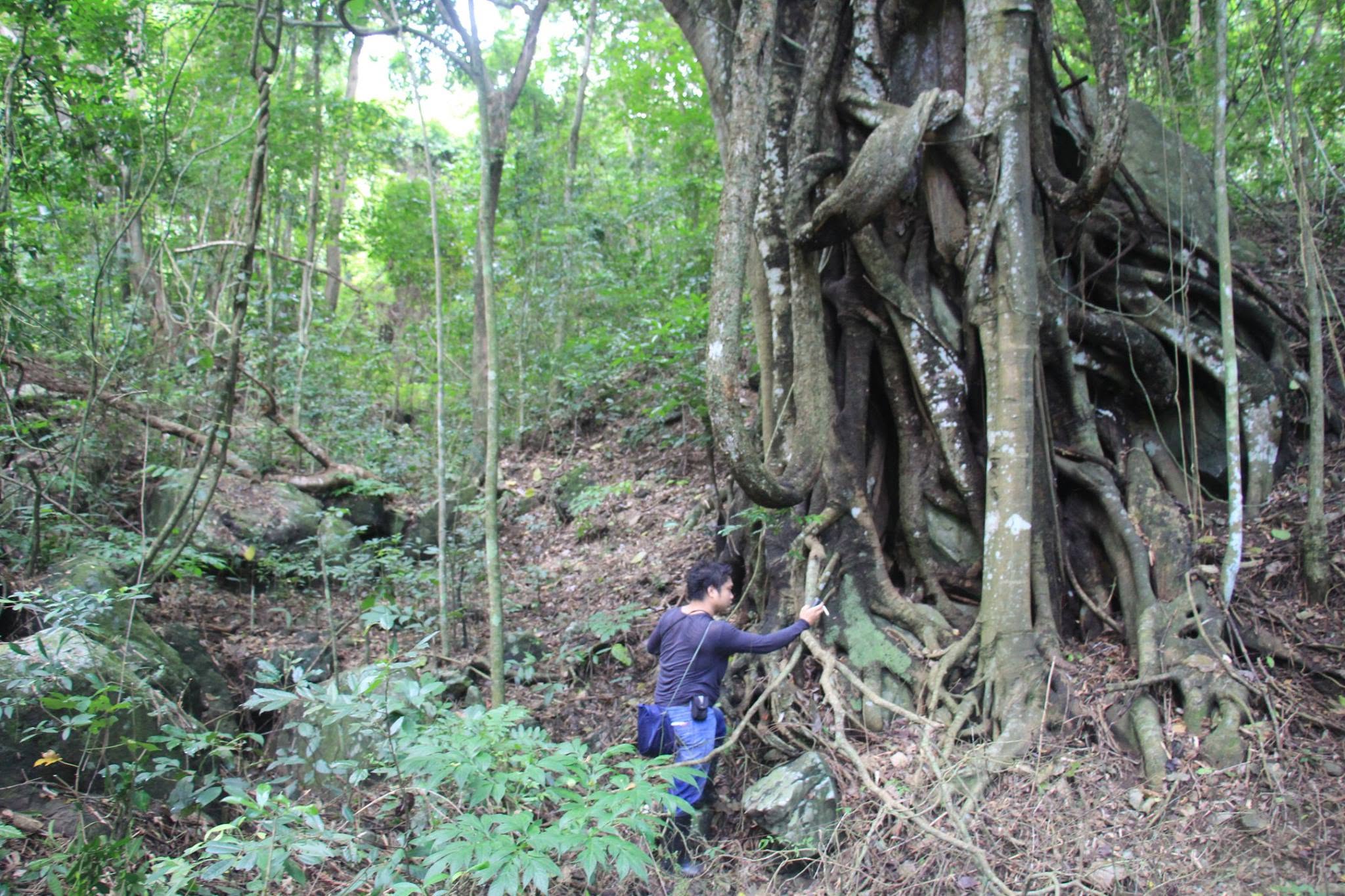
A mountainous reserve near Manila, the Philippine capital, is a critical ecological refuge, harboring high levels of plant diversity despite its proximity to the highly urbanized city, according to a recent study.
The findings come from surveys done 10 years earlier, however, and mounting pressures on the area’s forests since then may have had an impact, the authors say.
As the last remaining natural lowland forest in Cavite province, on the southern shores of Manila Bay, Mounts Palay-palay-Mataas-na-Gulod Protected Landscape serves as a vital stronghold for Philippine biodiversity, researchers say.
In July 2016, they surveyed plants within the landscape, known as MPPMGPL. At the time, they documented 294 species of plants across the landscape’s varied habitats, from grasslands and secondary forests to old-growth stands. They found that 42 species, or 16%, are found only in the Philippines, while 31 species are classified as threatened on national or international red lists.
“The most remarkable finding is that this landscape … harbors an incredibly high concentration of biodiversity despite being so close to highly urbanized zones,” study lead author Enrico Replan, an assistant professor at the Institute of Environmental Science and Meteorology (IESM) at the University of the Philippines Diliman, told Mongabay by email.
The study also identified 43 species that likely represent new records for Cavite province, “filling major geographic knowledge gaps,” Replan said. Among the most significant findings was the dominance of guijo (Shorea guiso), a critically endangered tree species, in the forest’s interior core. This highlights the role of MPPMGPL as a key conservation refuge, the authors write.
While the study was only published recently, Replan told Mongabay the 2016 findings offer a baseline for this landscape; there haven’t been similar surveys since.
In the past 10 years, however, urbanization and land conversion have led to a decrease in forested areas and breached strict protection zones in the landscape. A study that used satellite imagery to examine changes in forest area from 2015 to 2021, found a 13.8% decrease in MPPMGPL due to urbanization.
The 2016 survey “showed promising resurgence of Shorea guiso” in the interior core parts of MPPMGPL, Replan said. But because dipterocarp species such as guijo are highly sensitive to local climatic changes and canopy gaps, he added that any encroachment that disturbed the forest over the last decade could easily have stalled this progress.
“This 10-year gap highlights exactly why we are calling for continuous, long-term monitoring rather than relying solely on spatial snapshots,” Replan said.
He added that stricter local policy interventions and aggressive conservation programs are urgently needed to safeguard the endemic and threatened plants in the landscape “before they are permanently fragmented or lost.”
The research team writes that establishing permanent monitoring plots would better track the functional dynamics of this ecosystem amidst climate change.
Banner image: Enrico Replan from the, Assistant Professor at the Institute of Environmental Science and Meteorology (IESM), University of the Philippines Diliman doing fieldwork in Mounts Palay-Palay-Mataas-na-Gulod Protected Landscape. Image courtesy of Enrico Replan.
