


- Despite being the world’s second-largest producer of jute, a biodegradable fiber, Bangladesh faces the daunting task of combating the onslaught of hazardous plastic-based packaging and synthetic fibers.
- The Mandatory Jute Packaging Act of 2010 stipulated that 19 essential items must be contained and transported in jute sacks, but the legislation failed to protect the jute industry, which employs 3 million households.
- While traders ensure a door-to-door supply of “cheap” plastic and synthetic fiber for users, the government has closed down 25 state-owned jute mills that produced “costly” jute sacks and bags.
- Although a small rice mill demonstrates that jute sacks and bags are cheaper and bring a good profit, the government has not devised a proper strategy to sensitize businessmen to switch to jute instead of plastic/synthetic packing materials.
Bangladesh is the world’s second largest producer of the environmentally friendly fiber jute. However, the country has, for decades, grappled with the move to combat the escalating use of the cheaper and more popular, but harmful, plastic-based packaging and synthetic fibers.
As a safeguard measure, the government, 16 years ago, enacted a law for the mandatory use of jute sacks and bags to contain and carry 19 essential commodities, including rice, wheat and fertilizer.
The move has been largely unsuccessful, though, with plastic and synthetic fiber invasion as packaging ingredients continuing unabated. Synthetic and poly bags have caused environmental problems such as waste disposal.
Nazmul Haque, the government-appointed jute officer in the northern Sherpur district, told Mongabay that a small semi-automatic rice mill — Sakhina Rice Mill — has exclusively been using jute sacks.
Sakhina Rice Mill in Sherpur stands out from the crowd by exclusively using jute bags and sacks, debunking the narratives of fellow rice millers that jute sacks and bags reduce their profit margin.
“A 50-kilogram [110-pound] capacity synthetic/plastic bag costs 20 takas [16 cents], while a jute sack costs 80 takas [65 cents]. A synthetic/poly bag cannot be reused; it is for one-time use. On the other hand, we can use the same jute sack at least three times for carrying paddy or rice and then mend it, if torn, and use it three more times for carrying rice bran,” Md. Hamez Uddin, a proprietor of Sakhina Rice Mill, told Mongabay.
“Jute sacks are economically better, more durable than synthetic bags. All of us should use jute sacks instead of hazardous synthetic/plastic bags. If the government can ensure an uninterrupted supply of jute bags, we can stamp out the use of polybags,” he said.
“Sakhina Rice Mill has encouraged others to prefer jute sacks to plastic and synthetic fibers,” Haque said.
While Sakhina Rice Mill is trying to set a good model, the government has been unable to stop the use of plastic and synthetic fibers in rice mill packaging, even within Sherpur district.
“We need around 50,000 jute bags per year. Unfortunately, we do not get a smooth supply of jute bags and sacks. In Sherpur, there are 100 sellers, but they cannot guarantee a supply of jute sacks and bags.
“Sometimes we must pay extra to buy jute sacks and bags. In some cases, we are forced to use synthetic sacks when jute sacks are not available in the market,” Hamez Uddin said.
There are around 5,000 automatic rice mills and thousands of semi-automatic rice processing units in Bangladesh and most use synthetic or polythene bags.
Mostaq Ahmed, one of the proprietors of Bangladesh’s first auto rice mill in the northwestern Naogaon district, told Mongabay, “The suppliers deliver synthetic/polythene bags to factories. But the owners must procure jute sacks from the market at their own expense and by their own initiative. Sometimes, we do not get jute sacks in the market.”
“The government cannot ensure the supply of jute bags in the market, but they conduct mobile courts to enforce the implementation of the Mandatory Jute Packaging Act. They fine us. This is not fair,” he said.
The Mandatory Jute Packaging Act of 2010 stipulates that 19 essential items must be packaged in jute: paddy, rice, wheat, maize, fertilizer, sugar, chili, turmeric, coriander, potato, flour, ginger, garlic, onion, pulses, rice bran, husk, poultry feed and fish feed.

Legislation fails to promote jute packaging
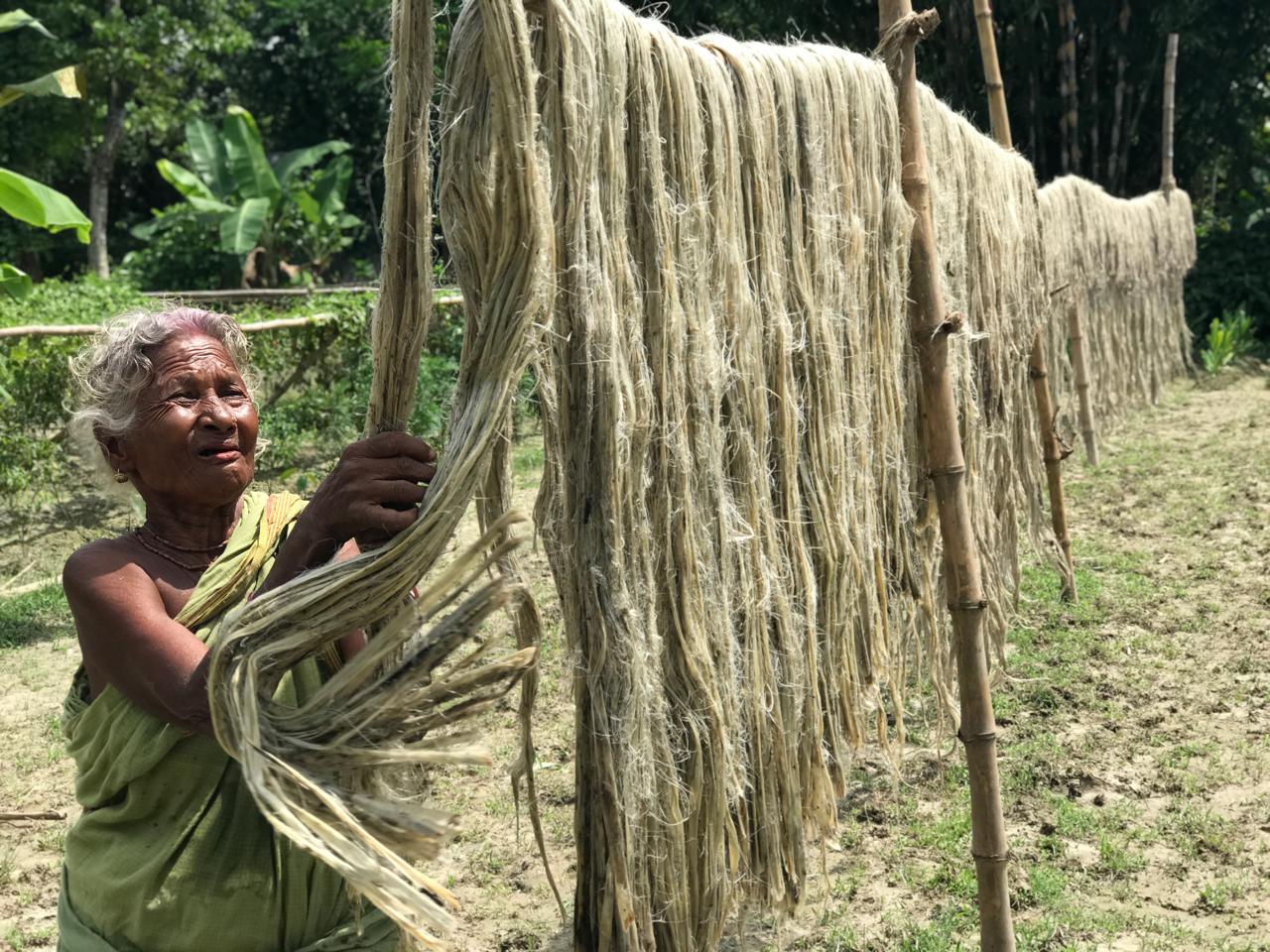
A tropical country with hot and humid weather, Bangladesh is famous for its high quality jute, which is called the “golden fiber” here.
According to the Department of Jute, Bangladesh produced more than 8 million bales (1.44 million tons) of jute during the 2025-26 fiscal year, and more than 7.5 million bales (1.35 million tons) during the 2024-25 fiscal year. The annual domestic requirement for jute in the 2024-25 fiscal year was around 5.4 million bales (972,000 tons).
In Bangladesh, around 3 million farming households are involved in jute production. In the 2024-25 fiscal year, Bangladesh’s export earnings from raw jute and jute products stood at more than $820 million, according to the Jute Department’s figures.
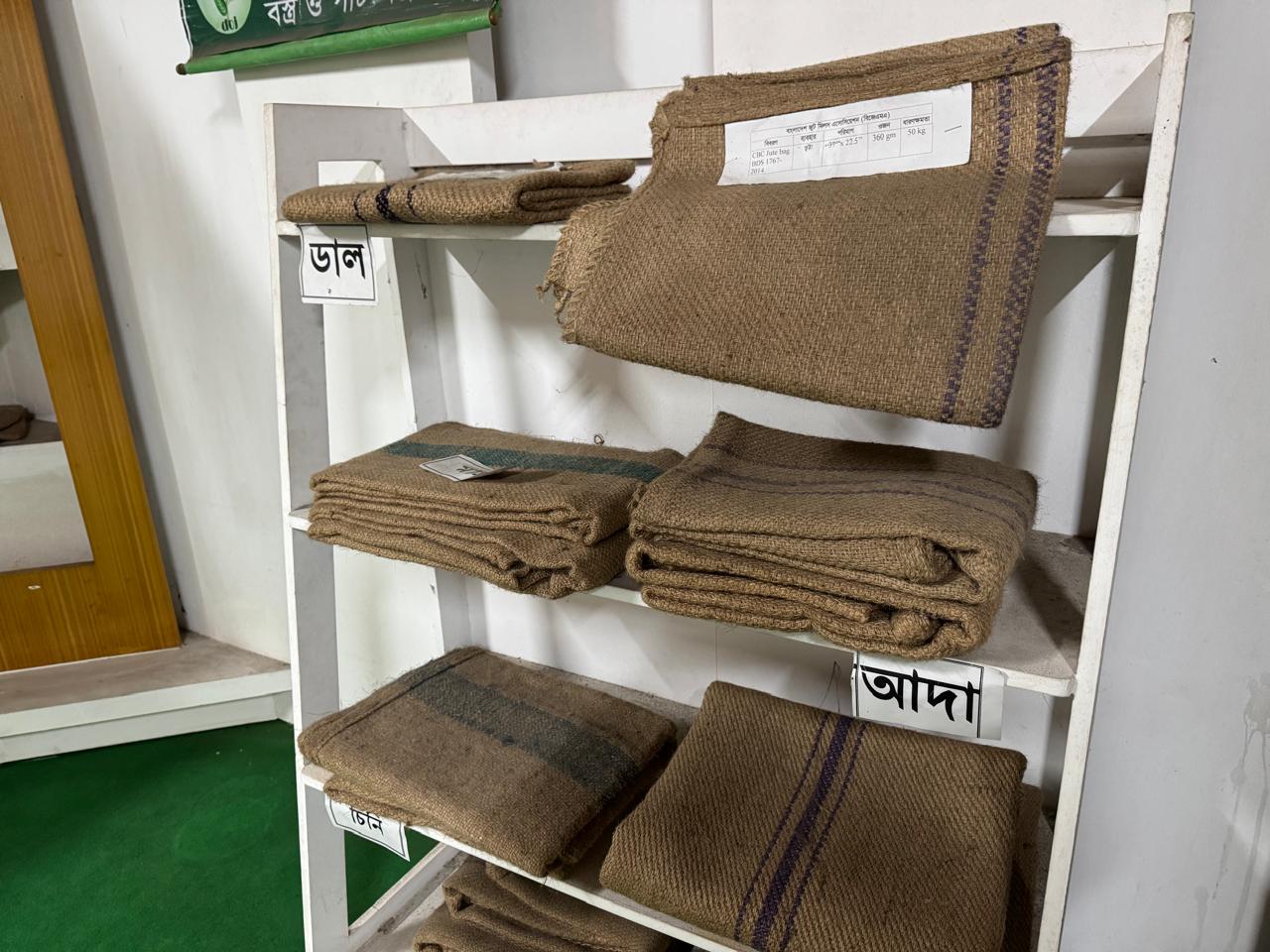
According to a 2023 survey by the Department of Jute, the annual internal requirement for different types of jute sacks and bags was estimated to be at least 1,200 million, jute officer Ziaur Rahman Khan, who managed the statistics wing of the Jute Department then, told Mongabay.
Bigger jute mills closed, but law enforcement continues
Md. Abul Hasnat, an opposition lawmaker from Cumilla district, told the Parliament on July 15 that bags made from plastic and polythene were in abundant use at the grassroots level, flouting the mandatory use of jute in packaging.
He also said that the Ministry of Textiles and Jute had become a hostage of sorts to the business syndicate promoting polythene and plastic.
In response, Khandakar Abdul Muktadir, minister for textiles and jute, told the Parliament that the government has been conducting mobile courts at different business establishments to promote jute in packaging. Between July 2025 and June 2026, the minister said, the government conducted 1,093 mobile courts and filed 1,399 cases against offenders.
Muktadir said the previous government in 2020 shut down the production of 25 state-owned jute mills supervised by the Bangladesh Jute Mills Corporation.
He said 14 of the closed mills had been leased out to the private sector. Nine of the mills had already gone into production. He said the government was hopeful of restarting the mills by December 2026.
Syed Md. Nurul Basir, director general of the Department of Jute, told Mongabay that the government was committed to saving the interests of millions of jute growers.
“We have been carrying out mobile courts to implement the Mandatory Jute Packaging Act. This aims to stop the unlawful use of plastic and synthetic bags in packaging and create demand for the environmentally friendly fiber jute,” he said.

“Unless users use jute packaging materials, the demand for jute would diminish, and the farmers would be hurt and would switch to other crops. It will ultimately encourage plastic and synthetic fibers,” Basir said.
However, Basir said he recognizes the dilemma regarding the easy availability of jute sacks and bags in different parts of the country.
He said 193 private jute mills have been in operation.
“The millers tell us they would only produce jute sacks when there is adequate market demand. On the other hand, users want us to ensure an adequate supply of jute bags and sacks. But we cannot force the private sector to produce jute sacks,” Basir said.
M. Wais Kabir, former executive chairperson of Bangladesh Agricultural Research Council (BARC), told Mongabay, “Saving jute through legislation is a wrong approach. The compulsory use of jute in packaging would not ultimately work; in fact, it has not worked over the last 16 years.”
He said plastic and synthetic fibers made inroads into jute bags due to two factors: cheaper prices and easy availability.
“Jute bags and sacks became costlier because the state-owned factories had been inefficient, and mired in misuse, mismanagement and corruption. The marketing method under state-owned management had also been problematic,” he said.
“As the factories have been privatized with better management, they can produce jute bags and sacks at lower prices. High demand will definitely encourage them to produce jute bags and sacks,” Kabir said.
“Now, the government should limit its role to creating an enabling and competitive atmosphere that will encourage users to prefer jute to plastic and synthetic fibers through motivation and effective campaigns.”
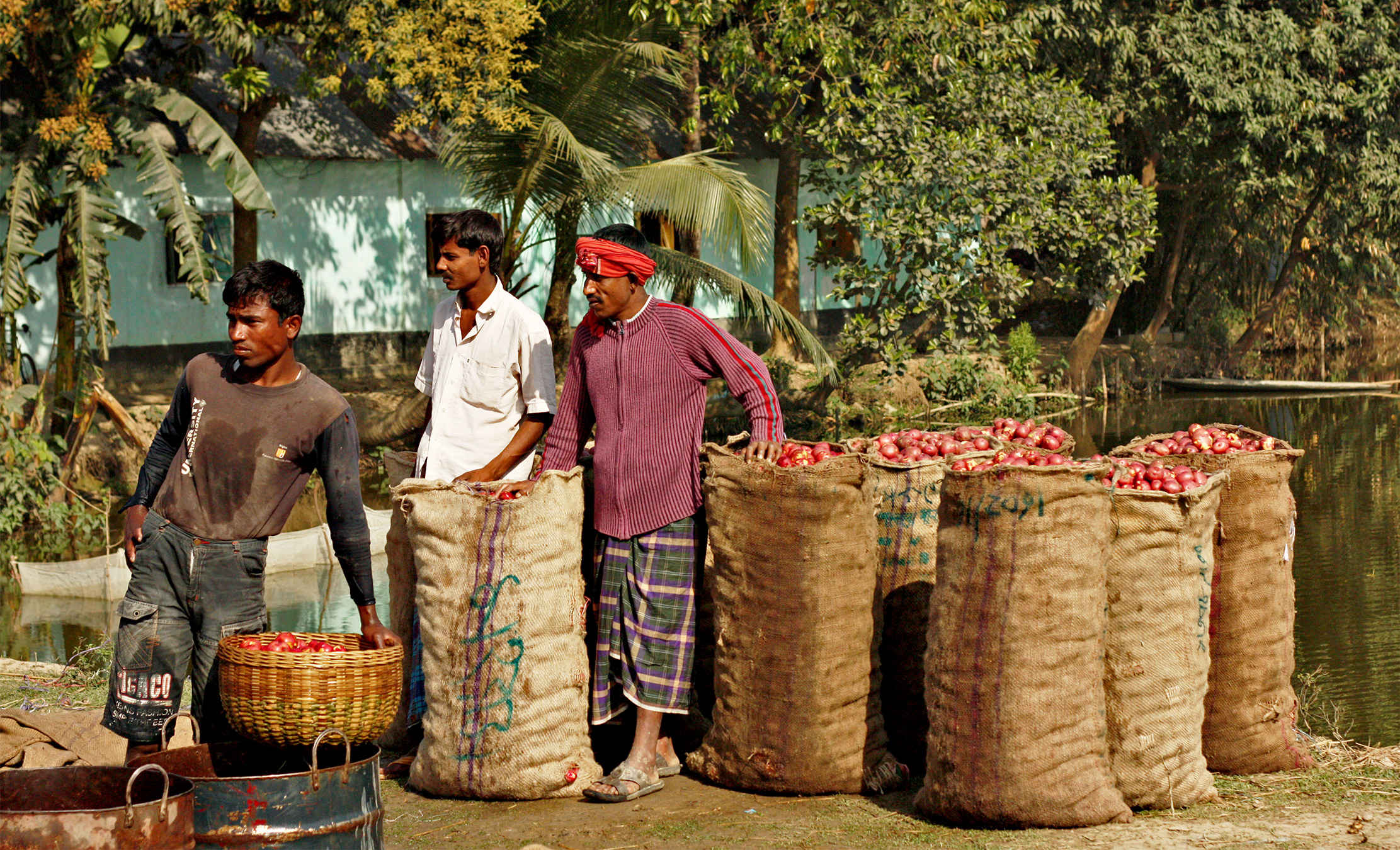
Banner image: Onions in jute sacks in Bogra. Image by abrinsky via Flickr (CC BY-NC-SA 2.0).
Bangladesh continues promotion of biodegradable bags amid battle against polythene
Jute waste may cut Bangladesh’s import bill as researchers make ink, graphene
Feedback: Use this form to send a message to the author of this post. If you want to post a public comment, you can do that at the bottom of the page.

