


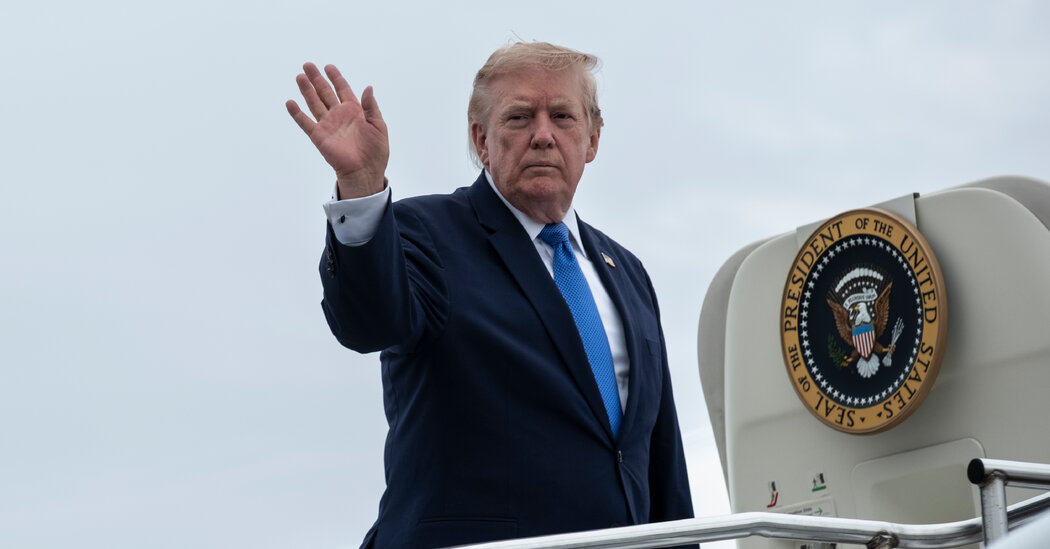
The war in Iran, along with a cycle of threats and walk-backs, has upended President Trump’s domestic agenda at a dire political moment.
Americans are facing rising gas prices; Republicans in Congress are being forced to fund and defend an unpopular war that they never voted to approve; and with the midterm elections looming, polls show cratering support for a war that has no end in sight.
Mr. Trump will hit the road this week for a swing through the West Coast to talk about the economy and sell his agenda to the American people. Here are three domestic hurdles Mr. Trump is facing because of the war.
Pain at the Pump
Mr. Trump’s war in Iran has driven up the cost of oil around the world, and Americans are paying, on average, more for gas than they have since 2022 when Russia invaded Ukraine.
Gas prices on Monday were at a national average of $4.10 a gallon, according to the AAA motor club. The increase has raised the cost for drivers by more than 37 percent since the war began at the end of February. And it compounds a cost-of-living crisis caused by persistently high inflation that Mr. Trump struggled to address before the war even started.
Mr. Trump has asserted that oil prices per barrel have been far lower than expected because of the conflict, and that gas prices will “drop like a rock” when the war ends.
On Monday, Mr. Trump tried to pass the blame on to oil companies, boasting in a social media post that they had grown much more profitable as a result of his policies.
In a social media post, and in an Oval Office appearance, he cited Chevron and Exxon for record profits, and suggested they should ease prices for the public. “That goes for other Oil Companies as well,” he wrote, “and get your consumer (retail!) Oil Prices DOWN, NOW!”
Plummeting Polls
Mr. Trump has been the only president in the modern era to take the country to war without the support of the American public.
“We got to wrap it up,” Speaker Mike Johnson said last month, as the United States launched a fresh barrage against Iran, signaling the collapse of a temporary cease-fire.
Mr. Trump went to war without the authorization of Congress, an issue that came to a head in recent weeks as members have been asked for billions more in funding. Last week, Senate Republicans declined to limit Mr. Trump’s power to continue the war, but days later many complained that they were unsure where the conflict was headed.
“I don’t know whether the president should start a new bombing campaign again, because I don’t have the military intelligence,” Senator John Kennedy, Republican of Louisiana, said on Sunday during an appearance on NBC’s “Meet the Press.” “Now, that’s a problem, too, because it’ll cause a lot of pain. It’ll cause energy prices to go up, and a lot of inflation for the American people. They’re all hellish choices.”
Democrats are already employing their strategy to use Republicans’ support of the war against their opponents in upcoming races.
In Maine, Majority Forward, a major Democratic group, has spent more than $1.5 million on ads accusing Senator Susan Collins, a Republican, of giving Mr. Trump a “blank check” for the war, according to an analysis by the media tracking firm AdImpact.
Ruth Igielnik, Katie Rogers and Jess Bidgood contributed reporting.
