


- A new study has found microplastic particles in almost all sampled mussels and snails inhabiting deep-sea hydrothermal vents in the Indian Ocean and southwestern Pacific Ocean.
- By comparing snails and mussels from hydrothermal vents in two oceans, researchers found stark differences in levels of microplastic contamination between the two.
- The new study suggests the animals’ different feeding mechanisms might influence the amount of plastic pollution in their bodies.
Three days away from shore, in the darkened control room of a huge ship, all eyes are fixed on a glowing wall of screens. Live images of mussels and snails appear. The animals are packed around a deep-sea chimney venting something that looks like black smoke, but is actually superheated, mineral-rich water bursting from the Earth’s crust. The images have threaded their way back to the research vessel Isabu from some 2,000 meters (6,500 feet) below, via a thin, fiber-optic cable.
It’s 2016 and the researchers are in the North Fiji Basin in the southwestern Pacific Ocean. It’s the first of two expeditions to study the inhabitants of deep-sea hydrothermal vents. Their next journey will take them to the Indian Ocean.
At each stop, the team deploys an underwater robot to catch the tender creatures. Once on deck, each animal is immediately wrapped in aluminum foil and flash frozen at –80° Celsius (-112° Fahrenheit) to prevent contact with airborne contaminants. The work is so delicate it takes the team several weeks to collect just 12 animals during the two expeditions between 2016 and 2019.
Almost 10 years later, analysis of the results of these expeditions shows that human activities impact even creatures living in some of the most remote places on Earth. According to a new study, published in Water Research, microplastic particles were found in 11 of the 12 sampled animals, which belonged to four different species of mussels and snails.
“Finding contamination in nearly every animal was still a shock,” study co-author Se-Joo Kim, a researcher at Korea Research Institute of Bioscience and Biotechnology, told Mongabay in an email. “I expected to detect some. I did not expect 92% of the specimens.”
Microplastics have consistently been reported in deep-sea sediments in the past decade and, more recently, in other deep-sea creatures, such as lobsters and crabs. “The chemical signature in animals living 2,000 meters down still reflects what people are doing at the surface above them,” Kim said.
Yet, the exact mechanisms by which organisms on the seafloor take microplastics into their bodies are still not well understood, Ana Carolina Ronda, a biochemist at the Argentine Institute of Oceanography who was not involved in the study, told Mongabay.
This study helps deepen understanding of “how microplastics — even on the seafloor and at enormous depths — can be taken up by various species,” she said.
A delicate operation
The ways microplastics sink below 200 meters (656 feet), to the zone known as the deep sea, are complex. Plastics naturally float, but as microbes and algae colonize them and add weight, they start to descend. They get even heavier once they become part of fish poop or zooplankton like tiny drifting marine animals and larvae. As they approach the seafloor, bottom currents swirl them around, while submarine canyons channel them into specific places or hotspots.
“And once they arrive, they stay,” Kim said. There’s no light and little heat and oxygen in this vast abyss, so all the chemical processes that break plastics down at the surface essentially stop, she said. “Whatever reaches the seafloor accumulates there on timescales far longer than human lifetimes.”
Reclaiming anything from these depths is an expensive, time-consuming task. In this case, it required a team of deep-sea taxonomists, ecologists and microplastics analysts; funding from three Korean ministries and the Korea Research Institute of Bioscience and BioTechnology; and two vessels, on which a −80°C (-112°F) freezer is considered basic equipment, alongside microscopes and imaging systems, culture facilities and even DNA sequencers.
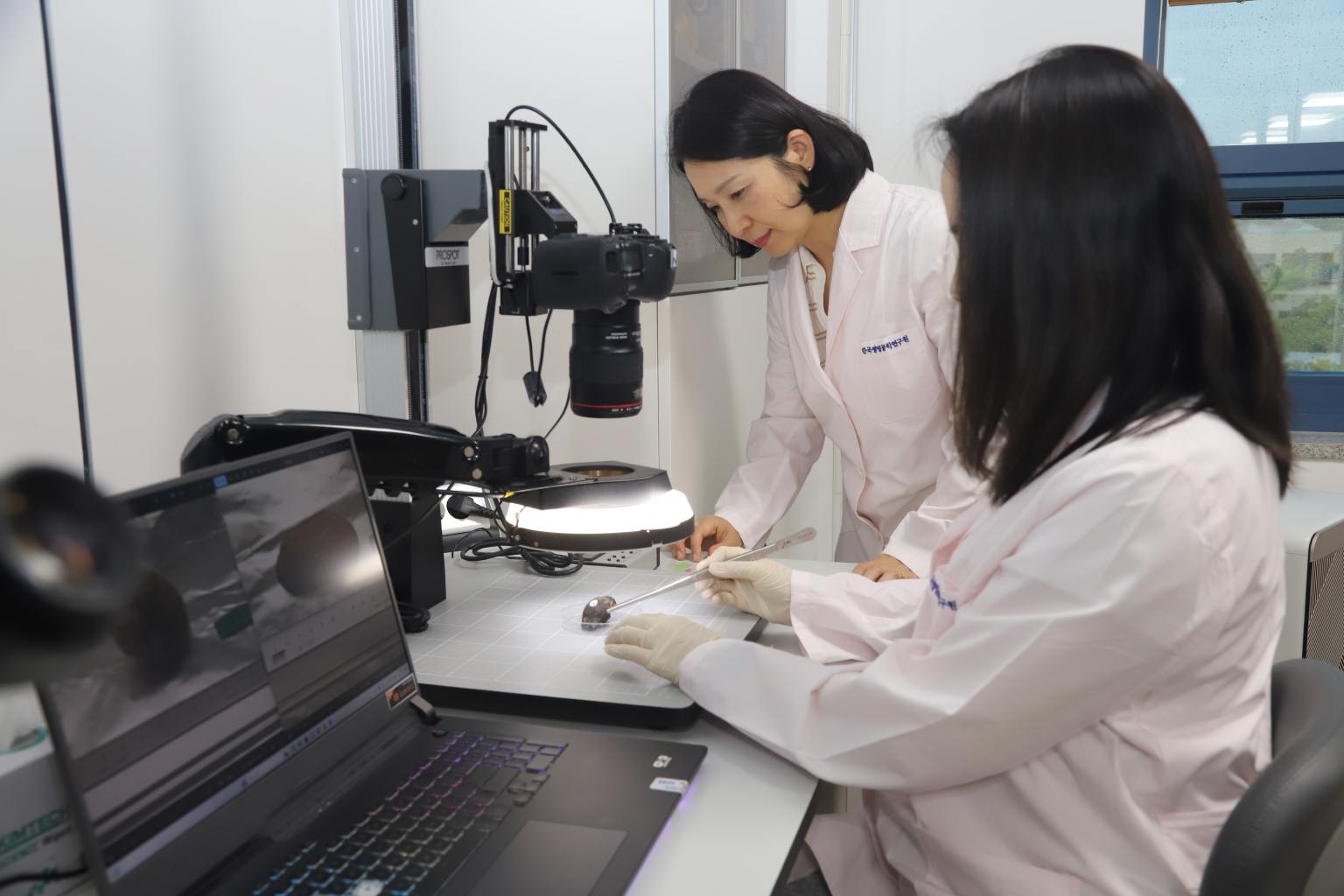
Because of this, once in the lab, each sample was treated like a treasure. To avoid cross-contamination while handling samples, the researchers wore natural-fiber clothing, 100% cotton lab coats and disposable latex gloves. They sterilized glass jars, dissecting forceps, scissors and knives and wrapped everything in aluminum foil rather than plastic-based materials. “You work carefully with what the ocean allows you to take,” Kim said.
Dining on microplastics
The thriving ecosystem of giant tube worms (Riftia pachyptila), clams, mussels, blind crabs, vent shrimp, limpets and snails that cluster around hydrothermal vents feed on whatever they find, including microplastics. The new research provides insight into how different creatures’ feeding mechanisms might influence the amount of plastic pollution in their bodies.
Deep-sea snail species, for example, graze on microbial mats, the slimy, sticky bacterial films covering vent chimneys and the seafloor that trap microplastic particles. Researchers suspect the snail’s gut and digestive gland, which combines what would be the functions of a liver, pancreas and intestines in humans, retain the particles, as they found higher concentrations of microplastics in those organs than in gills or muscles.
By contrast, particles didn’t accumulate in specific tissues of deep-sea mussels. This could be explained by the fact that when the mussels feed, by filtering water to collect microbes and floating debris, “both gills and digestive organs are continuously exposed to suspended microplastics,” the researchers wrote.

Tracing plastic pathways
The new study is the first to compare microplastic contamination in animals from two oceans. “Comparing separate oceans is, we felt, essential if you want to link deep-sea contamination directly back to human activity rather than simply documenting that plastic is everywhere,” Kim said.
The Indian Ocean specimens harbored up to 14.7 times more microplastics than those from the southwestern Pacific. The research suggests this could be explained by the Indian Ocean receiving about 15% of the world’s coastal and 20% of its riverine plastic discharges, the second largest load after the North Pacific. In addition, regional monsoons might hasten transport of terrestrial pollutants to the ocean, the authors wrote.
Biochemist Ronda said she is skeptical of this conclusion. She has analyzed samples from the ocean floor close to Hawai’i, near the enormous accumulation of plastic waste known as the Great Pacific Garbage Patch, expecting to find stratospheric levels of microplastics. Instead, she said she has found no linear relationship between the amount of microplastics on the surface and on the seafloor. “So, is it really because of the discharge into the area, or do those microplastics come from somewhere else?”
Ronda added that it’s important to understand if microplastics are impacting these animals’ biological processes. “Lots of new questions open up with these results,” she said.
For Kim, studying these mysterious ecosystems is essential to untangling the ocean’s role as the planet’s life-support system. “We still don’t know which species are the keystones, the ones whose loss would ripple outward across the planet,” she said. “If a link breaks in the deep-sea food pyramid, we have very little idea what that means for surface ecosystems, or for us. That’s a question worth taking seriously before we find out the hard way.”

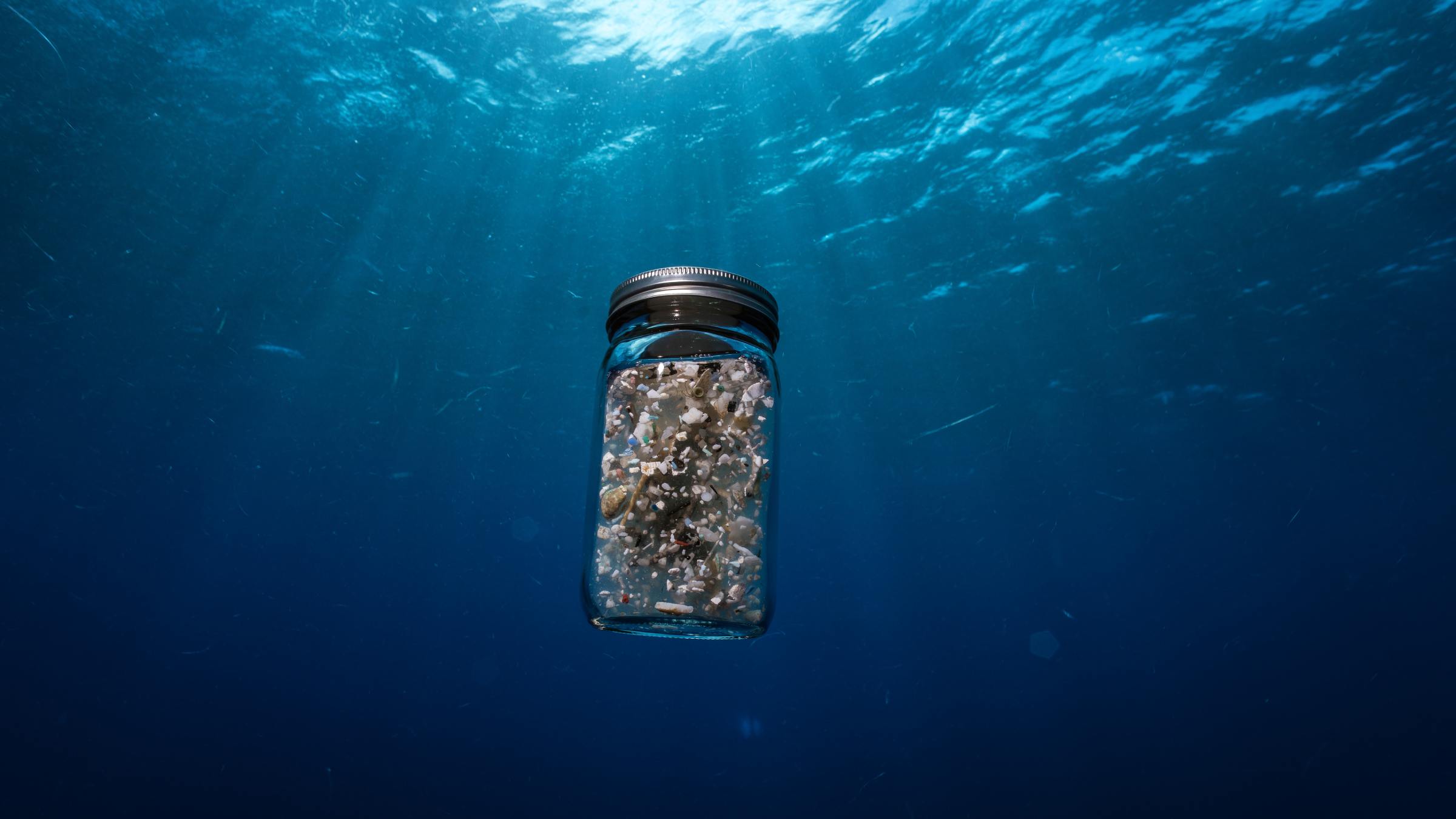
Banner image: A mason jar holds the plastic debris collected from just three hours of surface trawls, conceptualizing the vast number of plastic fragments and particles swirling in the Great Pacific Garbage Patch. Image © Justin Hofman/Greenpeace.
In ocean biodiversity hotspots, microplastics come with the currents
Citations:
Lee, W., Sim, Y., Ju, S., Kim, D., Jeong, J., & Kim, S. (2026). Oceanic determinants of microplastic bioaccumulation in fauna of deep-sea hydrothermal vents: Comparative study of the southwestern Pacific and Indian oceans. Water Research, 303, 126245. doi:10.1016/j.watres.2026.126245
Ronda, A. C., Adaro, M. E., Villar-Muñoz, L., Tomba, J. P., & Baldrighi, E. (2025). Microplastic contamination in deep-sea sediments and polymetallic nodules: Insights from the Clarion-clipperton zone, Pacific Ocean. Marine Pollution Bulletin, 216, 117945. doi:10.1016/j.marpolbul.2025.117945
Anthony, J., Varalakshmi, S., Kumar Sekar, A., Thalavai Sivasankarasubbiah, K., Harikrishnan, T., Rangamaran, V. R., … Ramalingam, K. (2024). Microplastics pollution in Indian marine environment: Sources, effects and solutions. Frontiers in Marine Science, 11. doi: 10.3389/fmars.2024.1512802
Pattiaratchi, C., Van der Mheen, M., Schlundt, C., Narayanaswamy, B. E., Sura, A., Hajbane, S., … Wijeratne, S. (2022). Plastics in the Indian Ocean – sources, transport, distribution, and impacts. Ocean Science, 18(1), 1-28. doi: 10.5194/os-18-1-2022
Feedback: Use this form to send a message to the editor of this post. If you want to post a public comment, you can do that at the bottom of the page.

