


More than half of the world’s wild tulip species assessed so far are threatened with extinction, reports Mongabay’s Shreya Dasgupta.
“For a flower this famous, it may surprise people how rare its wild relatives have become,” Brett Wilson, co-founder of the Wild Tulip Specialist Group at the IUCN, the global nature conservation authority, told Mongabay in an interview.
Researchers have so far assessed the conservation status of 62 wild tulip species for the IUCN Red List, Wilson said. Of these, 32 are threatened with extinction.
Most of the assessed species, 53, occur in Central Asia; five are critically endangered, seven endangered, 15 vulnerable, and 14 classified as near threatened. These at-risk wild tulips are concentrated in the massive Central Asian mountain systems of Tien Shan and Pamir-Alay, which Wilson calls the single richest region on Earth for tulip diversity.
The biggest threats to most wild tulips are livestock overgrazing and climate change. Tulips grow underground as dormant bulbs in cold, harsh conditions, before emerging and flowering in spring. Grazing animals can trample tulip bulbs and eat the flowers before they produce seeds, Wilson said. Meanwhile, “a warming, drying climate is squeezing mountain species upslope with nowhere left to go while more unpredictable weather can lead to landslides and floods,” he added.
Other threats including mining, infrastructure development, and overharvesting of bulbs from the wild, which affect specific species. The “classic victims of overcollection,” Wilson said, are the big, showy red-flowered species growing close to settlements. “Tulipa fosteriana in Uzbekistan and Tulipa praestans in Tajikistan have both been collected heavily, and both are now assessed as vulnerable on the IUCN Red List,” he added.
Most commercial tulip breeding, however, depends almost entirely on cultivated varieties, so international trade in wild species isn’t large, Wilson said.
“We do note some wild material collected in recent years, possibly entering breeding without clear permits, but this is small-scale and driven by tulip fanatics rather than industry,” he added.
Some tulip species, such as T. greigii, T. kaufmanniana and T. fosteriana, are abundant in cultivation, but have become rare in the wild. The conservation goal, Wilson said, is to maintain self-sustaining populations in their natural habitats, “because those are the plants established, reproducing and surviving in nature.”
Individuals from cultivated collections and nurseries can be reintroduced to the wild, but tulips have an added complication of hybridization. Cultivated tulip varieties and wild tulip species can cross-breed easily, producing genetic combinations that never occurred naturally. Those must not be released into the wild, Wilson said.
“Reintroduction still has to be done carefully: No hybrids, good survival rates for bulbs and seed, and only into places where the original threats have actually been reduced,” he said.
Read the full interview with Brett Wilson here.
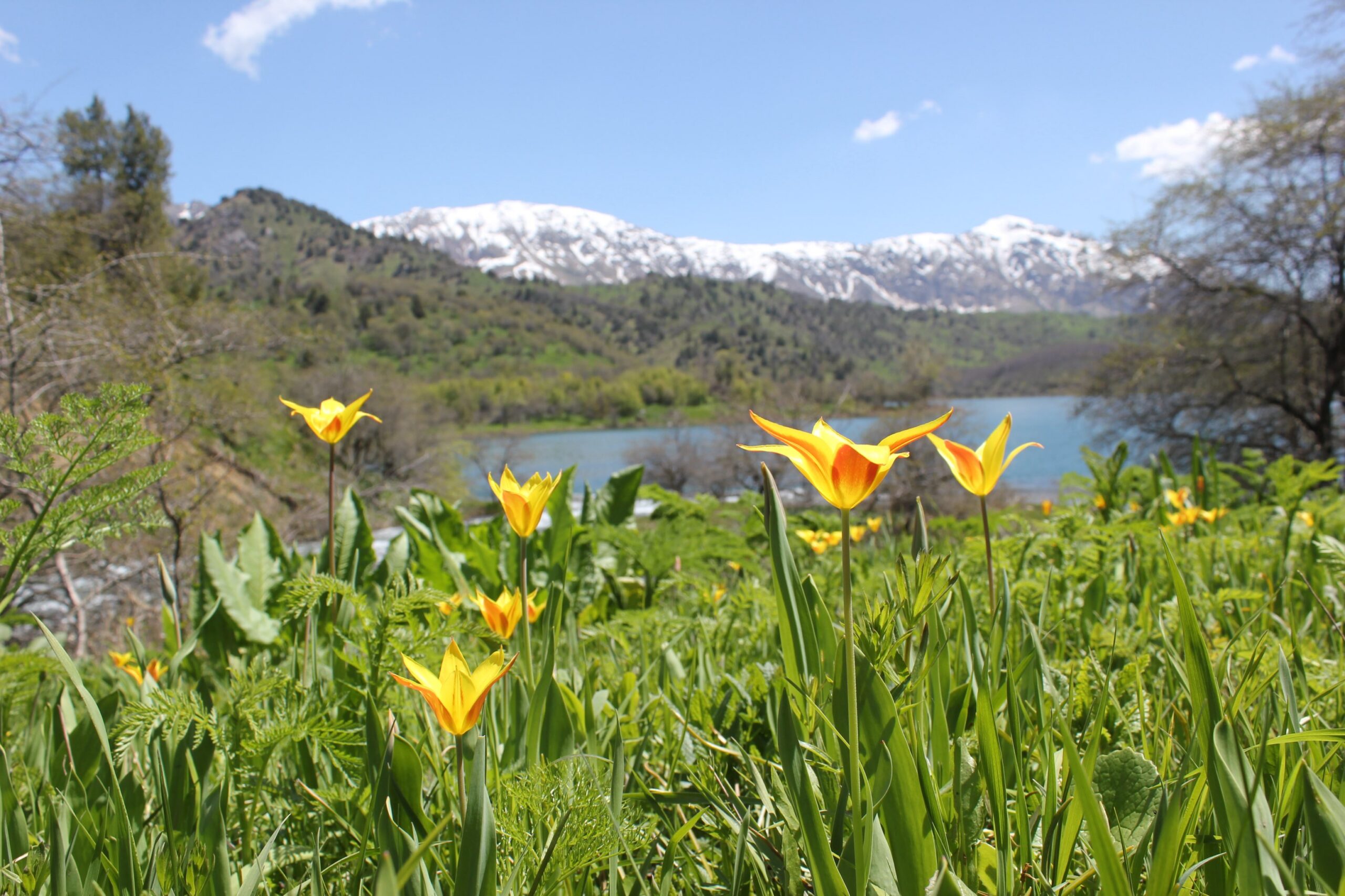
Banner image: Tulipa anadroma, a threatened species, growing in Sary-Chelek Biosphere Reserve in western Kyrgyzstan in early 2019. This protected area is the only place the species can be found. Image courtesy of Brett Wilson.
