


For months, Hamas’s disarmament has been the biggest sticking point in the stalled Gaza peace process. Major aspects of U.S. President Donald Trump’s 20-point peace plan are contingent on Hamas giving up its weapons, and Gaza has remained in a painful limbo since a cease-fire began last October due to the impasse.
For a moment last week, it looked like change might be on the horizon as Hamas agreed to a U.S.-backed framework to lay down its arms. Last Thursday, Trump hailed the agreement, which was orchestrated by his Board of Peace and designed to bring about the full implementation of his 20-point plan, on social media as “HISTORIC” and “a monumental step toward lasting PEACE and SECURITY.” The next day, Trump said that Israel was “very happy” with the agreement.
For months, Hamas’s disarmament has been the biggest sticking point in the stalled Gaza peace process. Major aspects of U.S. President Donald Trump’s 20-point peace plan are contingent on Hamas giving up its weapons, and Gaza has remained in a painful limbo since a cease-fire began last October due to the impasse.
For a moment last week, it looked like change might be on the horizon as Hamas agreed to a U.S.-backed framework to lay down its arms. Last Thursday, Trump hailed the agreement, which was orchestrated by his Board of Peace and designed to bring about the full implementation of his 20-point plan, on social media as “HISTORIC” and “a monumental step toward lasting PEACE and SECURITY.” The next day, Trump said that Israel was “very happy” with the agreement.
But it’s evident that that’s far from the case.
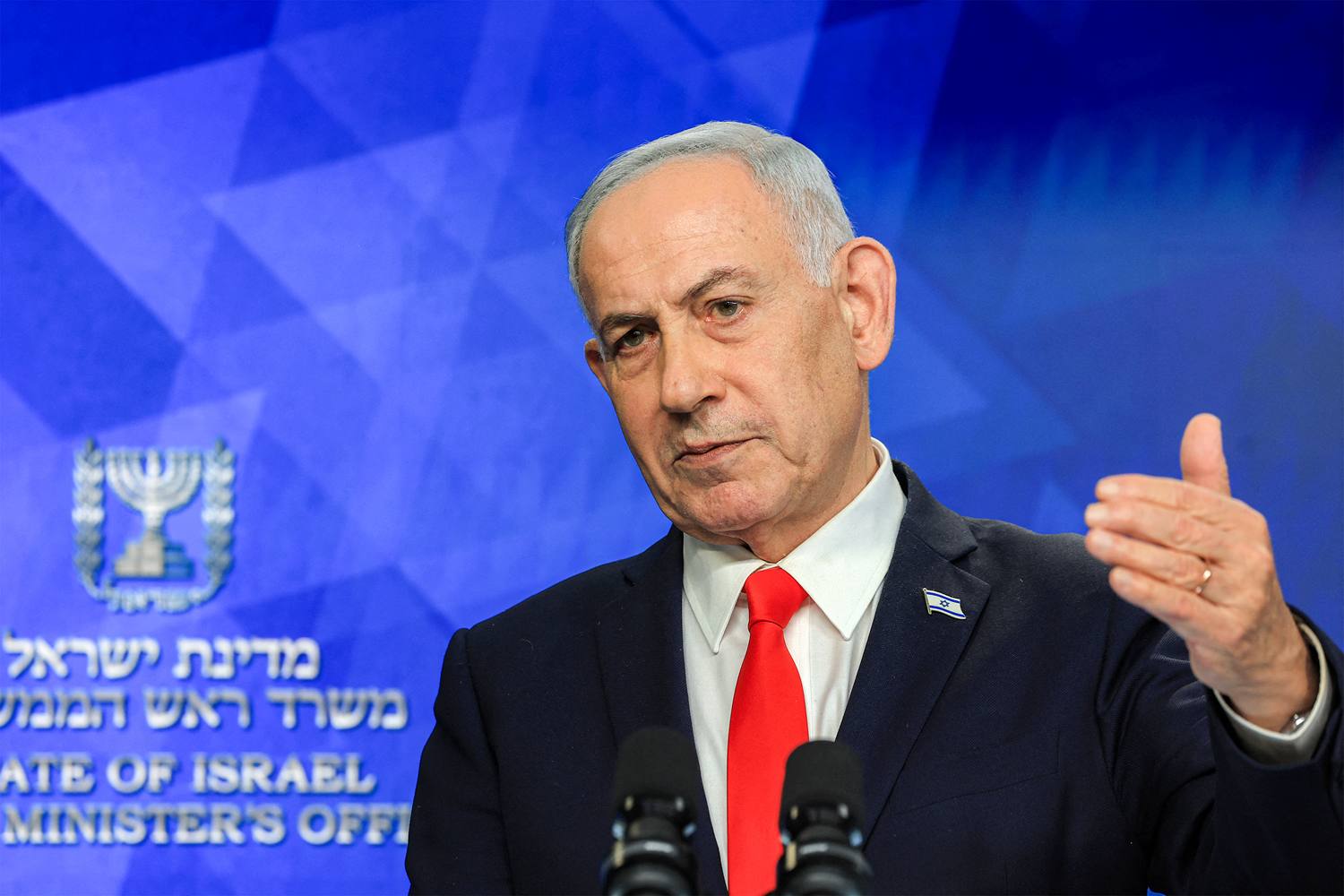
In the days since, Israel has expressed strong opposition to the disarmament roadmap, citing “serious security concerns.” Israeli Prime Minister Benjamin Netanayhu said on Tuesday that Israel “did not agree” with the framework and won’t withdraw from its “current lines until Hamas is completely disarmed.” Israel has also conducted a series of airstrikes in Gaza since the plan was announced, angering the Board of Peace.
Experts told Foreign Policy that Israel’s position on the disarmament plan is extremely unlikely to change until at least after the country’s highly anticipated elections in October, which could see Netanyahu—Israel’s longest-serving prime minister—lose power.
“The problem is that politically, in Israel, and especially before elections, it’s borderline impossible for the Israeli government to accept [the plan],” said Shira Efron, the distinguished chair for Israel policy at RAND, a security think tank. “Netanyahu and this coalition promised the Israelis absolute victory.” She added that the Israeli prime minister doesn’t want to be seen as making concessions to Hamas or giving up ground in Gaza ahead of the elections.
The deal is also unpalatable to Israel because of Qatar and Turkey’s potential role in the verification mechanism. “In the Israeli minds of today, Qatar is a borderline enemy state and Turkey the same,” Efron said, emphasizing that some in Israel view Turkey as the “new Iran.”
But even if Netanyahu loses in October, experts don’t anticipate swift changes in Israel’s position. “A new government would be hard-pressed to suddenly make major concessions in Gaza,” said Julie Norman, an associate fellow with the Middle East and North Africa program at Chatham House, a London-based think tank. “That would be a difficult move for them.”
Read More
-
U.S. President Donald Trump gestures as he poses next to a sign at a world leaders’ summit on ending the Gaza war, amid a U.S.-brokered prisoner-hostage swap and ceasefire deal between Israel and Hamas, in Sharm el-Sheikh, Egypt, October 13, 2025. U.S. President Donald Trump gestures as he poses next to a sign at a world leaders’ summit on ending the Gaza war, amid a U.S.-brokered prisoner-hostage swap and ceasefire deal between Israel and Hamas, in Sharm el-Sheikh, Egypt, October 13, 2025. Everyone Is Waiting for Trump’s Gaza Plan to Die
The Board of Peace has been revealed to be so flawed as to be completely unworkable.
-

Hamas militants are seen standing between two green flags while wearing all black and holding guns. Hamas militants are seen standing between two green flags while wearing all black and holding guns. Does the Road to Disarming Hamas Lead Through Qatar and Turkey?
Diplomats and experts say Doha and Ankara have leverage, but it may not be enough.

The disarmament framework, which provides a 14-day window to hammer out an exact timeline after all parties approve, calls for all sides to halt military operations in Gaza and ties the process to a phased withdrawal of Israeli troops from the territory.
But there are many reasons to believe that Israel has no intention of withdrawing from Gaza anytime soon.
Israel is currently estimated to control more than 60 percent of the coastal enclave. Israeli forces have also moved the yellow line—a military demarcation indicating the area under Israeli control—further into the territory in recent weeks. The yellow line, which was established under the Trump-backed peace deal, is supposed to be temporary. But in May, Netanyahu said that he directed the Israel Defense Forces (IDF) to expand its control of Gaza to 70 percent, in one of the many signs that Israel plans to remain for an extended period.
As Netanyahu outright rejects the plan, the Board of Peace has seemingly already backed down on the initial push for the Israeli withdrawal from Gaza to occur in concert with Hamas’s disarmament. “The withdrawal of the IDF beyond the Yellow Line will take place only once decommissioning is complete, as Hamas committed to the mediators,” the Board of Peace posted on X on Monday, the same day that its high representative for Gaza, Nickolay Mladenov, met with Netanyahu in Jerusalem. The Board of Peace has essentially “reassured Israel” that it doesn’t have to “withdraw from the current yellow line,” Efron said.
The disarmament agreement calls for the process to be overseen by the National Committee for the Administration of Gaza (NCAG)—a technocratic body of Palestinians that’s meant to administer Gaza under Trump’s peace plan—and for the weapons to be stored in Gaza.
Efron said that from Israel’s perspective, suggesting that Hamas’s arms should be stored in Gaza under NCAG supervision is “a joke.” Amid ongoing concerns that Hamas is taking steps to rearm and rebuild, it’s difficult for Israel to accept a process that removes it from monitoring the disarmament process, Efron said. Israel has blocked the NCAG from entering Gaza, and its 15 members remain in Cairo, which presents a significant obstacle.
The framework also states that the process will begin after the deployment of an international stabilization force (ISF). In late July, Israel reportedly offered initial approval for some form of a multinational force entering Gaza, but the ISF does not yet exist. With Israel rejecting the new disarmament framework, these key aspects of Trump’s broader peace plan are poised to remain up in the air.
At the end of the day, the details of the plan remain “hazy,” Norman said, adding that it follows a familiar pattern to “many of Trump’s diplomatic endeavors.”
“You see this initial announcement, a one-pager of bullet points, and then this idea that the rest of it will be hashed out later,” Norman said. “That hasn’t worked in other stages of Gaza or Iran or other conflicts that we’ve seen, and it doesn’t seem to be happening now.”
Nathan J. Brown, a professor of political science and international affairs at George Washington University, said that Trump’s enthusiastic announcement of the framework agreement was a “hardball tactic” as he attempts to “bully a way forward.” This development represents “noise” but “no movement,” Brown said.
Yet some experts said that the disarmament plan could serve as a roadmap toward future progress and might push the static peace process in a fresh direction.
“We can be clear-eyed about the fact that this is not going to suddenly resolve things in Gaza. Hamas is not going to bury or turn over their arms tomorrow. Israel is not going to be withdrawing anytime soon,” Norma said. “But this does change the dynamic in a way that was necessary and important.”
That’s in part because few expected Hamas to agree to disarm. The group defines itself as a resistance movement, and arms are central to its identity.
Some speculate that Hamas never expected Netanyahu to agree to the framework and that it was attempting to put the onus on Israel to make the next move, as well as shift blame to Israel for the lack of progress in Gaza.
The militant group has basically thrown “the ball to Israel’s court,” Efron said.
However strategic and calculated this move was, though, it helped “unlock” a different “dynamic and conversation,” Norman said.
The new framework also potentially offers the Board of Peace and the United States new “pressure and leverage” with the Israeli government “if they choose to use it,” Norman said, including by asking Israel to present alternatives to the plan—such as allowing the NCAG to enter Gaza if Hamas agrees to decommission its heavy weapons, for example.
Mladenov has conceded that the process is far from over, posting on X that this is “the start of the hard phase” and underscoring that this type of diplomacy is “grinding and technical work.”
