

Close Menu
NCIJ Network NCIJ Network
    What's Hot

    Microsoft Bets on a Unified Security Stack to Contain AI Agents

    October 23, 2026

    Scientists discover a surprising double benefit of exercise for Parkinson’s

    October 23, 2026

    Powys runner’s fitness addiction made him ‘obsessive and anxious’

    October 23, 2026
    Facebook X (Twitter) Instagram
    Trending
    • Microsoft Bets on a Unified Security Stack to Contain AI Agents
    • Scientists discover a surprising double benefit of exercise for Parkinson’s
    • Powys runner’s fitness addiction made him ‘obsessive and anxious’
    • Critics call for halt to road construction in Mexico’s Sian Ka’an Biosphere Reserve
    • The Guardian view on Caryl Churchill’s Triumph: a play for today | Editorial
    • Video of voting machine ‘switching’ vote to Republican is misleading and outdated
    • Meghan Markle ‘distressed’ by child abuse image allegations against father
    • Exposed to PHP? Cyber Experts Weigh in With Advice
    • About
      • Our Team
      • Editorial Policy
      • Editorial Independence
      • International Support
    • Trust & Standards
      • AI Usage Policy
      • Conflict of Interest Policy
      • Corrections Policy
      • Ethics Policy
      • Fact-Checking Policy
      • Source Protection
    • Get Involved
      • Guide for Sources
      • Support Independent Journalism
    • Legal
      • Cookie Policy
      • Privacy Policy
      • Terms of Use
    Facebook X (Twitter) Instagram
    NCIJ Network NCIJ Network
    Friday, October 23
    • Home
    • World
    • Ai
    • Business
    • Politics
    • Health
    • Crypto
    • Science
    • Technology
    • Cybersecurity
    • Defense & Security
    • Economy
    • Energy
    • Europe
    • More
      • Fact Check
      • Investigations
      • Opinion & Analysis
      • Environment
    NCIJ Network NCIJ Network
    Home»Science

    Why did humans’ brains surpass chimps’? A tiny foe might help explain it

    NCIJ NETWNCIJ NETWORKBy NCIJ NETWNCIJ NETWORKOctober 23, 2026 Science No Comments4 Mins Read
    Share
    Facebook Twitter LinkedIn Pinterest Email

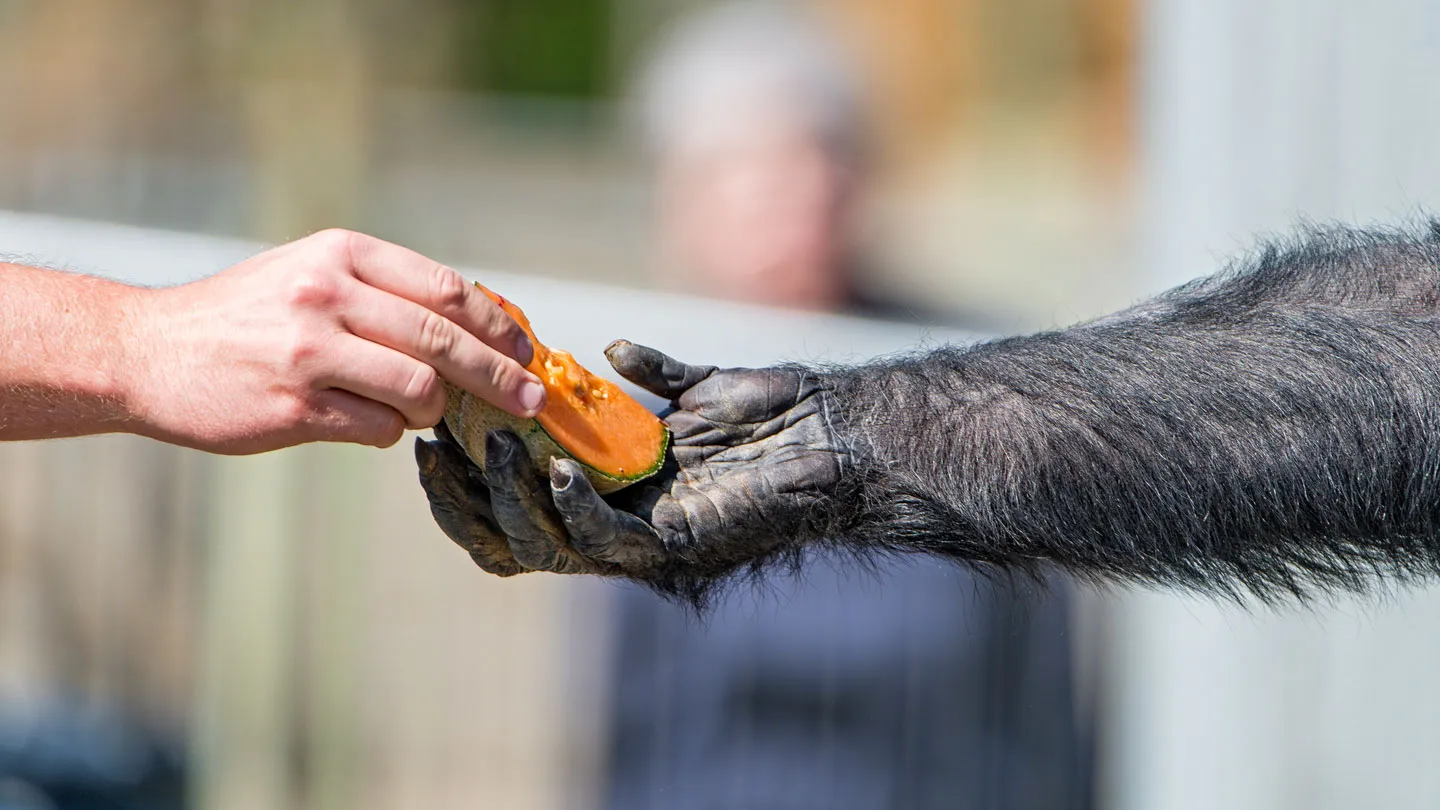
    Viruses may be minuscule, but one could have influenced major differences between human and chimpanzee brains.

    Millions of years ago, a virus left DNA behind in an African ape’s genome, and the genetic material stuck around in modern day chimps. Those ghosts of infections past appear to influence genes involved in neuron development, which may help explain how human and chimp brains ended up so different, researchers report October 23 in Science Advances. 

    Compared with the brains of their chimpanzee kin, human brains are three times larger and more cognitively powerful. Yet “most of their protein-making genes are very similar,” says Johan Jakobsson, a neuroscientist at Lund University in Sweden. In the absence of large differences in the genetic code, Jakobsson and his colleagues decided to look at the parts of the human and chimp genome that control when and where genes are turned on or off.

    Sign up for our newsletter

    We summarize the week’s scientific breakthroughs every Thursday.


    Changes in gene regulation can come from viruses. Some viruses called retroviruses insert their own DNA into their hosts’ genomes to command host cells to build more viruses. But those parasitic bits of DNA can linger long after an infection. If this happens in reproductive cells, the viral DNA gets passed down with the host’s DNA.

    These leftover bits, called endogenous retroviruses, no longer code for the production of infectious viruses, but they can have a big impact on the host’s biology — especially if they make copies of themselves across the genome. And they have. Such viral remnants make up at least 8 percent of the genomes of humans and chimps alike. More generally, these DNA leftovers have been linked with some major evolutionary events, such as the evolution of the mammalian placenta.

    Jakobsson and his colleagues focused on a particular viral vestige in chimps. The holdover came from an infection in an ancestral African ape somewhere between 5 million and 7 million years ago. In chimpanzees, the viral DNA had stuck itself into the genome at 158 different locations. However, it is curiously absent in humans. It’s still unknown why.

    The researchers wanted to know how that exact pathogen footprint might affect chimpanzees’ brains compared with those of humans. Working with chimpanzee stem cells, they removed the viral DNA using CRISPR, a gene editing technology that allows for precise, targeted cuts in DNA. Once the viral DNA was gone, a nearby gene called LINC00662 — normally silenced in chimpanzees — turned on, making RNA the team could detect. This matches the normal condition in human brain cells, in which LINC00662 is active. The team also used CRISPR to shut off LINC00662 in the human cells, matching the silenced condition seen in chimpanzees. 

    When LINC00662 was active in chimp or human cells, the researchers noticed activity boosts to other genes that may be important to brain development — such as genes involved in the development and maturation of neurons and in making new neural connections. It’s not yet clear exactly how the viral DNA’s shutdown of this brain gene network affected the biology of chimpanzee brains. However, this genetic difference may have contributed to a divergence in how human and chimpanzee brains evolved, Jakobsson says. “Our findings show one way an ancient viral [DNA] insertion could create a lasting difference in how a gene is regulated in humans and chimpanzees,” Jakobsson says. Other genetic and environmental changes could be involved in the puzzle as well, he says.

    Researchers have previously looked to single letter swaps in DNA to help explain how humans and chimp brains drifted apart in their evolution. But the new study highlights that creatures can rack up genome changes in other ways, says Giorgia Modenini, an evolutionary biologist at the University of Padua in Italy who was not involved with this research.

    The researchers do a convincing job of showing that these particular viral leftovers influence developmental differences between human and chimp neurons, says Ravinder Kanda, an evolutionary geneticist at Oxford Brookes University in Oxford, England. “They’ve proved that absolutely. How far that goes, I don’t think we can quite say yet.”

    It could be that other controls on genes’ activity are also involved or that this particular ancient lever-puller may represent just a sliver of the viral holdovers that have shaped brain development, Kanda says. “I think there are many, many more retroviruses to be discovered, and at the moment we’ve only touched the tip of the iceberg.”

    brains chimps explain foe humans surpass Tiny
    NCIJ NETWNCIJ NETWORK
    • Website

    Keep Reading

    Scientists discover a surprising double benefit of exercise for Parkinson’s

    A tiny defect in a crystal reveals a big quantum surprise

    Trains cancelled and roads warnings as Scotland prepares for Storm Boelo

    MIT scientists build a tiny robot that swims using living muscle cells

    NASA, Virginia Launch Power Partnership for Energy Security

    Eating too much sugar on antibiotics could squash helpful gut bacteria

    Add A Comment
    Leave A Reply Cancel Reply

    Editors Picks

    Microsoft Bets on a Unified Security Stack to Contain AI Agents

    October 23, 2026

    Scientists discover a surprising double benefit of exercise for Parkinson’s

    October 23, 2026

    Powys runner’s fitness addiction made him ‘obsessive and anxious’

    October 23, 2026

    Critics call for halt to road construction in Mexico’s Sian Ka’an Biosphere Reserve

    October 23, 2026
    Latest Posts

    ‘This is hell’: British widow ‘sick’ with worry over threat of being removed from Sweden | Sweden

    August 14, 2026

    Prichard Colon dies from boxing injury that resulted in 221-day coma | Boxing News

    August 14, 2026

    Weather forecasts once gave Britons something safe to chat about. Not any more | Andy Beckett

    August 14, 2026

    Subscribe to News

    Get the latest sports news from NewsSite about world, sports and politics.

    NCIJ Network is an independent digital news platform delivering trusted investigative journalism, European and global news, in-depth analysis, and fact-based reporting with accuracy, transparency, and integrity.

    Facebook X (Twitter) Instagram Pinterest YouTube

    Microsoft Bets on a Unified Security Stack to Contain AI Agents

    October 23, 2026

    Scientists discover a surprising double benefit of exercise for Parkinson’s

    October 23, 2026

    Powys runner’s fitness addiction made him ‘obsessive and anxious’

    October 23, 2026

    Subscribe to Updates

    Get the latest creative news from FooBar about art, design and business.

    Type above and press Enter to search. Press Esc to cancel.