


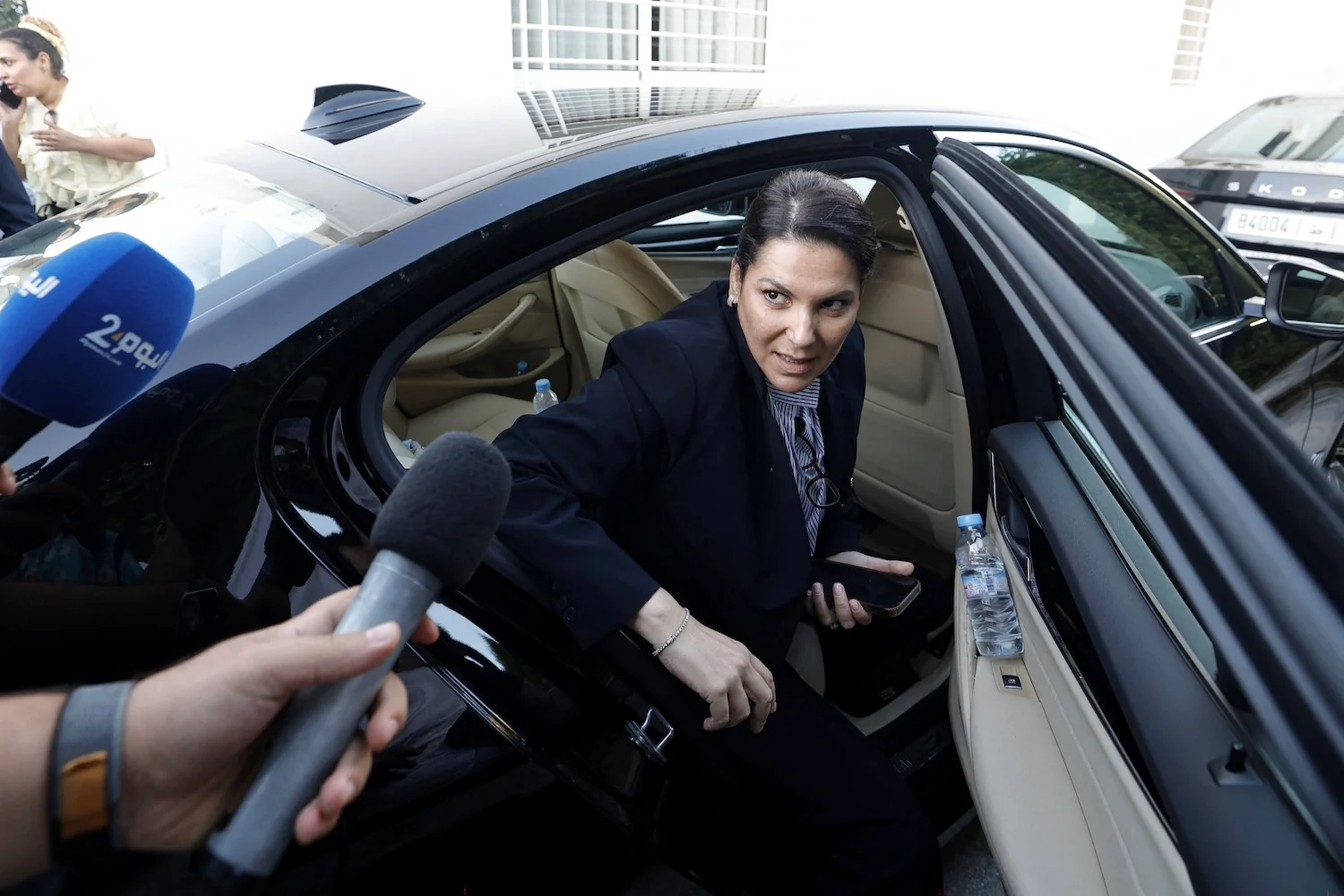
On Sept. 29, King Mohammed VI named Fatima Ezzahra Mansouri as Morocco’s head of government, making the country the second in the Arab world after Tunisia to appoint a woman to lead its executive branch. Soon, images of Mansouri meeting with the king, both of them dressed in traditional outfits of the same light-blue shade, circulated around the world. It’s a moment that would have been unimaginable not so long ago.
Mansouri’s appointment brought excitement to an otherwise uneventful election that was largely ignored by many Moroccans. The vote, which took place on Sept. 23, had an abstention rate of almost 62 percent, the country’s highest in almost 20 years. The low turnout was the culmination of decades-long apathy toward elections, with citizens feeling increasingly disconnected from Morocco’s political parties.
Yet while Mansouri’s new role is symbolically important, she will have limited power, as executive authority rests with the king. Still, her leadership comes at a pivotal moment for the country, and she will have a chance to influence issues that are important to many citizens, including the much-anticipated reform of Morocco’s family status law. If she succeeds in shaping policies that improve Moroccans’ lives and support gender equality, she may very well leave her mark on a country that is striving to modernize even as it has long leaned conservative.
Mansouri’s nomination has not been particularly surprising to observers of Moroccan politics. Although women historically did not hold key government positions, that has started to change over the last three decades. In 1993, the first two women were elected to the House of Representatives. Women have also occupied more government roles since 2000, when the late Zoulikha Nasri became the first female royal advisor to the king. Currently, although women still lag in political representation, 107 of the House’s 395 seats are filled by women.
Moroccan women have also become increasingly prominent in civil society. In 2007, the Moroccan Association of Human Rights (AMDH), perhaps the region’s most influential rights organization, elected its first woman president, Khadija Ryadi. (It is currently led by another woman, Souad Brahma.) Five years later, Nabila Mounib became the first elected female secretary-general of a political party, the Unified Socialist Party (PSU). And the National Human Rights Council, whose leaders are appointed by the king, has been led by Amina Bouayach since 2018.
These trends have coincided with Morocco’s transition to a more democratic constitutional monarchy. Before the Arab Spring, the king could choose anyone he wished to be prime minister. This changed after the “February 20 Movement” demonstrations in 2011 shook the country, leading to democratic practices taking root. The new 2011 constitution enshrined gender equality and gave more power to the prime minister—now called the head of government—and parliament. Morocco’s king now has to choose a head of government from the party that wins the general election, though he maintains control over certain divisions of government, such as the ministries of the interior and foreign affairs.
In the lead-up to this year’s election, the possibility of Mansouri’s nomination loomed over the end of the campaign, because she is a prominent figure in the Authenticity and Modernity Party (PAM), which was widely expected to win. A liberal party that describes itself as “modernist,” the PAM was created in 2008 by current royal advisor Fouad Ali El Himma, and many Moroccans have since associated it with the country’s real decisionmakers in the royal palace. Its political purpose was to rival the Islamist party, the Justice and Development Party (PJD). The PJD led Morocco’s coalition governments from 2011 to 2021, when it suffered a major defeat. In September, the PAM won 97 seats, securing a major victory, though it had to form a coalition to govern.
Mansouri, who is 50 years old, is no newcomer to politics. Her father, Abderrahmane El Mansouri, led the Marrakech bar association, served as the city’s “pasha,” a high-ranking city administrator, and later became Morocco’s ambassador to the United Arab Emirates. She followed in his footsteps, becoming a lawyer before moving into politics. In 2007, she joined the Mouvement de tous les démocrates, which laid the groundwork for the PAM. Since then, she has become one of the PAM’s three leaders, and at the time of her appointment, she was serving as both mayor of Marrakech and Morocco’s housing minister.
Mansouri is not known as an outspoken women’s rights advocate, though she openly celebrated her appointment as a historic event and a victory for Moroccan women in her first declaration as head of government. And of the new government’s 32 ministers, only six are women, including Mansouri. Nevertheless, when it comes to women’s rights, the political elite has sent a clear message: Soon after her nomination, many possible political allies in her coalition government expressed their support for a woman occupying the role.
While Mansouri will have only limited room for decision-making, she will still play an important role in the coming months as Rabat tries to find its footing and implement highly anticipated reforms in a delicate political climate.
First, she will oversee new reforms to the Moudawana, or family status law, which is an extremely sensitive topic in Moroccan politics. The Moudawana law is inspired by Islamic principles and concerns issues such as women’s rights, child custody, and the legal age of marriage. The law underwent major revisions in 2004, in a process that sparked significant societal tensions. In recent years, King Mohammed VI has called for another reform, which will address inflammatory subjects such as divorce and equality in inheritance rights, which Moroccan conservatives and Islamists will surely oppose.
It will take political courage for Mansouri to modernize the Moudawana, as she will certainly face considerable opposition. But how she approaches it will impact Moroccan society for decades and represents a unique opportunity to enact radical change for gender equality.
In addition, Morocco’s government will have to manage co-hosting the 2030 FIFA World Cup amid deep socioeconomic tensions. Last fall, the country was shaken by the Gen Z 212 protests, a movement that called for investment in education and health reforms instead of the billions of dollars slated for building and modernizing soccer stadiums. This led to a wave of detention, with some 2,500 people prosecuted—at least 580 of whom are currently incarcerated, according to Omar Arbib of AMDH.
Mansouri will also have to tackle the related issues of the high cost of living and youth disillusionment, illustrated by more than 70,000 Moroccans fleeing to the Spanish exclave of Ceuta in July. (Most have since been returned, and at least 145 have died.)
Although Morocco boasts strong GDP growth of around 4 percent, according to the High Commission for Planning, many citizens aged 15 to 24 have been largely left behind, with a 30 percent unemployment rate. Moreover, 3 million Moroccans between the ages of 15 and 29 are characterized as NEET (Not in Employment, Education, or Training), and many young Moroccans show political apathy; 18- to 24-year-olds account for 12 percent of the population but just 4 percent of the country’s 15.8 million registered voters.
So far, Moroccans have been largely in a state of anticipation. “Let’s see what she does, and then we’ll judge,” has been a common refrain over the last few weeks. Some young people I spoke to approve of Mansouri because of her gender but added that it wasn’t “the woman of their choice.” (They would have preferred Mounib, who openly supported Gen Z 212 and called for the release of detainees.)
In activist circles, meanwhile, having a woman leading the government hasn’t been as important a subject of discussion as the struggle against corruption and the push for further democratization. At least some critics even see the discussion around Mansouri as a diversion from important political debates. Although they welcome a woman leader, leftists in the PSU and the Federation of the Democratic Left believe that structural political reform, social justice, and democratization are far more important than identity politics. Indeed, many Moroccan citizens seem more concerned about the reforms Mansouri will implement to ease the cost-of-living crisis than the gender dynamics at play.
Regardless, the royal nature of the decision leaves little room for open criticism. If Mansouri succeeds in overseeing reforms that improve both gender inequality and the socioeconomic climate, her premiership could have a considerable impact on Morocco’s evolution in the 21st century. At the same time, because she does not fully hold the reins of power, she could remain confined to a political role that critics view as an impediment to genuine democratic improvement. After all, if Morocco undergoes a meaningful transformation, it will be at the hands of the king, not Mansouri herself.
