


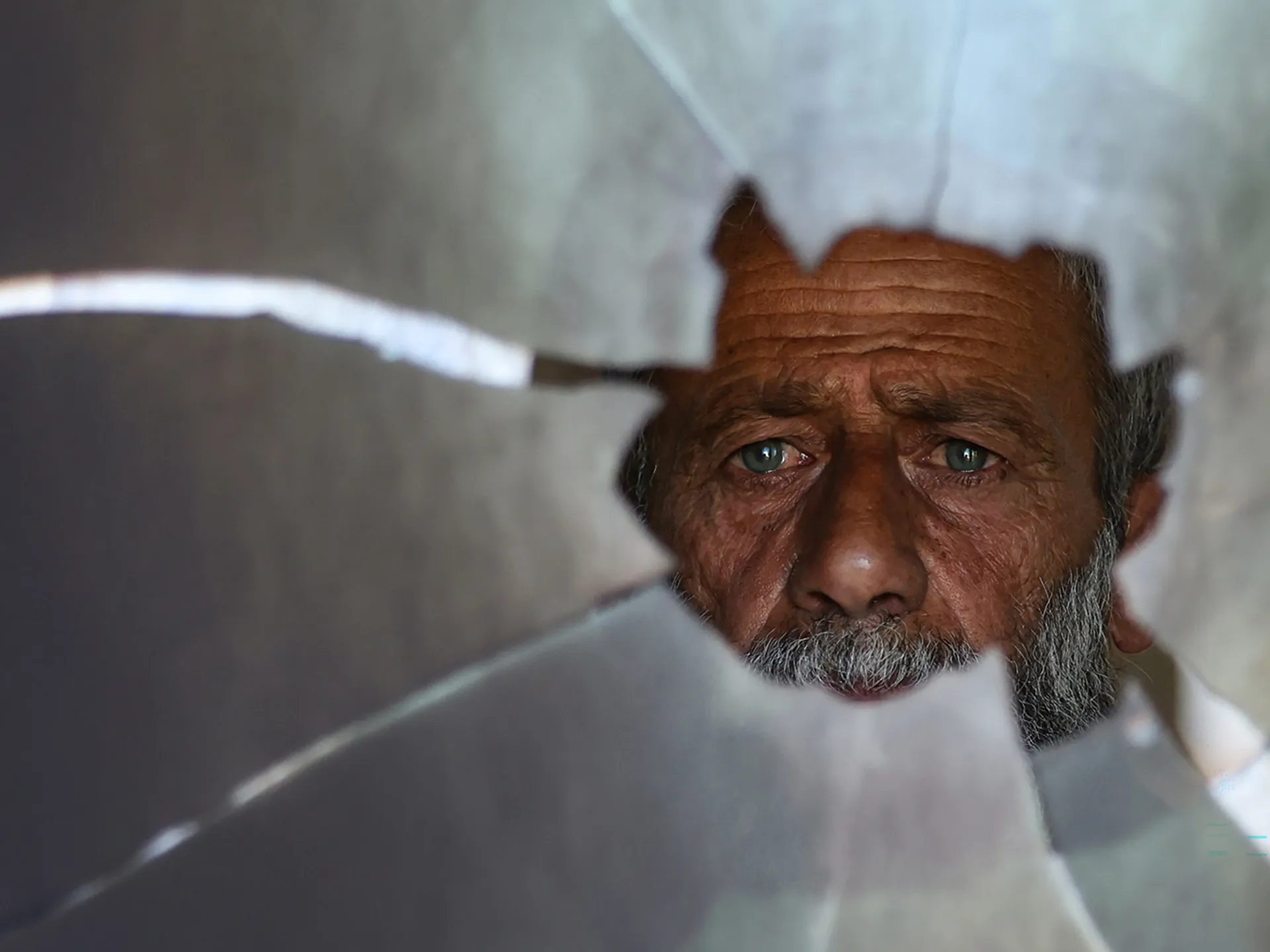
At-Tuwani, occupied West Bank – In the village of at-Tuwani in Masafer Yatta, 72-year-old Khadera Ima sleeps on her roof through the hot summer nights. It keeps her cool, she says.
On July 18, she climbed up to sleep as usual.
Recommended Stories
list of 3 itemsend of list
Just after midnight, Ima heard shouting below. Looking down, she saw a group of 30 to 40 masked settlers moving through the village.
“I saw them set fire to the factory, to the mosque, to homes. They threw petrol and rocks at our house. My son was at the window. It is good they did not kill him,” she told Al Jazeera.
From the roof, she watched as they moved between houses, spraying graffiti on walls, setting a neighbour’s car alight and smashing in a front door.
“What could I do? Nothing,” Ima said.
Downstairs, her daughter-in-law watched settlers throw petrol outside her window. She was two months pregnant. Her family told Al Jazeera she miscarried after the attack.
Further down the road, 21-year-old Adam al-Adara was preparing to sleep when he heard the commotion. A football match had ended earlier, and many young men were still outside when messages about the attack began circulating in the local group chat.
“When I left the house, honestly it was really scary, seeing houses on fire,” al-Adara said.
He joined other residents as they rushed to put out fires with soil and move children deeper into the village, away from where the settlers had reached.
“If people do not defend themselves, the settlers will come in and kill them and burn the house they are sitting in,” he said.
The incident lasted about 10 minutes before residents eventually pushed the settlers out, but nobody slept that night, fearing they would return.
Days later, the graffiti was still on the walls: a Star of David sprayed on the mosque, and the Hebrew word for “revenge” on the side of a home.
A policy of forcible displacement
At-Tuwani is a village of just more than 200 residents at the entrance to Masafer Yatta, a cluster of Palestinian herding communities in the South Hebron Hills. It is located in Area C of the occupied West Bank, which is under full Israeli military control.
Sami Huraini, a member of the village council and a field researcher documenting settler attacks in the South Hebron Hills, told Al Jazeera that while the violence is not new, the scale and nature of this attack marked a new escalation.
Huraini framed it as part of a pattern of Israeli raids, demolition orders, land confiscation, and incursions meant to drive Palestinians from their land, with Israeli settlers and the military all part of the same system.
“We see the mentality of the settlers,” he said, describing how many of the same individuals he grew up watching intimidate and harass his community later return in military uniform.
Human rights organisations have documented a pattern of settler impunity, arguing that state policies, military protection, and lack of accountability have allowed attacks against Palestinians to continue.
Huraini added that the pressure extends beyond physical attacks and into Israel’s legal and planning systems. One example, he said, is the near impossibility for Palestinians to obtain building permits, leaving homes and other structures vulnerable to demolition.
At-Tuwani sits just outside Firing Zone 918, an area Israel declared a military training ground in the 1980s that covers most of the Masafer Yatta communities. A 1981 government transcript records former Prime Minister Ariel Sharon – who was then the chair of a committee on Israeli settlements – saying the declaration was intended to restrict the “expansion of the Arab villagers from the hills towards the desert”.
In May 2022, Israel’s Supreme Court cleared the way for the expulsion of around 1,000 Palestinians living inside the zone, including the village of Khallet al-Daba. During a campaign of mass demolitions in 2025, carried out by the military, the majority of the hamlet was destroyed, leaving many homeless.
The July 19 attack came amid the highest rate of settler violence on record. The United Nations Office for the Coordination of Humanitarian Affairs (OCHA) has documented an average of six settler attacks a day causing casualties or property damage in the first five months of 2026, more than 1,000 so far this year, across upwards of 230 communities.
“The only language this regime knows is terror and violence,” said Huraini.
Across the occupied West Bank, 63 Palestinian communities have been forcibly displaced since October 2023 as of June 2026, according to Israeli rights group B’Tselem.
As Palestinians are displaced, Israeli settlers continue to expand their presence. Roughly 20 Israeli settlements and outposts are mapped by OCHA in the Masafer Yatta area, all of which are illegal under international law. One of them, Havat Maon, borders at-Tuwani, and residents say some of the settlers involved in the July 19 attack came from there.
Still, Huraini said the people of at-Tuwani have no intention of leaving. “This is a strong, stubborn village that always challenges the occupation,” he said. Residents across Masafer Yatta echoed the same sentiment.

‘We are here to stay’
In the days that followed the attack, settlers returned to at-Tuwani, reinforcing what residents say has become a constant reality: there is no one coming to protect them.
On July 20, settlers returned carrying assault rifles and approached the same homes that had been attacked.
Ima said a group of them came to her door and told her the house no longer belonged to her family, and that they should leave.
“I told them I am not afraid of you, and I am not afraid of your country,” she said. “This house, I will protect.”
On July 24, residents said that settlers returned, escorted by the military, to hold an annual prayer inside a privately owned Palestinian garden.
Between these incursions, the village has been left to defend itself.
“We have no protection from anyone,” Huraini said. “So we are the ones protecting ourselves.” That means installing cameras on homes and keeping watch through the night.
Standing outside the mosque settlers attempted to burn, al-Adara said residents are forced into an impossible calculation: stand back and watch their homes burn, or confront the settlers and risk arrest or worse.
Yet despite the pressure, residents insist at-Tuwani will not become another community forced from its land.
“We are here to stay,” said Huraini.
