


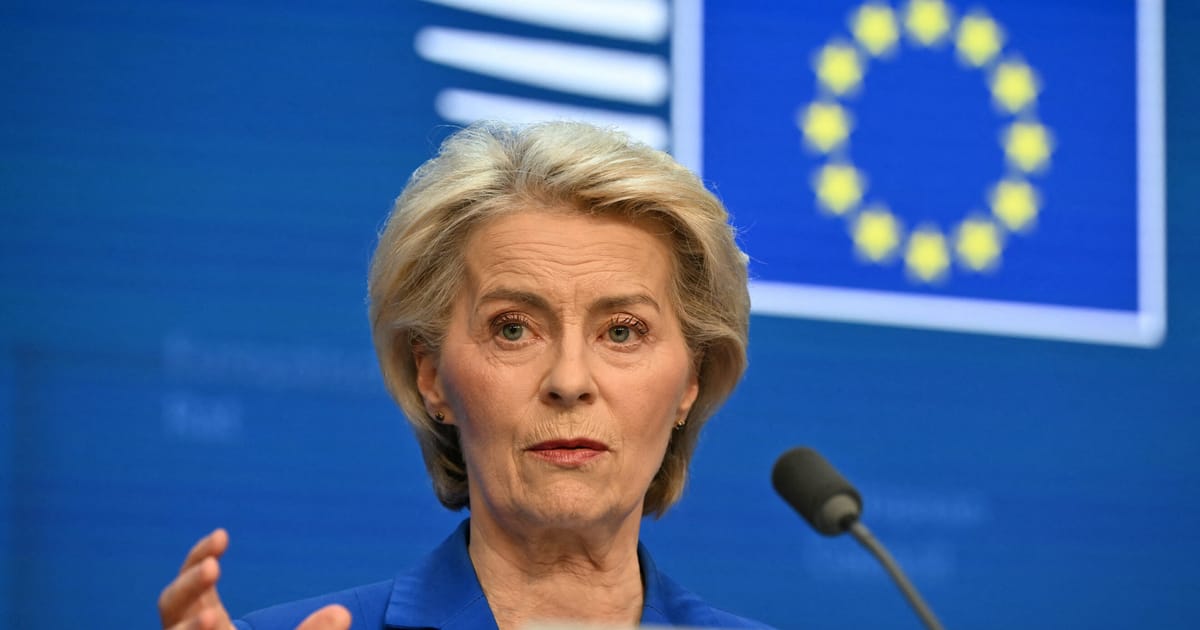
“We need to be able to act effectively and to act quickly,” she said about the needed changes in the EU Executive’s machinery. “That means simpler procedures, clearer structures, better cooperation across departments so that our colleagues can focus their efforts where it makes the greatest difference.”
The external group, consisting of Day and eight other experts with experience in national administrations and international organizations including the OECD and OSCE, put forward nine interrelated recommendations aimed at making the Commission more agile and better equipped to adapt to future challenges.
Among its main proposals is a shift away from working in siloed departments toward greater collaboration across directorates-general, including through cross-DG portfolios.
This part of the exercise is politically sensitive. Behind the push to modernize the Commission lies the prospect of a far-reaching reorganization of its departments, potentially redrawing the responsibilities of powerful directorates-general that oversee billions of euros in EU spending.
As POLITICO first reported, several major Commission departments face an uncertain future under plans to overhaul how the bloc manages and distributes EU funds, raising the prospect of mergers or other structural changes.
Among the departments potentially affected is the Directorate-General for Regional and Urban Policy (DG REGIO), which oversees cohesion policy funding, accounting for almost a third of EU spending. Other departments facing uncertainty include the Directorate-General for Agriculture and Rural Development (DG AGRI), responsible for Common Agricultural Policy money; DG EMPL, which oversees employment and social funding; DG MARE, which handles fisheries funding; and DG RTD, responsible for research and innovation.
