


- Documents obtained by Mongabay show Vantara, the controversial private zoo in India run by billionaire Anant Ambani, was in talks with Brazilian authorities to form a “strategic conservation partnership” focused on the country’s threatened species.
- The zoo also proposed a conservation partnership on Spix’s macaw, a parrot species endemic to Brazil but extinct in the wild; 26 of the birds were sent from Germany to Vantara in 2023 without Brazil’s consent.
- Representatives from Vantara met with Brazilian officials in 2025 to discuss this partnership. A Brazilian delegation was scheduled to visit the Indian zoo in 2026; that trip was canceled at the last minute.
- Conservationists say that given the ongoing investigations into Vantara’s links to alleged wildlife trafficking, the country must be transparent about any agreement signed with the zoo.
Vantara, the billionaire-run Indian private zoo that houses more than 150,000 animals, discussed a “strategic conservation partnership” with authorities in Brazil, the world’s most biodiverse country, according to documents obtained by Mongabay under Brazil’s Freedom of Information Act (FOIA).
Correspondence between Vantara representatives and Brazilian officials reveal that negotiations, initiated by Vantara, began in August 2025, and involved some of Brazil’s threatened species.
The zoo, which is located in Gujarat state in western India, was founded in 2025 by Anant Ambani. He’s the youngest son of India’s richest person, Mukesh Ambani, who heads Reliance Industries, a conglomerate valued at $167 billion as of press time.
On Aug. 30, 2025, a Vantara representative sent a letter by email to three officials at the Chico Mendes Institute for Biodiversity Conservation (ICMBio), the governmental agency responsible for protecting Brazil’s biodiversity. The sender’s identity was redacted in the FOIA response. The subject line reads, “Proposal for Strategic Conservation Partnership with the Government of Brazil.”
The letterhead uses Vantara’s official name, the Greens Zoological Rescue and Rehabilitation Centre (GZRRC). The letters are addressed to Mauro Pires, president of ICMBio; Marcelo Marcelino de Oliveira, the agency’s director; and Raul Fontoura, its head of international affairs.
The letter states that Vantara was “well-positioned to assist with other Brazilian species requiring urgent ex-situ intervention,” referring to the conservation strategy of keeping a population surplus in zoos and breeding centers, rather than in their natural habitats.
The correspondence does not name specific species, but highlights the purported benefits of such an agreement. “Brazil stands to gain access to Vantara’s advanced infrastructure, technical expertise, and global conservation networks while Vantara gains the opportunity to contribute meaningfully to one of the world’s most biodiverse nations,” it says.
Vantara also invited Brazilian officials to visit its facilities in Jamnagar, Gujarat, a 1,400-hectare (3,500-acre) compound run by the philanthropic arm of Reliance Industries. A copy of the letter is available here.

Negotiations amid allegations of illegal wildlife trade and a row over Spix’s macaws
Since its opening in March 2025, Vantara has drawn accusations that some animals it has imported may have been illegally trafficked. In September 2025, an investigation by India’s top court found no irregularities in Vantara’s animal acquisitions.
The zoo has also been the subject of inspections by CITES, a treaty regulating the international trade of endangered species signed by 184 nations and the EU. After visiting Vantara in September 2025, the CITES Secretariat requested that India “not issue any further import permits” for endangered species because of discrepancies between export and import trade data.
Among the suspicious transfers to Vantara that were mentioned in the CITES report are shipments of chimpanzees (Pan troglodytes) from the Democratic Republic of Congo, snow leopards (Panthera uncia) from Germany, and a bonobo (Pan paniscus) from the United Arab Emirates.
But that recommendation to suspend imports was voted down at a CITES meeting in Uzbekistan in November 2025, with decisive votes from Brazil, Japan and the U.S.
In August 2026, Vantara announced a self-imposed 12-month ban on all animal imports, dating back to June 5, 2025. The zoo hasn’t acknowledged any wrongdoing, nor explained what it will do with the 150,000 animals already under its care, many of which are endangered species.
It said that during this ban, Vantara would focus on internal “enhanced governance expertise and due diligence procedures” and it would “undertake structured outreach, pursue international accreditation and benchmarking.”

Following Vantara’s announcement, a coalition of 27 global NGOs called on the Indian zoo to permanently end all wild animal imports, and to focus on conserving their habitat and providing care and rescue where the animals are, in their home range.
In light of past accusations against Vantara, a partnership proposal with Brazil for threatened species warrants careful scrutiny, Brazilian conservationists say.
“Given the widespread concerns raised by various organizations in different countries regarding different animals, the precautionary principle must be observed,” Juliana Machado Ferreira, executive director of the South American wildlife trafficking watchdog Freeland Brasil, told Mongabay.
Vantara’s letter to Brazilian authorities came at a precarious time for the relationship between the two: Brazil was unhappy about a shipment of Spix’s macaws sent to Vantara in 2023.
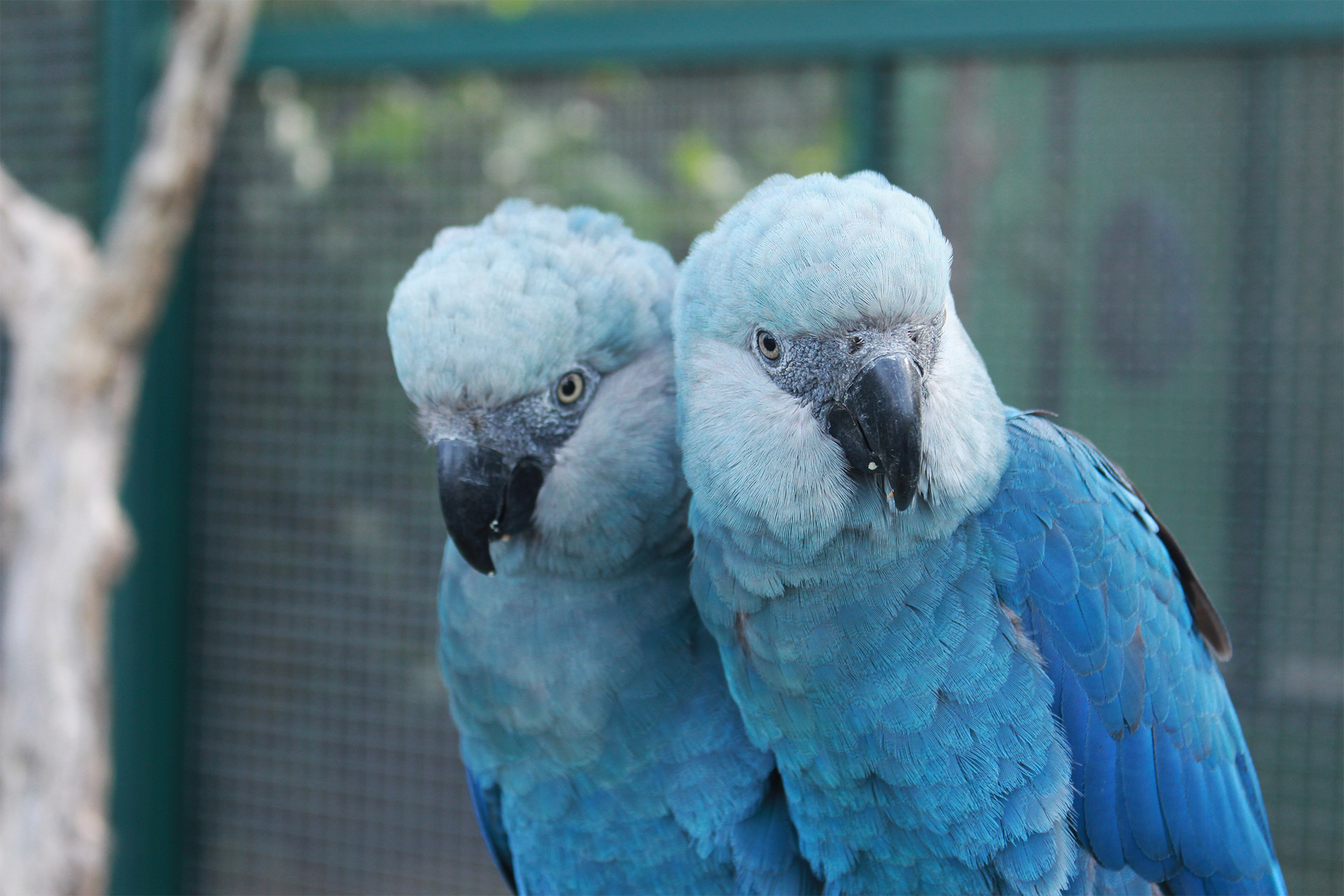
The Spix’s macaw (Cyanopsitta spixii), an endemic Brazilian species, is highly coveted by collectors worldwide, in particular in Europe and the U.S., thanks to its color and rarity. These birds can’t be sold legally, and there are no current estimates on their black-market price, but historical data indicates they were selling for as much as $40,000 a bird.
Poaching for this lucrative trade wiped them out: The bird was declared extinct in the wild in 2019. More than 300 individuals, however, are scattered in breeding centers around the world, according to Brazil’s Ministry of Environment and Climate Change.
Since the 1990s, Brazil has been trying to bring part of this precious population back to the wild. In 2001, as part of this effort, it requested that all signatories to CITES consult Brazilian authorities before issuing any import or export permits for a Spix’s macaw.

The country also created a conservation program to reintroduce these birds into the wild in the Caatinga biome, in Brazil’s northeast. The first group, consisting of 20 macaws, was reintroduced in 2022 — but they were recaptured in November 2025 owing to an outbreak of circovirus. The virus causes psittacine beak and feather disease in parrots, macaws and parakeets, which can be fatal.
“It was a major setback,” Luís Fábio Silveira, the curator of the ornithological collections at the Museum of Zoology of the University of São Paulo (USP), Brazil, told Mongabay. “The project was going well, but one animal was infected and infected all the others.”
In 2023, Vantara obtained 26 Spix’s macaws from the German-based Association for the Conservation of Threatened Parrots (ACTP). The transfer raised concerns among Brazilian authorities because the macaws were being raised as part of the conservation and reintroduction program — and they were sent to the Indian zoo without Brazil’s consent.
According to USP’s Silveira, the transfer jeopardized the species’ reintroduction program. “For the reintroduction to succeed, you have to release many animals on a regular basis, sometimes for decades,” he said. “We needed that steady flow [of the birds], and ACTP failed to honor its agreement with the government.”
In 2024, Brazil terminated its partnership with ACTP because of the unauthorized transfer to Vantara. The German organization faced allegations of improperly profiting from collecting, breeding and selling rare parrots, according to a 2018 investigation by The Guardian.
Brazil filed a formal objection at a February 2025 Standing Committee meeting of CITES, opposing the Spix’s macaw transfers. “In order to generate the greatest possible conservation benefit to the species, international transfers of specimens of Spix’s macaw shall only be acknowledged and authorized if they are in accordance with the management plan coordinated by the Brazilian authorities,” Brazilian environmental officials wrote.

Vantara representatives visited Brazil
The FOIA documents shared with Mongabay do not include Brazil’s response to the August letter where Vantara proposed a partnership. In October 2025, however, Vantara’s representatives visited Brazil, as confirmed by ICMBio in another FOIA response. According to the agency, it “met with representatives from Vantara/GZRRC to discuss actions aimed at the conservation of the Spix’s macaw within Brazilian territory” and “a potential contribution to the Population Management Program.”
The agency stated it does not have a list of the meeting’s participants, but said representatives from three government bodies met with GZRRC staff: ICMBio’s Division of International Affairs, the Ministry of the Environment’s Special Advisory Office for International Affairs, and the Ministry of Foreign Affairs’ Division of Biodiversity. It’s also unknown who represented Vantara at the meeting.
In a FOIA response to Mongabay, the Ministry of Foreign Affairs confirmed it participated in the meeting and said that “preliminary discussions are underway between ICMBio and Vantara to explore ways to strengthen efforts aimed at the conservation and reintroduction of the Spix’s macaw into the wild.”
On the day of the meeting, Oct. 23, 2025, a Vantara representative sent a second letter to ICMBio, proposing cooperation with Brazil specifically for the conservation of Spix’s macaws. The sender’s name was redacted.
Earlier that year, in January, ACTP sent 41 Spix’s macaws from its breeding center in Berlin to a facility in Curaçá in Bahia state, Brazil. Vantara stated it participated with “expert guidance and critical resources” in the operation, which was widely shared on Indian media.

The second letter was addressed to Marcelo Marcelino, then-acting president and director of ICMBio. In it, Vantara proposes a “framework of cooperation” to guide “joint efforts in advancing the recovery and long-term survival” of the imperiled macaw. The proposed framework includes scientific collaboration, vet and technical support, rehabilitation infrastructure and other elements.
The letter details the proposed terms: “Within this framework, GZRRC will undertake the breeding, veterinary care, and management of the Spix’s macaws maintained at its facility in India.”
The zoo’s representative also says that the “[B]irds will be made available for reintroduction into their natural habitat in Brazil as part of a coordinated and scientifically guided process jointly overseen by ICMBio and GZRRC.”
Under this framework, the letter says, Brazil and the GZRRC could set a global example “showing how India and Brazil can unite to lead the next era of biodiversity restoration.”
Conservationists say that while a partnership with Vantara might help fund the Spix’s macaw conservation program, there are concerns.
Ferreira from Freeland Brasil said that while the influx of funds could benefit the birds, the terms of a potential collaboration should be crystal clear, especially after the recent controversies about ACTP sending the birds to Vantara without authorization and the circovirus outbreak.
She added that Brazil “excels” in technical expertise needed for Spix’s macaw conservation and the country is capable of doing it independently.

In a response letter sent on Dec. 13, 2025, ICMBio’s president Pires instructs Vantara to formally join Brazil’s management program for Spix’s macaws, like other animal conservation and breeding organizations, including the Association of Aquariums and Zoos of Brazil (AZAB) and the Loro Parque Fundación in the Canary Islands.
Led by ICMBio, Brazil’s management program sets rules that govern the captive breeding and reintroduction of Spix’s macaws into the wild. For instance, at the end of each year, partner organizations must share data with Brazilian coordinators detailing births, transfers and deaths, as well as information on the animals’ health and diet.
In his response, Pires raises a concern: A significant portion of the Spix’s macaws population lives outside Brazil, which “has raised questions and expectations.” He also notes that Vantara hadn’t shared any information about the “health status, management, and individual conditions” of the 26 macaws it received in 2023, which, he writes, “is essential for informing strategic decision-making within the Population Management Program.”
On Dec. 24, 2025, Vantara responded to Fontoura, ICMBio’s international affairs head, saying that it would consider joining the breeding program. It added that they could discuss the conditions of the macaws under the zoo’s care “during your and your team’s visit to Jamnagar early next year.”
Three months later, in March 2026, Vantara shared a status report with ICMBio on its Spix’s macaws’ gender, microchip ID number, year of birth, health and test results for communicable diseases. It also shared photos and descriptions of some of the birds in its care, its laboratories and its health facilities.
Brazilian visit to Vantara canceled at the last minute
ICMBio stated that Vantara’s potential contribution to the Spix’s macaw breeding program “is under discussion” and that “any agreement that may be reached will be between the governments of Brazil and India,” according to a FOIA response dated May 13, 2026.
Mongabay asked the Indian embassy in Brazil if the Indian government was aware of such discussions. In response, a spokesperson said that these negotiations were between a “private entity” and the government of Brazil.
Mongabay also asked India’s CITES management authority and ministry of forestry and environment whether Brazil reached out regarding the Spix’s macaw conservation project, but did not receive a response by the time of publication.
As part of the ongoing discussions, Brazilian environmental officials were scheduled to visit the Indian zoo in March 2026. However, a few days before they were due to depart, ICMBio said it postponed the trip “due to unforeseen circumstances.”
In an email to Mongabay, ICMBio stated, “there are no plans or indications that the trip will take place.” It did not clarify why the visit was canceled. Read the agency’s full response, in Brazilian Portuguese, here.

But then, in May 2026, the Brazilian Federal Police seized three cell phones and a computer from renowned bird expert Tony Silva, in an investigation linked to Vantara.
At the time, a police statement said the action was part of an investigation “probing the international trafficking of golden lion tamarins and other endangered species of Brazilian fauna.”
Silva, who has promoted himself as a parrot specialist and was in Brazil for a bird breeders conference, was sentenced in the U.S. in the 1990s to seven years in prison for wildlife trafficking.
In May, sources told Mongabay that Silva is suspected of coordinating the purchase of illegally traded animals for Vantara. Vantara denied wrongdoing in an email to Mongabay and stated that Silva “has been engaged [to work for Vantara] by an independent contractor for limited consultancy.” It declined to provide further details about his work for the zoo.
The investigation is ongoing.
Given the current allegations and investigations in Brazil involving Vantara, the country must be transparent about any agreement to be signed with the zoo, Freeland Brasil’s Ferreira said. “We must take care to ensure that this does not become a way to facilitate the shipment of animals to Vantara or to be part of a greenwashing strategy.”
Vantara did not respond to Mongabay’s questions on the ongoing discussions with Brazil, the aims of these discussions and where they stand.
Banner image: Vantara proposed a partnership with Brazil for the conservation of the Spix’s macaw, a species endemic to Brazil and extinct in the wild. Image by Camile Lugarini.
Marco Mantovani contributed reporting.
Brazil police seize devices from bird expert in trafficking probe linked to Vantara zoo
Vantara works with lobbyist tied to Trump Jr. and pro-hunting groups
NGOs call on Vantara to end all wild animal imports permanently
Cite this article
Fernanda Wenzel, Spoorthy Raman (2026). Vantara in talks with Brazil on ‘strategic cooperation’ on threatened species, FOIA documents reveal. Mongabay Conservation news. DOI: https://doi.org/10.66709/news-331147

