


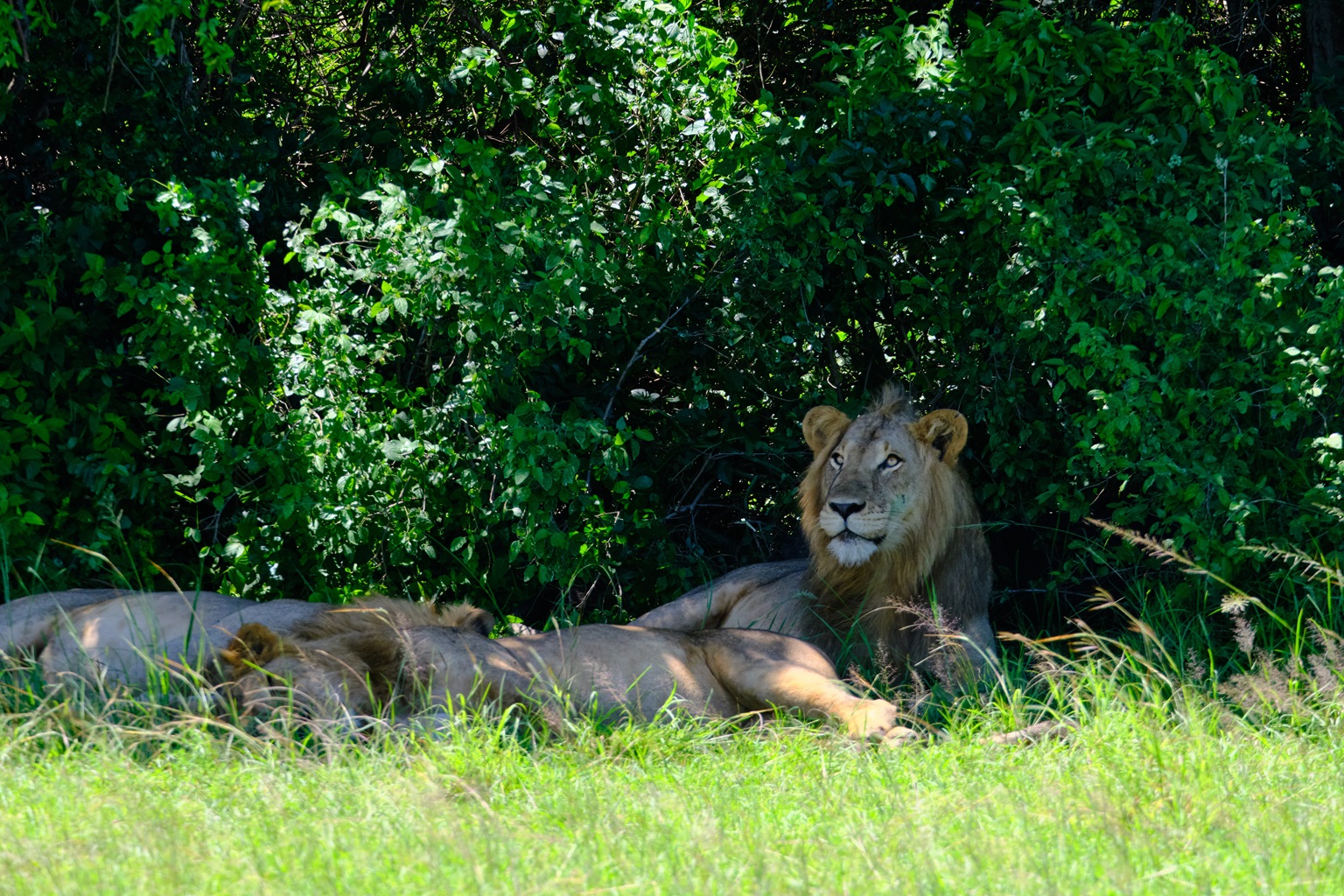
The Uganda Wildlife Authority (UWA) and the Wildlife Conservation Society (WCS) have signed a 10-year agreement to co-manage a portion of Queen Elizabeth National Park, famous for its tree-climbing lions.
WCS will take over some day-to-day roles for the Ishasha Sector in the south of the park, including those covering biodiversity management, community engagement and the development of tourist enterprises, according to WCS Uganda country director Simon Nampindo. UWA will retain responsibility for law enforcement and wildlife protection in Ishasha, he added.
The agreement follows a wider trend of “public-private” partnerships between African governments and conservation organizations to manage parks.
“Across all pillars, WCS and UWA will work closely in the co-development and implementation of all activity workplans and budgets,” Nampindo told Mongabay by email.
Queen Elizabeth’s Ishasha Sector covers around 500 square kilometers (193 square miles) of the park’s 1,978 km2 (764 mi2) area.
Historically, Ishasha’s lions have been a magnet for tourists, but the animals are becoming rare. According to UWA’s figures, the overall lion population in Queen Elizabeth declined by more than 90% between the late 1970s and 2022, falling from 400 to 39 individuals.
Nampindo said there are now fewer than five lions in Ishasha. Unless that population is supplemented — likely through translocation from elsewhere — it will not be able to recover naturally.
Queen Elizabeth’s lions have faced several overlapping threats, including conflict between the predators and local herders, habitat loss and snares set by poachers in the park. Nampindo said these causes of lion decline need to be addressed before any translocations take place.
Since 2018, lions have been killed by people living in and around the park in a series of incidents. In 2021, a poisoned carcass caused the death of at least six lions. In late 2025, another three lions died under similar circumstances.
Mongabay’s reporting from Queen Elizabeth has found a tense relationship between some pastoralist communities and the UWA. Attacks on livestock by lions have fed long-standing grievances over strict grazing rules and contributed to retaliatory killings.
Nampindo said that WCS plans to recruit “lion guardians” and scouts from towns around Ishasha to build support for conservation. It has also financed the construction of enclosures and water boreholes for livestock.
“[Human-wildlife conflict] measures will be further strengthened under the [collaborative management partnership] and launched through a series of extensive community consultations in the first six months,” Nampindo said.
WCS’s role at Queen Elizabeth will come with new oversight responsibilities for law enforcement at Ishasha. A 2024 Mongabay investigation found credible allegations of extrajudicial killings and other violence by UWA rangers at the park. Nampindo said its agreement with UWA includes human rights protections, such as a grievance structure and a code of conduct.
“WCS is aware of the allegations and has discussed them directly with [UWA], with both organizations agreeing to a series of concrete measures to strengthen human rights protections, accountability, and community engagement,” he said.
Banner image: A pride of lions inside Queen Elizabeth National Park. Image by Ashoka Mukpo for Mongabay.
