


Welcome back to Foreign Policy’s Situation Report. John is flying solo this week as Rishi enjoys a much-deserved vacation.
Alright, here’s what’s on tap for the day: Trump’s renewed push for a Ukraine peace deal, Kyiv’s complicated budget concerns, and the Republican backlash to Witkoff’s praise of Putin.
Have feedback? Hit reply to let us know your thoughts.
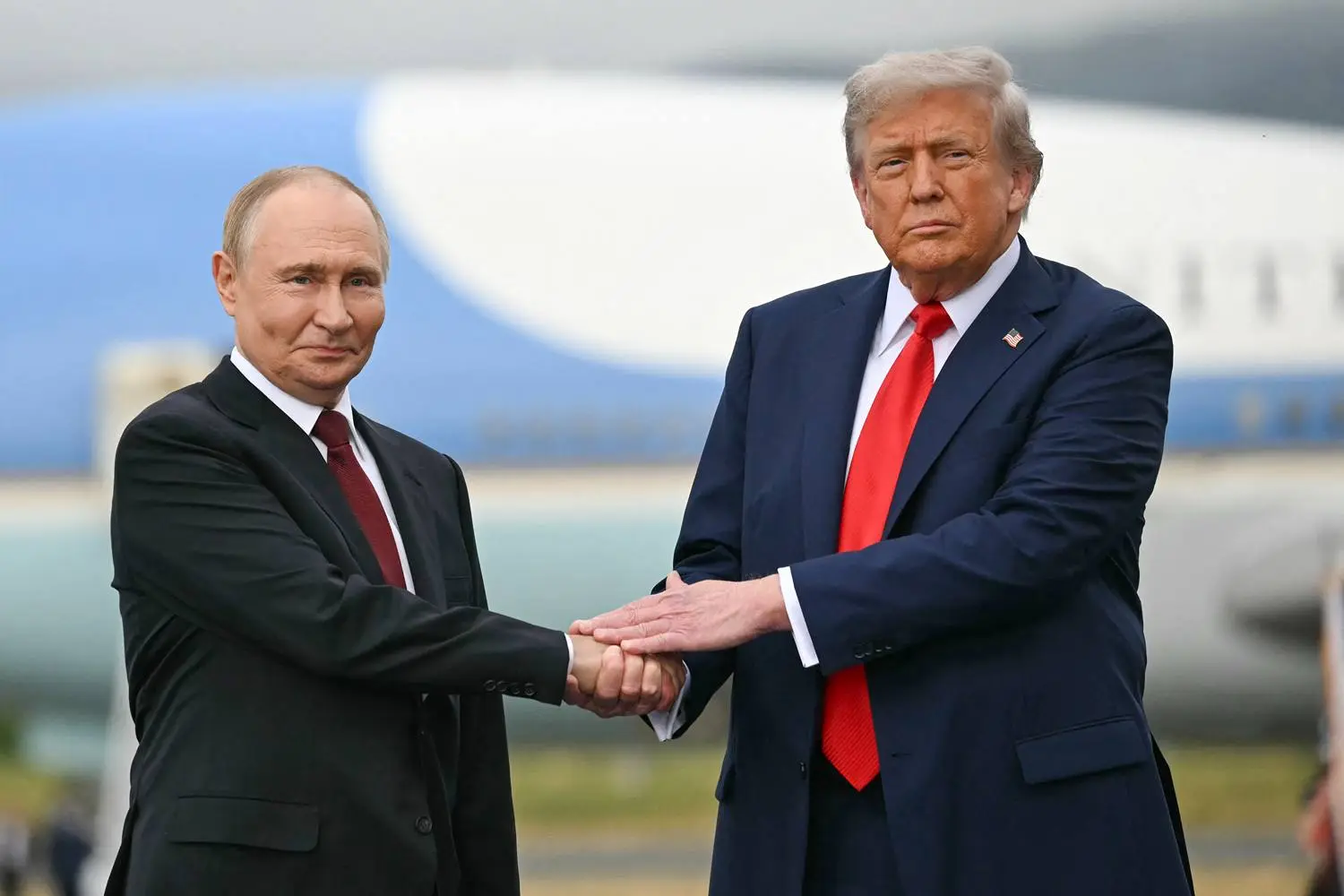
U.S. President Donald Trump has been pushing for an end to the Russia-Ukraine war throughout his second term but has so far failed to make meaningful progress as both sides continue to pummel one another. Trump is now taking another swing and has (once again) soured on Ukrainian President Volodymyr Zelensky in the process.
Trump is blaming Zelensky for prolonging the war and portraying him as an obstacle to an agreement. “We want Zelensky to make a deal,” Trump told reporters in the Oval Office on Tuesday. “We’ve given a lot to Ukraine. We’ve gotten absolutely nothing back except grief, death, tremendous monetary loss.” He also suggested that Zelensky is “more difficult to deal with than [Russian President Vladimir] Putin,” a longtime adversary of the United States.
Meanwhile, the Pentagon has also delayed the transfer of Patriot missile interceptors that Ukraine needs to defend itself against Russian strikes. And questions have been raised in recent days over whether the White House or Elon Musk ordered a slowdown of the military-grade version of SpaceX’s Starlink in Ukraine—a satellite internet service that the Ukrainian military has relied on in the fight against Russia.
“I don’t know who did it, but I was not involved,” Trump said Wednesday. The Wall Street Journal reported that Musk ordered the restrictions and discussed the move with Trump.
Also this month, Trump has taken controversial steps to ease economic pressure on Moscow that critics—including some Republicans on Capitol Hill—view as a boost to Putin’s war machine. Trump in early October announced a deal for Russia to supply diesel to the United States. Last week he waived sanctions on Moscow—measures mandated via legislation he recently signed that was named for the late GOP Sen. Lindsey Graham (a close ally of Trump’s up to his death).
Why now? Before his second term began, Trump vowed to end the war in Ukraine within 24 hours. It’s proved to be more complicated than that. These days, he appears to be growing impatient with the lack of progress.
This renewed push for peace also comes as Trump looks to ease pressure on energy markets ahead of the midterm elections in November, in which Republicans could get clobbered amid voter discontentment over the state of the U.S. economy. Along these lines, Trump is angry at Zelensky over Ukraine’s strikes on Russian energy facilities, which he’s blamed for rising fuel prices. But Trump’s war with Iran, which has entered a holding pattern lately, is in many ways the bigger culprit for high gas prices of late.
A misguided search. There are many reasons to doubt that Trump’s approach will pay off. Though Putin on Wednesday released an American prisoner and has seemingly agreed to resume trilateral peace talks with the United States and Ukraine next month, neither of these steps comes at a particularly large cost to the Russian leader.
By easing restrictions on Russia and refusing to impose new economic penalties, Trump has given up potential leverage over Moscow in negotiations, according to analysts. But that’s not the way Trump sees it. “When you’re close to a deal and you have delicate negotiations, you don’t put sanctions on,” Trump said Wednesday.
Is a deal close? Hardly. Russia and Ukraine remain fundamentally at odds on terms to end the war—which include maximalist demands from Moscow such as Ukraine ceding the Donbas—and that makes it difficult to be optimistic about the prospects for an agreement. This was also the case when Trump met with Putin at a high-profile summit in Alaska in August 2025, which ended without any significant agreements or movement.
It’s clear Trump wants a foreign-policy win, and he seems to believe that Putin could help deliver one, but his chances don’t look good.
Katie Zacharia was pushed out as White House press secretary last Friday after just five tumultuous days on the job. Anthony Scaramucci, who also had a famously short tenure in the White House under Trump during his first term, said, “The universe did her a favor.” It’s unclear who will replace Zacharia.
What should be high on your radar, if it isn’t already.
Ukraine’s money problems. Kyiv has relied heavily on financial support from European allies amid its war with Russia. But Ukraine’s budget—particularly in defense funding—could be in trouble if it doesn’t pass reforms needed for continued European backing. FP’s Sam Skove wrote about these challenges in a recent piece.
Hope for bipartisanship? Politics in the United States are more polarized than in decades, and it’s especially evident on Capitol Hill—particularly when it comes to foreign policy and national security. In a must-read piece, FP’s Rachel Oswald profiles outgoing Democratic Sen. Jeanne Shaheen, the ranking member on the Senate Foreign Relations Committee, who describes why she still believes in bipartisanship. Read it here.
Saudi-backed Yemeni government fighters fire a truck-mounted recoilless rifle during battles against Yemen’s Iran-backed Houthis at the Jabal Han front west of the city of Taiz on Oct. 21.Ahmad Al-Basha/AFP via Getty Images
Tuesday, Oct. 27: Israel is holding its first parliamentary elections since the Hamas attack of Oct. 7, 2023.
“All I can say is if I’m ever captured by Vladimir Putin, I’d rather die in a prison in Russia than have somebody on my behalf refer to Vladimir Putin as a humanitarian.”
—GOP Sen. Kevin Cramer after U.S. special envoy Steve Witkoff referred to Putin as a “humanitarian” for releasing an American prisoner.
