


Welcome to Foreign Policy’s South Asia Brief.
The highlights this week: A proposed liquefied natural gas project in Pakistan underscores close ties with the Trump administration, garment workers in Bangladesh protest for pay increases, and India’s opposition alliance rallies to call for the resignation of the chief election commissioner.
U.S. Mulls LNG Project in Pakistan
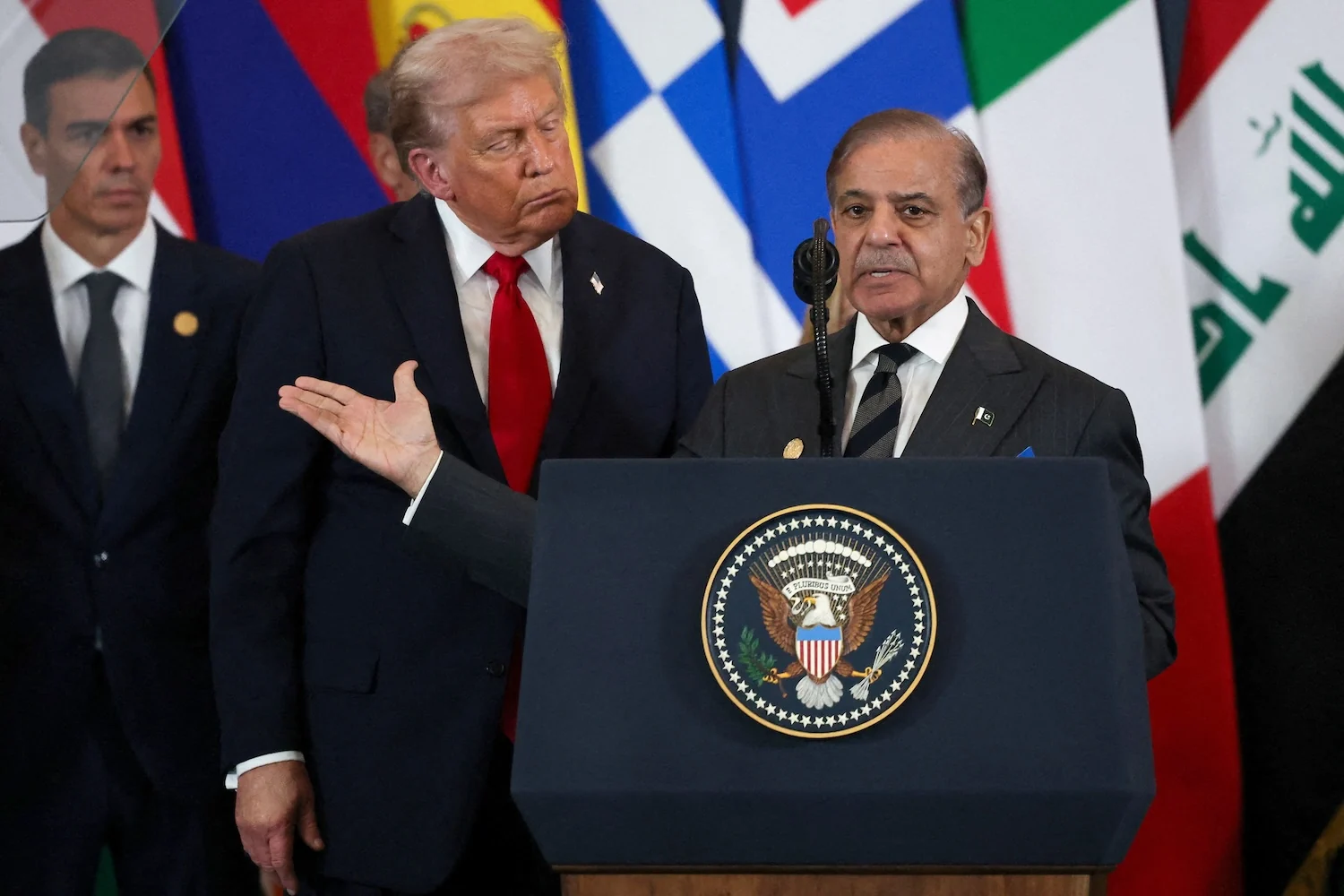
Since U.S. President Donald Trump returned to the White House last year, Pakistan has banked heavily on doing business with the United States. With the Democrats flipping both houses of Congress in the U.S. midterm elections on Tuesday, though, one has to wonder if Islamabad could come out as another loser.
For one thing, scrutiny of Trump’s business dealings will certainly increase, constraining his administration’s capacity to pursue deals abroad.
A big topic of discussion in Pakistan this week—along with the midterms—is the news that a consortium of U.S. companies has proposed a $4.4 billion liquefied natural gas (LNG) project in Port Qasim, near Karachi. It would be Pakistan’s first LNG storage facility, helping to shield the country from global energy shocks.
The proposal entails a large-scale storage terminal and eventually a 680-mile delivery pipeline. The plan is backed by the U.S. Trade and Development Agency, U.S. International Development Finance Corp., and the Export-Import Bank of the United States.
Washington’s support for the proposed LNG project underscores just how much the U.S.-Pakistan relationship has changed in Trump’s second term. Bilateral ties were downgraded after the U.S. withdrawal from Afghanistan in 2021, in large part because Washington had long viewed relations with Islamabad through a security lens.
The Trump administration turned this approach on its head. The United States now prioritizes ties with Pakistan, and Trump often praises the country’s leadership. Though counterterrorism still figures in the relationship, Washington has emphasized economic and commercial issues in its engagement with Islamabad.
In particular, the United States has taken a strong interest in Pakistan’s critical minerals and cryptocurrency resources. It has pushed for the country to import more U.S. goods, including energy supplies. In October 2025, Pakistan received its first-ever shipment of U.S. crude oil. Washington has pushed to remove trade obstacles with Islamabad, including ending a two-year ban on U.S. soybean exports.
Pakistan, which had long pitched its economic offerings to the United States unsuccessfully, has capitalized on the Trump administration’s newfound interest in its assets. The Financial Times reported last year that Islamabad went as far as to offer Washington the opportunity to build and manage a port on the Arabian Sea. (Pakistan publicly denies this.)
The proposed LNG project would be one of the Trump administration’s most ambitious commercial ventures in Pakistan, perhaps putting an exclamation point on the shift in the U.S. approach to the country. Yet that shift might not even be sustainable—especially given the midterm results.
The Trump administration’s commercial focus is largely driven by the president’s whims and by the economic interests of his family members and close associates. But this arrangement won’t outlast Trump’s term, which ends in two years. Further, with Congress in the hands of the Democrats starting in January, it could also become more difficult to pull off.
Conversations with Pakistani interlocutors this week revealed a combination of curiosity and concern about ties with the United States in the Trump era. There seems to be a desire to understand how the relationship improved so quickly alongside a sense that it might not last for long, given Trump’s unpredictability. The Democrats’ victory will only sharpen these concerns.
These worries reflect an evergreen challenge for the U.S.-Pakistan relationship: how to craft a strong partnership that can withstand political change in both countries and weather external shocks.
The last time the White House officially announced a policy on Pakistan was during Trump’s first term, in August 2017, when a new South Asia strategy included a hard-line approach toward Islamabad. It’s clear that the United States is overdue in conducting a formal review of its Pakistan policy, even as the relationship is being informally reevaluated and refashioned.
What We’re Following
Garment protests in Bangladesh. Garment workers have taken to the streets in industrial areas of Dhaka, Bangladesh’s capital, in recent days to call for pay increases. Clashes with security forces have prompted the closure of dozens of garment factories and raised concerns about shipment delays.
Garment workers are a critical constituency in Bangladesh, numbering around 4 million, and the sector accounts for 80 percent of the country’s export earnings. Bangladesh’s ready-made garment industry is a global success story; it made the country one of South Asia’s best-performing economies until a slump in the last few years.
With the downturn, Bangladesh seems to be paying the price for relying so heavily on a single export—as globally competitive as it was—for so long. The protests are just the latest policy challenge for Dhaka, which is already struggling with economic stress, energy shortages, and the world’s most serious measles crisis.
These issues risk distracting Bangladesh from pursuing economic and governance reforms—something the government, which took office in February, was given a mandate to prioritize.
India’s opposition alliance rallies. On Sunday, the main opposition alliance in India staged protests in New Delhi to call for the resignation of India’s chief election commissioner, Gyanesh Kumar. The rally drew tens of thousands of people and marked the latest mobilization against a voter roll revision that critics say favored the ruling Bharatiya Janata Party.
The youth-led Cockroach Janta Party has spearheaded the protests calling for Kumar to step down. This summer, the Cockroach movement galvanized protests over leaked exam papers that ultimately resulted in the resignation of the country’s education minister.
Now, India’s opposition is riding on the coattails of this activism. The success of the Cockroach movement is a gift to the opposition, which has long been hobbled by the absence of a popular leader and disagreements within its alliance.
Heat stress becomes serious vulnerability. The International Labor Organization (ILO) released studies last week warning that by 2040, workplace heat stress spawned by rising temperatures could lead to reduced working time equivalent to around 145,000 full-time jobs in Sri Lanka and 2,400 in the Maldives.
The reports estimate that these losses will be valued at around $26 billion in Sri Lanka and $576 million in the Maldives. The hardest-hit sector in Sri Lanka will be agriculture, along with services, manufacturing, and construction. In the Maldives, services and construction will be the most vulnerable industries.
The ILO findings are a reminder of the high economic cost of climate change in a region where economies are fragile—and where some of the most labor-dependent sectors are especially vulnerable to climate effects.
FP’s Most Read This Week
Under the Radar
Last Sunday, around 200,000 people converged on the Bhutanese town of Gelephu to watch volunteers construct 108 stupas. (The number 108 is sacred in Buddhism.) The initiative is part of a campaign led by Bhutan’s king to transform Gelephu, near Bhutan’s border with India, into a “mindfulness city.”
Bhutan hopes to use the initiative, which emphasizes ecological sustainability and happiness, as an antidote to the country’s deepening economic stress. The stupa project is certainly an unorthodox way to tackle these problems. Critics will likely say it does little to reverse rising unemployment and a rapid outflow of highly skilled workers.
However, the project aligns with a long-standing Bhutanese principle known as “gross national happiness,” which measures national well-being not by income or other economic indicators but instead by the level of contentment among citizens.
