


This investigation was reported in a collaboration between Inside Climate News and Columbia Journalism Investigations.
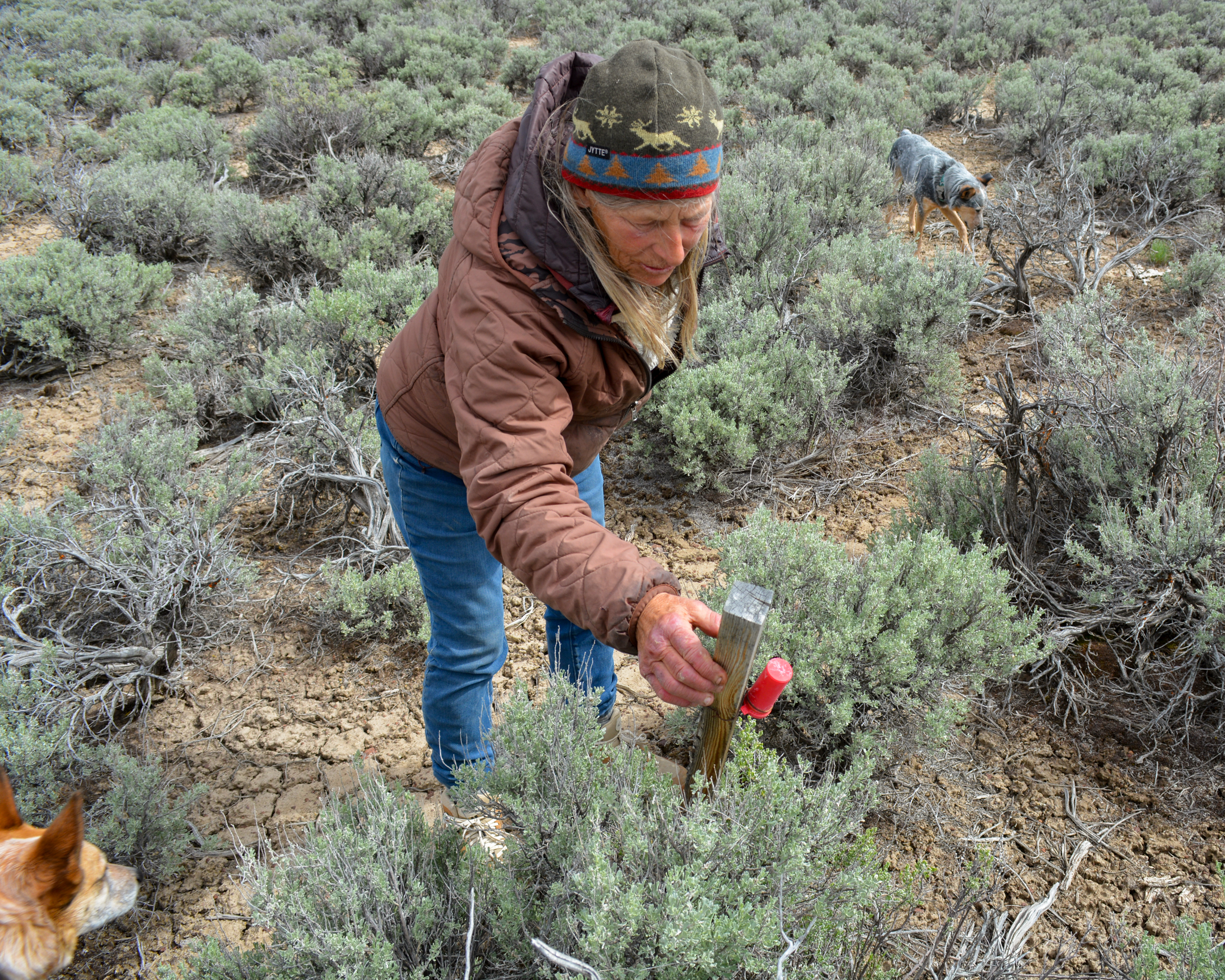
MCDERMITT CALDERA, Ore.—On a cold and overcast spring morning, Katie Fite stood in one of the country’s last sage-grouse strongholds, contemplating the wooden stakes in the ground that she fears warn of its destruction.
Every spring, males of the chunky bird species with spiky tail feathers come to a dwindling number of locations to strut, pop their inflatable white neck pouches and make a “paloop, paloop” sound in an attempt to court a mate. As their name suggests, sage-grouse need sagebrush, the green-brown shrub that once dominated arid Western landscapes. But both the bird and its habitat are rapidly disappearing due to climate change, invasive species, wildfires and energy development.
Now a mining company wants to extract lithium here.

Millions of sage-grouse once filled the West, but federal data shows their numbers have plummeted 80 percent since 1965 as more than a million acres of the sagebrush landscape they depend on is lost every year. They’ve long teetered toward the endangered-species list.
“We want to save sage-grouse?” Fite, public lands director for WildLands Defense, asked as she walked through the mating area, known as a lek, on the public lands where the McDermitt Lithium project would dig. “This is not how we do it. This is a travesty.”
The project’s owner agreed to avoid drilling during the sage-grouse breeding season in an effort to avoid impacting a species that is easily put off mating if conditions aren’t just right. But there is so little sagebrush habitat left in the country, Fite said, that “you can’t even pretend to mitigate this.”
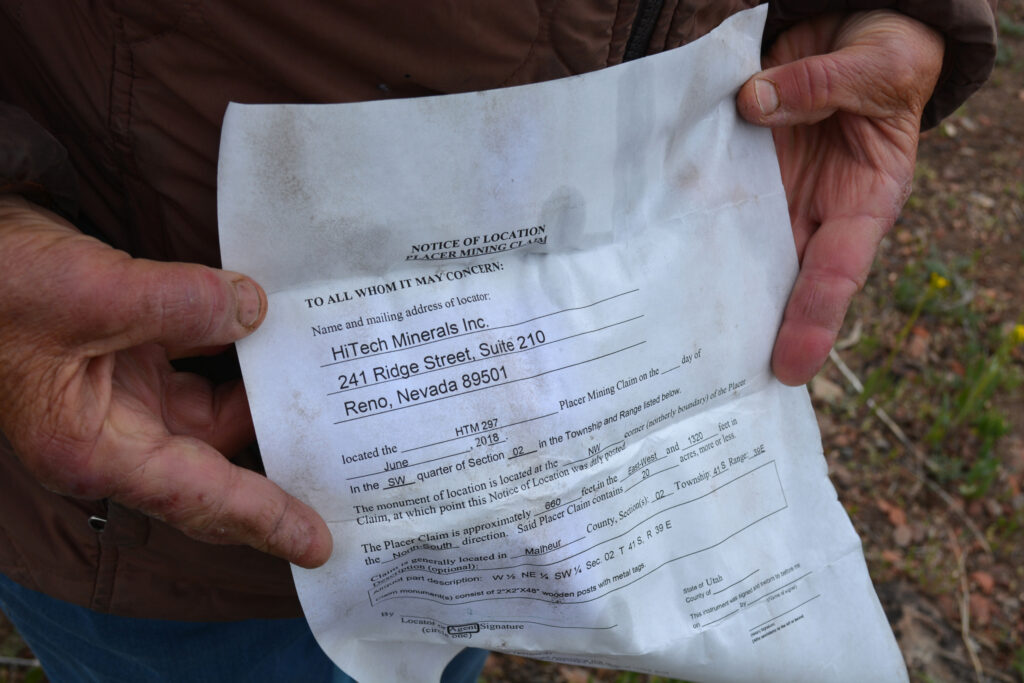
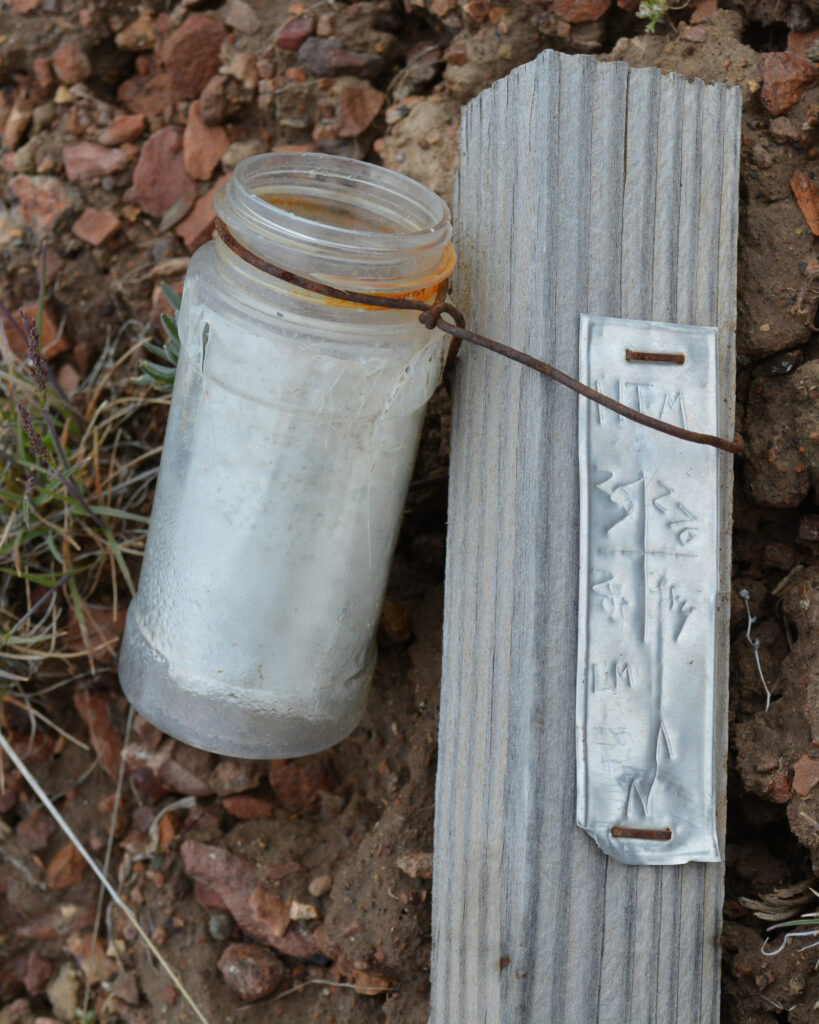
Today, the U.S. has only one operating lithium mine—Albemarle’s Silver Peak in Nevada. By 2030, at least six new mining projects are predicted to be extracting lithium from American soil and another 13 will soon follow, according to a database compiled by Columbia Journalism Investigations and Inside Climate News. Scores more are proposed, their wooden stakes marking companies’ claims.
This element of the energy transition—lithium is used in batteries for electric vehicles and energy storage—poses stark dilemmas in the communities atop the so-called white gold. Mining it uses and displaces water, and much of it is found in water-scarce regions. Tribal nations repeatedly harmed by past extraction are disproportionately located on or near lithium-rich lands.
And then there’s vulnerable wildlife. The McDermitt Caldera’s basin is rolling hills of sagebrush and rare native wildflowers growing on strangely yellow soils in an ancient volcanic depression on the Oregon-Nevada border, its springs providing a home to threatened Lahontan cutthroat trout just as its sagebrush sustains sage-grouse. Further south in Nevada, a fully approved lithium mine, Ioneer’s Rhyolite Ridge, has faced controversy over its siting at the world’s only location of an endangered buckwheat. And scores of other proposed projects are near vulnerable species in wild, intact landscapes.
President Donald Trump is both undercutting endangered-species protections and boosting the country’s domestic mining industry, leaving plants and animals in lithium areas particularly exposed. Though the Trump administration has abandoned U.S. climate efforts and attacked the energy transition, it’s streamlining and fast-tracking permitting for lithium mines whose demand rests on that shift.
The remote McDermitt Caldera could end up home to multiple such projects.
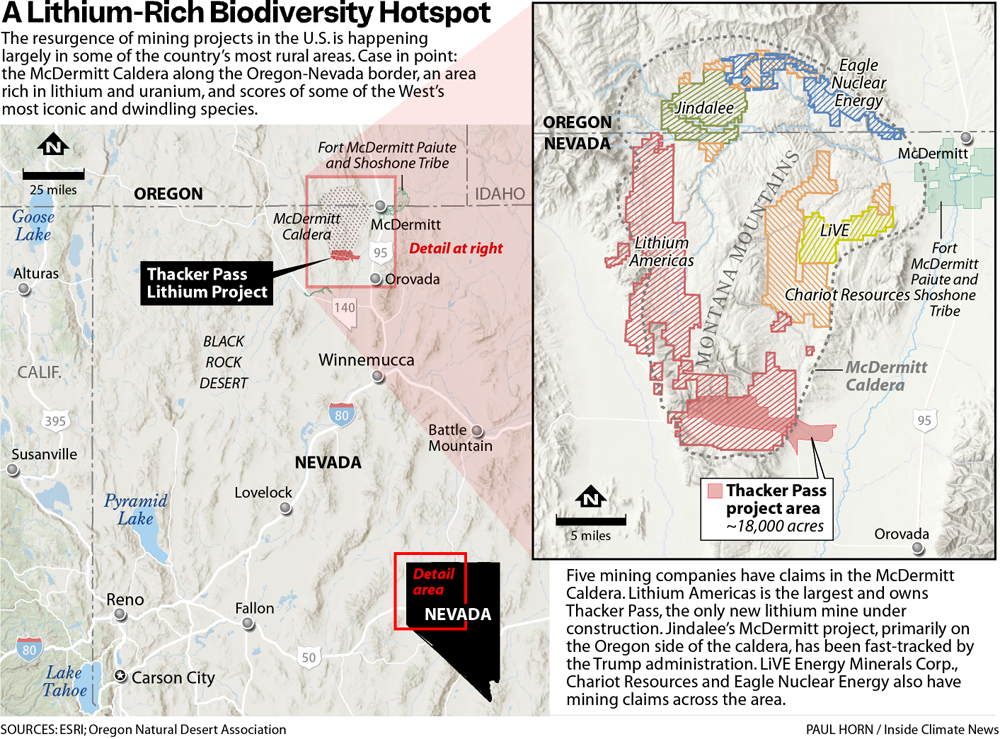
Some of the mining claims are for projects in very early stages. But Thacker Pass, a lithium mine permitted by the first Trump administration, is under construction on the Nevada side of the caldera. The McDermitt Lithium project that would mine the lek where Fite stood is one of the first mines to be fast-tracked during the second Trump term.
All told, the Trump administration approved fast-tracking for 10 lithium mines across the country since last year. It’s doing so under a 2015 law launching the FAST-41 program that streamlines permits for large infrastructure projects. But Trump officials created an outgrowth they’re calling the “transparency program” that skips a number of requirements under the law, including coordination with local governments.
The McDermitt Lithium project tried to get into FAST-41 in 2023 but was denied by the Biden administration, according to documents from the federal agency managing the program and obtained by Inside Climate News and CJI.
The project, owned by Australian mining company Jindalee’s subsidiary HiTech Minerals Inc., is a prime example of the administration’s push to quicken mining permitting across the board. Even before McDermitt Lithium made it into FAST-41, the federal Bureau of Land Management (BLM) gave the public just five days in March 2025 to comment on the company’s proposed exploratory drilling—one of the first steps in creating a new mine.
Public backlash forced the BLM to extend the comment period to 31 days, still far shorter than usual, and the project was then added to the fast-track program to further speed its way through permitting.
In December, the BLM approved Jindalee’s plan to drill at 168 sites and build 21.5 miles of access roads across 73 of the 7,200 acres of public land the project’s site encompasses. Now, the Oregon Natural Desert Association, Great Old Broads for Wilderness and Great Basin Resource Watch are suing the BLM over its project approval, alleging the agency failed to properly evaluate the mine’s environmental impacts to species like the sage-grouse.
“When they provided at first only a five-day comment period, they were certainly making it clear that they had no interest in what the public had to say, which is certainly an indication that perhaps they’re not conducting the kind of hard-look analysis that’s required [under the country’s environmental laws],” said Ryan Houston, the executive director of the Oregon Natural Desert Association.
Records of communications between BLM staffers obtained via a public records request by the Oregon Natural Desert Association and shared with Inside Climate News and CJI reveal regional staff were surprised by the project’s short comment period. The decision to limit the time for public input, they wrote, came from higher-ranking officials.
“Staff are ‘pausing’ their review of the HiTech [environmental assessment] and it will be completed at a higher level,” one staffer wrote in a message, adding that she was unsure how, with such a fast timeline, the agency would be able to incorporate the minimum reclamation requirements to restore the land after drilling is completed. “Seems it changes daily and keeps getting worse,” she added.
A different staffer asked, “How is that timeline allowed?”
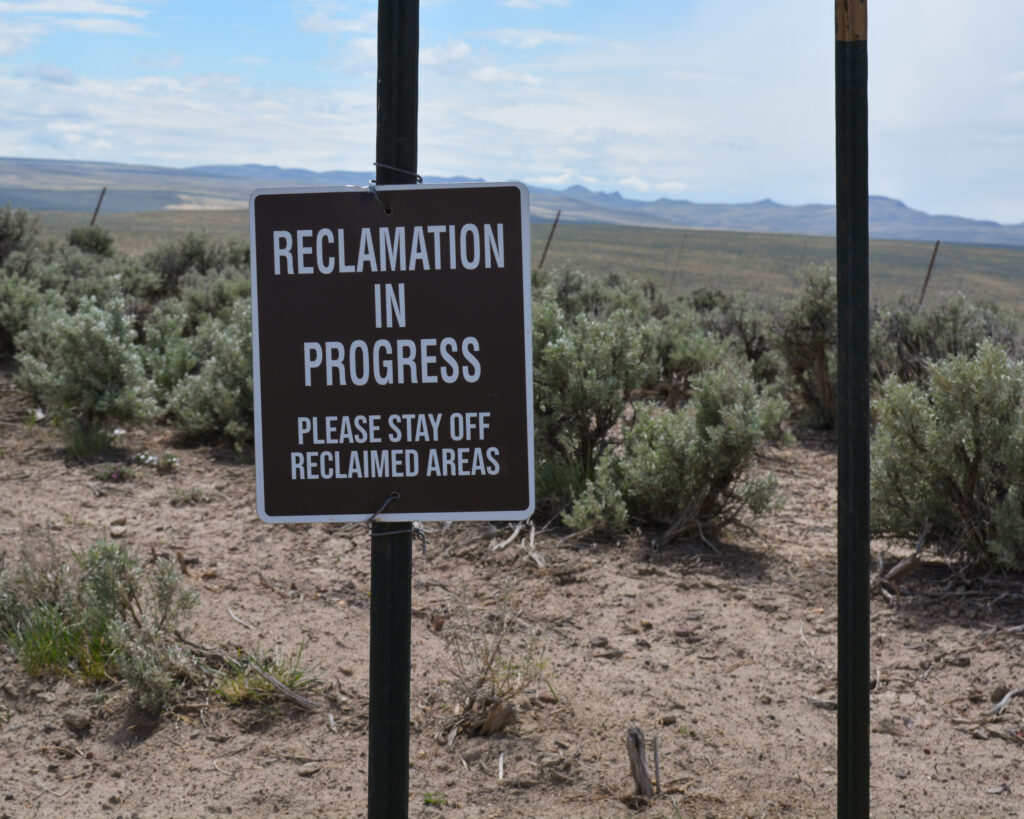
Jindalee CEO Ian Rodger said in a statement to CJI and Inside Climate News that the company was pleased to be added to the fast-track list but was not aware of the decision to shorten the public comment process. He said Jindalee supported the decision to extend it.
The project is currently only conducting exploratory drilling, not yet digging a full-scale mine, Rodger added. He said the company is committed to continued community and tribal consultation. In April, Jindalee’s HiTech Minerals announced plans with Constellation Acquisition Corp. to form US Elemental Inc. and go public. Jindalee, which will retain majority ownership of HiTech, plans to support the BLM in its legal defense of the project.
Larisa Bogardus, a BLM spokesperson, said the agency determined it would be “beneficial” to extend the initial comment period after evaluating the first batch of public comments. The project’s fast-track inclusion does not predetermine the permitting process’ outcome, she added.
But the environmental groups’ lawsuit alleges the project’s fast tracking resulted in its permits not meeting the requirements of the National Environmental Policy Act. The BLM only conducted an environmental assessment for the project, and not a more intensive impact review, which are required for more environmentally damaging projects and have been done for similar mineral exploration projects, Houston said.
That led to inadequacies in the review. The agency conducted no study on whether pumping 31.5 million gallons of groundwater would draw down the aquifer, harming local streams vital for wildlife. It evaluated only direct impacts to sage-grouse habitat, rather than the landscape affected across the project’s 7,200 acres. And it undertook no evaluation of the cumulative impacts lithium mining will have across the McDermitt Caldera.
A killdeer, known for laying their eggs directly on the ground, and a burrowing owl on the Oregon side of the McDermitt Caldera. Credit: Wyatt Myskow/Inside Climate News
Experts say mining in the U.S. could be done with fewer environmental impacts than if the nation relies on imports from other countries, where much of its current lithium supply originates. But rollbacks of both environmental protections and community engagement make that less likely, they say.
In August, Oregon’s mining regulator issued the final permits needed for the project’s exploratory drilling to commence, with no public comment period. Despite that, more than 8,000 people from Oregon and beyond sent letters to state officials opposing the permit.
The final permit requires Jindalee to meet certain conditions before proceeding, such as developing a plan with the state to mitigate impacts to sage-grouse and to coordinate with the Burns Paiute Tribe, one of the tribes concerned about the project.
Alex Lopez, a spokesperson for Oregon’s mining regulator, said in a statement that exploration permits do not require a public comment period and that compliance with permit conditions is evaluated over the project’s life by multiple agencies.
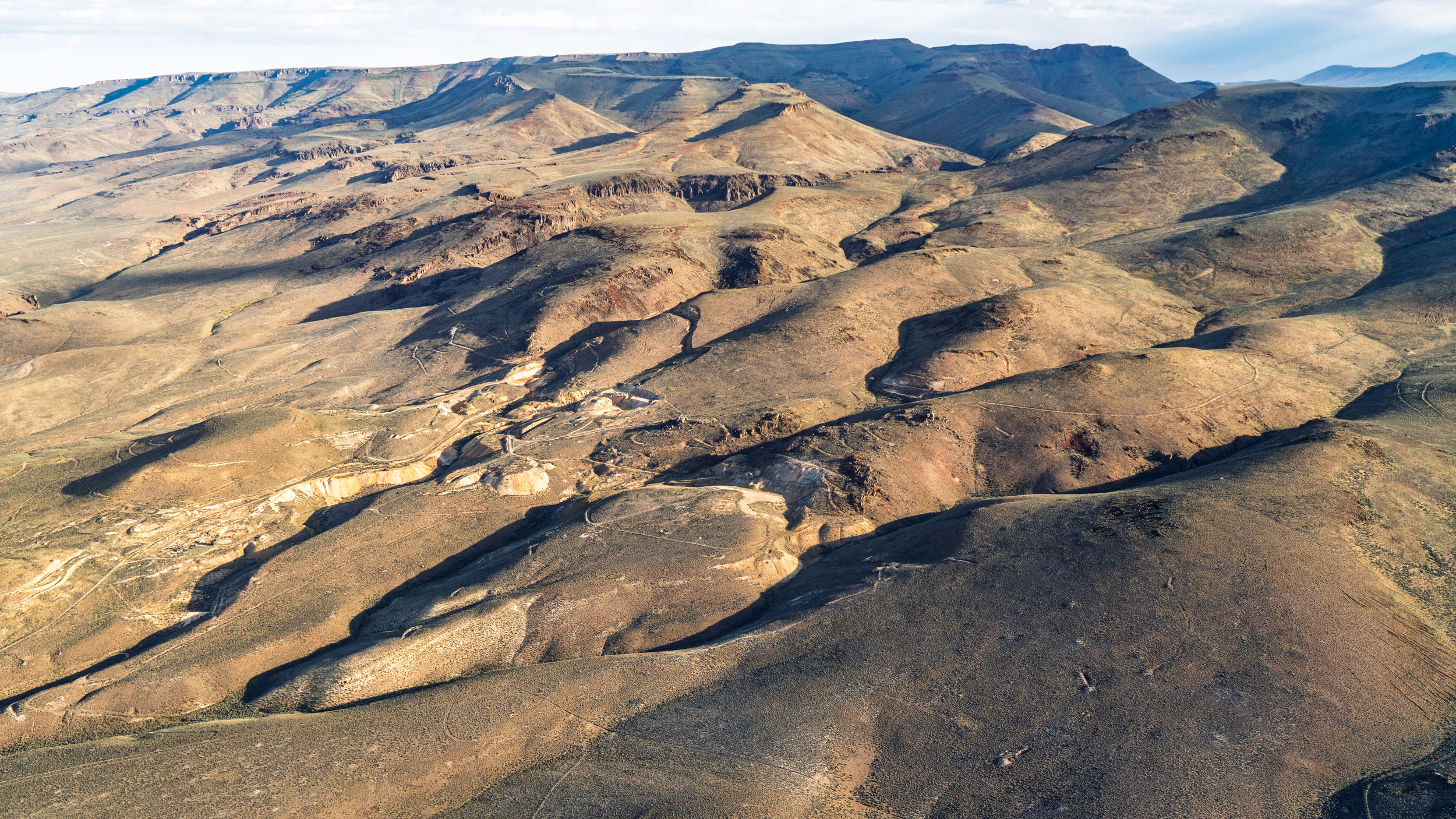
Before the project received approval to drill, the Oregon Department of Fish and Wildlife told the state mining regulator and BLM that it has serious concerns about the project’s impacts to sage-grouse, given it “falls completely within core sage-grouse habitat” and the area holds “the only [prioritized] population which has had an increasing trend over the past 30 years, making this one of the true sage-grouse strongholds in the state.”
In a release to investors, Jindalee said it expects to begin drilling by the end of September. The release made no mention of the state-mandated conditions the company must meet first.
Supercharging a Powerful Industry
The McDermitt Caldera, an area larger than New York City with just a few hundred people living in communities along its edges, had a fiery birth roughly 16 million years ago. The volcanic hotspot below Yellowstone erupted through a number of volcanoes, one of which collapsed into its empty magma chamber. Surrounded by mountains, the basin-shaped caldera became a roughly 25-mile-long lake, and seismic activity left major deposits of mercury, uranium and lithium ore below it.
The caldera’s more recent history has been shaped by America’s approach to mining.
On federal lands—more than half of Oregon and roughly 80 percent of Nevada—the practice is governed by a Reconstruction-era law, the Mining Act of 1872. The law is one of the ways the nation incentivized white settlers to move West into lands long occupied by tribes, declaring that “all valuable mineral deposits in lands belonging to the United States” are “free and open to exploration and purchase.”
To this day, all that’s needed to stake a mining claim on public lands is to plant literal stakes in the ground, file the paperwork and pay a fee. Companies pay no royalties for the minerals extracted from the lands owned by American taxpayers, something other extractive industries, like fossil fuel developers, are required to do.
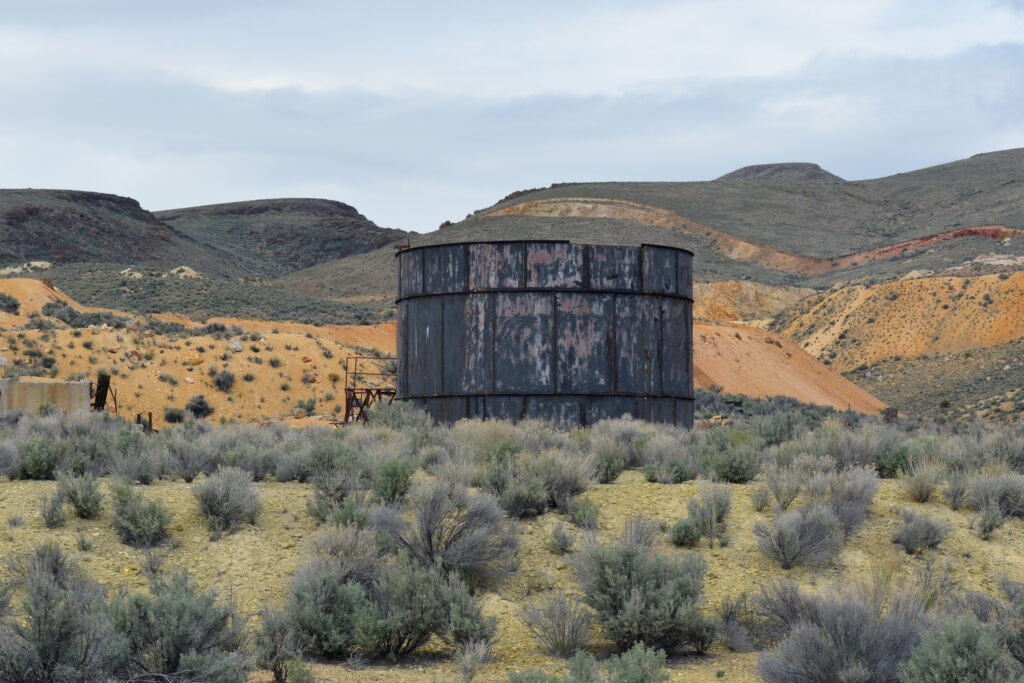
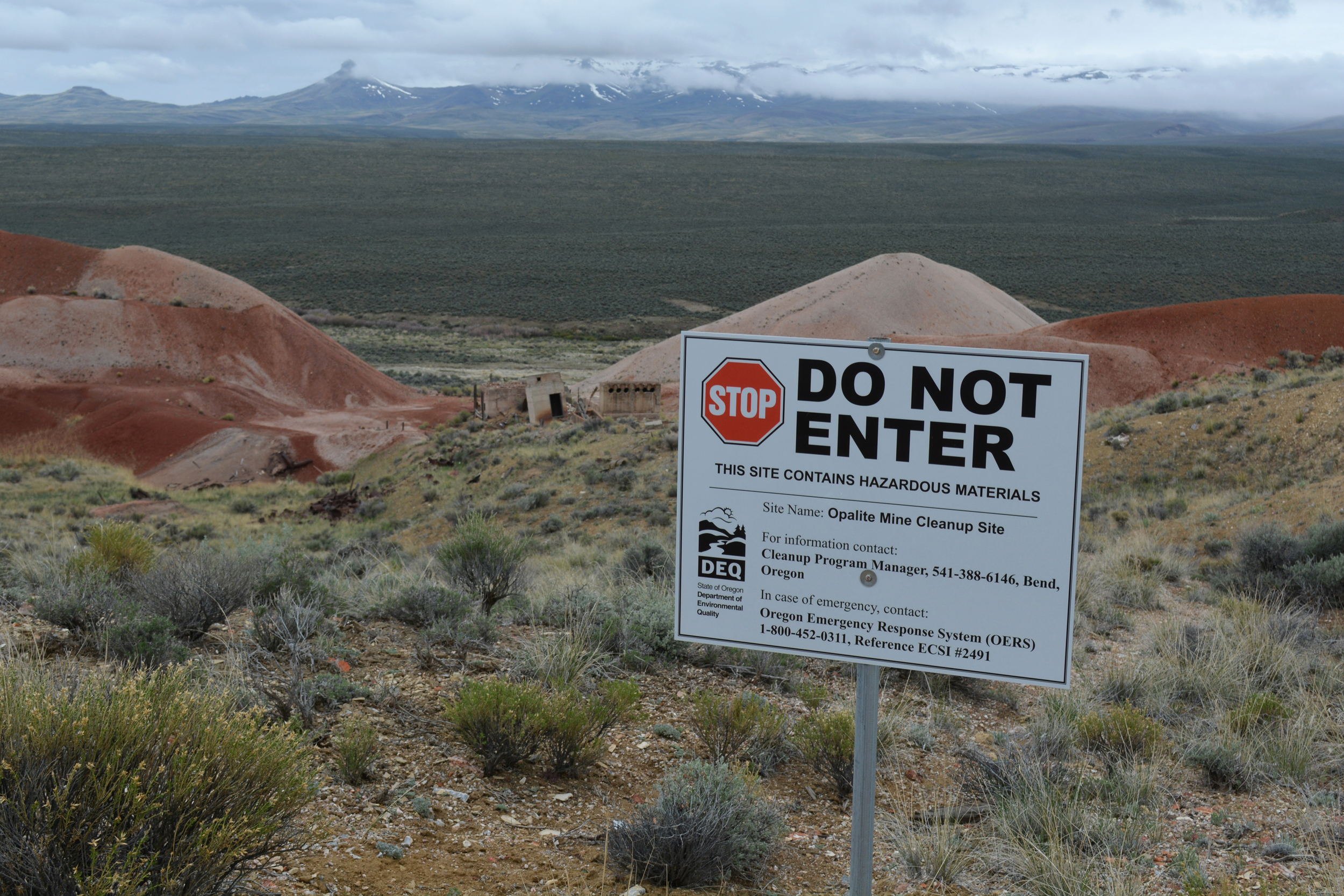
Though mines once dug by pickaxes and hauled by mules are now open pits thousands of feet deep and as wide as towns, excavated with massive vehicles and explosives, the law has not changed. It’s made mining a consistent top use of the nation’s public lands. In the McDermitt Caldera, now-closed mercury mines left behind strange-colored pools of water and piles of waste; for decades, high arsenic levels from the activity made water in the border community of McDermitt unsafe to drink.
“This is an area in which the law [and the industry built around it] is so complex there is no appetite for meaningful reform,” said Jamie Pleune, a mining-permitting expert and associate professor of law at the University of Utah’s Wallace Stegner Center. “It is very easy to conduct mineral exploration, and the law creates an entitlement that overrides other rights and concerns.”
That’s the baseline the Trump administration is supercharging, using emergency powers and recent court decisions weakening environmental laws to remake federal reviews of mineral extraction.
“Thanks to President Trump’s bold leadership, American lithium production is going to skyrocket,” U.S. Energy Secretary Chris Wright said in a press release announcing the federal government’s 5 percent stake in Lithium Americas as part of a renegotiated $2.26 billion federal loan to the company.
Some of that could backfire on companies, in part through litigation.
“It doesn’t matter how fast you push your permit,” Pleune said. “If you don’t have a social license, your project is going to encounter delays, and those delays are going to cost you money.”

The McDermitt Caldera is riddled with new boreholes, evidence of noisy drilling that’s detrimental to the dwindling sage-grouse. A lithium operation here would likely pump millions of gallons of water out of a desert aquifer in an area where earlier mining harmed water quality. Environmentalists and Indigenous people fear that mining will also degrade the springs supporting the threatened trout and ancestral hunting and gathering grounds for nearby tribes, while ranchers watch mining companies lay claim to the last bit of land on which they can graze their cattle.
“When you fast track, you miss out on so much,” said Chanda Callao, an organizer with People of Red Mountain, a coalition of Fort McDermitt Paiute, Shoshone and Bannock tribal members and allies working to protect their ancestral lands in the caldera. Lithium mines threaten sacred spaces, burial grounds and places to hunt and gather traditional medicines, she said, and the companies and government “don’t inform the community of what’s happening, and [they] don’t give people that opportunity to steer the mine or to fight back against it.”
“This area is basically under siege,” said Terry Crawforth, a former director of the Nevada Department of Wildlife who lives in the area. The McDermitt Caldera is rich with wildlife, he said, especially at its northern end where Jindalee is approved to drill. “The families who have been here for 100 years farming, their kids are not going to see it.”
“If the mine goes through, I know I’m done,” said Nick Wilkinson, a local rancher whose family has lived in the area since the 1800s and whose cattle graze the land Jindalee claimed.
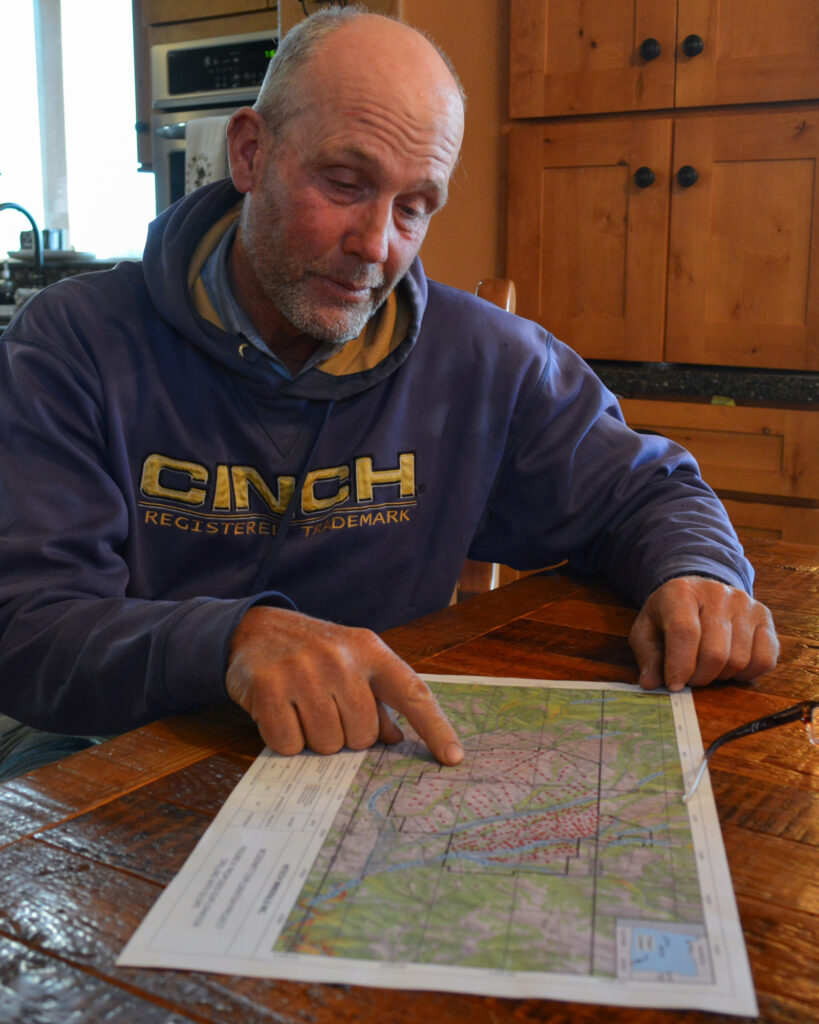
Wilkinson and other ranchers have worked closely with federal agencies, state officials and environmentalists to protect the Lahontan cutthroat trout—whose protections pushed ranchers off high-elevation habitat they once grazed—and sage-grouse. Jindalee’s claims are in the Wilkinson family’s low-elevation range. If that’s lost, it’s over for the ranch, Wilkinson said. There’s nowhere left for them to graze their cattle.
Before the project’s latest batch of exploratory drilling was approved, he met with Jindalee to seek a path forward. So far, he said, the company has refused to work with him. Contractors for the mine have torn up the roads and burst the water pipe for his cows three times by driving over it with heavy equipment, he said. And the mining laws allowed them to degrade the habitat he said he’s helped protect for years by maintaining area roads and fences and helping run a crew that by his count has put out roughly 30 wildfires over the past decade.
Rodger, Jindalee’s CEO, said the company is increasing its engagement with local ranchers, has supported road repairs caused by its activities and added language to its contracts with contractors “to respect private property, report and remedy damages, and operate in a manner to minimize impacts to the ongoing ranching activities.”
Wilkinson said it’s clear to him that the mine will do more harm to the sensitive species in the area than his cattle ever could. He said he’s “dumbfounded” it’s being allowed after millions of dollars in restoration work and longstanding efforts by local ranchers, and he fears he’ll lose the home where his parents are buried.
“My family’s invested their life here to create fish habitat and sage-grouse habitat and still make a living off a renewable resource,” he said. “And nobody cares. As I look back on it, I’m just like, ‘I don’t even know why I did it.’”
“White Gold in Those Hills”
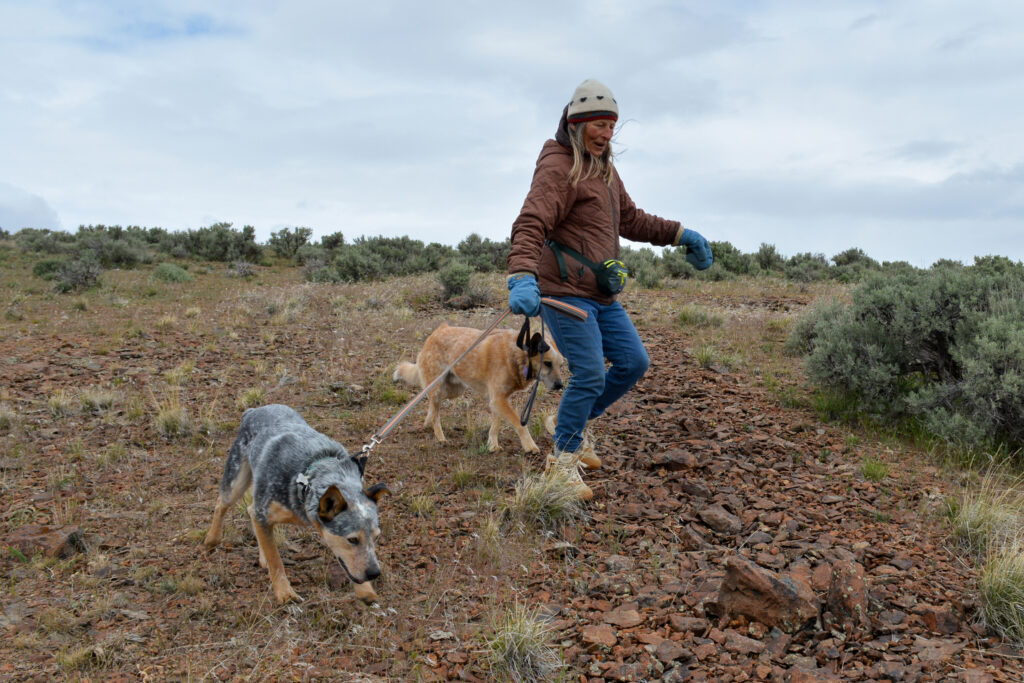
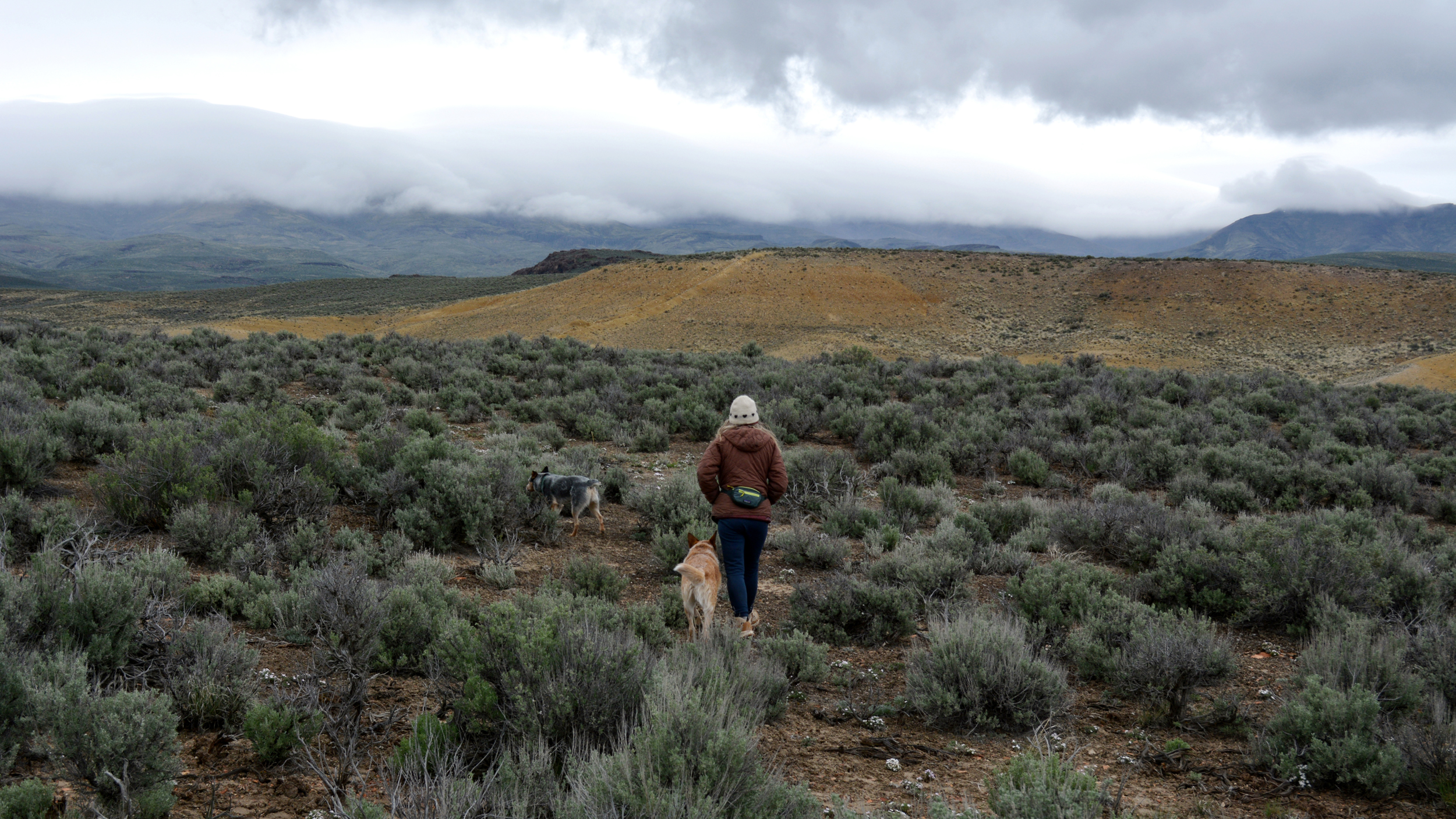
Fite, of WildLands Defense, has visited the caldera regularly since 2023, documenting the wildlife and the activities of the miners while camping with her two cattle dogs—Skye and Roo.
“These days, you see odd soils and worry someone’s going to come in, saying ‘There’s white gold in those hills,’” she said as she drove her silver Toyota 4Runner to a yellow-colored hill within Jindalee’s exploration area in the caldera.
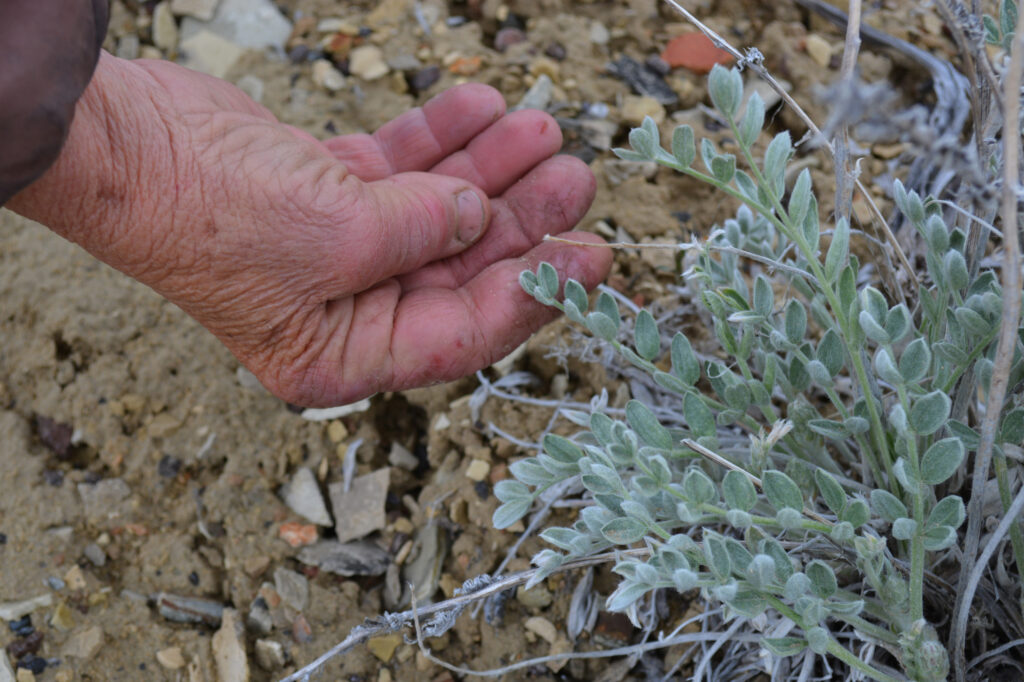
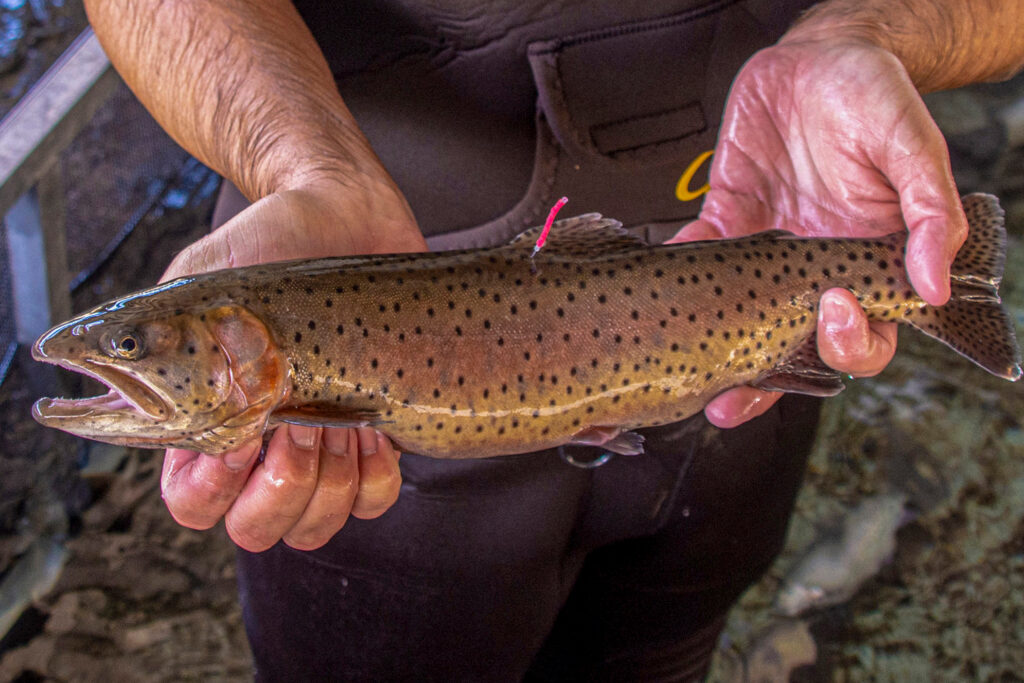
In Jindalee’s claimed area, hills made of unique clay soils support multiple sensitive wildflower species listed by the BLM, like Cooper’s goldflower and Pueblo Mountains buckwheat. Below the ridges, drilling is permitted to start soon in clearings where male sage-grouse gather for their mating dances. Pygmy rabbits nest in nearby fields rich in sagebrush. Just 200 feet away, other claims riddle streams supporting the threatened Lahontan cutthroat trout and all the rest of the local wildlife.
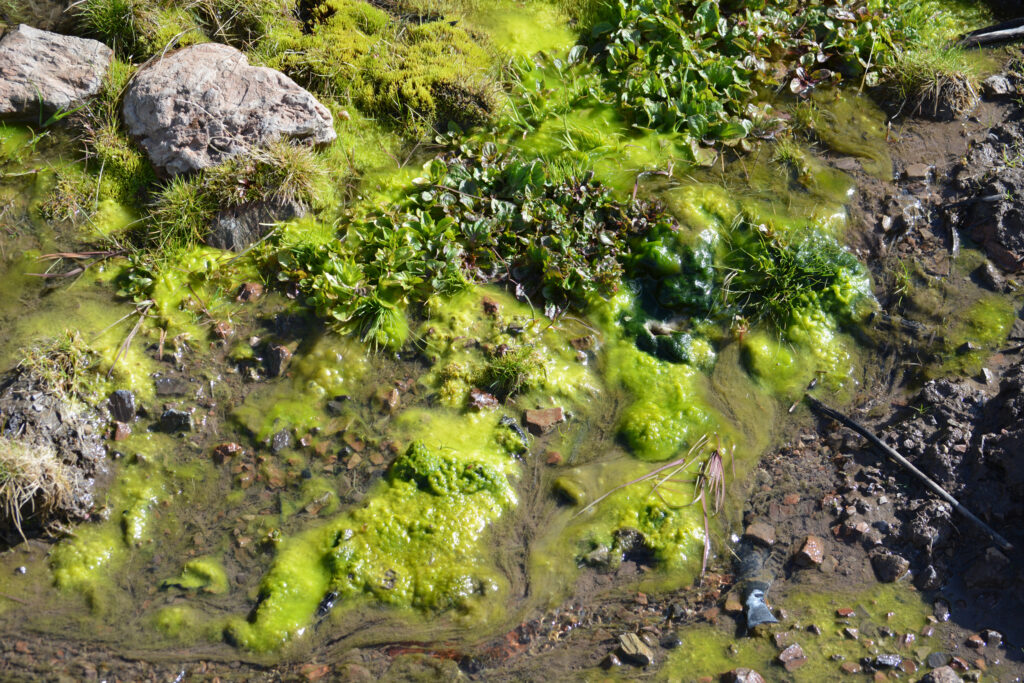
McDermitt Creek and its tributaries flow into Nevada’s Quinn River Valley basin. The water supply here is like a financial institution in trouble, more of its resources being withdrawn than replenished. For the last four decades, the Nevada Division of Water Resources has denied applications to pump even more groundwater from the basin. But that information, the environmental groups suing the federal government allege in their lawsuit, was omitted by the BLM as part of its approval of exploratory drilling for lithium.
The BLM’s environmental assessment noted two active sage-grouse leks in the project area and an additional 25 leks within four miles of the project’s approved drilling area. The activity will have short-term effects on the population, the BLM found, and may lead to population decline. But a seasonal shutdown and mitigation efforts post-drilling should avoid long-term issues, the agency stated. Impacts to water resources, it says, will be short term and have no effect on other users.
The disturbance of soils for the 168 drill sites will disrupt and fragment habitat and make the areas vulnerable to invasive weeds like cheatgrass, Fite said. Noise and lights will force sage-grouse to abandon leks. Since the birds return to the same lek year after year, it’s a major blow to the species when one is lost.
If the drilling finds enough lithium to make it worthwhile to dig, it will be followed by an open-pit strip mine.
“Any fool can tell you this is important sagebrush habitat,” Fite said. “There is no way to mitigate a mine out here.”
The site of Jindalee’s claims has the highest quality sage-grouse habitat designated by the state, said Skyler Vold, the conservation coordinator for the species with the Oregon Department of Fish and Wildlife—so good that the population has grown in recent years.
The reason for that is simple: “There’s no big human presence” in the area, Vold said. “Sage-grouse really don’t like us and our noise.”
The caldera is one of the few places with little development, few recent severe wildfires and where invasive species have not taken hold. Just drilling in the area would be a major detriment to the population, Vold said, and his agency is concerned about the project.
Oregon has a system to incentivize developers to stay away from sensitive species like the sage-grouse: If they don’t, they have to pay. During an April 2024 meeting between the state wildlife agency and Jindalee, notes taken by a contractor for the company, obtained via a records request, show those mitigation fees could “exceed $10 million.” That price “seems disproportionate” with the project’s impact, the consultant noted; the state responded that the goal is to avoid sage-grouse being placed on the endangered species list.
Jindalee has another option, though, and that’s the path it’s pursuing, according to the state. The company would purchase conservation credits through a mitigation bank program intended to provide a net benefit for the affected species and in essence replace the sage-grouse habitat lost from the drilling.
A final agreement is expected soon and could prove far cheaper than the mitigation fees. Environmentalists worry the mitigation bank will function like carbon credits: a tool that enables companies to keep harming the environment.
As Fite surveyed a patch of land near yet more mining claims with Skye and Roo, she said people don’t need to be experts to recognize the caldera is a unique and wild place. Other than the occasional miner or rancher, you could walk from the site of Jindalee’s project to Thacker Pass 20 miles south and not see a soul, she said. That’s why it’s a stronghold for many of the West’s iconic but declining species.
“This is the forgotten wildlife corridor,” she said.
Landscapes like this, she said, are the places land managers work to protect—until they’re told a mine takes precedence.
Gray clouds overhead had cleared, and water trickled down from Nevada’s Montana Mountains to a meadow of sagebrush in their foothills. The land was a lush green from recent rains, and a sea of rolling sagebrush hills surrounded Fite as she walked up a mountainside, joining the birds in song.
“Chewee, chewee, chewee, chewee,” she called out with the rock wren. “Churt, churt, churt” for the “loud-mouth” meadowlark. The long “meewww” of the spotted towhee.
On a barbed-wire fence to prevent cattle from grazing into the higher elevations, reflective markers intended to stop the sage-grouse from flying into it had faded from years in the sun.
In the valley below, more mining claims dotted the ground.
Wyatt Myskow reported this story for Inside Climate News. Johanna Hansel and Carla Samon Ros were fellows at Columbia Journalism Investigations, the investigative-reporting unit at the Columbia Journalism School. Inside Climate News and CJI provided editing, graphic illustration and other support.
Additional support was provided by the National Press Foundation and the National Press Club Journalism Institute.
About This Story
Perhaps you noticed: This story, like all the news we publish, is free to read. That’s because Inside Climate News is a 501c3 nonprofit organization. We do not charge a subscription fee, lock our news behind a paywall, or clutter our website with ads. We make our news on climate and the environment freely available to you and anyone who wants it.
That’s not all. We also share our news for free with scores of other media organizations around the country. Many of them can’t afford to do environmental journalism of their own. We’ve built bureaus from coast to coast to report local stories, collaborate with local newsrooms and co-publish articles so that this vital work is shared as widely as possible.
Two of us launched ICN in 2007. Six years later we earned a Pulitzer Prize for National Reporting, and now we run the oldest and largest dedicated climate newsroom in the nation. We tell the story in all its complexity. We hold polluters accountable. We expose environmental injustice. We debunk misinformation. We scrutinize solutions and inspire action.
Donations from readers like you fund every aspect of what we do. If you don’t already, will you support our ongoing work, our reporting on the biggest crisis facing our planet, and help us reach even more readers in more places?
Please take a moment to make a tax-deductible donation. Every one of them makes a difference.
Thank you,
