


In 1415, a young European prince named Henry, who came from an obscure, foundling dynasty in what would later be known as Portugal, charged out ahead of the troops under his command during an invasion of the African mainland, at a little trading outpost called Ceuta.
The prince, who would eventually achieve fame as Henry the Navigator, was less of a hero in battle than his reckless sally would suggest, but the Portuguese land grab soon succeeded. The gambit jolted Europe with the news of a success against the Muslims of the Marinid dynasty and announced a Portuguese dynasty, the Aviz, as a new force to be reckoned with in the Christian world.
In 1415, a young European prince named Henry, who came from an obscure, foundling dynasty in what would later be known as Portugal, charged out ahead of the troops under his command during an invasion of the African mainland, at a little trading outpost called Ceuta.
The prince, who would eventually achieve fame as Henry the Navigator, was less of a hero in battle than his reckless sally would suggest, but the Portuguese land grab soon succeeded. The gambit jolted Europe with the news of a success against the Muslims of the Marinid dynasty and announced a Portuguese dynasty, the Aviz, as a new force to be reckoned with in the Christian world.
What Henry sought was not converts to Christianity, nor even so much territory to add to the Aviz realm. Rather, it was access to the huge wealth in gold that had flowed into Europe for centuries via Mediterranean Africa from points far to the south, below the Sahara Desert.
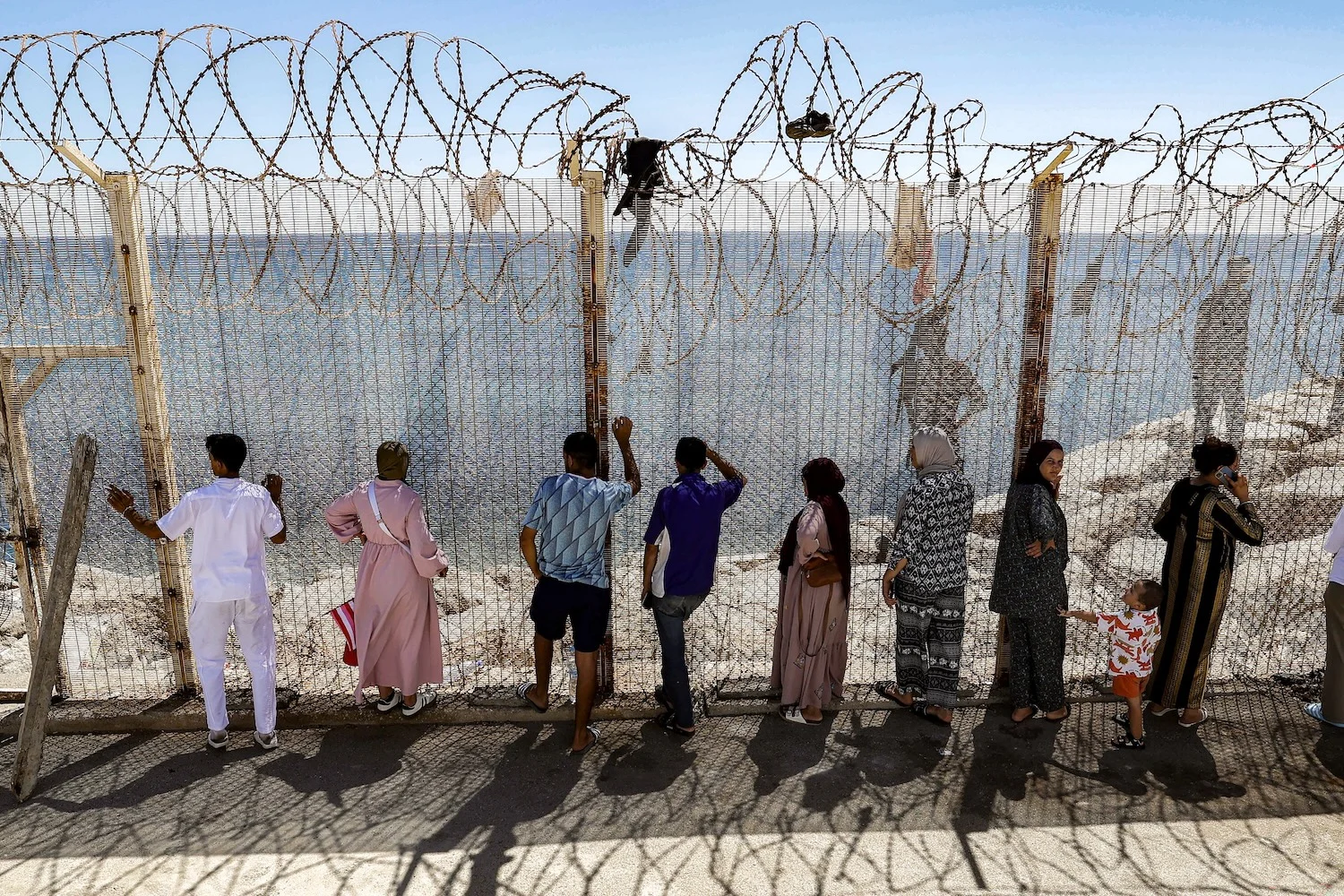
In recent days, developments in tiny Ceuta, which helped launch the Portuguese empire and the so-called Age of Exploration, have led the news again. But this time, there has been a rush in the opposite direction, with tens of thousands of citizens of Morocco and other African countries risking their lives and perishing by the dozens to use the Spanish-controlled exclave as a springboard toward more prosperous lives in wealthy Europe.
As someone who has written at length about the origins of European imperialism—and with it, the commerce and conquest in Africa that formed much of Europe’s early wealth—I have been struck by the narrow frames that many news outlets have employed to cover what has occurred in Ceuta. Much of the coverage has presented it as a simple, if grave, immigration crisis, taking the current situation on the map, and the deep historical backstory behind today’s headlines, for granted.
As I wrote in my book, Born in Blackness: Africa, Africans, and the Making of the Modern World, it is a mistake to buy into the notion that Portugal acquired its imperial possessions in Africa as “in a fit of absence of mind”—as one historian famously described British colonial conquest—with Ceuta being a mere historical relic and curio that the world should today unquestioningly accept as part of Europe.
The Aviz conquest of Ceuta followed its rivalry with Spain for control of the Canary Islands off the coast of Africa in the 14th century, where the Portuguese raided for slaves and the Spanish committed what some historians consider the first modern genocide, wiping out the native Guanche population. As with Ceuta and other islands such Madeira and the Azores, the Portuguese carried out carefully conceived ambitions to capture African gold wealth in an era that long predated both the trans-Atlantic slave traffic and Iberian efforts to discover a maritime route to Asia.
Beyond the search for gold, Portugal’s early imperialism was motivated by competition with its far larger and more powerful neighbor, Spain, which hoped to subdue and incorporate Portugal into a united Iberia. Ceuta acquired its legal status as part of Spain after a convoluted crisis of Portuguese royal succession in 1578, when a new king, another Henry—Henry the Navigator’s distant nephew—took the throne at an old age without an heir. This left Philip II of Spain, the grandson of a Portuguese king, with the strongest claim to the Portuguese crown upon Henry’s death in 1580.
Given today’s focus on Ceuta, one can’t move on here without mentioning the striking fact that Portugal’s 16th-century succession crisis resulted from a broader invasion of Morocco, which ended in disaster when King Henry’s predecessor, Sebastian I, was killed along with much of his family. Decades later, after Portugal waged a successful war to restore its own royal line, independent of Spain, the spit of Moroccan land known as Ceuta was ceded to the Spanish.
Although extended a patina of legitimacy by international law and by the recognition of Spanish sovereignty by other states, this situation is clearly a historical fluke, and one that seems unlikely to endure. Consider how fragmented and open to contestation similar relics of imperial history are in this part of the world. Almost directly across the Mediterranean sits Gibraltar, a small protrusion of land into the sea that Britain has claimed and controlled since Anglo-Dutch forces seized it during the War of Spanish Succession in 1704. Nine years later, Spain ceded it to Britain in supposed perpetuity as part of the Treaty of Utrecht.
Spain rejects Morocco’s historic and geographic arguments to rightful ownership of Ceuta, but it makes very similar claims to Gibraltar. A glance at the map quickly makes clear why Madrid and Rabat believe that they should control Gibraltar and Ceuta, respectively. (Incidentally, Gibraltar was founded as a fortified lighthouse outpost by North Africans from the Muslim Almohad empire in the 12th century, but this is a claim that Moroccans long ago quite sensibly relinquished.)
Continued possession of the exclave brings only a point of pride to Spaniards who are susceptible to nostalgia over the country’s puny remaining imperial possessions. In fact, policing Ceuta against the next upsurge in immigrants incurs large, ongoing fiscal costs and intra-European tensions.
Indeed, last week, much of Europe recoiled in shock and anger at the prospect of tens of thousands of Africans entering their continent by storming the beaches of Ceuta, bearing the meager possessions that they could carry. Though most had returned within 48 hours, Europe’s right-wing parties and press sensationalized what was happening for political or commercial gain, and Spain’s near-neighbor, Italy, quickly instituted the screening of people arriving from Spain to make sure that no Africans were sneaking in through Spain’s North African exclave.
My bet, though, is that Spain will gradually, and perhaps even soon, see the wisdom of abandoning its African territorial claim out of a realism that has so far eluded the British in Gibraltar. The reason for that can be summed up in one word: demographics. Africa’s population is growing more quickly than any other region, albeit a bit more slowly than projected a mere decade ago. Europe is heading in the exact opposite direction, with women in many countries—including Spain and Italy, to take two southern European examples—having roughly one child on average.
Spain’s government has taken the wisest measure of this trend that I know of in Europe, granting amnesty to many who have immigrated illegally in the past, and hitherto publicly identifying continued immigration as one of the rare available remedies for population collapse, with all of the dire economic consequences that would bring to the country.
The quick and fierce lashing out against Spain by fellow European neighbors over the momentary Ceuta crisis makes clear, though, that public opinion on the continent is easily stirred by the prospect of any big and sudden foreign influx, especially one that involves brown- and Black-skinned people.
At this point, Spain should do the right thing and restore this geopolitically insignificant territory to Morocco, closing off the possibility of it ever being used as a backdoor into the pan-European immigration zone known as Schengen.
While doing so, Spain should take the lead in the European discussion of the future of immigration to the continent—which, given its proximity, will disproportionately hinge on the future of Africa. Much of the rest of Europe clings to the delusion that the movement of peoples from Africa and elsewhere in the global south can be handled indefinitely through little more than police action. But Africans and other migrants will continue to show up in Europe in ever larger numbers no matter what. Just how many, though, will depend on what Europe does today to renovate its economic ties to the continent just to the south, making sure that prosperity spreads there, as it once did from Africa to Europe.
