


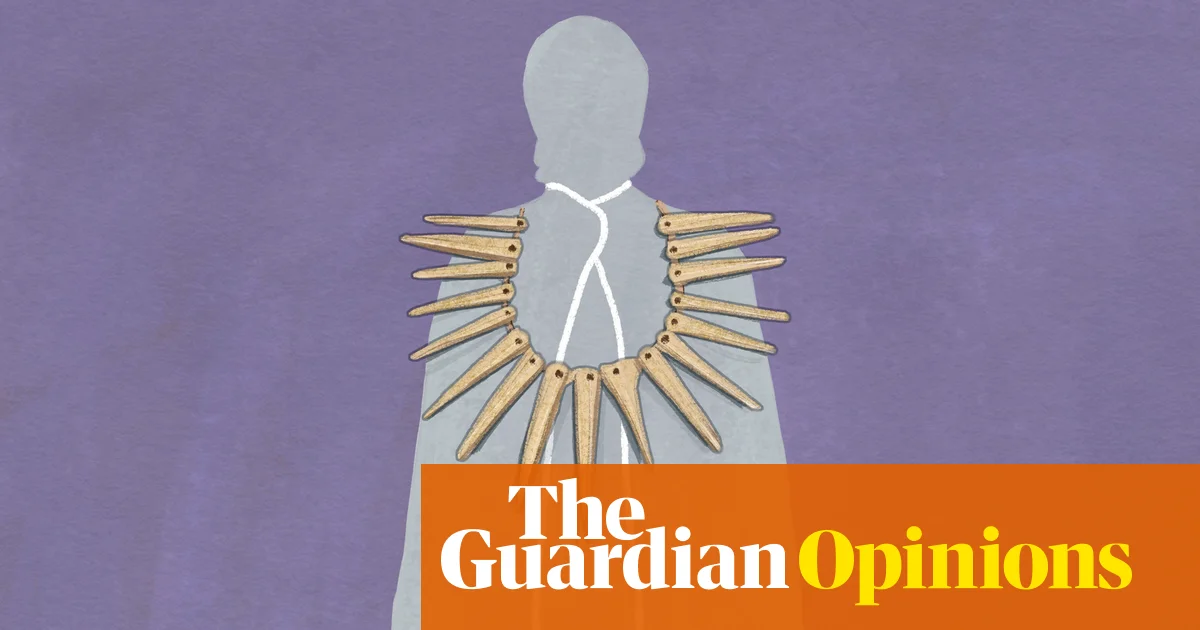
Archaeologists believe the Upton Lovell Shaman, who lived in what is now Wiltshire 4,000 years ago, was an important religious leader and metalworker because of the artefacts and tools buried with the body. Until very recently it was also believed, on considerably slimmer evidence, that this shaman was a man: it was simply assumed that someone of such status must be male, and the view was barely questioned over the years. Now ancient DNA analysis performed at the Francis Crick Institute has revealed that the body, held by the Wiltshire Museum, is in fact a woman.
That should cause a stir in bronze-age studies. But it is also yet another example of how many of our assumptions about human history have been upended by the rise of ancient DNA analysis over the past two decades. Others include the revelation that there were (frequent) liaisons between humans and Neanderthals just 50,000 years ago, a reconstruction suggesting that the first modern Britons had “dark to black” skin, and the closing of longstanding mysteries such as what really killed two members of Italy’s powerful Medici family in the 16th century (probably malaria, not murder as was often believed). Every time we widen our keyhole view of the past even slightly, we are confronted by how many of our seemingly grounded assumptions are, in fact, wrong.
These insights have emerged because the technology to extract and read DNA from ancient, poorly preserved samples has improved exponentially since around 2010. DNA analysis hardly provides a total picture of the past, but it has been useful for mapping migrations, sexual relations and family structures, as well as tracking plagues and diseases. For instance, it has told us that groups of ancient humans moved around and intermixed with each other far more often than previously thought, allowing us to imagine a more dynamic, less lonely ancient world.
It also suggests that the replacement of one group with another, such as evidence of the near-total disappearance of the Stonehenge-building Neolithic Britons, just a few centuries after the arrival of the Bell Beaker people around 2400BC, was relatively common. But it cannot answer why or how that replacement took place. These are big questions that will keep scientists, anthropologists and archaeologists busy for decades.
Alongside a deeper and richer view of the past, we should take a lesson from the constant stream of debunking and myth-busting emerging from this research. The politics behind assuming a shaman is male are obvious, but last year a study took on more subtle biases by proving that famous plaster casts of citizens of Pompeii long believed to show a mother and child locked in a final embrace were in fact two people who were not related, and the adult was male. The authors note that there was no published evidence suggesting the sex or family relations of these bodies, but both scholars and the public found the romantic (and very modern) interpretation irresistible.
We will probably always try to see something of ourselves in our ancestors. But the past is more interesting when we consider it on its own, often bracingly foreign, terms. DNA evidence will not conveniently overturn every one of our biased judgments about the ancient world, but each case does make it easier to recognise how readily it happens, and to be humble about how little we really understand.
-
Do you have an opinion on the issues raised in this article? If you would like to submit a response of up to 300 words by email to be considered for publication in our letters section, please click here.
