


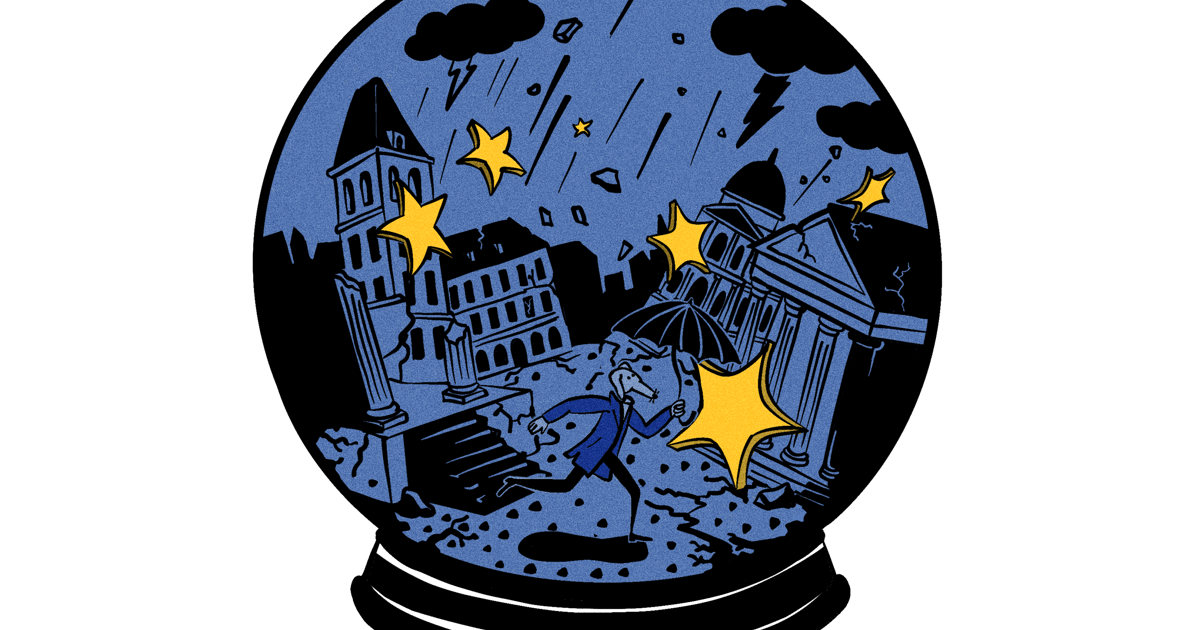
“They seek our division. They want our division,” Belgian Prime Minister Bart De Wever told reporters at a late-night briefing during the summit, not mentioning names but referring to countries to the east and west of Brussels. “And they have, of course, points where they can hurt us.”
Former Lithuanian Foreign Minister Gabrielius Landsbergis, now a visiting fellow at Stanford University, was less circumspect. “Now we are under assault from three sides: from the U.S., Russia and China,” he said.
Washington is questioning the old alliances that have underpinned European security for generations. Moscow is waging a shadow war across Europe, from cyberattacks and sabotage to an attempted drone attack at Leipzig airport that Berlin blamed on the Kremlin. Beijing is tightening its grip on critical supply chains and flooding European markets with cheap exports.
Then there’s the Ukraine problem. The country is facing a budget shortfall of $30 billion to $35 billion next year, according to the IMF, with Russia battering its energy infrastructure ahead of a brutal winter. That’s despite the €90 billion the EU already agreed to stump up last year.
Landsbergis said the coming months are looking “extremely dire” for Kyiv. “Everything falls on European shoulders,” he said.
Ukrainian President Volodymyr Zelenskyy sounded a grim note at last week’s summit, telling reporters that if Ukraine falls, 20 million Ukrainians will flood into the EU. “Russia is killing us,” he said. “They don’t want to stop.”
