

Close Menu
NCIJ Network NCIJ Network
    What's Hot

    Satellite Imagery Documents New Border Patrol Road Construction in Big Bend National Park

    August 20, 2026

    Guest opinion: Wisconsin’s commutation debate should look beyond the toughest cases

    August 20, 2026

    Trump Administration Releases New National Security Science and Technology Strategy

    August 20, 2026
    Facebook X (Twitter) Instagram
    Trending
    • Satellite Imagery Documents New Border Patrol Road Construction in Big Bend National Park
    • Guest opinion: Wisconsin’s commutation debate should look beyond the toughest cases
    • Trump Administration Releases New National Security Science and Technology Strategy
    • Why State Farm is distributing $5B in cash among its auto insurance customers
    • Jailed Pakistan ex-PM Imran Khan taken to hospital for treatment
    • How Greek farmers milked EU funds from imaginary cows – POLITICO
    • Is Vine back? Short-form video-sharing app Divine opens to public
    • US warns of AI-powered attacks on Siemens PLCs in critical infrastructure
    • About
      • Our Team
      • Editorial Policy
      • Editorial Independence
      • International Support
    • Trust & Standards
      • AI Usage Policy
      • Conflict of Interest Policy
      • Corrections Policy
      • Ethics Policy
      • Fact-Checking Policy
      • Source Protection
    • Get Involved
      • Guide for Sources
      • Support Independent Journalism
    • Legal
      • Cookie Policy
      • Privacy Policy
      • Terms of Use
    Facebook X (Twitter) Instagram
    NCIJ Network NCIJ Network
    Thursday, August 20
    • Home
    • World
    • Ai
    • Business
    • Politics
    • Health
    • Crypto
    • Science
    • Technology
    • Cybersecurity
    • Defense & Security
    • Economy
    • Energy
    • Europe
    • More
      • Fact Check
      • Investigations
      • Opinion & Analysis
      • Environment
    NCIJ Network NCIJ Network
    Home»Science

    The “Asian water tower” is losing 24 billion tonnes of groundwater every year

    NCIJ NETWNCIJ NETWORKBy NCIJ NETWNCIJ NETWORKAugust 20, 2026 Science No Comments3 Mins Read
    Share
    Facebook Twitter LinkedIn Pinterest Email

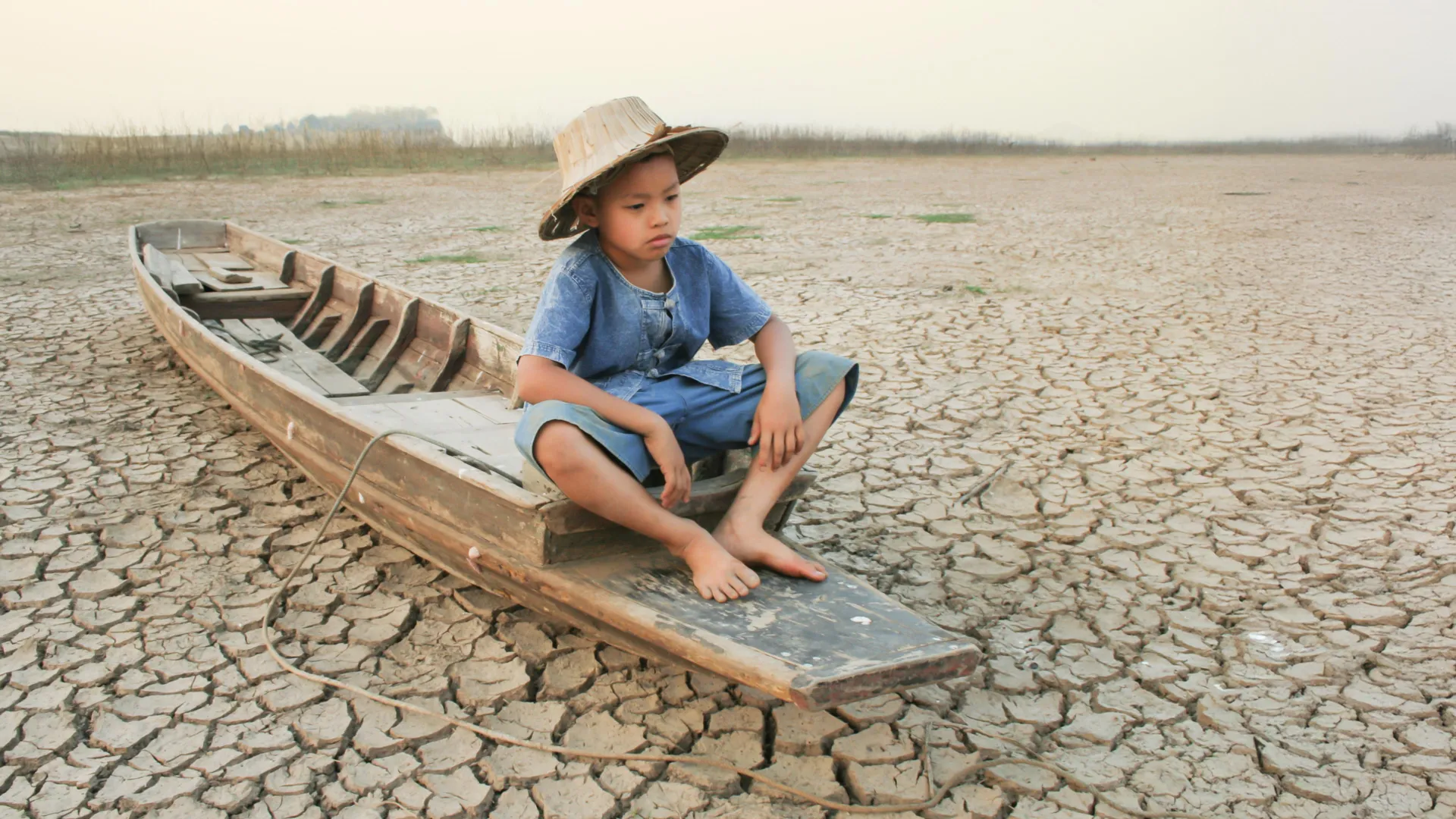
    Groundwater reserves beneath High Mountain Asia (HMA), often called the “Asian Water Tower,” are shrinking at an alarming pace, according to a new satellite-based study. The region provides water that supports farming, cities, and ecosystems across more than a dozen downstream countries, making it a critical resource for hundreds of millions of people. Researchers estimate that groundwater storage is declining by about 24.2 billion tonnes each year.

    The research was led by Prof. Shudong Wang of the Aerospace Information Research Institute of the Chinese Academy of Sciences (AIRCAS). The team sought to overcome two major obstacles to understanding groundwater in the region: limited on-the-ground data and the extremely complex mountainous landscape. The findings were recently published in Environmental Research Letters.

    AI and Satellites Reveal Two Decades of Change

    To build a clearer picture of what is happening underground, the researchers created an artificial intelligence (AI) powered assessment model that combines observations from multiple satellites, Earth system modeling, and explainable AI.

    Using this approach, they reconstructed about 20 years of groundwater storage (GWS) changes across High Mountain Asia. The system also helped identify the main forces driving those changes and allowed the researchers to explore how groundwater risks could develop under future scenarios.

    The results show that roughly two-thirds of HMA experienced declining groundwater storage between 2003 and 2020. The largest losses occurred in heavily populated downstream basins where irrigation demands are high, including the Ganges-Brahmaputra, Indus and Amu Darya basins. Some inland areas at higher elevations, however, experienced localized increases in groundwater storage.

    Climate and Human Water Use Drive the Decline

    Climate-related forces explain nearly half of the observed variation in GWS, with changes involving the cryosphere playing an especially important role.

    At the same time, human withdrawals of groundwater have become an increasingly significant source of depletion, particularly in downstream agricultural regions that rely heavily on irrigation. The influence of human water use became even more pronounced after 2010.

    Researchers also project that groundwater losses will continue if current patterns of water use remain in place. In some locations, increased glacier melt could temporarily reduce the pace of groundwater decline around the 2060s. But this “buffer effect” cannot continue indefinitely and is expected to be followed by faster losses.

    If present water use patterns do not change, groundwater depletion could accelerate further, increasing the threat to agricultural areas downstream that depend on these reserves.

    A New Way to Track Groundwater in Mountain Regions

    For the analysis, the researchers used a framework guided by existing scientific knowledge while also drawing on large amounts of observational data. Information from multiple satellite sensors was used to estimate GWS changes over the past 20 years.

    The framework incorporates a lightweight Transformer architecture designed to account for hydrological memory and delayed effects within mountainous catchments. The researchers also used explainable machine learning methods to determine the physical factors associated with the groundwater changes identified by the system.

    To test the reliability of the results, the team compared its findings with thousands of measurements from groundwater wells as well as independent datasets. Those comparisons provided additional support for the study’s conclusions.

    By combining remote sensing observations, established hydrological knowledge, and interpretable AI methods, the framework helps address long-standing difficulties in studying High Mountain Asia, including rugged terrain and incomplete information about human water use.

    The research was funded by the National Key R&D Program of China and the Key Program of the National Natural Science Foundation of China (NSFC).

    Asian Billion groundwater Losing tonnes Tower water year
    NCIJ NETWNCIJ NETWORK
    • Website

    Keep Reading

    Pollution behind coracle fishing in Carmarthenshire river’s decline

    Scientists say the human family tree may need a major rewrite

    An Uncommon Drifter in the Denmark Strait

    Schizophrenia’s lost brain connections follow a surprising pattern

    In a Big Year for Progressives, Here’s Why These Moderates Won Their Primaries

    NASA Data Feeds River Forecasts as Snow Drought Effects Linger

    Add A Comment
    Leave A Reply Cancel Reply

    Editors Picks

    Satellite Imagery Documents New Border Patrol Road Construction in Big Bend National Park

    August 20, 2026

    Guest opinion: Wisconsin’s commutation debate should look beyond the toughest cases

    August 20, 2026

    Trump Administration Releases New National Security Science and Technology Strategy

    August 20, 2026

    Why State Farm is distributing $5B in cash among its auto insurance customers

    August 20, 2026
    Latest Posts

    New Dysphoria DDoS botnet spreads to 200k devices worldwide

    July 28, 2026

    OpenAI’s biggest threat may just be open AI

    July 28, 2026

    6 Takeaways From Michigan’s Senate Debate Between Abdul El-Sayed and Haley Stevens

    July 28, 2026

    Subscribe to News

    Get the latest sports news from NewsSite about world, sports and politics.

    NCIJ Network is an independent digital news platform delivering trusted investigative journalism, European and global news, in-depth analysis, and fact-based reporting with accuracy, transparency, and integrity.

    Facebook X (Twitter) Instagram Pinterest YouTube

    Satellite Imagery Documents New Border Patrol Road Construction in Big Bend National Park

    August 20, 2026

    Guest opinion: Wisconsin’s commutation debate should look beyond the toughest cases

    August 20, 2026

    Trump Administration Releases New National Security Science and Technology Strategy

    August 20, 2026

    Subscribe to Updates

    Get the latest creative news from FooBar about art, design and business.

    Type above and press Enter to search. Press Esc to cancel.