


Welcome back to Foreign Policy’s Situation Report.
Here’s what’s on tap for the day: Elon Musk’s geopolitical fights in Ukraine and India, U.S. Ambassador to Greece Kimberly Guilfoyle resigns, and why Trump’s diesel deal won’t have much of an impact on fuel prices.
Welcome back to Foreign Policy’s Situation Report.
Here’s what’s on tap for the day: Elon Musk’s geopolitical fights in Ukraine and India, U.S. Ambassador to Greece Kimberly Guilfoyle resigns, and why Trump’s diesel deal won’t have much of an impact on fuel prices.
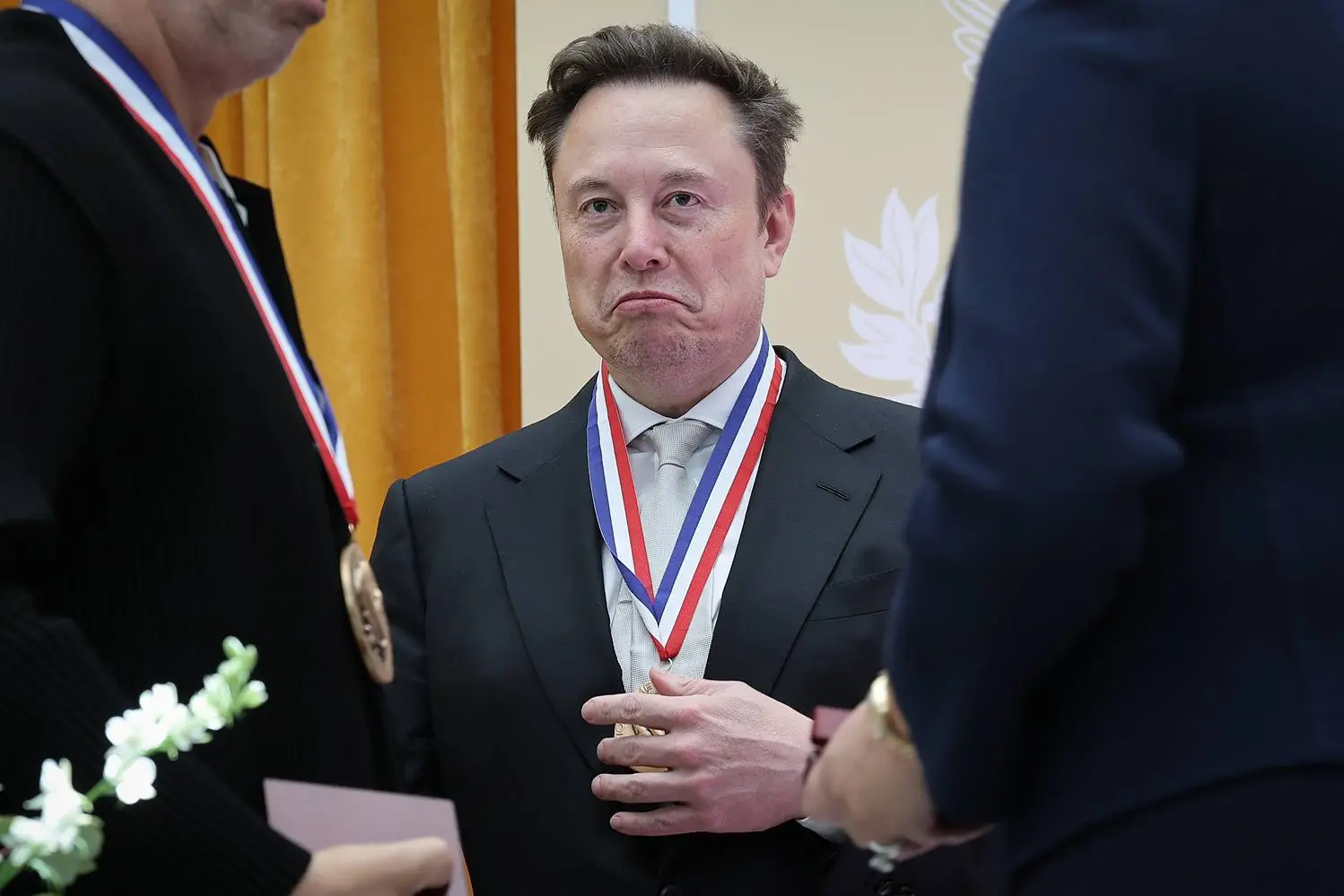
Elon Musk keeps reminding us why so many people are uncomfortable with the degree of influence he holds over global geopolitics.
Nowhere is that truer than in Ukraine, which alleged this week that the billionaire’s company SpaceX had restricted some access to its Starlink satellite internet service—capping the speed at which Ukrainian weapons can remain connected to the internet in Kyiv’s ongoing war against Russia.
Musk claimed he wasn’t behind the restrictions, saying in a post on X that Ukraine’s military uses a military-grade version of Starlink called Starshield that is overseen by the U.S. government and that any decision to impose restrictions would have come from the Trump administration, not him. U.S. President Donald Trump has been pressuring Ukraine to stop strikes on Russia’s energy sector, as high gas prices cast a shadow over the upcoming U.S. midterm election. SpaceX and the Pentagon did not immediately respond to requests for comment from SitRep.
But the Ukraine brouhaha served as an acute reminder of how closely interlinked Musk and his businesses are with the U.S. government and how dependent multiple countries are on the whims of the world’s richest man. As Rishi has previously written, Starlink has been indispensable for the Ukrainian military and people, allowing the country to stay connected and in the fight since the early days of the war.
But Musk has also sometimes expressed sympathy for Russia’s perspective and echoed Kremlin talking points. He did so again on Wednesday, saying Ukrainian President Volodymyr Zelensky must “go” in response to Zelensky’s statement that he would not end the war until Russia was defeated.
“Even if you’re not 100 percent sure whether this was Elon Musk’s decision or whether it was the U.S. government’s decision, do you want to become dependent on a company whose head is inserting himself in your conflict?” Sharon Weinberger, the author of Valley of Death: How Big Tech Is Fueling the Future of War and the editor in chief of the Bulletin of the Atomic Scientists, told SitRep. “The problem is right now there just isn’t that much of an alternative,” she said. “Elon Musk, by virtue of having done things pretty well from a business standpoint, is in a dominant market position.”
As of Thursday, Starlink access for Ukraine’s military had reportedly been partially restored. That same day, Zelensky told the Financial Times that Ukraine was “done” respecting Trump’s demand to pause strikes on Russian energy targets.
That wasn’t Musk’s only geopolitical fight in recent days, however.
The India issue. While Ukraine fights to keep Starlink on, the world’s most populous country appears intent on keeping it out—much to Musk’s chagrin. The billionaire has spent years pushing for Starlink to gain a license to operate in India. He made some progress last year after he met Indian Prime Minister Narendra Modi in Washington, but the company is still waiting for final approvals.
But last Wednesday, Musk accused “certain oligarchs” in India of blocking Starlink from being approved “in order to maintain their monopolistic chokehold on the Indian people.” Though he didn’t name names in that post, he made clear in later posts that he was referring to fellow billionaire Mukesh Ambani, a key Modi ally whose conglomerate owns India’s largest telecommunications company. Musk criticized Ambani’s “de facto monopoly in India” and sarcastically referred to him as the “real boss of India.”
Ironically, Starlink and Ambani’s company Reliance Jio already have a deal to bring Starlink to India, but neither company can proceed without a sign-off from Modi’s government. Ambani and his companies have not publicly responded to Musk’s accusations.
India shuts down the internet more frequently than almost any country in the world, and did so again this month to quell mass protests against Modi’s government—exactly the kind of internet curbs that Starlink has been used to circumvent in places like Iran. India’s communications ministry issued a statement after Musk’s initial accusations last week.
Though it didn’t mention the billionaire by name, it referred to a post “being circulated in social media regarding the fairness of India’s regulatory framework for satellite communication services and suggesting that it is being applied in a discriminatory manner.” The government refuted those claims, saying it had “put in place a fair and non-discriminatory authorisation framework” but said all providers are “required to demonstrate compliance with security conditions.”
For now, Musk will likely have to keep waiting.
Kimberly Guilfoyle resigned as U.S. ambassador to Greece this week following a string of negative headlines and allegations of improper conduct—including that she pressed a Republican donor to pay $100,000 to American Express to pay off her credit card balance prior to her Senate confirmation hearing.
“She was doing a good job, but we didn’t like what we were reading,” Trump said of Guilfoyle in comments to reporters on Tuesday.
What should be high on your radar, if it isn’t already.
Trump’s dud of a diesel deal. The surprise diesel deal with Russian President Vladimir Putin that Trump announced last Friday has led to criticism on both sides of the Atlantic. Opponents worry the agreement will boost Putin’s war machine as Russia continues to pummel Ukraine. But Trump appears more concerned with being seen as taking action to lower energy costs ahead of the U.S. midterm elections. “Lower prices for Americans, especially our Great Farmers, Ranchers, and Truckers, is my Greatest Priority,” Trump said last week.
In a new piece this week, FP’s Keith Johnson explains why the controversial deal won’t significantly reduce fuel prices nor provide Moscow with major profits. Read it here.
Russia ramps up European sabotage. Moscow has consistently sought to punish Ukraine’s allies across Europe with acts of sabotage. These attacks initially targeted “symbolic objects,” but they have since entered a dangerous new phase that poses more of a threat to civilians, Margo Palloson, Estonia’s counterintelligence chief, told FP’s Sam Skove in a recent interview. Read it here.
British Prime Minister Andy Burnham greets Ukrainian President Volodymyr Zelensky outside 10 Downing Street in London on Oct. 14.Henry Nicholls/WPA Pool/Getty Images
Monday, Oct. 19: The 2026 United Nations Biodiversity Conference is set to begin in Yerevan, Armenia.
Alberta is scheduled to hold a nonbinding referendum that will ask residents if they want to remain part of Canada.
Spain vs. Trump. FP editor in chief Ravi Agrawal spoke with Spanish Foreign Minister José Manuel Albares on the latest episode of FP Live about why the country’s left-wing government is willing to risk angering the world’s wealthiest country by standing up to Trump.
“We believe in international law. We believe that war shouldn’t be a tool used to achieve foreign-policy objectives,” the top Spanish diplomat said. FP Insiders can read that interview here. (Not an FP Insider yet? Subscribe here for your all-access pass to exclusive content, ad-free web browsing, and more perks.)
“My president—excuse me, my husband…”
—Katie Zacharia, the new White House press secretary, mistakenly referring to her husband as “my president” during her first White House press briefing.
