


- While emergency responders prioritized human life and property during Australia’s 2019-2020 Black Summer bushfires, there were few systems in place to protect wildlife or evacuate and care for domestic animals during and after the fires, exposing a gap in disaster planning.
- Neighbors, wildlife carers, veterinarians, landholders and volunteers rapidly organized evacuations, rescue efforts, feeding stations and supply networks, demonstrating the power of local knowledge and grassroots coordination.
- Fire ecology research suggests animals may be more vulnerable to fire than previously understood, and more research is needed to understand wildlife mortality and survival during and post-bushfire.
- Experts say that community-led efforts could dramatically improve outcomes for both people and animals during disasters with better funding, coordination and institutional support. Community networks offer a blueprint for the future as bushfires become more frequent in a climate-changed world.
NEW SOUTH WALES, Australia — A wallaby with a joey tucked into her pouch grazes beneath towering eucalyptus trees. Black cockatoos wheel overhead, their wailing calls echoing across the green hills of Vanessa Hartley’s property on the South Coast of New South Wales in Australia. A kangaroo bounces away, seeking better forage. The russet and golden horses that wander nearby are used to the wildlife: They ignore the bounding animals and the bird cries.
Standing there on a blue-sky autumn afternoon, it was difficult to imagine that just a few years earlier this same landscape was engulfed in flames.
“It was full-on,” Hartley said, scratching her brindled sheepdog’s ears. “The horse poo was spontaneously combusting.”
During Australia’s catastrophic Black Summer bushfires of 2019-2020, roughly 95% of Jerrawangala National Park burned as repeated fire fronts swept through. The park borders Hartley’s property, where she rehabilitates abused and surrendered horses before partnering them with people experiencing mental health challenges and disabilities as support animals.
When smoke rolled over the ridgeline behind her pastures, Hartley posted a message on Facebook asking for help. Within an hour, neighbors and strangers arrived with trucks and horse trailers and evacuated all 19 of Hartley’s horses. “It made me cry knowing how supported we were,” she said.
After the fires passed, Hartley returned to find another crisis unfolding. The surviving wildlife had little food or water, and the land was quiet.
When she finally spotted a bedraggled wallaby (Phascolarctos cinereus), then another, she was relieved. “But they were exhausted, dehydrated and really skittish.” First, she built simple water stations for the wallabies, kangaroos (Macropus), greater gliders (Petauroides volans), quolls (Dasyurus maculatus) and birds that shared her land. “Then we had about 15 feeding stations, so we’d put about 30 fruit rings out a day.”
According to remote-sensing data, more than 30 million hectares (74 million acres) burned across the continent during the Black Summer fires. Entire towns were cut off and homes destroyed. Thick smoke blanketed major cities. Researchers later estimated that nearly 3 billion vertebrates and up to 240 trillion invertebrates were killed, injured, displaced or otherwise affected by the fires.
While emergency systems focused overwhelmingly on protecting people and property, thousands of volunteers quickly built their own networks to care for wildlife and domestic animals that were ignored in official bushfire planning.
Now, six years later, researchers, firefighters and wildlife rescuers say those community networks remain one of Australia’s greatest — and most overlooked — resources for protecting animals as climate-driven disasters intensify.

The not-so-forgotten animals
“It was a huge response from communities,” said Danielle Celermajer, a professor of sociology at the University of Sydney and author of the book “Summertime: Reflections on a Vanishing Future.”
At the time of the Black Summer bushfires, Celermajer was living on a multispecies sanctuary in the Shoalhaven region, caring for dozens of animals, including pigs and donkeys, that share the land with wombats (Vombatus ursinus), superb lyre birds (Menura novaehollandiae), kookaburras (Dacelo novaeguineae), black cockatoos (Calyptorhynchus funereus) and wallabies. On Dec. 28, 2019, she realized that the huge Currowan State Forest Fire that had been lapping the river for weeks was about to cross it.
Like Hartley, she turned to Facebook, and within hours, trucks arrived.
“We evacuated animals to different places, and I quickly became aware of the networks that were operating,” Celermajer said.
The experience led her to team up with an interdisciplinary group of academics to create a major research project published in the International Journal of Disaster Risk Science in 2025. They wanted to learn what worked on the ground — and what didn’t — during the bushfires. “If you look at disaster management policy, there is no policy to protect or rescue animals,” Celermajer said. “The only subjects of concern for the state are human beings and human property.”

They examined how communities self-organized to care for wildlife, domestic and companion animals during the fires. Celermajer and her colleagues conducted 56 in-depth interviews over four days of community workshops. They consulted residents, wildlife carers, farmers and emergency personnel who had first-hand experience with animals during the disaster.
The research found that communities were often exceptionally well positioned to respond because of their local knowledge and existing relationships. These “coordinating mechanisms” are what’s key. That understanding led her team to develop a proof-of-concept app that could connect people needing assistance with those offering resources such as transport, feed, shelter or animal care.
The goal was not to replace community networks, but to strengthen them. Against what she describes as the “systematic anthropocentrism” of government institutions, dozens of documented community responses demonstrated that many people viewed both wildlife and domestic animals as fellow victims of a climate disaster.
“People do care,” she said. “They care about the fact that a human-driven catastrophe is having massive effects on beings other than humans.”


Learning more about fire and wildlife
Animals of all kinds were fed, watered or given emergency vet assistance — it wasn’t just beloved icons like koalas and wallabies, though there were dozens of news stories about those species. Platypus (Ornithorhynchus anatinus) were rescued from dried-out creeks (and later returned, post-fire and post-drought). Volunteers gave pythons water. In Victoria, 19 endangered Spencer’s tree frogs (Litoria spenceri) were collected from areas ravaged by fire and taken into a captive-breeding program; they were threatened by post-fire waterway pollution, not the fires themselves.
One thing the experts agree on: There’s much more to learn about the best ways to help animals during and after fires. Knowing more about what happens to them when fire moves through a landscape could help experts and communities respond in smarter, better ways.
Scientists often divide fire impacts into two categories. There are the indirect effects that occur after a fire, such as habitat destruction and food shortages.
Then there are the direct effects: Whether animals survive the fire itself. “We know almost nothing about that,” said Phil Zylstra, a professor of fire ecology at Curtin University.
One reason is that it is difficult to study. Fires are dangerous. A blaze can change its trajectory with a shift in the wind and scorch through remote areas. Researchers rarely have the opportunity to track individual animals before, during and after a blaze.
As a result, a longstanding assumption has taken hold: That many animals are able to escape. But Zylstra and other experts say this may not be as true as people might hope, depending on the animal. Slower-moving animals or those that rely on climbing into treetops, like koalas and greater gliders, are especially at risk. “What I’m seeing,” Zylstra said of these more vulnerable animals, “is that they’re not okay.”

His research on greater gliders, an endangered marsupial that spends most of its life in the forest canopy, illustrates the problem. During fires, the tree hollows they call home — often found in standing dead trees — become deadly traps as flames enter cavities and burn upward, like in a chimney.
Other animals flee heat and smoke, only to find themselves displaced into already crowded habitat, or in human settlements that are often built right up to the edge of the bush.
Smoke itself is an underappreciated threat. During the Black Summer fires, researchers documented deaths among smoky mice (Pseudomys fumeus) located roughly 20 kilometers (12 miles) from the nearest fire front. Autopsies found smoke particles had damaged their lungs. “Animals don’t have to be near the fire front to be affected,” Zylstra said.
The dangers extend beyond large bushfires. Zylstra argues that prescribed burns that are intentionally lit to reduce “fuel loads” — the quantity of combustible material — can also have significant consequences for wildlife.
Unlike wildfires, which typically advance as a moving front, prescribed burns are often ignited from multiple locations within a burn area, creating a wall of fire that encircles wildlife.
“There’s nowhere to run to,” Zylstra said. In the Warrungup Spring Reserve south of Perth in Western Australia, a prescribed burn killed 17 of 22 critically endangered western ringtail possums (Pseudocheirus occidentalis), a mortality rate of roughly 77%.

What really helps wildlife
The broader question, Zylstra said, is whether fire management strategies are adequately accounting for wildlife at all. “We have this goal that we have to burn things,” he said. But native wildlife has evolved with occasional fire, not regular burns that eliminate habitat repeatedly every few years.
Not all fire scientists agree with Zylstra’s conclusions. But his research highlights a growing tension in Australia: How to protect human communities from bushfires while also safeguarding increasingly vulnerable wildlife populations?
Zylstra says serving one serves both, pointing to his 2022 study that shows mature forests have naturally low levels of undergrowth, which slows fires. Those forests also provide the best habitat for wildlife, including trees tall enough for threatened and endangered marsupials to escape into and survive.
Even when animals survive the flames, their challenges are often only beginning.
In the weeks after a bushfire, landscapes can become biological deserts. Water sources disappear. Grasses and shrubs have been torched. Tree canopies that once provided food and shelter are reduced to blackened trunks or inaccessible.
That’s when people like Mel Darer step in.
A wildlife rescuer and veterinary nurse in the state of Victoria, Darer has spent years helping coordinate aid during bushfire emergencies. Following fires, she always starts with the basics.
“Every animal needs water,” she said, which might be contaminated or nonexistent since drought usually precedes fire. “So water stations are massively important.”
Food is next. In fire-affected areas, volunteers like her often distribute hay, chaff, supplementary feed, fruit, vegetables and salt licks to help wildlife survive until vegetation begins to recover.
“It’s just a very basic roughage with a small amount of nutrients to try to get them through until the bush starts to regenerate,” she said.
During the Black Summer bushfires, Darer helped organize donations, veterinary supplies, animal feed and transport for both wildlife organizations and rural communities. Much that was donated proved useless, she said, which is why having a coordinator with knowledge of wildlife-specific veterinary needs, as well as bushfire experience, is important.

Shelters required medical supplies to treat injured animals, especially burn creams and bandaging materials. They also needed nutritional supplements, fluids and veterinary equipment like wallaby-sized splints and syringes appropriate for tiny marsupials. Wildlife carers worked around the clock treating animals that survived the blaze, only to emerge dehydrated, starving or badly injured, that were often brought in by concerned members of the community.
Stronger support is needed
Darer has now volunteered her time through a number of bushfires. The most recent was in January 2026 in Victoria.
She says she hasn’t seen promised change in how the government works with community members, including increased access for volunteers.
Following Black Summer, government agencies, wildlife organizations and veterinarians worked to improve emergency wildlife response through new training programs and networks. One initiative, the Wildlife Emergency Support Network, was established to create a larger, accredited wildlife emergency response team that would quickly allow veterinary and wildlife experts into fire zones.
Many in the wildlife community hoped it would be a turning point. Instead, Darer says, recent fires suggest many of the same obstacles remain. “We are still excluded,” she said. According to Darer, government officials prevented wildlife organizations, veterinarians and trained volunteers from entering fire-affected areas for weeks.
“Three days is the time frame that you need to be getting to these animals to turn things around,” she said. “Weeks later is not going to be of any benefit.”
Mongabay emailed the Victorian Department of Energy, Environment and Climate Action (DEECA) for comment, but did not receive a response by time of publication.
Even efforts to provide food and water to wildlife have sometimes encountered resistance from officials. Darer said she encouraged landholders to support wildlife on their own properties during recent fires by placing out water and supplementary feed where it was safe to do so.
“They know the wombats (Vombatus ursinus) that live there,” she said. “They know the mobs [of kangaroos and wallabies] that live there. They know this is the area where there’s some greater gliders.”
That local knowledge can never be replaced by government programs that are already stretched thin, according to Celermajer. That’s exactly why her team’s research found that “communities are actually very, very well placed to do this [rescue work]. But they have to have proper support.”
The volunteers working with Darer and Celermajer have told them that the loss of wildlife can be emotionally devastating. Hartley said that grief is also very familiar to her, causing tears to flow even years later.

After the fire, the marsupials large and small, birds, possums and countless other animals that called Hartley’s property home had lost food, shelter and access to water. She wondered if she had done enough, but the impact was real for the animals that were able to drink from the water stations that were quickly set up on her property, which still stand today.
She hopes they won’t be needed, but the reality is they may well be. Seasonal bushfires are now always on Australians’ minds, for good reason. This fire season, the Bureau of Meteorology has declared an El Niño event that forecasters say could become one of the strongest on record, raising the likelihood of the hotter, drier conditions that elevates bushfire risk.
As Australia’s fire seasons grow longer and more intense, community networks like Hartley’s and Darer’s may prove to be one of the country’s most fundamentally important forms of disaster preparedness for native wildlife.
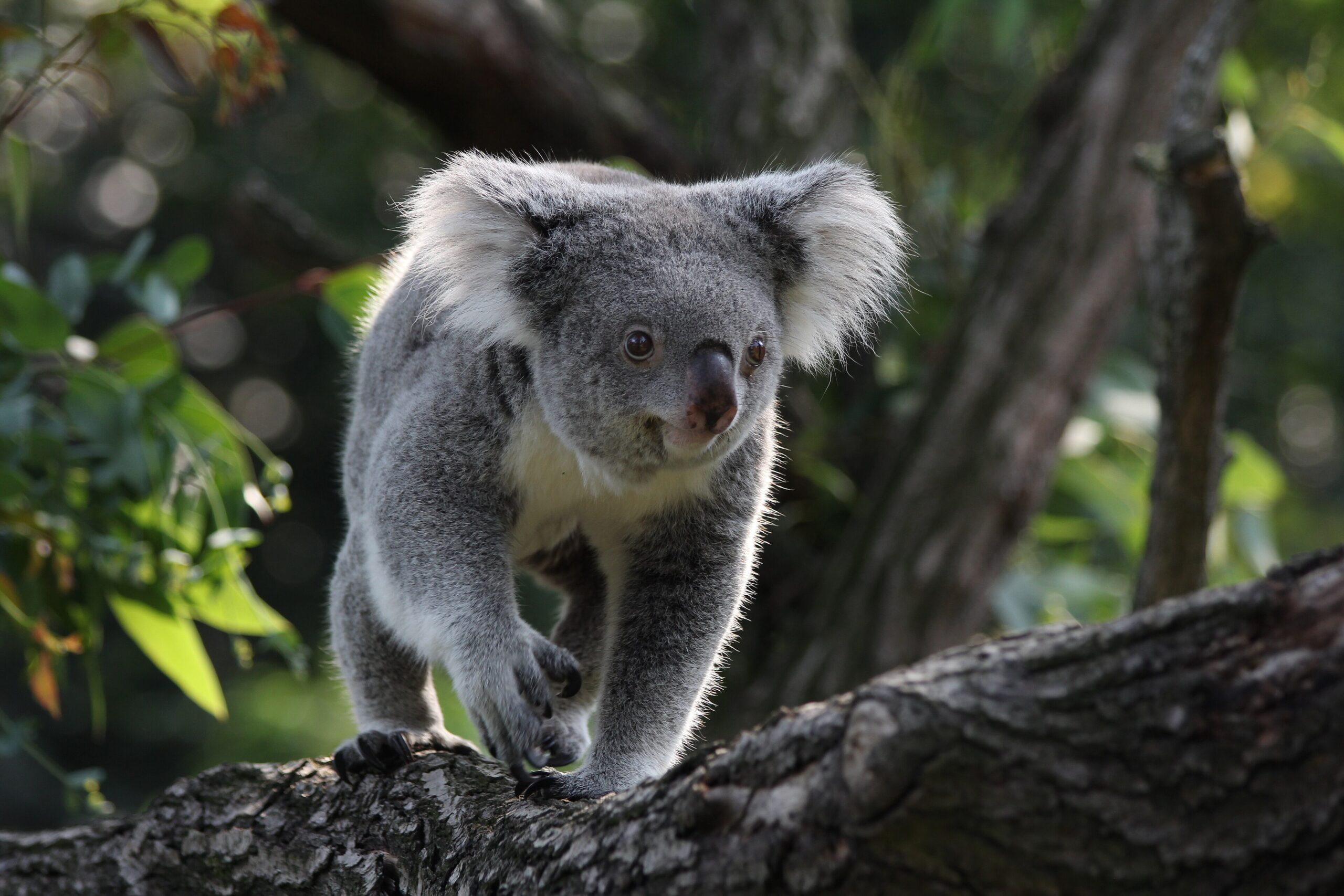
Banner image: Koalas typically climb into the upper reaches of trees to escape fire, but during the massive Black Summer bushfires, this wasn’t always a lifesaving strategy. Many surviving koalas suffered extreme burns to their paws and other body parts and required intensive intervention from specialized wildlife shelters. Image by Till Niermann via Wikimedia Commons (CC BY 3.0).
After logging bans, Australia turns to “forest thinning”. Does it reduce fire risk?
Australian bushfires leave wildlife facing increased predator risk, decades of recovery
Citations:
Sturman, A., Celermajer, D., MacDonald, F., Verlie, B., Heenan, N. … Schlosberg, D. (2025), Community efforts to care for animals during climate disasters: Experiences and recommendations from an Australian bushfire affected region. International Journal of Disaster Risk Science. 16(2), 190–200. doi:10.1007/s13753-025-00623-8
Zylstra, P., Bradshaw, D., … Lindenmayer, D.B. (2022). Self-thinning forest understoreys reduce wildfire risk, even in a warming climate. Environmental Research Letters. 17(4), 044022. doi:10.1088/1748-9326/ac5c10
Zylstra, P. (2022). Quantifying the direct fire threat to a critically endangered arboreal marsupial using biophysical, mechanistic modelling. Austral Ecology. 48(2), 266–288. doi:10.1111/aec.13264
Banner image:
Starre Vartan is an independent science journalist and geologist/hydrologist who grew up exploring the sandstone tidepools of the Sydney, Australia, coastline and the glacier-carved wetlands and ponds of New York’s Hudson Valley, building a deep interest in animals and their environments as well as the human body. She’s also the author of “The Stronger Sex: What Science Tells Us About the Power of the Female Body.”
FEEDBACK: Use this form to send a message to the author or editor of this post. If you’d like to post a public comment, you can do so at the bottom of the page.

