


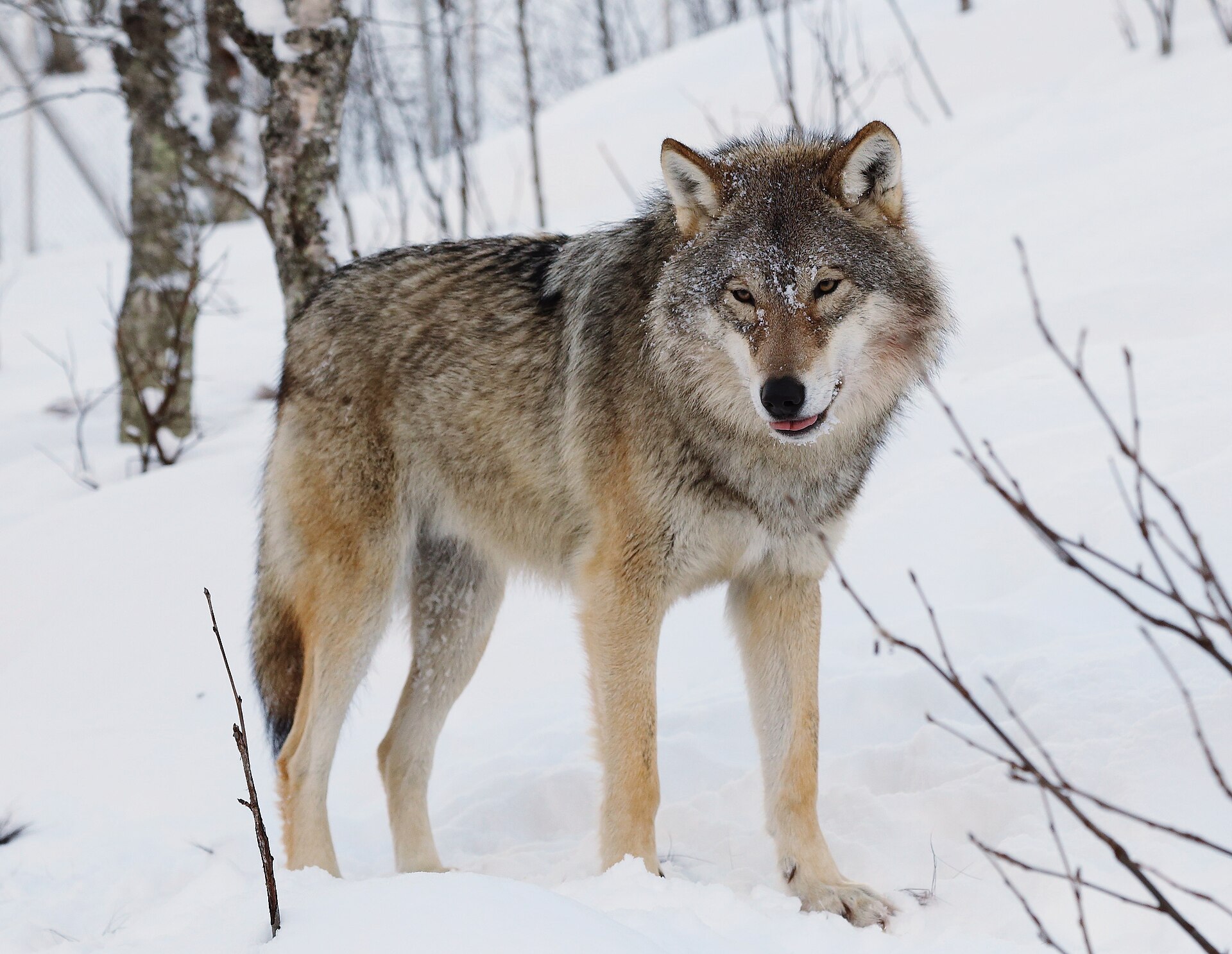
Across much of Europe, gray wolves were hunted to near extinction by the mid-20th century. In the past couple of decades, though, strict protections have helped the population rebound in some countries.
The return of the gray wolf (Canis lupus) has posed a conundrum. Conservation groups view it as a conservation success. However, wolves sometimes kill livestock, which brings them into conflict with some farmers. In response, the European Union recently weakened the wolf protections, making it easier to hunt the animals.
In a conversation with Mongabay’s Mike DiGirolamo, social scientist Emu-Felicitas Ostermann-Miyashita, from the Tokyo University of Agriculture and Technology, argues the situation shouldn’t be seen as wolves versus livestock, but rather “livestock with wolves.”
“Looking back to the point when wolves were abundant in the landscape, it has always been livestock with wolves because people had no other choice,” Ostermann-Miyashita says in the Newscast episode. “And that’s why in the countries where there has been persistent wolf populations without them being exterminated … these protection measures are intact, like fencing or putting the sheep into enclosures during the evening to prevent livestock predation.”
By contrast, landscapes where wolves have been extinct for decades or centuries have become more populated with humans who have become habituated to living without wolves, Ostermann-Miyashita says. So the knowledge of how to protect livestock from large carnivores has also been lost, she adds.
Ostermann-Miyashita has studied the conflict between humans and wolves in Germany, where the canids were once exterminated and have since returned. In early 2025, she published suggestions for wolf-livestock coexistence.
One of these suggestions is for European countries to collaboratively assess their approaches to managing interactions with wolves. Ostermann-Miyashita says there are four broad ways to manage large carnivores across Europe: protect livestock using methods like fencing; provide compensation or financial measures for livestock losses; pay people for letting carnivores persist on their land; and lethal control.
Ostermann-Miyashita says it’s important that countries like Germany, which now have decades of experience with the return of wolves, share their experience with countries that are newer to wolf reintroduction, like the Netherlands or Belgium. This way, everybody doesn’t have “to go through the same process to adapt to the species,” Ostermann-Miyashita adds.
The effectiveness of each management method is highly context-dependent, Ostermann-Miyashita says, adding that more research is needed.
There are some studies to suggest that killing wolves, for example, may reduce damage temporarily by getting rid of a pack or an individual, but another wolf pack can fill its gap and the damage can restart, Ostermann-Miyashita says. “So at the moment, I would say there’s not enough evidence to say whether lethal control can be effective or not.”
Listen to the newscast episode here.
Banner image of a gray wolf at Polar Zoo in Bardu, Norway, by User:Mas3cf via Wikimedia Commons (CC BY-SA 4.0).
