


- As scientists and dozens of nations call for major reductions in plastic production, the plastics industry continues to push pyrolysis — dubbed chemical or advanced recycling — as a primary solution to the global plastic waste crisis.
- Critics say pyrolysis is not a viable solution, but rather an attempt by the industry to rebrand incineration as an environmentally sound recycling process. Pyrolysis uses high temperatures and pressure to convert waste into molecular building blocks which can then be used to make small amounts of recycled plastic.
- Pyrolysis facilities, analysts say, emit a toxic cocktail of harmful pollutants, while also using large amounts of energy and storing considerable amounts of hazardous chemicals onsite, putting local communities at risk. The facilities also create very little, if any, recycled plastic.
- But the industry hopes to use what little new plastic pyrolysis facilities do make to count toward recycling credits that can then be applied to new plastic products containing minimal recycled content. NGOs want transparency and strong industry regulation to protect health and the environment.
Plastic pollution has rapidly escalated into a global environmental crisis that threatens ecosystem function and human health at an epic scale. Solutions are urgently needed, but while scientists, conservationists and more than 75 nations have called for binding limits on fossil fuel-driven plastic production, the plastics industry is opposed to all limits and is instead pushing a collection of technologies known as ‘chemical recycling.’
Critics say the industry is utilizing deceptive accounting practices and marketing jargon to rebrand polluting plastic incineration disposal methods.
To date, chemical recycling facilities have created a relatively miniscule amount of recycled plastic, according to industry critics. But consumer product labels claiming “20% recycled plastic” have become an increasingly common sight on single-use plastic items.
Reading such labels, consumers might logically assume that the product contains 20% recycled material, but that might not be the case. In addition, that potentially misleading label could be greenwashing environmentally damaging plastic incineration.
Chemical recycling: Cutting-edge solution or sleight of hand?
Chemical recycling, also dubbed ‘advanced recycling’ by the industry, uses chemicals, intense heat and/or pressure to break down plastic waste into its molecular building blocks. This contrasts with traditional ‘mechanical’ recycling methods which shred plastic waste into tiny flakes that can be melted and re-molded into new products.
The most common form of chemical recycling, called ‘pyrolysis,’ uses high temperatures and pressure to convert waste plastic into an oil, which can be further processed into a variety of chemicals, some of which can be used to create new plastics.
Policymakers in the U.S. and Europe have spent tens of millions subsidizing pyrolysis facilities. But experts warn that it’s not an effective solution to the plastic pollution crisis and is fraught with environmental and public health issues.
For starters, pyrolysis can’t directly produce new plastic. Instead, it outputs pyrolysis oil, which must be further processed using energy-intensive means to produce the chemical ingredients of plastic. As a result, turning plastic waste into new plastics via pyrolysis releases more greenhouse gases than producing virgin plastic from crude oil, a study published in 2023 found.
Pyrolysis oil derived from plastic waste is also contaminated with chemical additives, heavy metals and other substances, so it typically needs to be diluted with virgin petroleum first, before being made into products.
Mechanical plastic recycling methods also face challenges: Recycling reduces the material quality, so to achieve desired properties, such as strength and durability, recycled plastic is often mixed with virgin plastic.
The difference between chemical recycling and mechanical recycling is that the latter can produce products containing up to 100% recycled plastic, whereas very little of the waste plastic fed into the pyrolysis process can actually become new plastic, with estimates ranging from 0.1% to 6%.
The need for transparent, traceable recycling supply chains
For decades, plastic recycling companies have used well-established ‘chain-of-custody’ methods to ensure that their final product contains a known quantity of recycled material. One approach involves physically tracking materials through the entire supply chain, creating end products that all contain the same proportion of recycled content.
However, the availability and price of recycled and virgin plastic feedstocks vary over time, so it’s not always possible to produce consistent outputs. That’s where the bookkeeping approach known as ‘mass balance rolling average accounting’ comes in. This method tracks inputs and outputs to calculate the average amount of recycled content created over a set period.
Such methods are used in many industries — such as Fairtrade chocolate, tea and sugar — and are approved for plastic products making a recycled content claim by the U.S. Federal Trade Commission. But industry is lobbying regulators to accept more opaque and potentially deceptive accounting methods. That, according to critics, is because more transparent chain of custody methods aren’t suitable for chemical recycling technologies like pyrolysis, which can’t physically track inputs and connect them with recycled outputs.
Creative accounting would rebrand ‘fuel’ as recycled content
The industry is advocating for non-proportional or ‘free’ allocation mass balance accounting. It would allow plastic waste that is burned to fuel the pyrolysis process, as well as fuels generated from pyrolysis oil (which will later be burned), to be counted toward recycling credits that can be applied to virgin plastic that can then be labeled as recycled.
“Companies are literally taking plastic, turning it into fuel, claiming this is recycling even though it is not, and then assigning their recycling credits to virgin plastic, and marketing the virgin plastic as recycled, which is both misleading and just plain nuts,” says Renée Sharp, director of plastics and petrochemical advocacy at the Natural Resources Defense Council, who spoke to Mongabay via video call.

Counting fuel products as recycled violates policy and legal definitions of recycling in the European Union, U.S. state of California and Canada. But advocates claim this accounting method — which isn’t used in any other industry — is necessary to make pyrolysis scalable, marketable and financially viable.
“The American Chemistry Council supports both proportional and non-proportional allocation when combined within a rigorous, independently certified mass balance system,” says Adam Peer, senior director of plastics sustainability at the American Chemistry Council, who responded to Mongabay’s questions via email. “With clear rules, transparent claims, and independent third-party certification, mass balance is the only practical way to increase the amount of sustainable material used across the economy, leveraging existing infrastructure.”
The Plastics Industry Association did not respond to Mongabay’s request for comment by the time of publication.
Experts warn that these new accounting methods lack transparency, risk undermining confidence in recycling, and distract policymakers from real solutions to plastic pollution. Critics also say such methods put mechanical recycling — which is associated with fewer health and environmental concerns — at a disadvantage. “You’re creating a very uneven playing field for mechanical recycling that can’t make those same kind of credit transfers,” Sharp said.

A toxic track record
In the U.S., pyrolysis is legally classified as incineration under the Clean Air Act, which places strict limits on toxic emissions from waste incineration facilities because their emissions pose public health risks. To get around these rules, companies claim pyrolysis makes new plastic (something it does minimally), and are pushing state agencies for Clean Air Act exemptions intended for recycling processes, thus attempting to avoid the stronger restrictions imposed on incineration as a means of waste disposal.
In March 2026, the U.S. Environmental Protection Agency under President Donald Trump’s administration proposed a new rule exempting pyrolysis units from Clean Air Act regulations.
That change would effectively deregulate pyrolysis facilities by removing the only federal standards that currently apply, and allowing them to emit a cocktail of harmful and toxic pollutants, including benzene and dioxins — both potent carcinogens — putting neighboring communities at risk. Environmental groups, including the NGO Beyond Plastics, are opposing the EPA’s plan.
Chemical recycling facilities also use and store large quantities of hazardous chemicals, including flammable, corrosive and/or explosive substances, such as sulfuric acid and butane, putting the facilities at risk for spills, fires and explosions.
These chemicals and waste also need to be transported to and from chemical recycling facilities by road or rail, sometimes traveling thousands of miles overland, potentially endangering unaware communities along transportation routes.
Closures shine light on pyrolysis failure
The 2025 closure of the Braven Environmental pyrolysis facility in the U.S. state of North Carolina offers insights into pyrolysis industry operations and failings. Public records reveal that this facility repeatedly mishandled hazardous waste, and has multiple unresolved violations with the State Department of Environmental Quality. It’s unclear what contamination may be left onsite, or what the company’s monitoring and clean-up obligations will be, leaving locals guessing about long-term implications.
Likewise, the Freepoint Eco-Systems pyrolysis plant announced the suspension of operations in June 2026. It received multiple notices from regulators in the U.S. state of Ohio for air pollution emissions violations and failure to meet required recycling output thresholds.
“How these facilities are operating in reality indicates a dangerous track record of spills, violations, not following the law and their permits, which presents greater health risks to communities than the best-case scenarios assumed by [regulatory] agencies,” said Veena Singla, an environmental health researcher affiliated with the University of California, San Francisco, who spoke to Mongabay via video call.

As is often the case with polluting U.S. incinerators, chemical recycling facilities are predominantly sited in low-income areas and communities of color, who bear the burden of the associated pollution and health impacts.
“The pattern of plastic pollution disproportionately affecting marginalized communities continues with chemical recycling,” Singla said. She analyzed EPA data and her yet to be published findings show that chemical recycling facilities are located where the proportion of Black residents within a three-mile radius is twice the U.S. average.
“It’s a pattern of environmental injustice,” she said.
If the EPA rule to reclassify plastic incinerators, including chemical recycling facilities, is finalized, pyrolysis plants will no longer be federally required to limit hazardous air pollution, and communities nearby will lose legal protections afforded by the Clean Air Act against the harmful emissions they produce.
The public comment period for the EPA rule change has closed, and a final decision could be published at any time.
Experts call for strong ‘mass balance accounting’ regulation
In the U.S., there are currently no federal regulations on the use of mass balance accounting methods for recycled plastic. Several states recently implemented, or are currently developing policies in this area. European legislation on plastic recycling is more advanced, but policymakers continue grappling with how to regulate chemical recycling.
Zero Waste Europe (ZWE), a European network of local and national NGOs, is calling for a level playing field for recycled content claims: If an accounting method can’t be used by mechanical recyclers — non-proportional allocation, for example — then it shouldn’t be allowed for chemical recyclers, the group says.
“Zero Waste Europe supports the highest level of transparency and traceability,” said Lauriane Veillard, ZWE’s chemical recycling and plastic-to-fuels policy officer, who spoke to Mongabay via email. “We consider non-proportional allocation an unfair practice as it impacts the [reported] recycling yield of the technology … while in reality no changes [have occurred] in the system.”
In 2026, the European Commission approved the use of mass balance accounting methods for recycled content in plastic beverage bottles under the EU Directive on Single-Use Plastics, but ruled that fuels could not count toward recycled content claims, in line with the definition of recycling outlined in the 2008 Waste Framework Directive. This ruling offers a regulatory precedent for other legislative bodies globally, Veillard said.

As other nations struggle to legislate mass balance accounting for plastic recycling, the NRDC has urged governments to enforce the highest transparency standards. “If some form of mass balance [accounting] is going to be allowed, it needs to be the fairest and least deceptive form,” said NRDC’s Sharp, but “what the industry really wants is the most deceptive and the most problematic forms.”
If industry lobbyists have their way, critics warn that misleading mass balance accounting methods could soon be greenwashing a largely unregulated and polluting industry that produces fuel and chemicals, and very little recycled plastic. And consumers will need to question the recycled content claims adorning plastic product labels.
The chemical complexity of plastic products, along with their persistence and toxicity, has made end of life disposal extremely challenging, and no recycling solution to date has come close to living up to those challenges. Though the industry is resistant, experts argue that limits on plastic production — especially single-use plastics — and bans on the worst toxic ingredients are more viable paths to protecting public and planetary health.
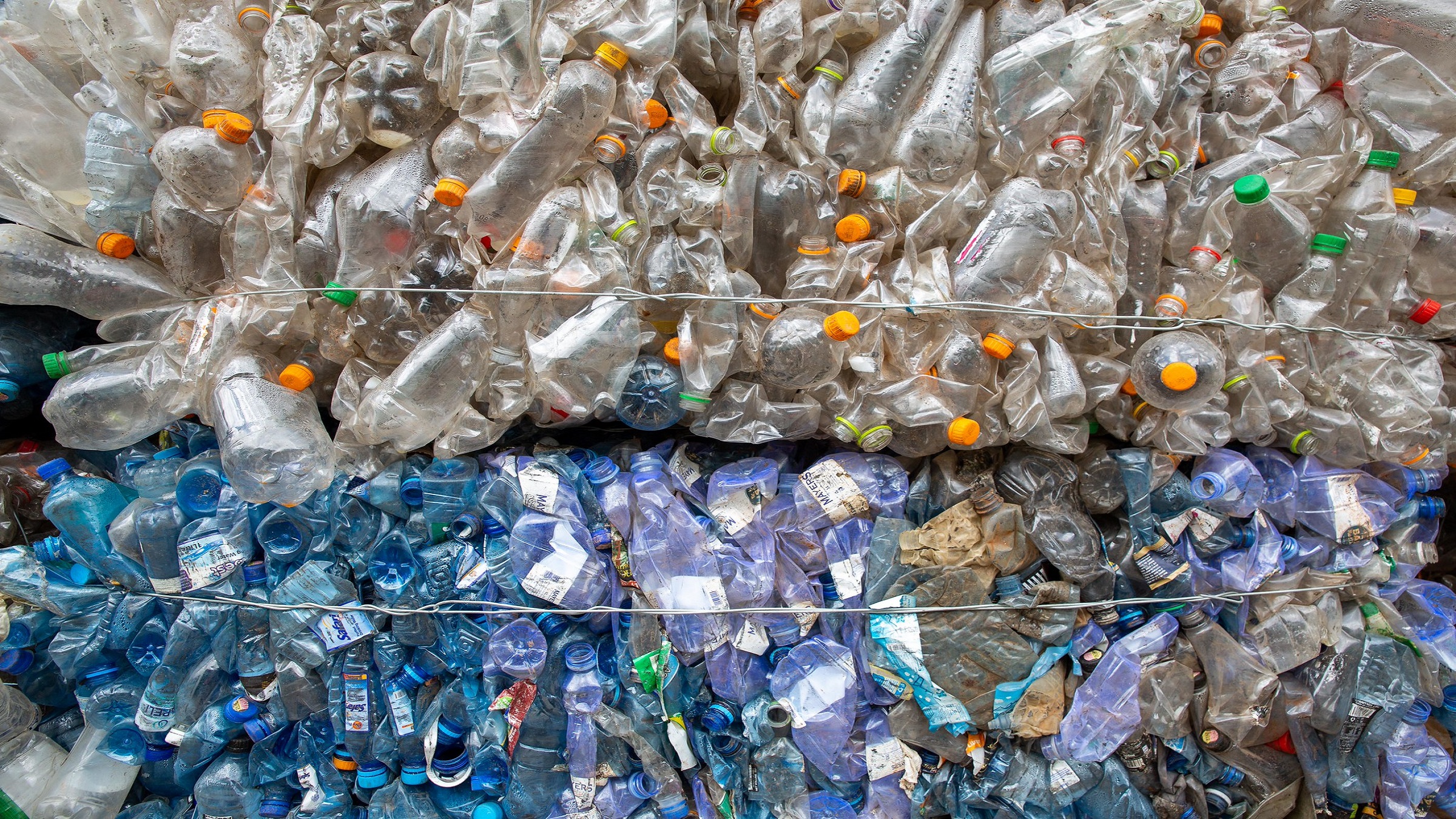
Banner image: As the world grapples with the growing plastic pollution crisis, new accounting methods pushed by the chemical recycling industry could undermine national and international recycling targets and distract from real policy solutions, critics say. Image by UNEP via Flickr (CC BY-NC-SA 2.0).
Citation:
Uekert, T., Singh, A., DesVeaux, J. S., Ghosh, T., Bhatt, A., Yadav, G., … Carpenter, A. C. (2023). Technical, economic, and environmental comparison of closed-loop recycling technologies for common plastics. ACS Sustainable Chemistry & Engineering, 11(3), 965-978. doi:10.1021/acssuschemeng.2c05497
FEEDBACK: Use this form to send a message to the author of this post. If you want to post a public comment, you can do that at the bottom of the page.
Cite this article
Claire Asher (2026). Plastic industry bookkeeping plans hide chemical recycling harms, critics say. Mongabay Conservation news. DOI: https://doi.org/10.66709/news-332808

