

Close Menu
NCIJ Network NCIJ Network
    What's Hot

    Common osteoporosis drugs linked to 24% lower dementia risk in major study

    November 9, 2026

    The Guardian view on Jensen Huang’s affair: why did Trump ignore the warnings? | Editorial

    November 9, 2026

    I wrote Labour’s Brexit red lines. This is why it’s time to scrap them | Chris Ward

    November 9, 2026
    Facebook X (Twitter) Instagram
    Trending
    • Common osteoporosis drugs linked to 24% lower dementia risk in major study
    • The Guardian view on Jensen Huang’s affair: why did Trump ignore the warnings? | Editorial
    • I wrote Labour’s Brexit red lines. This is why it’s time to scrap them | Chris Ward
    • Did Charlie Kirk say Texas would ‘never turn blue’ in his lifetime? There’s no proof
    • Who’s who for Europe at the Ukraine talks in Abu Dhabi – POLITICO
    • NASA reveals bold new plan to return astronauts to the Moon in 2028
    • Rangers’ role must be built into biodiversity conservation commitments (commentary)
    • Lame, suffocated and dead: The drug supersizing America’s cattle
    • About
      • Our Team
      • Editorial Policy
      • Editorial Independence
      • International Support
    • Trust & Standards
      • AI Usage Policy
      • Conflict of Interest Policy
      • Corrections Policy
      • Ethics Policy
      • Fact-Checking Policy
      • Source Protection
    • Get Involved
      • Guide for Sources
      • Support Independent Journalism
    • Legal
      • Cookie Policy
      • Privacy Policy
      • Terms of Use
    Facebook X (Twitter) Instagram
    NCIJ Network NCIJ Network
    Tuesday, November 10
    • Home
    • World
    • Ai
    • Business
    • Politics
    • Health
    • Crypto
    • Science
    • Technology
    • Cybersecurity
    • Defense & Security
    • Economy
    • Energy
    • Europe
    • More
      • Fact Check
      • Investigations
      • Opinion & Analysis
      • Environment
    NCIJ Network NCIJ Network
    Home»Science

    Part-human part-mouse brain developed in science breakthrough

    NCIJ NETWNCIJ NETWORKBy NCIJ NETWNCIJ NETWORKSeptember 16, 2026 Science No Comments2 Mins Read
    Share
    Facebook Twitter LinkedIn Pinterest Email

    The human brain is made up of billions of cells, interconnected in millions of circuits, making it difficult to understand its development and what exactly is happening – at the cellular level – when things go wrong.

    While this research is not the first time human neurons have been implanted in laboratory rodents, external, these scientists took that approach to a new level.

    First, they genetically-engineered mice to develop almost none of their own cerebral cortex – that is the outer layer of the brain sometimes referred to as “grey matter”. It handles higher-level thinking, memory and senses.

    The researchers then used skin cells taken from humans and “reprogrammed” them, so they grew into pieces of brain-like tissue.

    These are structures called organoids – they are not whole brains grown in dishes, more collections of connected, living cells.

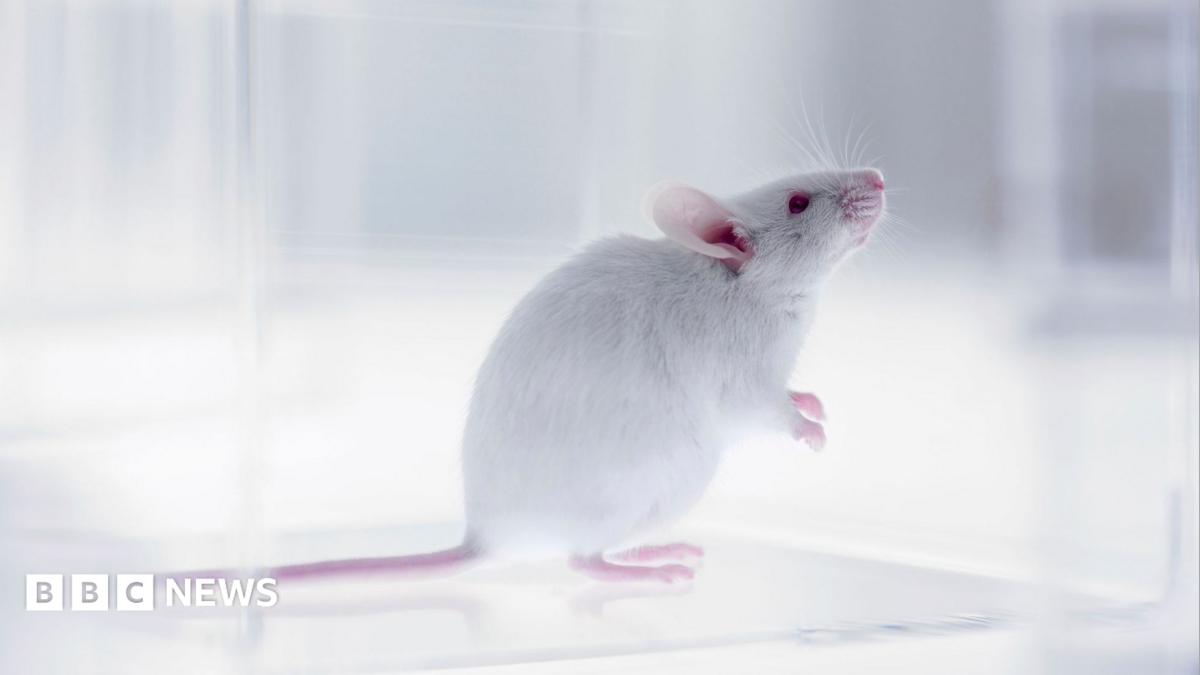
    When these organoids were implanted into the mouse brain the cells divided and organised themselves into the animal’s existing brain circuitry, connecting with the rest of the mouse’s brain and spinal cord.

    The cortex of the implanted mice is not perfect – normal cortex forms organised, structured layers. And as neuroscientist Dr Ilary Allodi put it, scans of these human-mouse brains look “a bit messy”.

    After a few months though, the human cells started to look and function like the outer layer of the mouse’s brain.

    About six months after the surgery, scientists put the mice through some basic behavioural tests – observing them as they moved around a small table-top arena.

    Pașca said they performed “largely as [the normal] mice did”.

    “They don’t have any enhancement,” he added.

    Dr Sarah Chan, a reader in bioethics at the University of Edinburgh who was not involved in this research, told BBC News there was “no indication that what’s being created here are mice that can think like humans, or a human brain in a mouse body.”

    But she said the study “prompts us to think about what it might mean when we start changing animal cognition”.

    “How can we know what it’s like to be one of these mice? And how do we take account of that in the ways that we treat laboratory animals,” she added.

    brain breakthrough developed Parthuman partmouse Science
    NCIJ NETWNCIJ NETWORK
    • Website

    Keep Reading

    Common osteoporosis drugs linked to 24% lower dementia risk in major study

    NASA reveals bold new plan to return astronauts to the Moon in 2028

    Caltech robot makes history by building a structure in space

    La NASA destina un millón de dólares al reto estudiantil Base Lunar

    A simple supplement may help clear brain fog after cancer

    Drugs like Ozempic may help reverse chronic kidney disease

    Add A Comment
    Leave A Reply Cancel Reply

    Editors Picks

    Common osteoporosis drugs linked to 24% lower dementia risk in major study

    November 9, 2026

    The Guardian view on Jensen Huang’s affair: why did Trump ignore the warnings? | Editorial

    November 9, 2026

    I wrote Labour’s Brexit red lines. This is why it’s time to scrap them | Chris Ward

    November 9, 2026

    Did Charlie Kirk say Texas would ‘never turn blue’ in his lifetime? There’s no proof

    November 9, 2026
    Latest Posts

    Progressive Democrat Makes Runoff for Alaska Governor

    August 19, 2026

    Climate change is cooking Europe’s oceans, scientists find – POLITICO

    August 19, 2026

    In a Faltering Chinese Economy, Working-Class Stories Strike a Chord

    August 19, 2026

    Subscribe to News

    Get the latest sports news from NewsSite about world, sports and politics.

    NCIJ Network is an independent digital news platform delivering trusted investigative journalism, European and global news, in-depth analysis, and fact-based reporting with accuracy, transparency, and integrity.

    Facebook X (Twitter) Instagram Pinterest YouTube

    Common osteoporosis drugs linked to 24% lower dementia risk in major study

    November 9, 2026

    The Guardian view on Jensen Huang’s affair: why did Trump ignore the warnings? | Editorial

    November 9, 2026

    I wrote Labour’s Brexit red lines. This is why it’s time to scrap them | Chris Ward

    November 9, 2026

    Subscribe to Updates

    Get the latest creative news from FooBar about art, design and business.

    Type above and press Enter to search. Press Esc to cancel.