


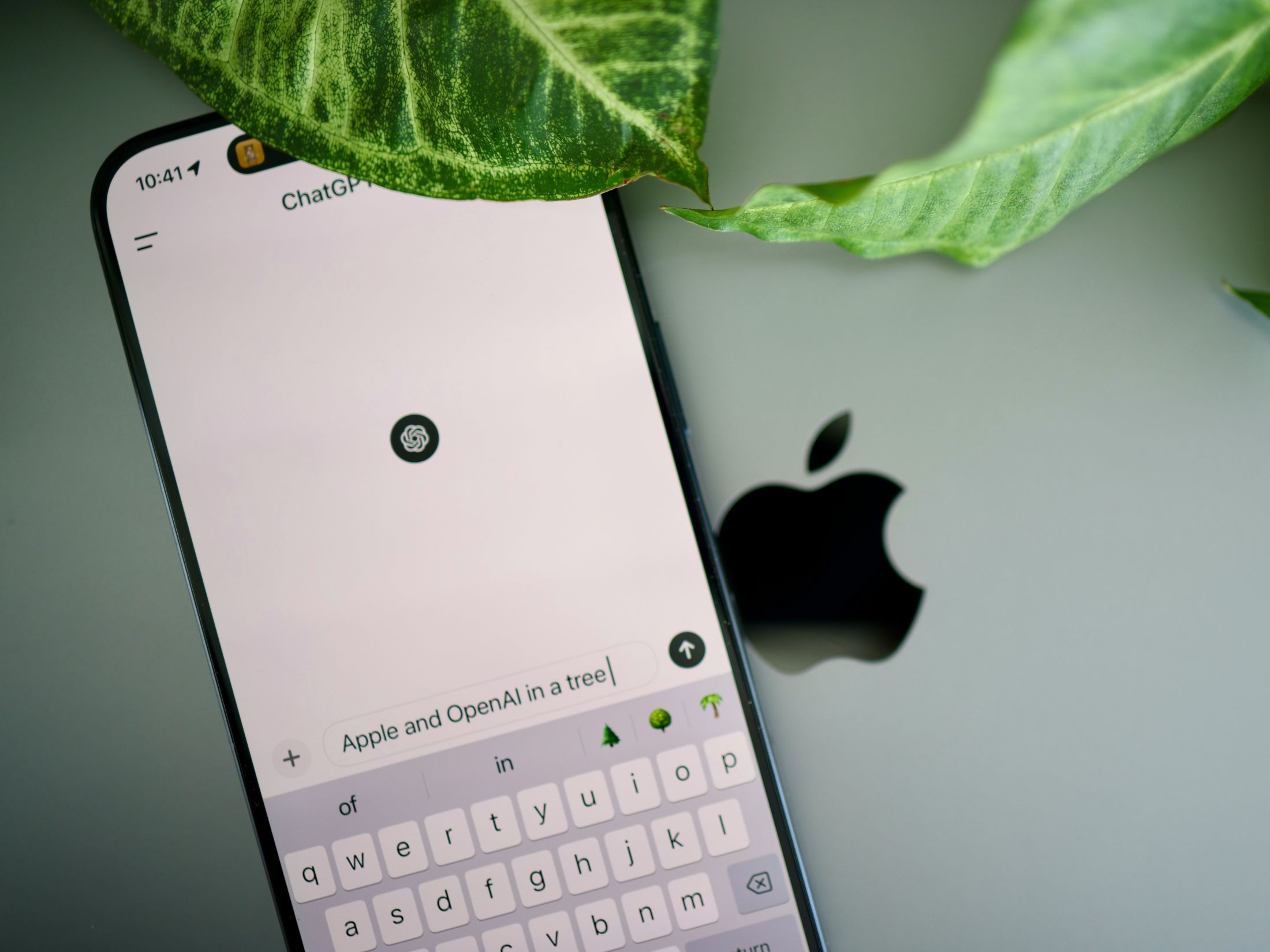
OpenAI is deploying a Health feature inside ChatGPT, giving users the option to connect Apple Health data and medical records to the chatbot. Logged-in users aged 18 and older can access it now on web and iOS, across the Free, Go, Plus, and Pro tiers.
Users link Apple Health and, where supported, records from US hospital systems, One Medical, or Function Health. Once synced, ChatGPT can pull medications, lab results, recent visits, sleep data, and activity logs into any conversation in the app, rather than confining that context to a separate section.
OpenAI ran an earlier version of this idea with a smaller test group, one that required users to open a dedicated health area to get responses grounded in their own data.
The company found that more than 70 percent of health-related conversations among that group happened somewhere else entirely, in the middle of meal planning or an unrelated symptom query, not inside the dedicated space built for that purpose.
That data led to this redesign. Rather than forcing users into a specific mode to get contextual answers, ChatGPT now draws on connected Health information across any conversation, provided the user has granted permission.
A person planning a dinner out might get a restaurant suggestion that accounts for a logged dietary restriction. Someone asking about weekend plans might get activity suggestions adjusted for a recent injury noted in their synced records.
The Health tab in the sidebar still exists, but its role has shifted to being a management hub: connecting accounts, reviewing synced data and trends, browsing suggested prompts, and returning to past health-related chats.
What early testers of the Health feature in ChatGPT report
OpenAI published numerous accounts from its early access group, and the details are worth weighing against the company’s own framing of the tool as support rather than diagnosis.
Blake, a technical program manager, said: “The most useful part has been turning scattered medical history into something I can actually understand and explain. I have multiple overlapping issues and ChatGPT helped connect those pieces into a clear timeline, explain the medical terms in plain English, and create summaries I could share with a physical therapist or trainer.”
On the shift from disconnected records to a usable pattern, Blake added: “Instead of just seeing disconnected diagnoses, imaging results, and surgery notes, I could understand the bigger pattern. It made the information more usable and gave me better language to advocate for myself with providers and trainers.”
Reweti, a portfolio manager, pointed to longitudinal analysis as the differentiator over a standard search or a one-off doctor visit: “What I want is to infer patterns that aren’t obvious and make connections I wouldn’t have made on my own.
“ChatGPT can access my existing labs because I’ve connected everything, and it can look over time—that’s the big advantage. It’s like having a research analyst. It allows me to be more proactive and own more of my health journey.”
However, not every account was frictionless, and one is worth flagging given the stakes involved in surfacing clinical data through a chatbot interface. Shannon, a nurse, described finding an unexpected entry in her own chart through the tool.
“Using Health has actually reinforced something I’ve believed for a while: one of AI’s greatest strengths isn’t replacing healthcare professionals, but helping patients better understand and navigate their own health information,” explained Shannon.
“Discovering an unexpected chart entry through Health really highlighted that for me. It wasn’t AI creating a problem. It helped me identify something I can now appropriately follow up on with my healthcare providers.”
That distinction, between a tool surfacing something for human follow-up versus a tool making a clinical call, is the line OpenAI needs the product to hold as usage scales.
Other testers focused less on clinical nuance and more on the practical grind of manual data wrangling the feature is meant to replace. Daniel, a consultant, connected multiple sources and found the combined view more useful than isolated chat sessions.
“It’s been great for coordinating labs and translating them into language I understand. Connecting Apple Health and MyChart makes the insights more grounded in what is happening across my life outside of just chat interactions,” said Daniel.
Kathleen, a small business owner who’d lost a decade-long fitness habit to work pressure, described a lower-stakes but still concrete use case, with the model adjusting suggestions based on activity gaps it could see directly.
“I’ll say, ‘I need something to help me move today,’ and Health can see I haven’t worked out in the last seven days and suggest starting slowly—with a walk or some stretching. It’s helping me make things manageable and get back into it in a reasonable way,” explained Kathleen.
Carlton, an operations manager, had previously resorted to exporting spreadsheets from Apple Health and uploading them manually before every chat, a workaround the new integration is designed to eliminate.
“Prior to Health, I was exporting massive spreadsheets from Apple Health and importing them into ChatGPT. Now, it feels a lot more streamlined. Being able to see years and years of my fitness journey in Health helped me see things in a different light—a bigger picture,” said Carlton.
OpenAI puts weekly health-related ChatGPT queries at north of 300 million people, covering everything from decoding a lab result to prepping for a doctor’s visit. That figure, if accurate, puts ChatGPT in a position most digital health platforms would need years and considerable marketing spend to reach.
The company is explicitly positioning Health as a support tool rather than a diagnostic one, and telling users to confirm anything important with their actual healthcare provider.
OpenAI’s AI model performance claims and how they were tested
OpenAI attributes the feature’s viability partly to newer models: GPT‑5.5 Instant, available to Free users, and GPT‑5.6 Sol, reserved for paid tiers.
The company says GPT‑5.5 Instant made gains in recognising when urgent care might be needed and in explaining uncertainty, and that on its toughest health evaluations it performed comparably to OpenAI’s frontier Thinking models at the time. GPT‑5.6 Sol is described as the company’s strongest health model so far, built for reasoning across multiple data points such as lab trends over time.
To validate these claims, OpenAI says it worked with hundreds of physicians to build health scenarios and rubrics scoring responses on accuracy, safety, communication, context awareness, completeness, and appropriate escalation to professional care. The company reports that every GPT‑5.6 model outperformed GPT‑5.5 on HealthBench Professional, an internal evaluation built for this purpose.
A chart included in OpenAI’s announcement shows GPT‑5.6 Sol scoring higher than GPT‑5.5 Instant and GPT‑4o across categories including accuracy, communication, completeness, and following instructions, with physician-written responses used as a comparison baseline.
OpenAI does say physicians tested the live Health product before release specifically to assess real-world performance and safety with connected data, which is a step beyond benchmark scoring alone, though the company hasn’t published the methodology or results of that testing in detail.
Health data handling and the permission architecture
Connected medical records and Apple Health data – along with any conversations that draw on them – are excluded from foundation model training and ad targeting, according to the company, regardless of a user’s broader ChatGPT training settings. Conversations that don’t touch Health data still follow whatever training preference a user has set separately.
Access is permission-gated by default. ChatGPT asks before using connected health data to personalise a response, though users can switch to “always allow” and turn off the prompts entirely. That setting lives in Settings > Plugins > Health and can be reversed at any time. Disconnecting a data source triggers deletion from OpenAI’s systems within 30 days, though anything already surfaced in existing chat history sticks around until the user deletes those conversations manually.
Memory creation is scoped narrowly, too. Memories can be created from health conversations but not directly from the raw connected records or Apple Health data itself. Users wanting to avoid memory creation altogether can use Temporary Chat or disable memory in settings.
OpenAI also flags a specific edge case: actions that could expose Health data through other connected plugins, such as sending a training plan built from Apple Health metrics to a running partner. The company says additional checks apply before such actions execute, and that for sensitive cases ChatGPT may ask for explicit confirmation. OpenAI states it runs red teaming exercises targeting these scenarios, though no findings or failure rates from that testing have been made public.
What happens to accuracy at the edges
The practical friction point sits with data quality. A medication can stay listed in a patient’s synced record long after they’ve stopped taking it, and OpenAI uses that exact scenario to illustrate why synced data isn’t automatically current. Its guidance to users is blunt: flag changes to ChatGPT directly and check anything important against the original source rather than trusting the sync to stay accurate on its own.
Wearable and fitness app data carries its own gaps, since availability depends on what each third-party app chooses to share through Apple Health, and OpenAI notes some proprietary scores from fitness apps may not transfer at all.
The relevant question isn’t whether ChatGPT can summarise a lab result correctly in a demonstration, it’s whether the permission model, data deletion timelines, and escalation logic hold up when a user’s synced records are three months stale and the model is asked to reason across contradictory inputs.
OpenAI’s physician testing addresses part of that concern; it doesn’t close the distance between a controlled evaluation and a user managing multiple chronic conditions with incomplete data syncing from four different apps.
For those wishing to give the feature a try, it’s live now for eligible US users through the sidebar Health menu.
See also: OpenAI Presence sells enterprise AI agents with engineers attached
Want to learn more about AI and big data from industry leaders? Check out AI & Big Data Expo taking place in Amsterdam, California, and London. The comprehensive event is part of TechEx and is co-located with other leading technology events including the Cyber Security & Cloud Expo. Click here for more information.
AI News is powered by TechForge Media. Explore other upcoming enterprise technology events and webinars here.
