


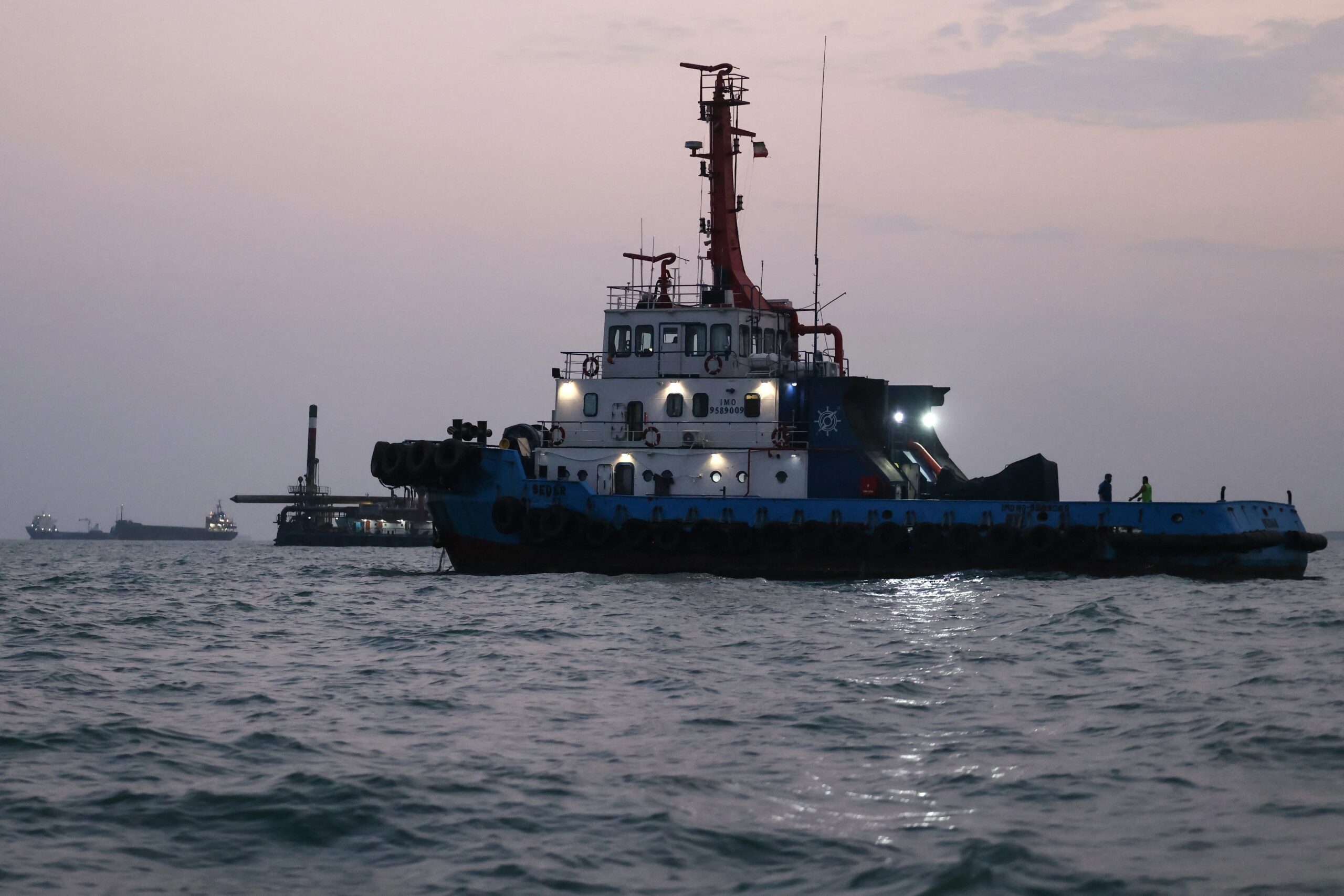
Over the past week, there has been a remarkable turnaround in supplies of crude oil making it out of the still-threatened Strait of Hormuz, with oil volumes returning nearly to prewar levels.
What is not leaving the strait—or many parts of Russia, or now China—are refined products such as gasoline and diesel. That means that despite the apparent success of the U.S. naval blockade of Iranian ports and the U.S. Navy’s escorting of a steadily rising stream of tankers out of Hormuz, there will be little relief at the pump for consumers in the United States or Europe for months to come.
Over the past week, there has been a remarkable turnaround in supplies of crude oil making it out of the still-threatened Strait of Hormuz, with oil volumes returning nearly to prewar levels.
What is not leaving the strait—or many parts of Russia, or now China—are refined products such as gasoline and diesel. That means that despite the apparent success of the U.S. naval blockade of Iranian ports and the U.S. Navy’s escorting of a steadily rising stream of tankers out of Hormuz, there will be little relief at the pump for consumers in the United States or Europe for months to come.
The recovery in crude flows out of the Persian Gulf (and, for Saudi Arabia, out of its alternative port on the Red Sea) has been astonishing. From a rough average of about 6 million to 8 million barrels of oil a day in the middle of September, average weekly flows are now nearly double, or about 13.5 million barrels a day, according to shipping firm Kpler. Saudi Arabia, in particular, is outperforming even its 2025 export numbers, with huge amounts of crude exiting the Strait of Hormuz and significant volumes escaping via the Red Sea; Kpler estimates that Saudi crude exports are at least 6.4 million barrels, versus 5.4 million barrels before the war.
Estimates of the true recovery of Hormuz flows are notoriously tricky to nail down, because tanker-tracking services all present different numbers, and often over different time frames. But the trend line is clear: Oil is again flowing out of Hormuz.
That partial recovery of energy flows after seven months of war has given encouragement to Trump administration officials who were confident that the combination of U.S. escorts and a distance blockade on Iranian vessels, Tehran’s economic lifeblood, would both bring relief to the global economy and compel Iran to seek terms. U.S. Treasury Secretary Scott Bessent figures that Iran may run out of runway in a matter of weeks, as the last few tankerloads of oil it sent to China during the cease-fire are emptied. The economic threat to the Iranian people, if not the Iranian regime, is very real, with a rapidly depreciating currency and no clear way to pay for much-needed imports.
Read More
-
Trump is seen from the chest upward, slightly out of focus in the foreground and gesturing with both hand as he speaks. The other two men stand behind him, in focus, with serious expressions as they listen. All three men wear suits and ties. Trump is seen from the chest upward, slightly out of focus in the foreground and gesturing with both hand as he speaks. The other two men stand behind him, in focus, with serious expressions as they listen. All three men wear suits and ties. Trump Wants to Ban Diesel Exports. It Won’t Help.
Government interference in the world’s largest oil-producing state would be counterproductive.

-

A truck sits parked at a diesel fuel pump in the Wilmington neighborhood of Los Angeles, California on September 22. A truck sits parked at a diesel fuel pump in the Wilmington neighborhood of Los Angeles, California on September 22. Don’t Ban Diesel Exports
Trump’s proposed solution to rising diesel prices would backfire economically and geopolitically.
-

A sculpture overlooking the Strait of Hormuz is seen along the seafront in the port city of Bandar Abbas, in southern Iran on August 10. A sculpture overlooking the Strait of Hormuz is seen along the seafront in the port city of Bandar Abbas, in southern Iran on August 10. Why Iran Might Escalate
As Trump’s economic warfare takes its toll, Tehran will be tempted to go on the offensive in search of greater leverage
But the problems remain legion. First, and most immediately pressing, the Hormuz recovery is one-sided: Crude flows are nearly back to normal, but refined product flows are just over half of what they were before the war, or even lower at times. Kpler estimates that 3 million barrels a day of refined products are still missing from the Hormuz equation.
That crunch is exacerbated by Ukraine’s continued strikes on Russian refineries, as well as renewed Chinese export bans on refined products; Beijing is in no hurry to supply the global market and offer relief to U.S. President Donald Trump. That gap is the main reason why diesel prices in the United States and Europe are at near-record highs, which affects everything from agriculture to trucking. U.S. oil companies told the Dallas Federal Reserve that they expect high diesel prices to be a feature for at least another year.
That’s why Trump continues to mull, over the objections of many of his advisors, a ban on U.S. exports of diesel, a misguided bid to lower domestic prices ahead of the midterm elections that dangles the prospect of short-term relief in exchange for medium-term pain. His latest gambit is reportedly to pressure big European economies, such as France and Germany, to release large stocks of diesel to take froth out of the market.
Second, while crude oil flows look remarkably resilient even as Iran continues to attack tankers—three were struck earlier this week—it’s not a sustainable return to normality. Most of the transits are using the U.S.-guarded southern route out of the Strait of Hormuz, which requires an intensive and expensive naval presence. That cannot last indefinitely.
Further, most oil shipments out of the Persian Gulf these days require an expensive and cumbersome process of ship-to-ship transfers in the calmer waters off Oman, which further stresses an already strained global tanker fleet. Freight rates for tankers have risen roughly twentyfold since the start of the war and at times have reached $1 million a day.
Finally, the very success of the U.S. blockade (which has cut Iranian oil exports almost to zero) and the surprising recovery of Iran’s Gulf rivals, who are making a lot more money now than before the war due to the higher price of oil, could rekindle the conflagration.
Trump continues to threaten to renew military hostilities against Iran, after rejecting its latest cease-fire offer last week, though he has suggested any new strikes would wait until after the midterm elections. Iran, for its part, with its back against the wall, has renewed incentives to again strike regional energy facilities and seek to regain some measure of control over the Strait of Hormuz.
The upshot is that despite the apparent recovery of part of the Middle East’s energy complex, there is little prospect on the horizon for much real relief for beleaguered consumers, and it could all get much worse if hostilities resume. It’s not a “Mission Accomplished” moment.
