


“No pasarán!” – they shall not pass. It’s the rallying cry that strikes at the core of my identity. The same anti-fascist slogan heard by my Spanish grandmother, who endured the horrors of that country’s civil war, echoed in London where my Jewish paternal grandparents lived. Ninety years ago, it was this cry that united tens of thousands of East Enders, who stood tall against Oswald Mosley’s Blackshirts at the battle of Cable Street.
The story is well known. In 1936, disparate communities came together to block the far right from marching – Jewish residents, Irish dockers, Somali seamen, trade unionists, independent socialists and communists alike.
These groups were not uniform in identity, background or belief. Their solidarity was the expression of a tolerant Britishness, where neighbours look out for one another. When Mosley’s fascists wanted to rid British society of them, they stood together to defend their right to be different, while finding common cause in a Britain that had given them sanctuary.
Ninety years later, the contest to define Britishness is with us again.
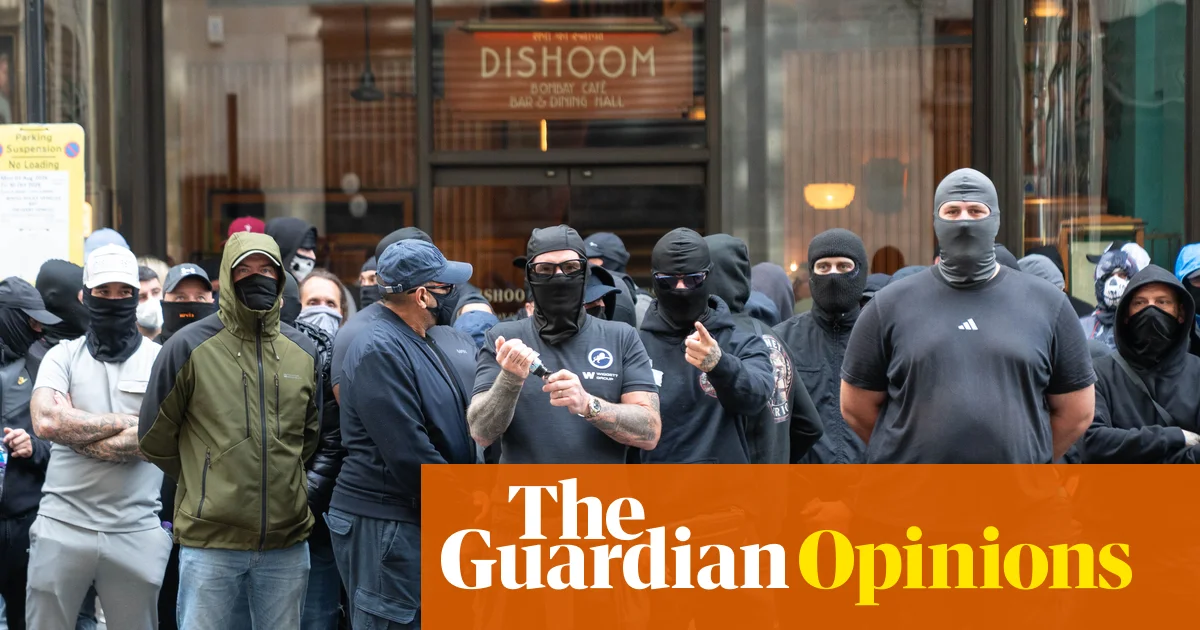
We see it in the balaclava-clad mobs in Dover and Portsmouth, and scenes of immigrants being burned out of their homes in Belfast. Much like Mosley’s Blackshirts, these extremists push a narrow ethnonationalism with no space for different faiths or backgrounds.
And it is not just the far right that threatens a tolerant, inclusive Britain. The extremism of recent years also comes from extreme Islamist sources and perpetrators of violent hate crimes.
Earlier this year, in my constituency, Jewish volunteer ambulances were torched. A month later, two visibly Jewish men were stabbed. My community, where I was born and raised, came under attack.
I condemned, with clarity, sectarian ideology and violent intimidation for what it is: un-British and antisemitic. As I said in the aftermath, an attack on Britain’s Jews is an attack on Britain itself.
The Labour government’s response to new extreme threats must be hard-edged and decisive. We proscribed Iran’s Islamic Revolutionary Guard Corps (IRGC) – suspected of being behind the ambulance attack – and made record investment in local policing.
But we must also champion a new, progressive patriotism. Extremists and sectarians create division in order to exploit it – be it the Islamist extremist who murdered Jews in cold blood at Heaton Park, Manchester, or the far-right thugs who assault police officers on marches. Responding by fuelling culture wars and inciting further violence, as some political leaders did, makes things worse. So-called anti-racist groups staying silent on the antisemitic violence on our streets makes things worse.
We must instead win the argument about what it means to be British. We must model a politics that is curious about difference, not frightened of it. One that embraces those who trace their roots to the Domesday Book as well as the granddaughter of Jewish and Spanish immigrants. A dynamic patriotism that accepts that some things will change, and others will endure.
after newsletter promotion
We cannot be naive about the threat to our shared values. We must tackle those who seek to undermine our way of life, without demonising entire communities. But patriotism cannot only be about what we are against – it has to be a vision we are fighting for.
In 2013, the Somali Bravanese Muslim community centre in Barnet, north London, was burned to the ground, and the letters EDL were found sprayed on the building. Finchley Reform Synagogue (FRS) opened its doors for the Somali Bravanese community to pray and to heal. And, in 2026, after an attempted arson attack on the FRS, the Somali Bravanese community showed up in force for the Friday night Shabbat service. Somali and Jewish communities were resilient, together, in defence of our home in Britain – just like at Cable Street.
That’s the Britain I fight for. A tapestry of different cultures that creates a rich, proud, resilient British identity. When sectarian forces seek to divide us, our challenge is to fight for security, fairness and tolerance.
As the prime minister, Andy Burnham, said in his party conference speech, we need to build a country of solidarity, not separation. That is the spirit of Cable Street. And we must declare once again to those who see violent intimidation as the answer: “No pasarán!” – they shall not pass.
