

Close Menu
NCIJ Network NCIJ Network
    What's Hot

    CISO vs. CSO: Rethinking cybersecurity leadership

    September 3, 2026

    Pencil Finance Completes $1M Onchain Lending Cycle for 6.6k Students

    September 3, 2026

    New Mexico’s largest reservoir plunges to just 1.4% full

    September 3, 2026
    Facebook X (Twitter) Instagram
    Trending
    • CISO vs. CSO: Rethinking cybersecurity leadership
    • Pencil Finance Completes $1M Onchain Lending Cycle for 6.6k Students
    • New Mexico’s largest reservoir plunges to just 1.4% full
    • Mexico-Brazil oil deal raises concern for ecosystems and energy transition
    • UK oil & gas player, floating wind developer to explore electrification opportunities in North Sea
    • Is Ukraine Turning on Zelensky?
    • Trump didn’t post about building ‘Melania Canal,’ despite claims
    • Putin’s ‘global battle’ against US & NATO: Russia ‘testing’ NATO since 2022 Ukraine invasion began – Spotlight
    • About
      • Our Team
      • Editorial Policy
      • Editorial Independence
      • International Support
    • Trust & Standards
      • AI Usage Policy
      • Conflict of Interest Policy
      • Corrections Policy
      • Ethics Policy
      • Fact-Checking Policy
      • Source Protection
    • Get Involved
      • Guide for Sources
      • Support Independent Journalism
    • Legal
      • Cookie Policy
      • Privacy Policy
      • Terms of Use
    Facebook X (Twitter) Instagram
    NCIJ Network NCIJ Network
    Thursday, September 3
    • Home
    • World
    • Ai
    • Business
    • Politics
    • Health
    • Crypto
    • Science
    • Technology
    • Cybersecurity
    • Defense & Security
    • Economy
    • Energy
    • Europe
    • More
      • Fact Check
      • Investigations
      • Opinion & Analysis
      • Environment
    NCIJ Network NCIJ Network
    Home»Science

    New Mexico’s largest reservoir plunges to just 1.4% full

    NCIJ NETWNCIJ NETWORKBy NCIJ NETWNCIJ NETWORKSeptember 3, 2026 Science No Comments3 Mins Read
    Share
    Facebook Twitter LinkedIn Pinterest Email

    When John Glenn orbited Earth in 1962, he commented on a striking green valley northwest of El Paso, Texas, surrounded by an otherwise dry landscape. That contrast is largely the result of human-made lakes along the Rio Grande, which have made farming possible in the arid region. Irrigation supports crops including alfalfa, cotton, onions, pecans, and the area’s famous Hatch green chiles.

    In recent years, however, unusually dry conditions across the Rio Grande basin have placed growing pressure on those water supplies. The region has endured prolonged and extreme drought. Conditions worsened in 2026 when the river’s headwaters in the southern Rocky Mountains experienced the earliest snowmelt on record.

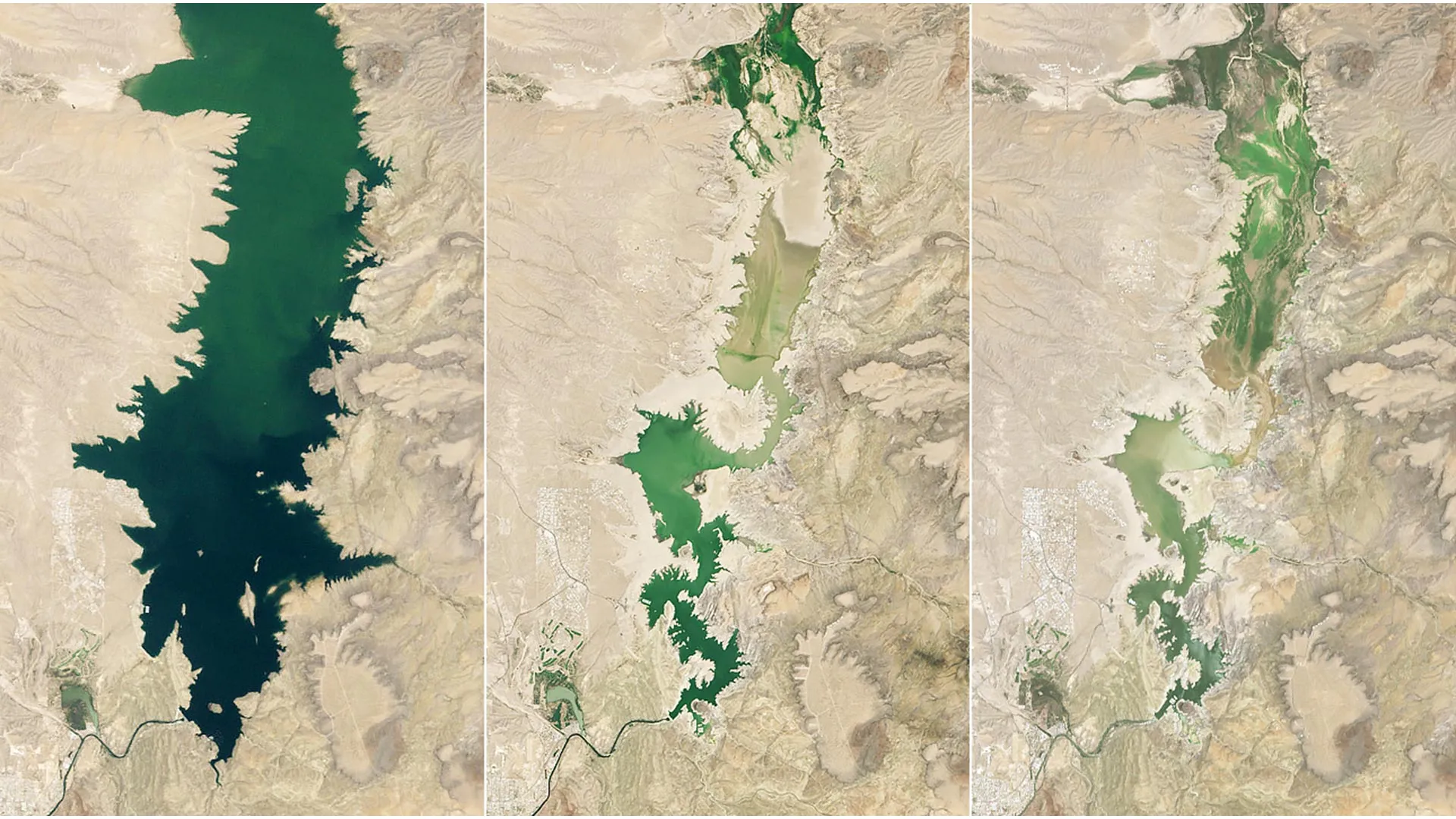
    Together, these conditions helped push Elephant Butte Reservoir, New Mexico’s largest reservoir, to its lowest level since 1971. When the image above was captured on July 27, 2026 (right), the reservoir held just 1.4 percent of its capacity. By contrast, it was nearly full on June 2, 1994 (left), and water levels remained relatively high during much of the period from 1985 through 2000. During another severe drought, the lake reached its annual low of 2.9 percent capacity on July 8, 2013 (center).

    Elephant Butte Falls to 1.4 Percent Capacity

    The extreme decline in 2026 revealed debris that had been submerged along the shoreline and caused sediment to cover boat ramps at Elephant Butte Lake State Park. Still, the reservoir appears to have reached its lowest point of the year in late July. State officials said agricultural water releases ended after July 28, giving the reservoir a chance to slowly begin rising again.

    The persistent drought has also highlighted broader concerns about the future of water along the Rio Grande. Communities and water users in both New Mexico and Texas depend on surface water and groundwater throughout the valley. Managing those limited supplies requires careful decisions about how water is stored, allocated, and shared.

    NASA Satellites Help Track a Shrinking Water Supply

    Several efforts backed by NASA’s Western Water Action Office (WWAO) are designed to give water managers better information for making those decisions. These projects use NASA observations and analytical tools to improve understanding of water availability and support resource allocation.

    One effort created a model that combines NASA satellite measurements of factors including soil moisture and evapotranspiration. The result is a near-real-time system that supplements the water allocation methods already used by the Elephant Butte Irrigation District.

    Another project combined satellite measurements of water surface heights with observations from drones and instruments on the ground. Researchers used the combined data to examine how groundwater pumping influences the Rio Grande’s flow, information that the WWAO says can help officials manage water rights.

    NASA scientists are also participating in a federal study focused on the Upper Rio Grande. That work seeks to better understand the region’s water needs, estimate how much water may be available in the future, and create data-driven tools to help managers respond to those challenges.

    Full largest Mexicos plunges Reservoir
    NCIJ NETWNCIJ NETWORK
    • Website

    Keep Reading

    September brings a dazzling Venus and a glowing Harvest Moon

    The universe has plenty of hydrogen. So why is star formation collapsing?

    Peatland Fires Darken Skies in Indonesia

    New Hubble images reveal a bizarre decagon over Saturn’s south pole

    A coffee-table-size scorpion roamed Earth before forests existed

    Alzheimer’s may leave a mark on the brain long before plaques appear

    Add A Comment
    Leave A Reply Cancel Reply

    Editors Picks

    CISO vs. CSO: Rethinking cybersecurity leadership

    September 3, 2026

    Pencil Finance Completes $1M Onchain Lending Cycle for 6.6k Students

    September 3, 2026

    New Mexico’s largest reservoir plunges to just 1.4% full

    September 3, 2026

    Mexico-Brazil oil deal raises concern for ecosystems and energy transition

    September 3, 2026
    Latest Posts

    Australia news live: Reformers member tells hearing he used factional funds to pay for bucks night; Taylor refuses to answer multiple Icac-related questions | Australia news

    July 31, 2026

    Trump administration to end Medicare Part D subsidy program. Will costs increase?

    July 31, 2026

    FP Live: Daniel Yergin on Why Energy Prices Didn’t Soar Higher This Year

    July 31, 2026

    Subscribe to News

    Get the latest sports news from NewsSite about world, sports and politics.

    NCIJ Network is an independent digital news platform delivering trusted investigative journalism, European and global news, in-depth analysis, and fact-based reporting with accuracy, transparency, and integrity.

    Facebook X (Twitter) Instagram Pinterest YouTube

    CISO vs. CSO: Rethinking cybersecurity leadership

    September 3, 2026

    Pencil Finance Completes $1M Onchain Lending Cycle for 6.6k Students

    September 3, 2026

    New Mexico’s largest reservoir plunges to just 1.4% full

    September 3, 2026

    Subscribe to Updates

    Get the latest creative news from FooBar about art, design and business.

    Type above and press Enter to search. Press Esc to cancel.