

Close Menu
NCIJ Network NCIJ Network
    What's Hot

    Aesto Health says data breach affects over 9.5 million patients

    September 2, 2026

    USDC Transfer Volume Masks Circle’s Revenue Challenge

    September 2, 2026

    NASA’s Swift telescope is back, but time is running out

    September 2, 2026
    Facebook X (Twitter) Instagram
    Trending
    • Aesto Health says data breach affects over 9.5 million patients
    • USDC Transfer Volume Masks Circle’s Revenue Challenge
    • NASA’s Swift telescope is back, but time is running out
    • Rising numbers of children in mental health crisis ending up in A&E
    • RNC’s ‘Trumpapalooza’ convention has many names, one big question: Who’s paying for it? • OpenSecrets
    • G20 backs final statement despite Russia tensions, China dissent
    • ‘I think he’s sensible’: constituents on Keir Starmer stepping down as MP | Keir Starmer
    • Senator Ed Markey, 80, Turns Back Younger Challenger in Massachusetts
    • About
      • Our Team
      • Editorial Policy
      • Editorial Independence
      • International Support
    • Trust & Standards
      • AI Usage Policy
      • Conflict of Interest Policy
      • Corrections Policy
      • Ethics Policy
      • Fact-Checking Policy
      • Source Protection
    • Get Involved
      • Guide for Sources
      • Support Independent Journalism
    • Legal
      • Cookie Policy
      • Privacy Policy
      • Terms of Use
    Facebook X (Twitter) Instagram
    NCIJ Network NCIJ Network
    Wednesday, September 2
    • Home
    • World
    • Ai
    • Business
    • Politics
    • Health
    • Crypto
    • Science
    • Technology
    • Cybersecurity
    • Defense & Security
    • Economy
    • Energy
    • Europe
    • More
      • Fact Check
      • Investigations
      • Opinion & Analysis
      • Environment
    NCIJ Network NCIJ Network
    Home»Science

    NASA’s Swift telescope is back, but time is running out

    NCIJ NETWNCIJ NETWORKBy NCIJ NETWNCIJ NETWORKSeptember 2, 2026 Science No Comments3 Mins Read
    Share
    Facebook Twitter LinkedIn Pinterest Email

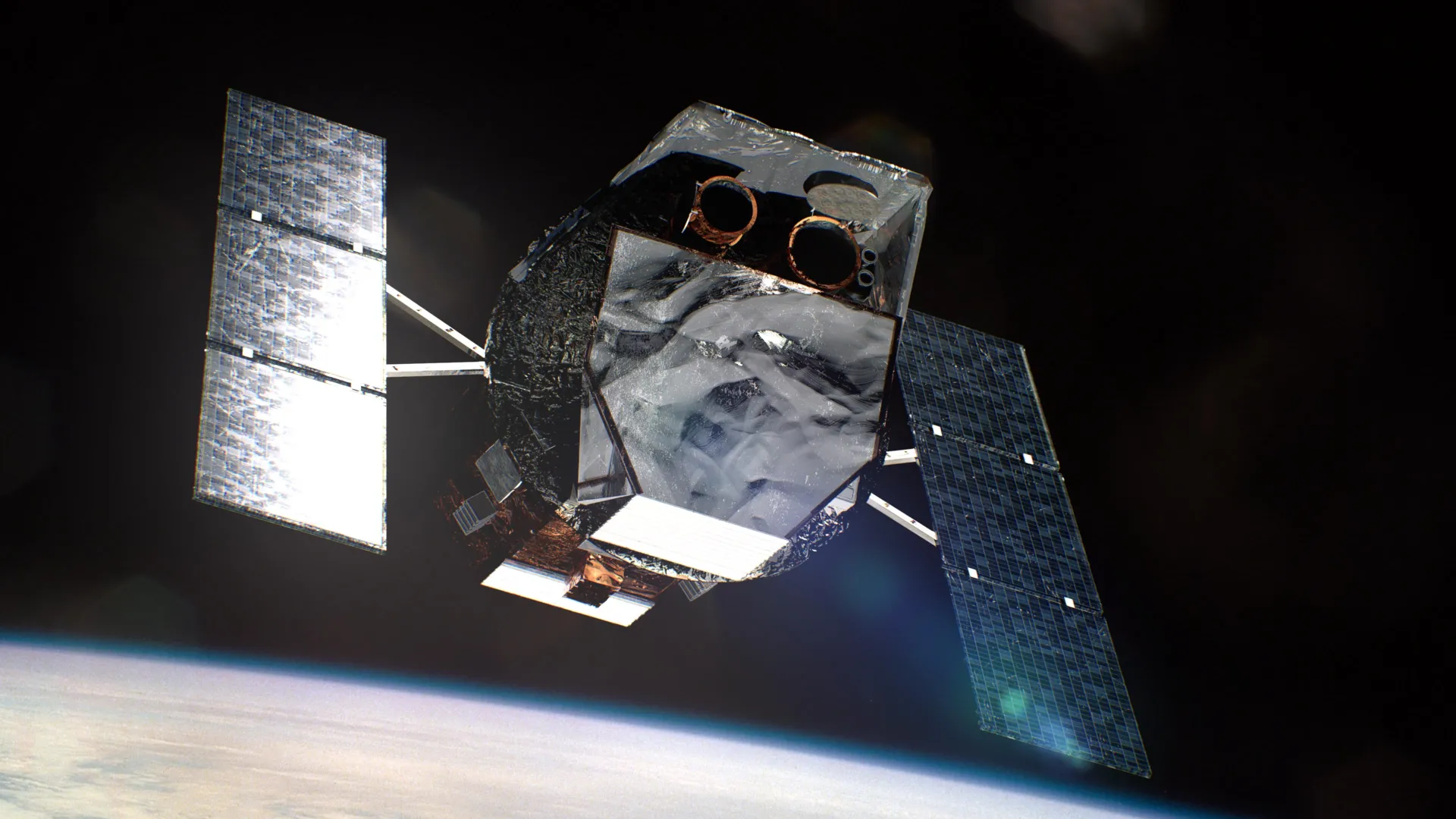
    NASA’s Neil Gehrels Swift Observatory is back to studying the universe with two of its three science instruments after plans to raise the spacecraft into a higher orbit were scaled back.

    The observatory’s Ultraviolet/Optical Telescope and X-ray Telescope were switched back on Wednesday, Aug. 26. Both instruments had been shut down in February as part of an effort to reduce atmospheric drag and help Swift remain in orbit longer while NASA prepared for a possible orbital boost.

    Swift’s third instrument, the Burst Alert Telescope, has not yet resumed science operations. NASA stopped using it in April to lower the spacecraft’s power needs, which allowed engineers to position Swift’s solar panels in a way that further reduced drag. The team now expects to restore that instrument to data collection within the next few weeks.

    Swift Returns to Its Cosmic Watch

    For 21 years, Swift has served as one of NASA’s most versatile observatories. It studies the universe across multiple wavelengths of light and is especially valuable for tracking sudden, short-lived cosmic events.

    When Swift detects an outburst, it can quickly turn toward the source and alert other observatories on the ground and in space. That rapid response helps astronomers gather follow-up observations before fleeting events fade away.

    One of Swift’s biggest challenges is its location in low Earth orbit. Even hundreds of miles above Earth, traces of the planet’s atmosphere remain. Those thin upper layers create drag on spacecraft, gradually slowing them and causing their orbits to drop.

    Swift does not have a propulsion system that can raise its orbit, so it cannot directly counter that effect.

    Solar Activity Increased the Drag

    The problem became more urgent as recent solar activity caused Earth’s upper atmosphere to expand. When the Sun is more active, extra energy heats the atmosphere and makes its outer layers extend farther into space.

    That expansion increases atmospheric drag on satellites in low Earth orbit. For Swift, the result was a faster-than-expected loss of altitude.

    NASA responded in September 2025 by contracting Katalyst Space to attempt something unusual: send another spacecraft to Swift, capture it, and lift the observatory into a higher orbit.

    Katalyst had one year to design, build, test, and launch a spacecraft called LINK, then guide it to Swift and carry out the boost.

    The Planned Orbit Boost Was Abandoned

    LINK launched in July aboard a Northrop Grumman Pegasus rocket. Later that month, however, the spacecraft developed problems with controlling its orientation.

    On Aug. 19, NASA and Katalyst announced that LINK would no longer attempt to capture and raise Swift.

    The mission is not ending entirely. Katalyst still plans to bring LINK near Swift and perform rendezvous and proximity operations. These maneuvers are intended to test technologies that could eventually be used for in-space satellite servicing, including future missions in which one spacecraft approaches and works near another.

    Swift’s Remaining Time at Higher Altitude Is Shrinking

    NASA had previously estimated that Swift’s low-drag operating mode would keep the observatory above 185 miles (300 kilometers) until October.

    That altitude is an important threshold. Once Swift falls below 185 miles (300 kilometers), operating the telescope becomes more difficult, and the spacecraft is expected to lose altitude more quickly as atmospheric drag increases.

    Now that science observations have resumed, the team expects Swift to reach that milestone within the next one to two months.

    Until then, the observatory is once again watching the universe and gathering as much science as possible while its orbit continues to decline.

    NASAs Running Swift telescope time
    NCIJ NETWNCIJ NETWORK
    • Website

    Keep Reading

    One of Earth’s driest places was just covered in snow

    NASA Selects Blue Origin as Mars Telecommunications Network Provider

    What’s Up: September 2026 Skywatching Tips from NASA

    How a small island in Canada appeared, vanished, and was found again

    The universe may have been building rocky planets almost from the start

    A massive plume deep beneath Africa is pulling the continent apart

    Add A Comment
    Leave A Reply Cancel Reply

    Editors Picks

    Aesto Health says data breach affects over 9.5 million patients

    September 2, 2026

    USDC Transfer Volume Masks Circle’s Revenue Challenge

    September 2, 2026

    NASA’s Swift telescope is back, but time is running out

    September 2, 2026

    Rising numbers of children in mental health crisis ending up in A&E

    September 2, 2026
    Latest Posts

    Bitcoin Only Makes Up 1% Of Legendary Investor Ray Dalio’s Portfolio

    July 30, 2026

    AI Harnesses Burst With Potential Exploit Opps

    July 30, 2026

    LinkedIn actually adds a ‘seems like AI slop’ button

    July 30, 2026

    Subscribe to News

    Get the latest sports news from NewsSite about world, sports and politics.

    NCIJ Network is an independent digital news platform delivering trusted investigative journalism, European and global news, in-depth analysis, and fact-based reporting with accuracy, transparency, and integrity.

    Facebook X (Twitter) Instagram Pinterest YouTube

    Aesto Health says data breach affects over 9.5 million patients

    September 2, 2026

    USDC Transfer Volume Masks Circle’s Revenue Challenge

    September 2, 2026

    NASA’s Swift telescope is back, but time is running out

    September 2, 2026

    Subscribe to Updates

    Get the latest creative news from FooBar about art, design and business.

    Type above and press Enter to search. Press Esc to cancel.