


Trump also said at this month’s NATO summit in Ankara, Turkey, that he planned to allow Kyiv to produce much needed Patriot air defense missiles.
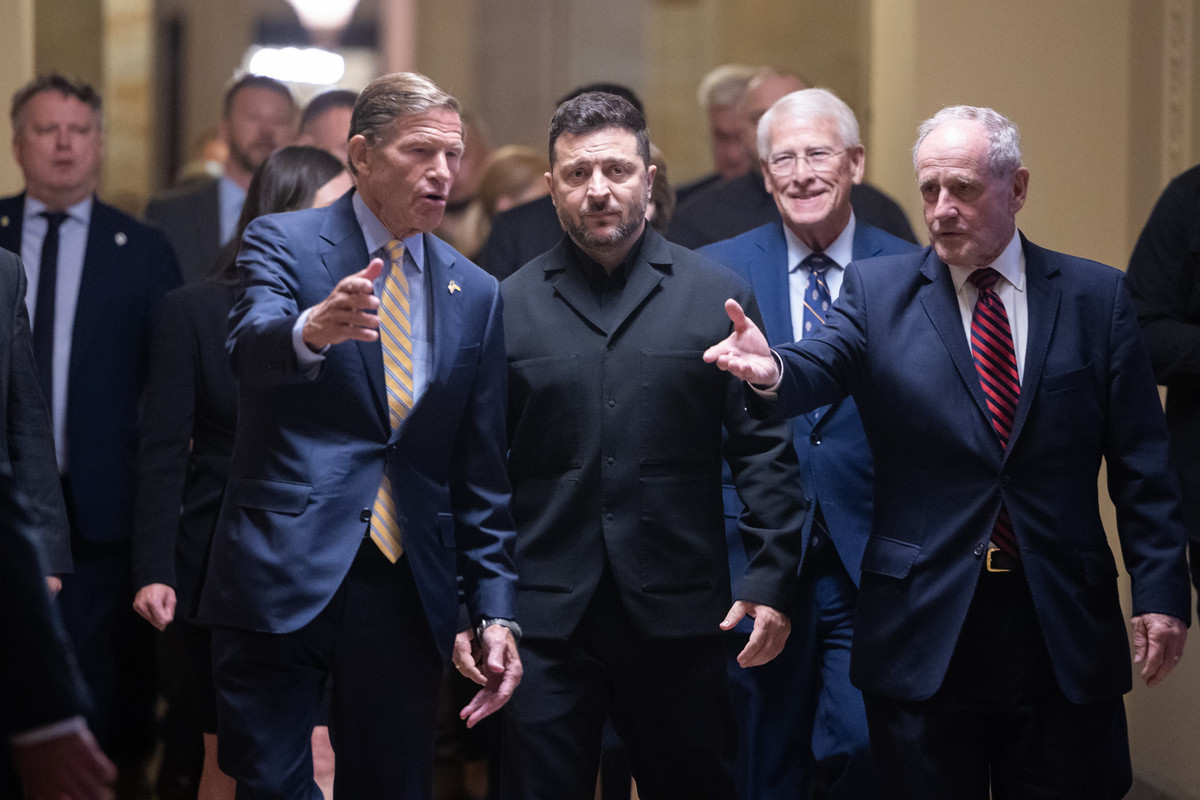
Zelenskyy, in the bipartisan meeting ahead of the vote, emphasized the impact sanctions could have on the course of the war. He also underscored several continued requests, according to senators who attended, including licensing to produce Patriot missile defense batteries, securing supplies of PAC-3 interceptors used in the Patriot system and sustained access to the Starlink satellite service to assist targeting for long-range attacks.
The requests for military hardware and targeting assistance, along with sanctions on Moscow, mirror Zelenskyy’s pitch to lawmakers on the sidelines of the NATO summit three weeks ago, Rounds said.
Zelenskyy and Finnish President Alexander Stubb, who also visited the Capitol on Tuesday, told lawmakers the legislation could have more of an effect on the war than any fighting, according to Sen. Jim Risch (R-Idaho).
“Both were of the opinion that this was at least as effective, maybe more effective, at bringing this war to an end that everybody wants to see. And this piece of legislation may have more effect than anything that’s done on the battlefield,” Risch said during a press conference after the meeting.
Yehor Cherniev, a Ukrainian lawmaker and member of Zelenskyy’s Servant of the People party, said the latest meeting between Trump and Zelenskyy is a sign that “previous misunderstandings and contradictions are a thing of the past, and now both countries act as allies.”
But Trump has reversed course quickly before and the sanctions measure is not a done deal. Majority Leader John Thune is aiming to fast-track the bill and pass it as soon as this week. And lawmakers must smooth over plenty of complications before the Senate can pass it, not to mention hurdles in the House.
White House support for the measure has been tepid, and Republican leaders in both chambers had long avoided bringing up the bill in deference to Trump.
