


Mental health organisations have “failed to acknowledge” the risk of violence from a minority of people with severe mental illnesses, the chief executive of Mind has said ahead of the closure of the inquiry into the Nottingham attacks.
Dr Sarah Hughes, who has led mental health charity Mind for four years and has worked in the sector for almost four decades, said charities had shied away from addressing the risk of violence due to the fact it had increased the stigma and harassment around people with mental health conditions.
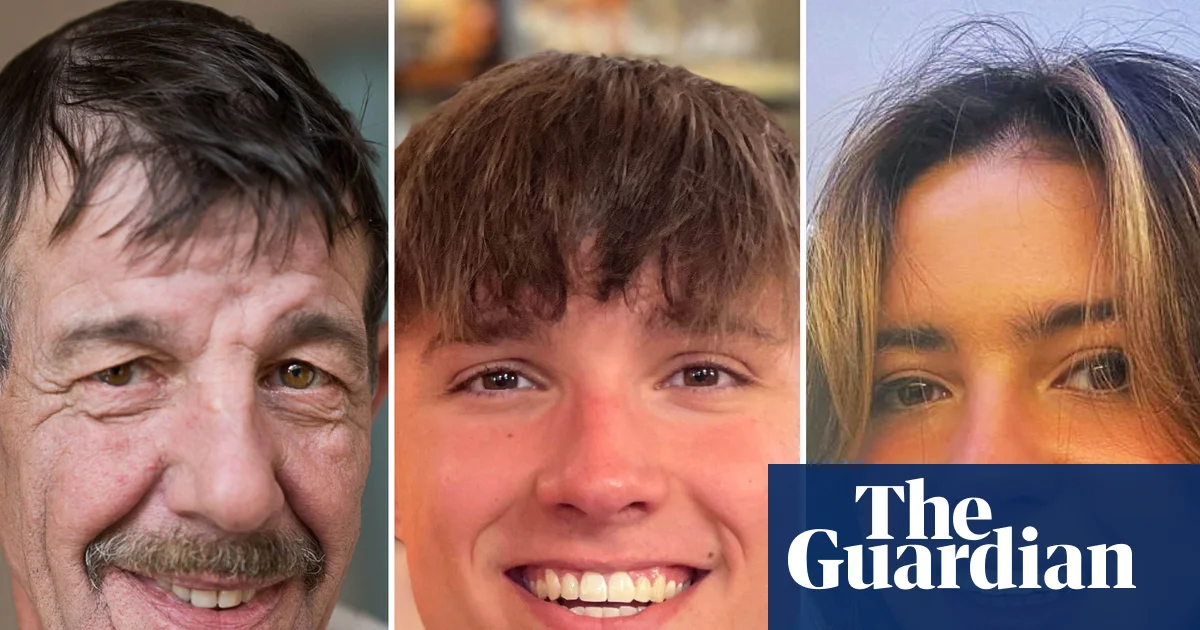
The inquiry into the Nottingham attacks is examining the events leading up to 13 June 2023, when 19-year-old students Barnaby Webber and Grace O’Malley-Kumar, and 65-year-old caretaker Ian Coates, were fatally stabbed by Valdo Calocane, who was later diagnosed with paranoid schizophrenia.
In 2024, Calocane was sentenced to an indefinite hospital order after admitting three counts of manslaughter on the grounds of diminished responsibility and three counts of attempted murder.
The public inquiry has heard evidence from various local authorities, including health professionals and police officers, as well as Calocane’s family, in order to assess the “events, acts and omissions” that led to the killings.
The inquiry heard how Calocane had committed a string of violent incidents in the years before the attacks, repeatedly refused to take medication, and was sectioned four times in the space of two years. During her evidence, Calocane’s mother described the mental health system as “so broken”.
Speaking exclusively to the Guardian, Hughes said charities specialising in mental health had to become “more comfortable” with discussing the risk of violence that could exist from a minority of people with mental health illnesses.
Hughes’s comments come after the charity Mind held a roundtable with experts in Westminster to discuss the role mental health services needed to play to keep the public and patients safe.
“We, as a charity sector, have failed to acknowledge that violence does happen in some circumstances,” she said. “As a sector, [we] have held the narrative that the majority of people don’t commit violent crime. However, some do and the consequences are grave.”
Hughes added: “My feeling is that we haven’t always been able to articulate the topic of violence and mental health well to the public and ultimately, we have softened the truth. Stigma and discrimination are incredibly harmful, however our efforts to reduce them have, at times, meant that some of the most difficult topics have been brushed under the carpet. That’s why it’s so important to bring together a wide range of experts and experiences to have an open and honest conversation.”
Emma Webber, whose son Barnaby was killed by Calocane, said she welcomed the statement by Hughes. “I do feel like danger to others has been almost deliberately quietened down in the conversation in the past,” she said.
Webber said there had not been enough acknowledgment from mental health organisations of the risk of violence.
“It could be a really powerful voice for the charities to have that difficult conversation, and to not be fearful of saying about the risks of violence toward others, and that people that are mentally ill, like Calocane, can and do go on to kill.
“Obviously the vast majority of people with mental health issues in this country are completely safe … but if somebody’s dangerous, they’re dangerous.
“Had the risks in Calocane’s case been understood, then I genuinely believe we wouldn’t be having this conversation today.”
after newsletter promotion
Seena Fazel, a professor of forensic psychiatry at the University of Oxford who attended the event by Mind, said a minority of people with mental illnesses perpetrate violent acts and high-quality research on schizophrenia had “converged on the same picture”.
“People with schizophrenia do have an elevated risk of violence compared with the general population, even after accounting for socioeconomic factors, but the absolute risk is small. Only a minority will commit a serious violent act,” he said.
“That risk increases when other factors are present, particularly drug or alcohol problems, a history of violence, or having been a victim of violence themselves. The important point is that treatments we already have, and which are widely available, can bring that risk down.”
Hughes, who said she had experienced violence when she was a mental health practitioner from people experiencing psychosis, said many in the sector feared that addressing such issues could increase stigma and discrimination, and that could lead to dangerous health outcomes.
“We are incredibly frightened of deepening that stigma and discrimination because we know how dangerous it can be,” she said. “This could risk going back to a more restrictive approach. My view is that’s not the answer, but stigma creates a pathway to that as being the only solution to this problem.”
Hughes said this meant the sector had “shied away” from difficult conversations around violence. “The public, I think, are more ready [and] we’ve got to get our act together,” she said. “Even within Mind there was a reluctance internally and we had to really talk it though.”
Hughes said the UK government’s upcoming mental health strategy must improve support and treatment for those with severe mental illnesses, as well as address matters of public safety.
This includes ensuring an adequate number of beds in hospitals, assertive outreach, and accountability and communication with services.
“I hope that by us having these conversations openly we can both make sure that the people we’re advocating for know that we’re doing this safely with their consent, but equally, the public and families and victims know that we recognise that we have to come together to solve this problem,” Hughes said.
“Crucially, there is a role for Mind – and the sector as a whole – to show that patient and public safety are not mutually exclusive. Both are possible if we want to change our mental health system so people can get the right care before or after reaching crisis point,” she added.
