

Close Menu
NCIJ Network NCIJ Network
    What's Hot

    India wants to cuts its reliance on overseas strawberry varieties

    July 30, 2026

    The cost and burden of avoiding ‘forever chemicals’ should not fall on parents | Pfas

    July 30, 2026

    Why is US GDP growth slowing, and how can it be reversed? | International Trade News

    July 30, 2026
    Facebook X (Twitter) Instagram
    Trending
    • India wants to cuts its reliance on overseas strawberry varieties
    • The cost and burden of avoiding ‘forever chemicals’ should not fall on parents | Pfas
    • Why is US GDP growth slowing, and how can it be reversed? | International Trade News
    • Andy Burnham to give regional mayors share of income tax
    • Burnham to free mayors from ‘Treasury death grip’ with new devolved powers | Devolution
    • Amazon increases AI infrastructure spending to $220bn this year
    • A Leaked Memo Ties Cyberattacks on Minnesota Water Utilities to Iran
    • DPRK-Linked macOS Malvertising Uses Fake Updates to Deliver Crypto-Stealing Malware
    • About
      • Our Team
      • Editorial Policy
      • Editorial Independence
      • International Support
    • Trust & Standards
      • AI Usage Policy
      • Conflict of Interest Policy
      • Corrections Policy
      • Ethics Policy
      • Fact-Checking Policy
      • Source Protection
    • Get Involved
      • Guide for Sources
      • Support Independent Journalism
    • Legal
      • Cookie Policy
      • Privacy Policy
      • Terms of Use
    Facebook X (Twitter) Instagram
    NCIJ Network NCIJ Network
    Thursday, July 30
    • Home
    • World
    • Ai
    • Business
    • Politics
    • Health
    • Crypto
    • Science
    • Technology
    • Cybersecurity
    • Defense & Security
    • Economy
    • Energy
    • Europe
    • More
      • Fact Check
      • Investigations
      • Opinion & Analysis
      • Environment
    NCIJ Network NCIJ Network
    Home»Science

    Mammals moving between the Americas stopped over in Mexico

    NCIJ NETWNCIJ NETWORKBy NCIJ NETWNCIJ NETWORKJuly 30, 2026 Science No Comments4 Mins Read
    Share
    Facebook Twitter LinkedIn Pinterest Email

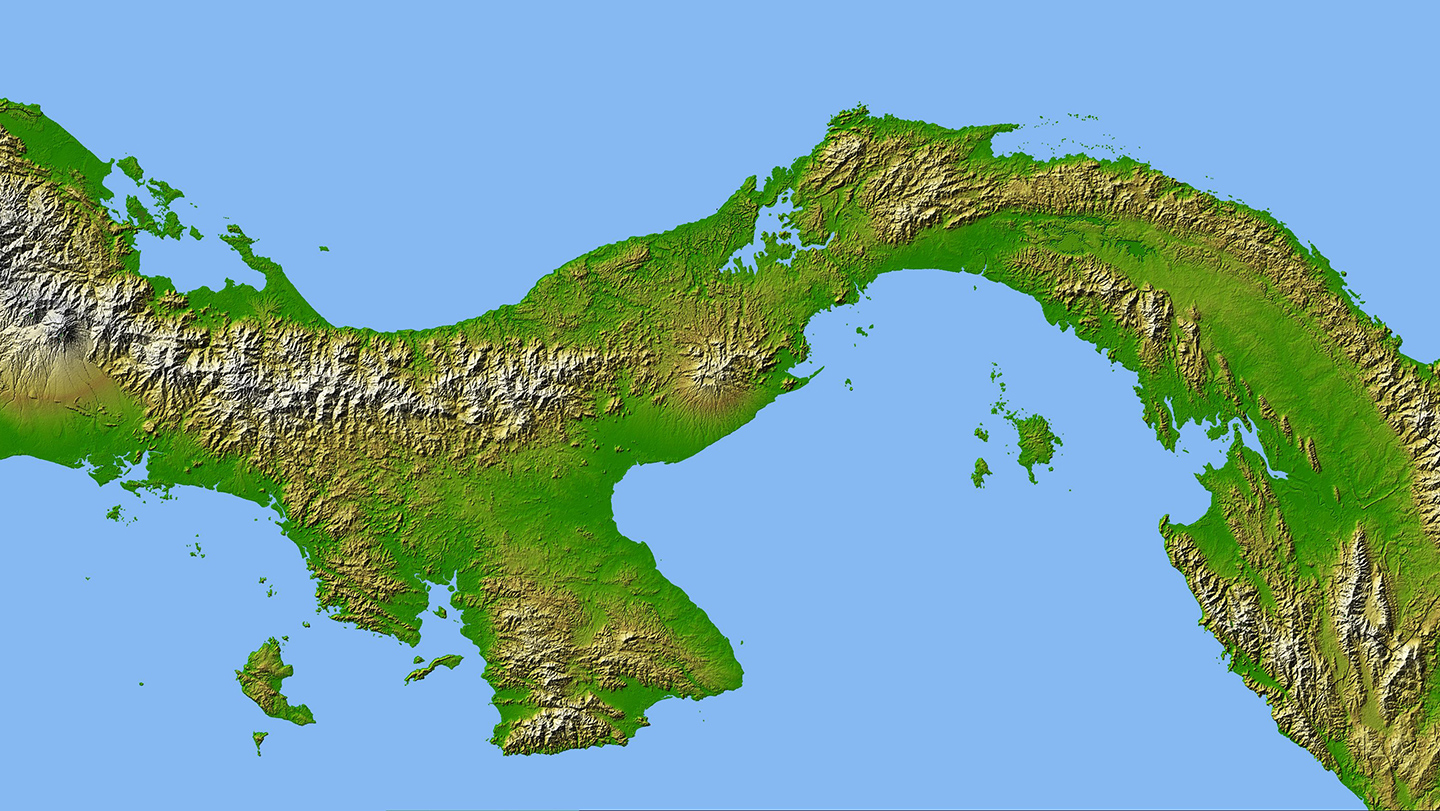
    In the Miocene, 10 million years ago, the Central American Seaway separated North and South America, leaving the southern continent in what scientists call “splendid isolation.” By 2.8 million years ago, the two continents were joined at the Isthmus of Panama. Mammals stampeded across the new land bridge in both directions.

    But the species trade wasn’t equal. Today, more than half of the 217 mammal genera present in South America have origins in North America. Only four genera in South America can be traced to the north. The key to the North American mammals’ success could be an extensive vacation. Over several million years, northern mammals moved into the low-lying “holding pen” of what is now the southern United States, Mexico and part of Central America, diversifying and adapting to the climate before the Isthmus of Panama arose, researchers report July 30 in Science.

    Sign up for our newsletter

    We summarize the week’s scientific breakthroughs every Thursday.


    Scientists have focused on ancient Mexico as a spot where mammals moving from South to North America adapted to new conditions over evolutionary time, says Jack Tseng, a vertebrate paleontologist at the University of California, Berkeley. Before the Isthmus of Panama joined the two continents, warm Central America and Mexico would have been the first stops north for animals coming across the sea from South America. Fossils of ancient sloths from Mexico, for example, indicate that after they arrived from South America 9 million years ago, they “stayed for a while … before they continued their journey further north” into the colder latitudes of the U.S. and Canada, Tseng says.

    Tseng and his colleagues wondered if the holding pen might have been bidirectional, allowing animals from the north a warm ecosystem in which to diversify and adapt before heading south. The scientists pulled together a fossil library of mammals from Mexico, nearly doubling the known mammal fossil record for the area. This wasn’t the result of digging up double the fossils, Tseng says. Instead, the team collected Spanish-language papers, papers from smaller journals and samples from a museum in central Mexico.

    Tseng and his colleagues showed that both Mexico and South America saw an explosion of mammal diversity between 10 million and 7 million years ago, before the two continents were connected. But the Mexican mammal diversity hit a much higher peak—nearly double that of South America.

    As mammals in Mexico and Central America were diversifying, new ones were arriving from North America. This created a mammalian cage match as a high diversity of species competed for limited resources. During the period afterward, the climate also began to dry out, creating a tougher environment to adapt to. “North American mammal faunas have essentially gone through the test time and time again,” Tseng says.

    In contrast, South American mammalian diversity was declining at the time. “Those mammals have been isolated since the extinction of the dinosaurs,” Tseng says. On their side of the sea, the climate also remained tropical and wet, leaving the mammals less well-equipped for dry environments.

    As North and South America began to link up, culminating with the final formation of the Isthmus of Panama 2.8 million years ago, North American mammals flooded into the south in pulses, armed with adaptations like larger body size and tolerance to dry environments from their time in Mexico and Central America. Canids, camelids, felids, raccoons and other mammals charged into South America and diversified.

    The idea of Mexico and Central America as an adaptation hotspot is “a hypothesis [that] was established in the literature for plants and animals moving from South America to North America,” says Jenny McGuire, a paleoecologist at Georgia Institute of Technology in Atlanta, who wrote an article that accompanied the paper. “This paper flips that hypothesis and considers the opposite direction.”

    The results “allow us to rewrite the timeline of an intercontinental migration,” says Alberto Boscaini, a paleontologist at the University of Buenos Aires. But that doesn’t mean, he notes, that northern mammals were somehow “biologically superior.” Instead “they acquired preadaptations that became useful during a moment of profound tectonic change.”

    Americas Mammals Mexico moving stopped
    NCIJ NETWNCIJ NETWORK
    • Website

    Keep Reading

    Rice bran compound may help ease irritable bowel symptoms

    NASA Assigns Astronaut Deniz Burnham to First Space Station Mission

    This 4,000-year-old city defied the rules of history

    A new monkey species has been found deep in Congo’s forests

    What if the brain does not create consciousness?

    Trump Has Weakened America’s Sanctions Weapon

    Add A Comment
    Leave A Reply Cancel Reply

    Editors Picks

    India wants to cuts its reliance on overseas strawberry varieties

    July 30, 2026

    The cost and burden of avoiding ‘forever chemicals’ should not fall on parents | Pfas

    July 30, 2026

    Why is US GDP growth slowing, and how can it be reversed? | International Trade News

    July 30, 2026

    Andy Burnham to give regional mayors share of income tax

    July 30, 2026
    Latest Posts

    Advancing the next era of national science

    July 22, 2026

    Arcee, a US open source AI lab, says Chinese models are not inherently dangerous

    July 22, 2026

    Most bus fares in England to be capped at £2 from January

    July 22, 2026

    Subscribe to News

    Get the latest sports news from NewsSite about world, sports and politics.

    NCIJ Network is an independent digital news platform delivering trusted investigative journalism, European and global news, in-depth analysis, and fact-based reporting with accuracy, transparency, and integrity.

    Facebook X (Twitter) Instagram Pinterest YouTube

    India wants to cuts its reliance on overseas strawberry varieties

    July 30, 2026

    The cost and burden of avoiding ‘forever chemicals’ should not fall on parents | Pfas

    July 30, 2026

    Why is US GDP growth slowing, and how can it be reversed? | International Trade News

    July 30, 2026

    Subscribe to Updates

    Get the latest creative news from FooBar about art, design and business.

    Type above and press Enter to search. Press Esc to cancel.