


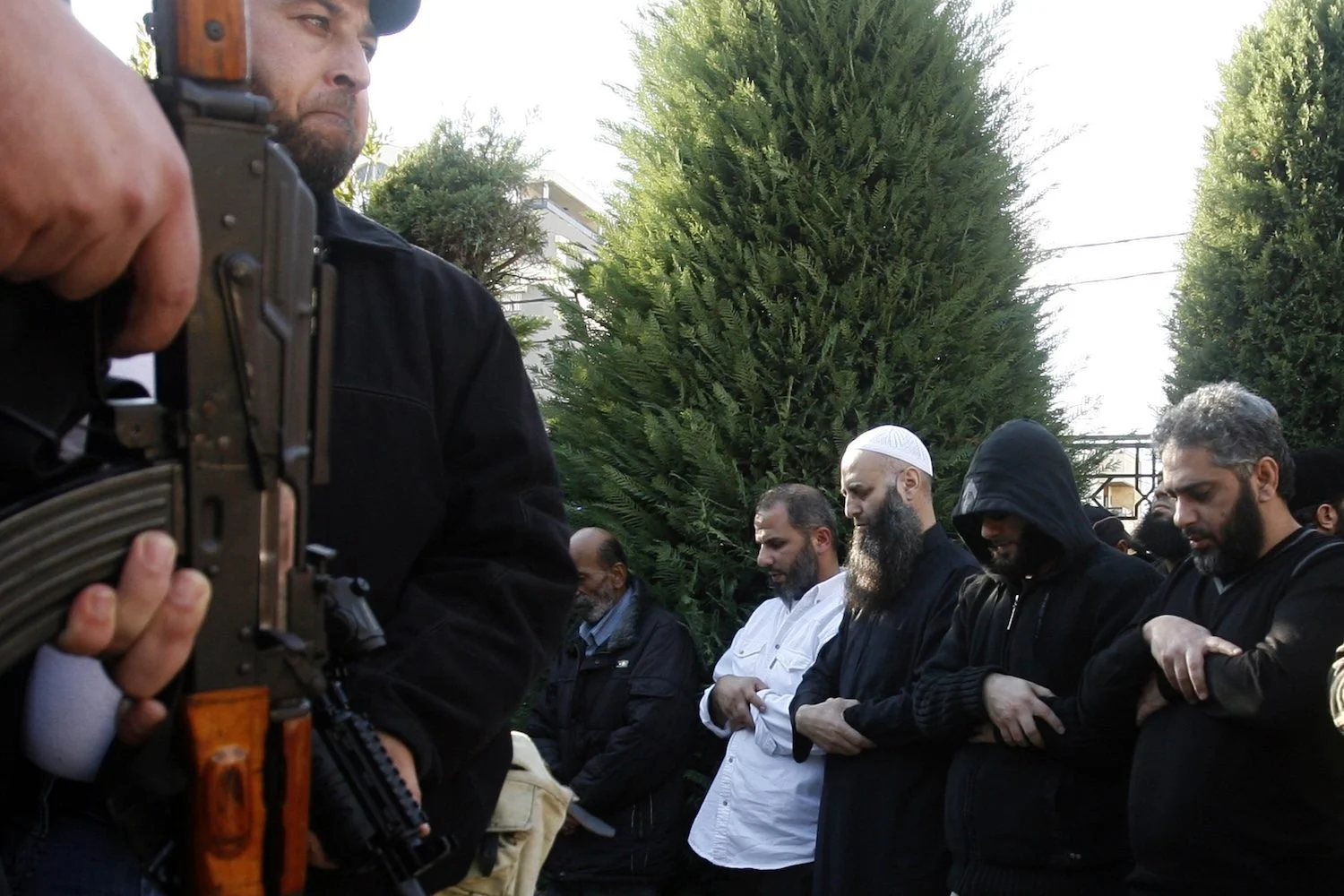
On Aug. 12, Lebanon’s parliament passed a general amnesty, the first since 1991. The law technically aims to address overcrowding in prisons. But, as with every policy debate in Lebanon, its stated aims exist alongside a second layer of sectarian politics. Seen in this light, the amnesty also reflects a subtle shift in the balance of power toward Lebanon’s Sunnis.
The concrete impact of the new law will be reducing prison terms for or releasing thousands of prisoners. Lebanon’s prisons are indeed overcrowded, with many inmates awaiting their trials for years. Now, death sentences will be commuted to life sentences, life sentences will be reduced to 17 prison years (one prison year is measured as nine months), and inmates detained for more than 12 prison years without charges will automatically be released.
On Aug. 12, Lebanon’s parliament passed a general amnesty, the first since 1991. The law technically aims to address overcrowding in prisons. But, as with every policy debate in Lebanon, its stated aims exist alongside a second layer of sectarian politics. Seen in this light, the amnesty also reflects a subtle shift in the balance of power toward Lebanon’s Sunnis.
The concrete impact of the new law will be reducing prison terms for or releasing thousands of prisoners. Lebanon’s prisons are indeed overcrowded, with many inmates awaiting their trials for years. Now, death sentences will be commuted to life sentences, life sentences will be reduced to 17 prison years (one prison year is measured as nine months), and inmates detained for more than 12 prison years without charges will automatically be released.
From the perspective of relieving overcrowding and preventing people from being held without due process, this legislation makes sense. But there remains the inevitably sectarian question of who gets pardoned and why.
Every faith community is looking out for its own type of criminal. For years, the Shiite group Hezbollah has been demanding amnesty for cannabis and car theft offenses because core Hezbollah constituencies tend to dominate these crimes. Christian parties want pardons for the families of those who collaborated with the Israeli occupation and fled to Israel when it ended in 2000.
Hezbollah has long had the leverage to secure its political interests through loyalists including in military intelligence and the General Security Directorate. The group’s ability to shape the amnesty law is noteworthy largely in showing that it retains this leverage despite setbacks at Israel’s hands. Likewise, Lebanon’s Christians remain politically strong, and their amnesty demand is a long-standing one, making its inclusion not particularly remarkable.
More surprising, though, is that Sunni politicians lobbied heavily and successfully to include Sunni Islamist prisoners in the amnesty. Sunni Islamists have been heavily targeted by Lebanon’s security forces with tacit or active support from Hezbollah. This reflects that they have at times adopted an aggressive posture against both the state and Hezbollah and remain much weaker than their militant Shiite rivals. As a result, they have received harsh sentences, especially when accused of violence against the state.
The poster child for aggrieved Sunni Muslim militants has long been Ahmed al-Assir. Assir gained prominence for his vocal criticism of Hezbollah and its large-scale killings of Sunnis in the Syrian civil war. Eventually, his group clashed with the Lebanese Army, killing 18 soldiers. He was sentenced to death in 2017, meaning that under the amnesty, he can be released in approximately two years. There will be mounting anticipation within Lebanon and especially within the Sunni community as Assir finishes his prison term, with many wondering whether this firebrand will enter politics and challenge the country’s traditional Sunni elite.
As early as a year ago, it would have been impossible to imagine a scenario where Assir was spared the death penalty and his sympathizers were set to be released by the thousands. Not only were Christians and Shiites generally happy to see Sunni extremists behind bars, but Sunni elites were as well. Ideologically and socially, Sunni militants are a poor fit for much of Lebanon’s Sunni political landscape, which is generally dominated by the wealthy or at least those who see themselves as urbane and cosmopolitan. What’s more, Sunni Islamist parties in Lebanon have usually been fragmented. This is due to localism; different foreign patrons such as Saudi Arabia, Qatar, or Turkey; and long-standing disagreements over the acceptability of cooperating with Hezbollah against Israel.
Yet changing circumstances may give radical Sunni politics a new momentum, particularly if the movement produces the kind of pugilistic populist who can channel anger over economic despair. Much of the Sunni community in Lebanon—outside of certain elite circles and a limited middle class mainly in Beirut and to a lesser extent in Tripoli—has suffered from widespread dispossession on par with that experienced by the Shiite community but without the organized social welfare that Hezbollah provided. Moreover, many blame their financial circumstances not just on the Hezbollah-influenced governments that led Lebanon but also on established Sunni leaders who supported the economic and political status quo.
What’s more, changing regional politics have helped Assir’s fortunes. The collapse of the Assad regime in Syria and the subsequent isolation of Hezbollah began the shift, but it has culminated with a jihadi-turned-president, Ahmed al-Sharaa, consolidating control in Damascus. Sharaa has been careful to keep a light touch in Lebanon. Still, Lebanese Sunnis, lacking strong leadership since Assad and Hezbollah killed their hero Rafik Hariri in 2005, have been energized by the presence of a strong Sunni leader in Damascus.
Israel has helped, too. As Hezbollah’s strategic situation deteriorates, it no longer has (or wants to expend) the clout needed to keep the likes of Assir behind bars indefinitely. Without Hezbollah to bully the likes of Assir around, the Lebanese state does not have the power to tackle a group that has emerged from one of its core constituent sects without risking sectarian strife and a backlash against the security forces.
It is in this context that Lebanon’s Sunni elite decided to lobby for the release of Assir and his supporters. From their point of view, it is a calculated gamble, enabling them to play populist politics and gain leverage against Hezbollah while still remaining in control of the political situation. Of course, the Middle East has seen other secular leaders unleash Islamist forces that spiraled out of control, whether in Iraq, Syria, or Egypt.
This does not mean we will see Sunni Islamists marching en masse in Beirut. But things are different in more conservative cities such as Sidon and Tripoli and their rural environs. The Sunni “Overton window” may begin to shift, pushing mainstream Sunni politicians (including from the capital) toward a more Islamist flavor of politics.
Now, Sunni Islamist constituencies in more aggrieved parts of Lebanon may start to agitate for social—even constitutional—reforms in line with their ideology. But more likely they will aim for universally popular policies among Sunnis, such as pressuring the state to take a more aggressive stance against Hezbollah. Their presence in government, should they acquire it, might also complicate the Sunni elite’s strong relationship with the United States—although Sharaa’s experience teaches us that this is by no means inevitable.
