


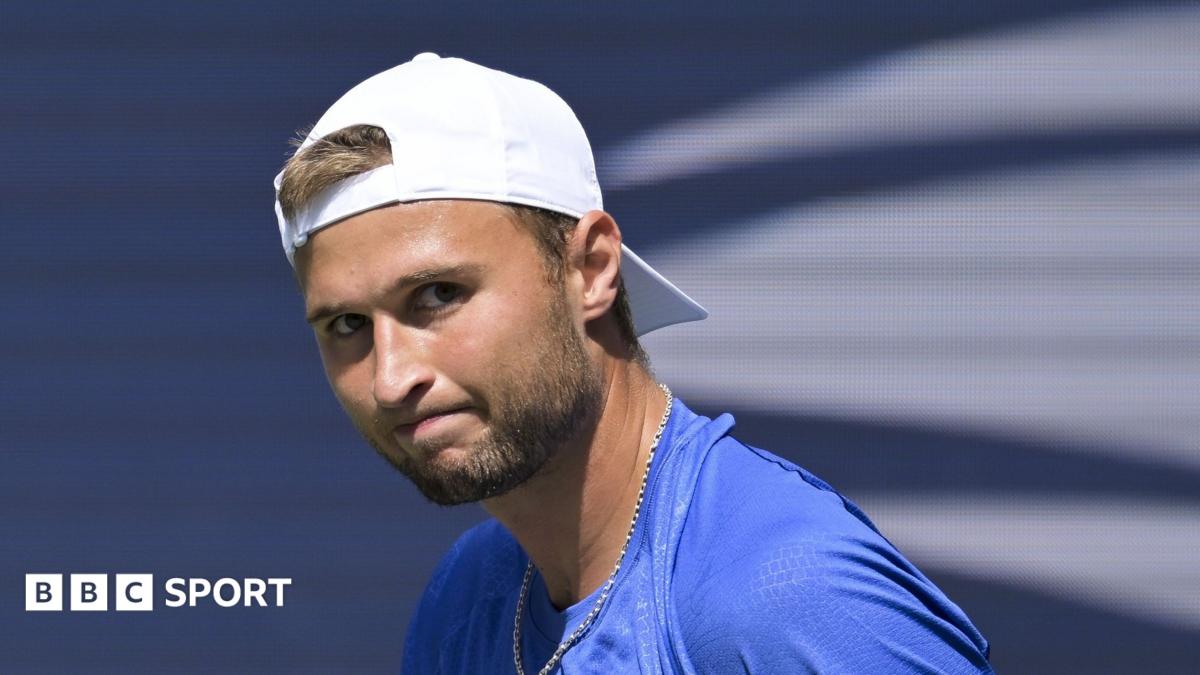
In his darkest moments Riedi found salvation in the sport which he started playing as a three-year-old growing up in Zurich.
“I felt really home at a tennis court – I was able to perform and I was able to play,” he said.
“So tennis was my saviour in that time. It helped me to go out of my thoughts for one second and focus on doing what I love.”
It goes some way to explaining why Riedi decided to still compete at Wimbledon so soon after attempting to end his life.
Looking back, he is unsure how he summoned the strength to play.
“My coach told me to go home. He was the only one who knew. But then what? Be sad at home?” Riedi said.
“I didn’t want to go home. I wanted to stay and I wanted to play. It was a horrible, horrible week.
“After the first round I remember I just left and went to the hotel. Usually you’re excited and happy about a win, but I couldn’t speak.”
In his hotel room Riedi continued to have troubled thoughts.
He credits his psychologist, who stayed awake with Riedi until 3am to make sure he was not alone, for saving his life.
Riedi went on to win his second qualifying match before losing in the third and final round. At first he felt the pressure was “lifted”, but not competing created a void.
Riedi describes how he was “scared” to leave his hotel room for the next two weeks, only going out to collect food deliveries from the lobby.
Tennis continued to be the only force which Riedi thought provided purpose. He managed to leave London for a tournament in Sweden, banking on it “bringing happiness”.
But, after winning a match in Gstaad, he started to realise that going on to court was merely a placebo effect.
The catalyst of change came a few weeks later when a knee injury – the first “big injury” of his career – required surgery following the US Open.
“It was devastating for me because I knew my one happiness – tennis – was gone,” Riedi said.
“In tennis I always had to fight [my mental health] because I was still playing. I didn’t want to show any weakness.
“Then I realised I didn’t want to fight any more. I wanted to help it. I wanted to work with it.”
